A Nissan 350Z is built to deliver exciting performance, but excessive engine heat can quickly turn an enjoyable drive into an expensive repair. If your Nissan 350Z is overheating, ignoring the warning signs can lead to severe engine damage, including warped cylinder heads, a blown head gasket, or even complete engine failure. Understanding why the temperature is rising is the first step toward protecting both your vehicle and your wallet.
In most cases, an overheating problem develops because the cooling system can no longer control engine temperature effectively. Low coolant, trapped air, a faulty thermostat, worn radiator fans, a failing water pump, or a restricted radiator can all prevent heat from leaving the engine. Although these problems produce similar symptoms, each one affects the cooling system in a different way. Identifying the exact cause before replacing parts can save both time and money.
Fortunately, many overheating issues follow recognizable patterns. For example, a Nissan 350Z that overheats only at idle often points to an airflow problem, while a vehicle that overheats at highway speeds may indicate poor coolant circulation. Paying attention to when the temperature rises can significantly narrow the list of possible causes and make the diagnostic process much easier.
This guide explains everything you need to know about a Nissan 350Z is overheating problem. You will learn the most common symptoms, the leading causes, practical diagnostic steps, effective repair solutions, and simple maintenance practices that help prevent overheating from happening again. Whether you are troubleshooting the issue yourself or preparing to visit a repair shop, this article will help you understand the problem with confidence and make informed decisions before minor cooling system faults become major engine repairs.
What Does It Mean When a Nissan 350Z Is Overheating?
A Nissan 350Z is overheating when the engine produces more heat than the cooling system can remove. The engine relies on a stable operating temperature to deliver strong performance and long term reliability. When the cooling system cannot control heat, the engine temperature rises quickly. If the problem continues, serious engine damage can occur.
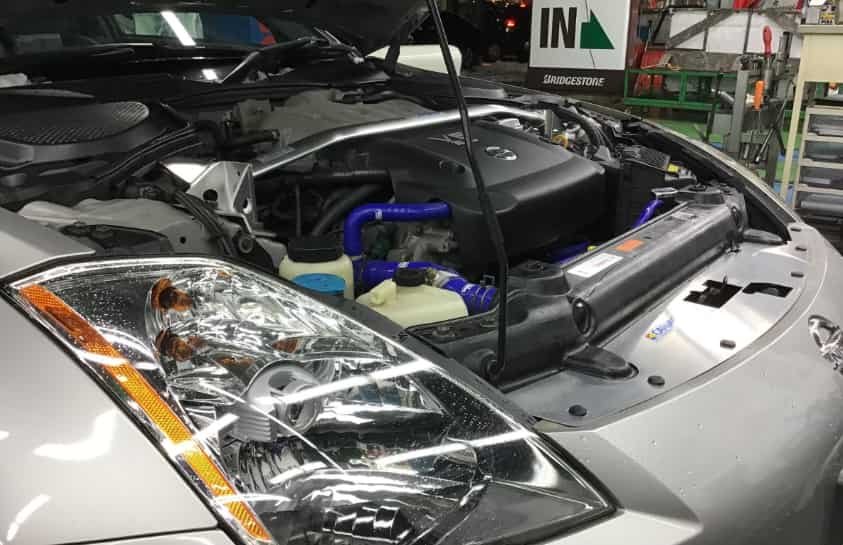
The cooling system works by moving coolant through the engine. As the coolant absorbs heat, it travels to the radiator. The radiator releases the heat into the outside air. The cooled coolant then returns to the engine and repeats the process.
Several components keep this process running smoothly. The water pump moves coolant through the system at all times. The thermostat controls when coolant flows to the radiator. The electric cooling fans pull air through the radiator when the vehicle is moving slowly or sitting still. Every part must work correctly to keep engine temperature under control.
Cooling system pressure is just as important as coolant flow. The radiator cap seals the system and maintains the correct pressure. Higher pressure raises the coolant’s boiling point and improves cooling efficiency. If the system loses pressure, the coolant can boil too early and cause the engine to overheat.
An overheating engine can damage important internal components within minutes. Excessive heat can warp the cylinder heads and weaken the head gasket. It can also reduce the engine oil’s ability to protect moving parts. As lubrication decreases, internal wear increases rapidly.
Both the VQ35DE and VQ35HR engines are durable when owners maintain them properly. However, these engines still depend on a healthy cooling system. A small problem can quickly become a major repair if drivers ignore the warning signs. Even a low coolant level or trapped air can eventually cause overheating.
Understanding how the cooling system works makes diagnosis much easier. Instead of replacing random parts, you can identify the real cause of the problem. This approach saves time, reduces repair costs, and helps prevent unnecessary engine damage.
Common Symptoms of a Nissan 350Z Overheating Problem
Recognizing the early symptoms of an overheating engine can prevent extensive mechanical damage. Many drivers notice subtle warning signs before the temperature gauge reaches the hot zone. Understanding what each symptom means helps identify the source of the problem more accurately.
Temperature Gauge Climbs Above Normal
The temperature gauge is often the first indication that something is wrong. Under normal conditions, the needle should remain near its typical operating position after the engine has warmed up. If the gauge begins climbing higher than usual or fluctuates unexpectedly, the cooling system may no longer be controlling engine temperature effectively.
A gradual increase often points to restricted coolant flow or a partially clogged radiator. A rapid temperature spike may indicate a stuck thermostat, low coolant, or sudden coolant loss. Regardless of how quickly the gauge rises, continuing to drive can cause the engine temperature to increase beyond safe operating limits.
Coolant Boils or Overflows From the Reservoir
Coolant overflowing from the expansion tank usually means excessive pressure has developed inside the cooling system. This may happen because the coolant has reached its boiling point, air is trapped inside the system, or combustion gases are entering the cooling passages through a damaged head gasket.
Drivers may notice bubbling inside the coolant reservoir after shutting off the engine. Although some coolant movement is normal while the engine cools, continuous bubbling or repeated overflow should always be investigated.
The Heater Blows Cold Air While the Engine Is Hot
Many owners overlook the cabin heater as a diagnostic tool. When the engine is overheating but the heater suddenly blows cold air, coolant may not be circulating through the heater core properly.
Low coolant, trapped air, or a failing water pump can all interrupt coolant flow. Because the heater core depends on circulating hot coolant, reduced flow often causes cabin heat to disappear before other symptoms become obvious.
Cooling Fans Do Not Turn On
Electric cooling fans become especially important when the vehicle is stopped or moving slowly. If the fans fail to operate, airflow through the radiator decreases significantly, allowing engine temperatures to rise quickly.
A failed fan motor, blown fuse, faulty relay, damaged wiring, or inaccurate coolant temperature sensor can all prevent proper fan operation. In many cases, the vehicle overheats only during traffic or extended idling while temperatures return to normal once the car begins moving again.
White Exhaust Smoke or a Sweet Coolant Smell
Persistent white smoke from the exhaust can indicate that coolant is entering one or more combustion chambers. At the same time, a sweet smell around the engine bay often suggests coolant leakage somewhere within the cooling system.
While condensation may produce light white vapor during a cold start, thick white smoke that continues after the engine reaches operating temperature requires immediate attention because it may indicate internal engine damage.
Coolant Continues to Disappear
A cooling system should not consume coolant during normal operation. If you frequently add coolant without finding an obvious leak, the coolant may be escaping internally or evaporating from a small external leak before it becomes visible.
This symptom often appears before major overheating develops. Monitoring coolant levels regularly can reveal problems early and reduce the risk of more expensive repairs later.
Why Is My Nissan 350Z Overheating?
A Nissan 350Z is overheating because the cooling system cannot remove engine heat efficiently. In most cases, the problem starts with poor coolant circulation, reduced airflow, or pressure loss inside the cooling system. As engine temperature continues to rise, the risk of serious damage also increases.
Several components can cause this issue. Low coolant, trapped air, a faulty thermostat, damaged radiator fans, a clogged radiator, and a failing water pump are among the most common causes. A weak radiator cap or a blown head gasket can also increase engine temperature by reducing cooling system performance.
The way your Nissan 350Z overheats provides valuable clues. If the engine overheats only at idle, poor airflow through the radiator is often the cause. If it overheats while driving at higher speeds, coolant circulation becomes the first area to inspect. Some vehicles also overheat immediately after a coolant service because air remains trapped inside the system.
Before replacing any parts, inspect the cooling system carefully. A simple problem can produce the same symptoms as a major engine failure. Following a logical diagnostic process helps identify the real cause, reduces repair costs, and prevents unnecessary part replacement.
10 Common Causes of Nissan 350Z Overheating
An overheating problem rarely appears without warning. Most failures begin with a small issue that gradually affects cooling performance. Identifying the correct cause early can prevent expensive engine repairs and reduce vehicle downtime.
The following sections explain the most common reasons a Nissan 350Z overheats. They are arranged from the simplest issues to inspect to the most serious mechanical failures.
Low Coolant Level
Low coolant is one of the most common reasons a Nissan 350Z overheats. Coolant absorbs heat from the engine and carries it to the radiator. When the coolant level drops, the system cannot transfer heat efficiently. As a result, engine temperature rises much faster than normal.
Coolant usually disappears because of a leak. The leak may come from a radiator hose, the radiator itself, the thermostat housing, or the water pump. In some cases, coolant escapes slowly and evaporates before it reaches the ground. This makes the leak difficult to notice during a quick inspection.
Several warning signs often appear before severe overheating begins. The temperature gauge may fluctuate instead of remaining steady. The cabin heater may stop producing warm air because coolant no longer reaches the heater core. You may also notice a sweet smell around the engine bay or find that the coolant reservoir requires frequent refilling.
Inspect the coolant reservoir first, but do not stop there. After the engine cools completely, remove the radiator cap and verify the coolant level inside the radiator. A full reservoir does not always mean the radiator is full. Air pockets can also create misleading coolant levels.
Adding coolant may lower engine temperature for a short time. However, it does not solve the underlying problem. If the coolant level continues to drop, inspect the entire cooling system for leaks before driving the vehicle again. Repairing the leak early is much less expensive than replacing a damaged engine.
Air Trapped in the Cooling System
Air trapped inside the cooling system can prevent coolant from circulating properly. This problem often appears after replacing the coolant, thermostat, radiator, or water pump. Even a small air pocket can reduce cooling efficiency and cause a Nissan 350Z is overheating.
Common symptoms include a fluctuating temperature gauge, poor cabin heat, and coolant overflowing from the reservoir. You may also hear a gurgling sound behind the dashboard as air moves through the heater core. These signs usually indicate that coolant is not flowing smoothly.
The best solution is to bleed the cooling system correctly. Allow the engine to cool, refill the coolant to the proper level, and follow the recommended bleeding procedure. Removing trapped air restores normal coolant circulation and often eliminates the overheating problem without replacing any parts.
Faulty Radiator Cap
The radiator cap does more than seal the cooling system. It also maintains the pressure needed to raise the coolant’s boiling point. If the cap becomes weak or damaged, pressure drops and the coolant may boil too early. This can cause a Nissan 350Z is overheating, even when the coolant level appears normal.
Common signs include coolant overflowing from the reservoir, a sweet coolant smell, and repeated overheating after long drives. Replacing a faulty radiator cap is inexpensive and often restores normal cooling system pressure.
Stuck Thermostat
The thermostat controls when coolant flows to the radiator. If it sticks closed, hot coolant remains inside the engine instead of reaching the radiator. Engine temperature can rise quickly, especially after the vehicle reaches normal operating temperature.
A bad thermostat often causes rapid overheating, poor coolant circulation, and a large temperature difference between the upper and lower radiator hoses. Replacing the thermostat and bleeding the cooling system usually solves the problem.
Cooling Fans Not Working
The cooling fans pull air through the radiator when the vehicle moves slowly or sits in traffic. If the fans stop working, the radiator cannot remove enough heat. The engine may stay cool on the highway but overheat at idle.
A failed fan motor, blown fuse, faulty relay, or damaged wiring can all prevent the fans from operating. Always inspect the electrical system before replacing the fan assembly.
Clogged Radiator
The radiator releases heat from the coolant before it returns to the engine. Dirt, corrosion, or old coolant deposits can block the internal passages and reduce coolant flow. Bent fins and debris on the outside of the radiator also limit cooling performance.
A clogged radiator usually causes overheating during long drives or under heavy engine load. Cleaning the radiator may help in minor cases, but severe blockages often require a replacement.
Damaged Water Pump
The water pump keeps coolant moving through the entire cooling system. When it begins to fail, coolant circulation slows down and engine temperature rises. A worn impeller or leaking pump can quickly reduce cooling performance.
Drivers may notice coolant leaking near the front of the engine or hear a grinding noise from the water pump. Replacing the pump restores proper coolant flow and helps prevent further engine damage.
Coolant Leak
A coolant leak reduces both coolant level and cooling system pressure. Even a small leak can introduce air into the system and lower cooling efficiency. As coolant continues to escape, the engine becomes more likely to overheat.
Inspect the radiator, hoses, thermostat housing, water pump, and coolant reservoir for signs of leakage. Repairing the leak early helps prevent repeated overheating and protects the engine from expensive repairs.
Restricted Radiator Hose
A radiator hose can collapse, crack, or become blocked as it ages. When this happens, coolant cannot flow freely between the engine and the radiator. Restricted coolant flow causes heat to build inside the engine.
Look for soft hoses, visible cracks, or hoses that collapse while the engine is running. Replacing worn hoses is a simple repair that can restore normal coolant circulation.
Blown Head Gasket
A blown head gasket is the most serious cause of overheating. It allows combustion gases to enter the cooling system or coolant to enter the engine cylinders. This creates excessive pressure, reduces cooling efficiency, and causes the engine to overheat repeatedly.
Common symptoms include persistent coolant loss, thick white exhaust smoke, bubbles in the coolant reservoir, and overheating even after replacing cooling system parts. A blown head gasket requires immediate diagnosis because continued driving can cause severe engine damage.
Why Does a Nissan 350Z Overheat at Idle but Not While Driving?
If your Nissan 350Z is overheating at idle but returns to a normal temperature while driving, the problem is usually related to airflow rather than coolant circulation. At higher speeds, natural airflow passes through the radiator and helps remove heat from the coolant. When the vehicle stops, the cooling fans must provide that airflow. If they fail, engine temperature can rise quickly.
The cooling fans are the first components to inspect. A failed fan motor, blown fuse, faulty relay, or damaged wiring can prevent the fans from operating. In some cases, a faulty coolant temperature sensor may also stop the fans from turning on at the correct time.
Restricted airflow can create similar symptoms. Dirt, leaves, or debris trapped between the radiator and the air conditioning condenser reduce the amount of air reaching the radiator. As cooling efficiency drops, the engine becomes more likely to overheat during slow driving or long periods of idling.
Although airflow is the most common cause, poor coolant circulation can also contribute to overheating at idle. A worn water pump or air trapped inside the cooling system may reduce coolant flow, especially at lower engine speeds.
Start by checking whether both cooling fans operate when the engine reaches normal temperature. If the fans work correctly, inspect the radiator for blockages and verify that the cooling system contains the proper coolant level. A systematic inspection makes it easier to identify the real cause and avoid replacing unnecessary parts.
Why Does a Nissan 350Z Overheat While Driving?
If your Nissan 350Z is overheating while driving, the cooling system may not circulate coolant efficiently. Unlike overheating at idle, this problem is often linked to restricted coolant flow instead of poor airflow. As engine speed and load increase, the cooling system must remove more heat. Any restriction can cause the temperature to rise.
A stuck thermostat is one of the most common causes. If it does not open fully, hot coolant cannot reach the radiator. A worn water pump can create the same symptom by reducing coolant circulation. A clogged radiator may also prevent heat from leaving the coolant, especially during long drives or uphill climbs.
Low coolant is another possible cause. When the coolant level drops, the system cannot absorb enough heat from the engine. A damaged radiator hose or a small coolant leak can make the problem even worse over time.
Pay attention to when the temperature begins to rise. If the engine overheats only during high speed driving or under heavy acceleration, inspect the thermostat, water pump, radiator, and coolant level first. Finding the cause early can prevent serious engine damage and reduce repair costs.
Why Is the Nissan 350Z Overheating After Replacing the Thermostat?
If your Nissan 350Z is overheating after replacing the thermostat, the new part may not be the actual problem. In many cases, overheating continues because air remains trapped inside the cooling system. Air pockets restrict coolant flow and create hot spots inside the engine.
An incorrectly installed thermostat can also cause overheating. If the thermostat is installed in the wrong position or does not open fully, coolant cannot circulate through the radiator. Even a brand new thermostat may be defective, so do not rule it out during diagnosis.
The cooling system should also be inspected for other faults. A clogged radiator, weak water pump, or faulty cooling fans can produce the same symptoms as a bad thermostat. Replacing one part will not solve the problem if another component has already failed.
Start by checking the coolant level after the engine has cooled completely. Then bleed the cooling system to remove trapped air. Next, verify that both cooling fans operate correctly and inspect the radiator for restricted flow. If the engine still overheats, test the cooling system for pressure loss and inspect the head gasket for internal leaks. A step by step diagnosis will help you identify the real cause and avoid replacing unnecessary parts.
How to Diagnose a Nissan 350Z That Is Overheating
Finding the exact cause of an overheating problem is more important than replacing random parts. Many cooling system failures produce similar symptoms, so a logical inspection saves both time and money. Start with the simplest checks before moving to more advanced tests.
Step 1. Check the Coolant Level
Allow the engine to cool completely before opening the radiator cap. Check the coolant level inside the radiator and the coolant reservoir. If either level is low, inspect the cooling system for signs of leakage before adding more coolant.
Step 2. Look for Coolant Leaks
Inspect the radiator, hoses, thermostat housing, water pump, and coolant reservoir. Look for wet areas, dried coolant residue, or a sweet coolant smell. Even a small leak can lower the coolant level and cause repeated overheating.
Step 3. Inspect the Cooling Fans
Start the engine and allow it to reach normal operating temperature. The cooling fans should turn on automatically. If they do not, inspect the fuse, relay, wiring, and coolant temperature sensor before replacing the fan motor.
Step 4. Check for Trapped Air
If the cooling system was serviced recently, trapped air may still be present. Watch for bubbles in the coolant reservoir, inconsistent cabin heat, or a fluctuating temperature gauge. Bleeding the system correctly often restores normal coolant circulation.
Step 5. Test the Thermostat
Feel the upper and lower radiator hoses after the engine warms up. If one hose becomes hot while the other stays cool, the thermostat may not be opening properly. Replace the thermostat only after confirming the diagnosis.
Step 6. Inspect the Radiator
Check the radiator for dirt, leaves, or damaged fins that restrict airflow. If the outside looks clean, consider the possibility of an internal blockage caused by old coolant deposits or corrosion.
Step 7. Check the Water Pump
Look for coolant leaking from the water pump or listen for unusual grinding noises. A worn water pump may fail to circulate coolant even if it does not leak.
Step 8. Test for a Blown Head Gasket
If the engine continues to overheat after the cooling system passes all previous checks, inspect for internal engine damage. Persistent bubbles in the radiator, white exhaust smoke, and continuous coolant loss without an external leak often indicate a blown head gasket. A combustion gas test or cooling system pressure test can confirm the diagnosis.
How to Fix a Nissan 350Z That Is Overheating
The best way to fix an overheating Nissan 350Z is to repair the component that is causing the cooling system to fail. Replacing parts without proper testing often wastes time and money. Start with a complete inspection, then repair the problem based on your findings.
If the coolant level is low, locate the source of the leak before adding more coolant. Common leak points include the radiator, hoses, thermostat housing, water pump, and coolant reservoir. Once the damaged part has been repaired, refill the system with the correct coolant and remove any trapped air.
If the thermostat is not opening properly, replace it with a high quality replacement. Make sure it is installed correctly and bleed the cooling system before driving the vehicle. Air trapped inside the system can create the same symptoms as a faulty thermostat.
Cooling fans should also be tested because they play a major role when the vehicle is stationary or moving slowly. Replace a failed fan motor if necessary. If the fan does not receive power, inspect the fuse, relay, wiring, and coolant temperature sensor before replacing other components.
A clogged radiator can also reduce cooling efficiency. Clean debris from the front of the radiator to improve airflow. If internal corrosion restricts coolant flow, replacing the radiator is usually more effective than flushing it.
Finally, inspect the water pump and head gasket if overheating continues after the cooling system passes the basic checks. These repairs are more complex and often require professional tools and experience. Repairing the actual cause as early as possible is the best way to protect the engine from permanent damage.
Can You Drive a Nissan 350Z That Is Overheating?
You should not continue driving if your Nissan 350Z is overheating. Excessive engine temperature can damage the cylinder heads, weaken the head gasket, and reduce engine lubrication. Even a short drive may turn a simple cooling system repair into a complete engine rebuild.
Pull over as soon as it is safe to do so and switch off the engine. Allow it to cool completely before inspecting the coolant level. Never remove the radiator cap while the engine is hot because pressurized coolant can cause serious burns.
If the engine overheats again after adding coolant, do not continue driving. Have the vehicle inspected or towed to a repair shop. Solving the problem early almost always costs less than repairing engine damage caused by repeated overheating.
Nissan 350Z Overheating Repair Cost
The cost to repair an overheating Nissan 350Z depends on the failed component and how long the problem has been ignored. A simple coolant leak or faulty radiator cap is usually inexpensive to repair. However, a damaged water pump or blown head gasket requires much more labor and significantly increases the total cost.
The table below compares the most common repairs and their relative cost.
| Repair | Cost Level | Repair Difficulty |
|---|---|---|
| Radiator cap | Low | Easy |
| Cooling system bleeding | Low | Easy |
| Radiator hose | Low | Easy |
| Thermostat | Medium | Moderate |
| Cooling fan | Medium | Moderate |
| Radiator | Medium | Moderate |
| Water pump | High | Difficult |
| Head gasket | Very High | Complex |
| Engine replacement | Extremely High | Major |
Delaying repairs almost always increases the final bill. Fixing a small coolant leak today is far less expensive than replacing an engine that has overheated several times.
How to Prevent a Nissan 350Z From Overheating
Preventing overheating is much easier than repairing engine damage. Regular maintenance keeps the cooling system working efficiently and helps you identify small problems before they become major repairs.
Check the coolant level regularly and inspect the radiator, hoses, and coolant reservoir for leaks. Replace old coolant at the recommended service interval and always use the correct coolant mixture. Clean dirt and debris from the radiator to maintain proper airflow.
If you replace the thermostat, radiator, water pump, or any cooling system component, bleed the system carefully before driving. Removing trapped air is an important step because even a small air pocket can cause the engine to overheat.
You should also monitor the temperature gauge during daily driving. A small change in operating temperature is often the first sign that the cooling system needs attention. Addressing the problem early can prevent expensive repairs and help your Nissan 350Z perform reliably for years.
Frequently Asked Questions
Why is my Nissan 350Z overheating when the coolant is full?
A full coolant level does not always mean the cooling system is working correctly. Trapped air, a faulty thermostat, a clogged radiator, a failing water pump, or a blown head gasket can still cause the engine to overheat.
Why does my Nissan 350Z overheat at idle but not while driving?
This usually points to an airflow problem. Cooling fans that fail to operate, damaged wiring, or debris blocking the radiator are the most common causes.
Can trapped air cause a Nissan 350Z to overheat?
Yes. Air pockets interrupt coolant circulation and create hot spots inside the engine. Bleeding the cooling system correctly often solves the problem.
How do I know if my thermostat is bad?
A faulty thermostat may cause rapid overheating, poor cabin heat, and limited coolant circulation. One radiator hose may feel much hotter than the other after the engine reaches operating temperature.
What are the signs of a failing water pump?
Coolant leaks, grinding noises, poor coolant circulation, and repeated overheating are common signs of water pump failure.
Can a bad radiator cap cause overheating?
Yes. A weak radiator cap reduces cooling system pressure, allowing coolant to boil at a lower temperature. This reduces cooling efficiency and increases the risk of overheating.
What are the symptoms of a blown head gasket?
Common symptoms include white exhaust smoke, continuous coolant loss, bubbles in the coolant reservoir, engine overheating, and coolant contamination. A professional inspection is the best way to confirm the diagnosis.
Conclusion
If your Nissan 350Z is overheating, do not ignore the warning signs. Most overheating problems begin with a fault in the cooling system, and early diagnosis can prevent costly engine damage.
Start with the simplest inspections first. Check the coolant level, look for leaks, verify that the cooling fans operate correctly, and make sure coolant flows freely through the radiator. If these components work as expected, continue with pressure testing and head gasket diagnostics.
A systematic approach makes troubleshooting much easier and prevents unnecessary part replacement. By maintaining the cooling system and addressing problems early, you can keep your Nissan 350Z running at a safe operating temperature and avoid expensive repairs in the future.