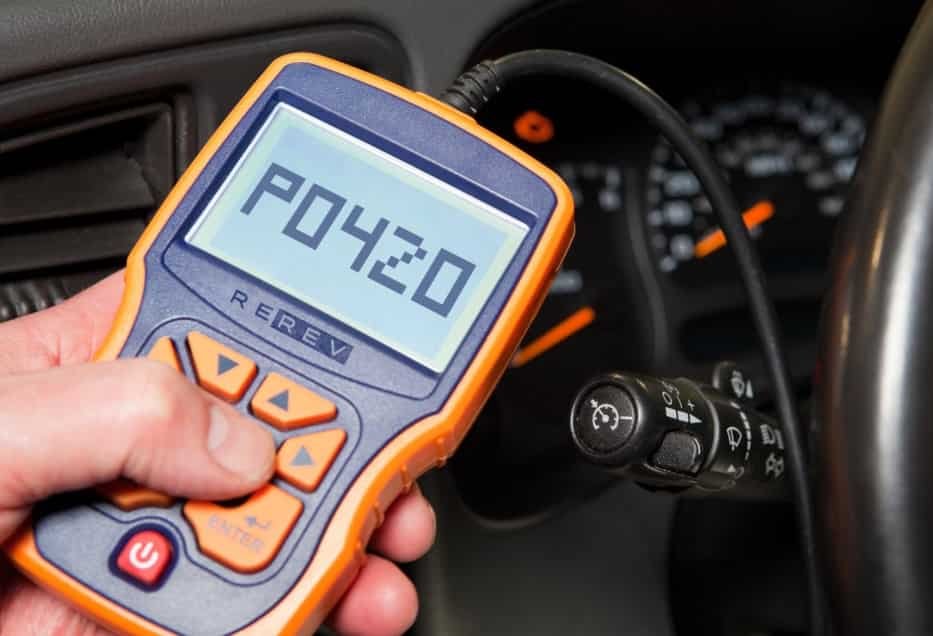
The Nissan P0420 code means that the engine control module has detected that the catalytic converter efficiency is below the expected threshold. This diagnostic trouble code does not always mean that the catalytic converter has failed because several other problems, including faulty oxygen sensors, exhaust leaks, and engine performance issues, can trigger the same warning.
Nissan vehicles use the OBD-II diagnostic system to monitor emission control components and compare oxygen sensor readings before and after the catalytic converter. When the difference between these readings shows that the catalyst is not reducing exhaust pollutants effectively, the ECM stores the P0420 code and activates the Check Engine Light.
Diagnosing Nissan P0420 correctly requires more than replacing the catalytic converter immediately. A complete inspection should identify whether the problem comes from the catalyst itself, the oxygen sensors, exhaust system leaks, or an underlying engine condition. This guide explains what Nissan P0420 code means, the most common causes, the symptoms drivers experience, the correct diagnostic process, and the repair solutions available to restore proper emission system performance.
What Does Nissan P0420 Code Mean?
The Nissan P0420 code means that the catalytic converter efficiency is below the threshold required by the engine control module. The code is officially known as “Catalyst System Efficiency Below Threshold (Bank 1)” and belongs to the OBD-II diagnostic trouble code system used by Nissan vehicles and other manufacturers. The ECM monitors the catalytic converter by analyzing oxygen levels in the exhaust stream and determines whether the converter is reducing harmful emissions effectively.
The catalytic converter is part of the vehicle’s emission control system and converts pollutants such as hydrocarbons, carbon monoxide, and nitrogen oxides into less harmful gases. Nissan vehicles use oxygen sensors located before and after the catalytic converter to measure exhaust conditions. The upstream oxygen sensor monitors exhaust gases entering the converter, while the downstream oxygen sensor checks how effectively the converter processes those gases.
When both oxygen sensor signals become too similar, the ECM determines that the catalytic converter is not storing and processing oxygen as expected. This condition triggers the P0420 code and turns on the Check Engine Light. However, the code identifies a system efficiency problem, not a specific failed component. A faulty oxygen sensor, exhaust leak, engine misfire, or fuel mixture problem can create readings that appear similar to a failing catalytic converter.
Understanding this difference is important because replacing a catalytic converter without proper testing can lead to unnecessary repair costs. A correct Nissan P0420 diagnosis starts by identifying why the ECM detected reduced catalyst efficiency and verifying which component is responsible.
What Are the Symptoms of Nissan P0420 Code?
The main symptoms of Nissan P0420 code include an illuminated Check Engine Light, reduced fuel efficiency, failed emissions testing, unusual exhaust odors, and reduced engine performance in some cases. The severity of symptoms depends on the actual cause behind the code because P0420 only indicates that the catalytic converter efficiency is below the expected level, not that one specific component has failed.
The Check Engine Light is the most common symptom because the ECM activates the warning after detecting abnormal catalyst efficiency through oxygen sensor data. Many Nissan vehicles continue to operate normally after the light appears because the vehicle can still maintain engine operation even when the emission system is not working at its ideal level. However, ignoring the code for a long period can allow an underlying issue to damage other components.
Reduced fuel economy can occur when the cause of P0420 is related to improper combustion, incorrect air fuel mixture, or faulty oxygen sensor readings. For example, a failing sensor may send inaccurate information to the ECM, causing incorrect fuel adjustments that affect engine efficiency.
A failed emissions test is another common indication because the catalytic converter plays a direct role in controlling exhaust pollutants. Vehicles with an active P0420 code may produce higher levels of harmful emissions and fail inspection requirements.
Some Nissan owners may also notice a sulfur-like exhaust smell, weaker acceleration, or poor engine response. These symptoms are more likely when the catalytic converter has physical damage, internal contamination, or when another engine problem is affecting exhaust performance. Proper diagnosis is necessary because similar symptoms can come from multiple emission system failures.
What Causes Nissan P0420 Code?
The main causes of Nissan P0420 code are catalytic converter failure, faulty oxygen sensors, exhaust leaks, engine misfires, and fuel mixture problems. The code appears when the ECM detects low catalytic converter efficiency. However, the code does not identify the exact failed component.
A damaged catalytic converter is one of the most common causes of Nissan P0420 code. The catalyst inside the converter can lose efficiency over time. This happens because of overheating, contamination, or internal damage. Excess fuel from engine misfires can also increase converter temperature and reduce its performance.
Faulty oxygen sensors can also trigger Nissan P0420. The ECM depends on oxygen sensor signals to evaluate catalyst operation. The upstream sensor measures exhaust gases before they enter the converter. The downstream sensor measures exhaust gases after they leave the converter. Incorrect sensor readings can make the ECM detect a false efficiency problem.
Exhaust leaks are another possible cause of P0420. A leak before the catalytic converter can allow outside air to enter the exhaust system. This changes oxygen readings and affects ECM calculations. Small cracks near exhaust connections can create inaccurate sensor data.
Engine problems can also reduce catalytic converter efficiency. Common examples include misfires, rich fuel mixtures, leaking fuel injectors, and oil consumption. These problems send unwanted substances into the exhaust system. Over time, they can damage the catalytic converter and cause the P0420 code.
A proper diagnosis is necessary before replacing parts. The catalytic converter is expensive, so replacing it without testing can create unnecessary repair costs. Checking oxygen sensors, exhaust leaks, and engine conditions helps identify the real cause of Nissan P0420 code.
How Do You Diagnose Nissan P0420 Code?
Diagnosing Nissan P0420 code requires checking the complete emission system instead of replacing the catalytic converter immediately. The ECM only reports that catalyst efficiency is below the expected level. It does not confirm which component has failed. A proper diagnosis checks the catalytic converter, oxygen sensors, exhaust system, and engine performance.
The first step is scanning the vehicle with an OBD-II scanner. The scanner retrieves stored trouble codes and freeze frame data. This information shows the engine conditions when the ECM detected the problem. Technicians should also check for additional codes because misfire or fuel system problems can cause P0420.
The next step is inspecting the exhaust system for leaks. Exhaust leaks before the catalytic converter can introduce outside oxygen into the system. This creates incorrect sensor readings and may cause a false P0420 diagnosis. A visual inspection can identify damaged pipes, cracked welds, or leaking connections.
Oxygen sensor testing is another important diagnostic step. The upstream oxygen sensor should react quickly to changes in the air fuel mixture. The downstream oxygen sensor should show a more stable signal after the catalytic converter processes exhaust gases. Similar readings from both sensors may indicate reduced catalyst efficiency or a sensor problem.
The catalytic converter should be tested only after other possible causes are eliminated. Technicians can use exhaust temperature measurements, oxygen sensor data, and efficiency tests to evaluate converter performance. These tests confirm whether the converter has actually lost its ability to reduce emissions.
Following a complete diagnostic process prevents unnecessary repairs. Many Nissan P0420 cases are caused by related components rather than the catalytic converter itself. Accurate testing helps owners choose the correct repair and avoid replacing expensive parts without evidence.
How Do You Fix Nissan P0420 Code?
Fixing Nissan P0420 code requires repairing the actual cause of reduced catalytic converter efficiency. The correct repair depends on diagnostic results because P0420 can come from several different problems. Replacing the catalytic converter is only necessary when testing confirms that the converter has lost its ability to process exhaust gases.
Repairing exhaust leaks is one possible solution for Nissan P0420. A leak before the catalytic converter can change oxygen sensor readings and create incorrect ECM calculations. Fixing damaged exhaust pipes, cracked joints, or leaking connections can restore accurate sensor data and remove the code.
Replacing faulty oxygen sensors can also fix P0420 when sensor failure causes incorrect readings. The ECM uses oxygen sensor information to monitor catalytic converter performance. A damaged upstream or downstream sensor may send inaccurate signals and make the system appear less efficient than it actually is.
Engine problems must also be repaired before replacing emission components. Misfires, rich fuel mixtures, leaking injectors, and oil consumption can damage a catalytic converter. Fixing these issues prevents repeated P0420 problems after repair.
A catalytic converter replacement is required when the converter has permanent internal damage. Common signs include poor catalyst efficiency after other components test correctly, physical converter damage, or contamination that cannot be removed. Because catalytic converters are expensive, proper confirmation is important before replacement.
Some Nissan owners consider temporary solutions such as cleaning products or additives. These products may help in limited situations, but they cannot repair a damaged catalyst or faulty sensor. A complete diagnosis provides the most reliable solution.
The best Nissan P0420 repair strategy is to identify the failure source first. Correct repairs restore emission system performance and reduce the chance of the code returning.
How Much Does Nissan P0420 Repair Cost?
The cost to repair Nissan P0420 code depends on the failed component, vehicle model, and labor requirements. A simple diagnosis may cost less than replacing emission system parts. The final repair price changes based on whether the problem comes from an oxygen sensor, exhaust leak, engine issue, or catalytic converter failure.
An OBD-II diagnostic inspection is usually the first repair expense. Technicians use a scanner and additional tests to identify the source of the code. This step is important because Nissan P0420 does not confirm a failed catalytic converter. A proper diagnosis prevents unnecessary replacement costs.
Oxygen sensor replacement is often less expensive than catalytic converter replacement. The total cost depends on the sensor type and installation difficulty. Nissan vehicles with easier sensor access usually require less labor time. A faulty sensor should be replaced only after testing confirms incorrect operation.
Exhaust leak repairs usually have a lower cost compared with major emission component replacement. The price depends on the location and severity of the leak. Small cracks or damaged connections may require simple repairs, while larger exhaust damage can increase labor costs.
Catalytic converter replacement is usually the most expensive Nissan P0420 repair. The converter contains precious metals that help reduce harmful emissions. Replacement costs vary between Nissan models because part prices and installation requirements are different. For example, a Nissan Rogue and a Nissan Sentra may use different catalytic converter designs and replacement procedures.
The most cost-effective approach is accurate diagnosis before repair. Spending money on testing first can prevent replacing expensive components that are still working correctly. Identifying the real cause of Nissan P0420 leads to a more reliable repair and reduces the chance of the code returning.
Can You Drive a Nissan With P0420 Code?
You can usually drive a Nissan with P0420 code for a short period, but the vehicle should be diagnosed as soon as possible. The code does not always indicate an immediate engine failure. However, ignoring the problem can allow emission system damage to become more serious.
Many Nissan vehicles continue to operate normally after the Check Engine Light appears because P0420 mainly affects the emission control system. The vehicle may still start, accelerate, and drive without noticeable performance changes. This situation does not mean the problem should be ignored because the underlying cause may damage other components.
Driving with P0420 becomes more risky when additional symptoms appear. A flashing Check Engine Light, engine misfire, strong exhaust smell, poor acceleration, or unusual engine behavior requires immediate inspection. These symptoms may indicate a more serious problem, such as excessive fuel entering the exhaust system or catalytic converter damage.
A damaged catalytic converter can create long-term problems if the vehicle continues operating without repair. Excessive heat, internal breakdown, or contamination can reduce converter performance further. In severe cases, a restricted catalytic converter can affect exhaust flow and reduce engine performance.
The driving risk also depends on the actual cause of the code. A faulty oxygen sensor may create inaccurate readings without causing immediate mechanical damage. An engine misfire, however, can quickly damage the catalytic converter because unburned fuel increases exhaust temperature.
The best approach is to continue driving only when the vehicle operates normally and schedule a proper diagnosis. Identifying the cause early helps prevent more expensive repairs and protects the Nissan emission system from further damage.
Which Nissan Models Commonly Get P0420 Code?
Nissan P0420 code can appear on many Nissan models because they use similar OBD-II emission monitoring systems. The code is not limited to one specific vehicle. It can occur on sedans, SUVs, and trucks when the ECM detects reduced catalytic converter efficiency.
The Nissan Altima is one model where owners commonly search for P0420 diagnosis information. The vehicle uses oxygen sensors before and after the catalytic converter to monitor emission performance. Problems such as aging catalytic converters, sensor issues, and exhaust leaks can trigger the code.
The Nissan Sentra can also experience P0420 code problems. Many cases involve high mileage vehicles with reduced catalyst efficiency. However, technicians should inspect oxygen sensor signals and engine conditions before replacing the catalytic converter.
The Nissan Rogue is another model where P0420 troubleshooting is relevant. Its emission system depends on accurate communication between the catalytic converter, oxygen sensors, and ECM. A fault in any related component can affect catalyst efficiency readings.
Other Nissan vehicles, including the Pathfinder, Frontier, and Murano, can also store P0420 code when emission system performance falls below the expected level. The diagnostic process remains similar across these models because they follow the same OBD-II monitoring principles.
Although different Nissan models use different engine designs and exhaust layouts, the main causes remain similar. Catalytic converter wear, oxygen sensor failure, exhaust leaks, and engine problems are the primary areas to inspect.
Vehicle model information helps narrow the diagnosis, but it does not determine the exact repair. A Nissan Altima with P0420 and a Nissan Rogue with P0420 require the same diagnostic approach. Technicians must test the emission system before selecting a repair solution.
What Should You Check First After Getting Nissan P0420 Code?
The first thing to check after getting Nissan P0420 code is the complete emission system, not only the catalytic converter. The code shows that catalyst efficiency is below the expected level, but it does not identify the exact failed component. A correct diagnosis helps determine whether the problem comes from the catalytic converter, oxygen sensors, exhaust leaks, or engine conditions.
The diagnostic process should begin with an OBD-II scan and a review of related trouble codes. Technicians should then inspect oxygen sensor data, exhaust system condition, and engine performance. These checks reveal whether the catalytic converter is actually failing or if another issue is creating inaccurate efficiency readings.
Replacing the catalytic converter without confirmation can lead to unnecessary repair costs. The catalytic converter is one of the most expensive emission components, so testing the system first provides a more reliable solution.
A Nissan P0420 code is a warning that requires investigation, but it does not always mean a major repair is needed. Identifying the real cause allows vehicle owners to choose the correct fix, restore emission system performance, and reduce the risk of the code returning.