Nissan CVT fluid needs regular service, but every Nissan does not follow the same change interval. Your model, model year, mileage, and driving conditions determine the right service timing. The maintenance schedule for your specific vehicle should remain your primary reference.
CVT fluid lubricates internal components and supports hydraulic operation. It also helps control transmission heat and maintain smooth performance. Heat and mechanical stress gradually degrade the fluid as mileage increases. Severe driving conditions can accelerate this process. Frequent city traffic, short trips, high temperatures, and heavy loads can place extra stress on the CVT.
For this reason, mileage alone should not determine when you change Nissan CVT fluid. Consider the vehicle’s maintenance schedule, operating conditions, service history, and current CVT performance. An unknown maintenance history may also justify closer inspection of the transmission and fluid condition.
This guide explains how often you should change Nissan CVT fluid and what affects the service interval. It also covers warning signs, correct fluid selection, service methods, and the role of regular fluid maintenance in CVT longevity.
How Often Should You Change Nissan CVT Fluid?
You should change Nissan CVT fluid according to the service requirements for your specific model, mileage, and driving conditions. Nissan does not use one universal change interval for every vehicle with a CVT. Different models and model years can have different maintenance requirements.
Start with the maintenance information for your specific Nissan. It provides the correct service guidance for the vehicle and its transmission. Do not apply a generic mileage recommendation to every Nissan CVT. The transmission design, fluid specification, and operating conditions can affect when the fluid needs attention.
Mileage still provides an important reference for CVT maintenance. However, mileage does not show how much stress the transmission has experienced. Two Nissan vehicles with the same mileage can have different fluid conditions. One may spend most of its time cruising on highways. The other may face daily traffic, frequent acceleration, and high operating temperatures.
You should also distinguish a CVT fluid inspection from a CVT fluid change. An inspection evaluates the transmission and fluid condition. A fluid change replaces fluid when the vehicle’s maintenance requirements or condition justify the service. These actions do not always occur at the same mileage.
For the most accurate interval, check your Nissan model, model year, maintenance schedule, driving conditions, and service history. These factors provide a stronger basis for CVT maintenance than mileage alone.
What Factors Determine How Often Nissan CVT Fluid Should Be Changed?
Five main factors determine how often a Nissan CVT needs fluid service: model, model year, mileage, driving conditions, and maintenance history. Each factor changes the context behind the service interval. For this reason, owners should evaluate them together.
The Nissan model and model year identify the vehicle’s specific maintenance requirements. Nissan has used different CVT designs and fluid specifications across its vehicle range. Owners should therefore follow information that applies to their exact vehicle.
Mileage shows how far the vehicle and transmission have operated. Higher mileage increases the time that CVT fluid spends under heat and mechanical stress. However, mileage alone cannot describe the severity of that operation.
Driving conditions add this missing context. Frequent traffic, repeated short trips, high temperatures, steep roads, and heavy loads can increase transmission stress. These conditions may accelerate fluid deterioration compared with less demanding operation.
Maintenance history provides another important signal. A complete service record shows when previous CVT inspections or fluid changes occurred. An unknown history creates more uncertainty, especially on a used Nissan.
These five factors create a practical maintenance framework. Check the vehicle specific requirements first. Then evaluate mileage, operating conditions, and previous service records before deciding when the Nissan CVT fluid needs attention.
Should Nissan CVT Fluid Be Changed More Often Under Severe Driving Conditions?
Severe driving conditions can increase the need for Nissan CVT fluid inspection and maintenance. Demanding operation places more heat and stress on the transmission. These conditions can accelerate fluid deterioration compared with moderate driving.
Frequent stop and go traffic creates repeated changes in vehicle speed. The CVT must constantly adjust its operating ratio during these changes. Heavy urban traffic can also reduce airflow around the vehicle. As a result, the transmission may operate under greater thermal stress.
High temperatures create another concern. CVT fluid must lubricate components while supporting hydraulic operation and heat control. Repeated exposure to high operating temperatures can reduce fluid performance over time. Heavy loads and steep roads can also increase transmission workload.
Short trips create a different operating pattern. A vehicle that makes repeated short journeys experiences frequent warm up cycles. Its total mileage may remain relatively low despite frequent transmission operation. Mileage alone may therefore provide an incomplete picture of fluid condition.
Do not assume that severe driving creates one shorter interval for every Nissan. Check the maintenance information for your specific model and model year. Then consider how you actually use the vehicle.
Drivers who regularly face demanding conditions should pay closer attention to CVT maintenance. Vehicle requirements, operating conditions, mileage, and service history together provide a more reliable basis for deciding when the fluid needs service.
What Are the Signs That Nissan CVT Fluid Needs to Be Changed?
Changes in CVT operation can indicate that the transmission or its fluid needs inspection. Common warning signs include hesitation, shuddering, unusual noises, abnormal operation, and changes in transmission response. These symptoms do not prove that old CVT fluid caused the problem.
Hesitation can appear when the vehicle responds differently during acceleration. Shuddering creates a vibration or shaking sensation during operation. Unusual whining or other transmission noises also deserve attention, especially when they appear suddenly or become more noticeable.
Changes in transmission behavior provide another warning. A Nissan CVT should deliver predictable operation under normal conditions. Noticeable changes can signal a fluid issue, mechanical wear, excessive heat, or an electronic problem. Proper diagnosis helps separate these causes.
Fluid condition can provide additional information when the vehicle allows appropriate inspection. Significant changes in fluid condition may support the need for further service evaluation. However, appearance alone should not replace the maintenance requirements for the vehicle.
Do not treat a CVT fluid change as an automatic repair for every transmission symptom. A mechanical or electronic fault may remain after fresh fluid enters the transmission. Continuing to drive with severe symptoms can also allow an existing problem to worsen.
Use warning signs as a reason to inspect and diagnose the CVT. Combine those findings with mileage, maintenance history, operating conditions, and vehicle specific requirements before choosing the correct service.
What Happens If You Do Not Change Nissan CVT Fluid When It Is Needed?
Delaying a needed Nissan CVT fluid change can reduce fluid performance and increase stress on transmission components. CVT fluid supports lubrication, hydraulic operation, and heat management. As the fluid deteriorates, it becomes less effective at performing these functions.
Heat creates an important part of this process. The transmission generates heat during normal operation. Demanding driving conditions can increase that thermal load. Over time, repeated heat exposure can degrade the fluid and reduce its ability to protect the CVT.
Deteriorated fluid can also affect lubrication. Internal transmission components depend on the correct fluid to operate under friction and pressure. Poor fluid condition can increase wear when the transmission continues to operate under demanding conditions. This wear may contribute to changes in CVT performance.
Drivers may notice hesitation, shuddering, unusual noises, or inconsistent transmission behavior when a CVT develops problems. However, old fluid does not cause every CVT symptom. Mechanical faults, electronic issues, and other transmission problems can produce similar signs. Proper diagnosis remains important.
Timely fluid maintenance helps reduce avoidable stress, but it cannot reverse existing mechanical damage. Replacing severely degraded fluid also does not guarantee that an already damaged CVT will return to normal operation.
Follow the maintenance requirements for your Nissan and address abnormal CVT behavior promptly. Preventive fluid service costs far less than major transmission repair when neglected maintenance contributes to internal wear.
Which CVT Fluid Should You Use in a Nissan?
Use the CVT fluid specification that Nissan requires for your exact model, model year, and transmission. Nissan vehicles can require different CVT fluids. Using the correct specification helps the transmission maintain proper lubrication and hydraulic operation.
Nissan NS 2 and Nissan NS 3 are two important CVT fluid specifications. They apply to different transmission applications and vehicle requirements. Do not choose between them based only on the Nissan brand or the fact that the vehicle uses a CVT.
Start by checking the maintenance information or service specifications for your exact vehicle. The model year matters because Nissan can change transmission designs and fluid requirements across generations. Two vehicles with similar names may therefore require different fluid specifications.
Correct fluid selection matters because a CVT relies on specific friction and hydraulic characteristics. The fluid works as part of the transmission system rather than as a simple lubricant. Using a fluid that does not meet the required specification can affect how the CVT operates.
Do not assume that NS 2 and NS 3 are automatically interchangeable. Confirm compatibility before adding or replacing CVT fluid. The same principle applies when considering aftermarket fluids that claim compatibility with several transmission specifications.
Identify the vehicle first, confirm its required specification, and then select the appropriate CVT fluid. Correct fluid and correct service timing work together to support consistent Nissan CVT operation.
Should You Change or Flush Nissan CVT Fluid?
A Nissan CVT fluid service should follow the procedure specified for the vehicle rather than a generic transmission flush. A fluid change and a flush use different methods. Understanding that difference helps owners avoid treating every transmission service as the same procedure.
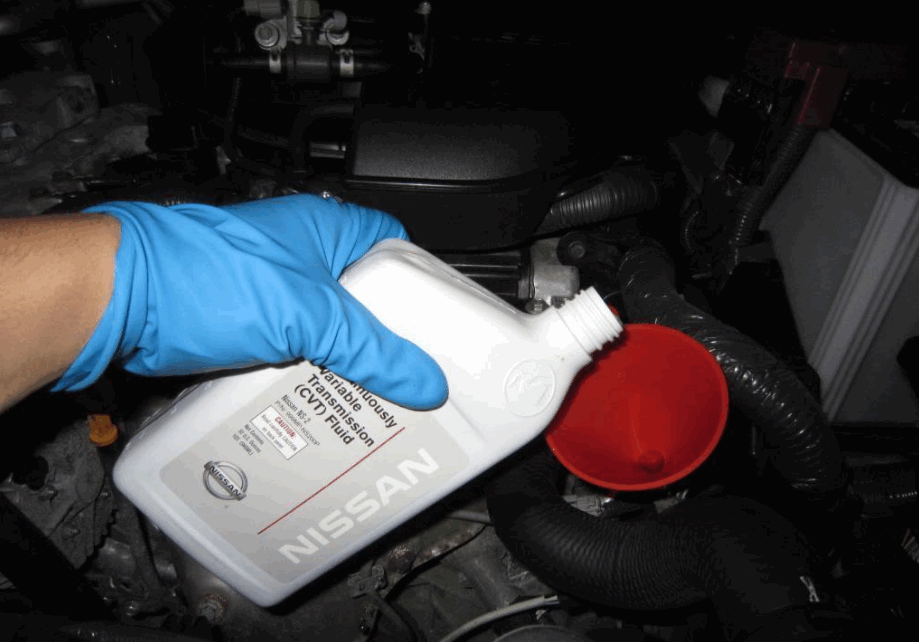
A fluid change removes a portion of the existing CVT fluid and replaces it with the correct fluid. People often call this process a drain and refill. The exact procedure depends on the Nissan model and transmission. Fluid level, temperature, and service steps can also matter during the process.
A transmission flush uses equipment to move a larger volume of fluid through the transmission. This approach differs from a standard drain and refill. For that reason, owners should not assume that a generic flush provides the correct service for every Nissan CVT.
The correct procedure matters because a CVT depends on precise fluid characteristics and operating conditions. Using the wrong fluid or following an unsuitable service method can create additional transmission concerns. A fluid service should match the requirements of the specific CVT.
Service history also matters when choosing the next step. A vehicle with regular maintenance presents a different situation from one with unknown service history and abnormal CVT behavior. Existing symptoms may require diagnosis before any fluid service.
Check the service information for your exact Nissan before choosing a procedure. Use the required CVT fluid and follow the appropriate service method. This approach provides a stronger maintenance strategy than automatically requesting a transmission flush.
How Can Regular CVT Fluid Maintenance Help a Nissan CVT Last Longer?
Regular CVT fluid maintenance supports transmission longevity by protecting lubrication, hydraulic operation, and heat management. Fresh fluid cannot guarantee a specific CVT lifespan. However, correct maintenance helps the transmission operate with fluid that meets its required performance characteristics.
Lubrication protects moving transmission components during operation. CVT fluid helps reduce harmful friction between components that work under pressure. Maintaining the correct fluid condition supports this protective function as mileage accumulates.
CVT fluid also plays an important role in hydraulic operation. The transmission depends on fluid properties to operate its internal systems correctly. Fluid deterioration can reduce the quality of this operating environment. Correct maintenance helps preserve the conditions that the CVT needs.
Heat management provides another reason to maintain the fluid. Normal transmission operation produces heat, while demanding driving can increase thermal stress. Repeated exposure to excessive heat can accelerate fluid deterioration. Maintaining suitable fluid condition helps the transmission manage these operating demands.
Fluid maintenance alone cannot prevent every CVT failure. Mechanical wear, cooling problems, electronic faults, and severe operating conditions can also affect transmission life. Owners should investigate unusual noises, shuddering, hesitation, or other changes instead of relying only on fluid replacement.
The best approach combines correct fluid, appropriate service timing, proper diagnosis, and attention to operating conditions. Together, these practices support consistent CVT performance and reduce avoidable transmission stress.
How Should You Decide When to Change Nissan CVT Fluid?
Decide when to change Nissan CVT fluid by checking your vehicle requirements, mileage, driving conditions, and maintenance history. Start with the maintenance information for your exact Nissan model and model year. This provides a more reliable reference than applying one mileage interval to every Nissan CVT.
Next, consider how you use the vehicle. Frequent city traffic, high temperatures, heavy loads, steep roads, and repeated short trips can increase transmission stress. These conditions may require closer attention to fluid condition and CVT maintenance. Previous service records also help determine whether the transmission has received appropriate care.
Pay attention to changes in CVT operation as well. Hesitation, shuddering, unusual noises, or abnormal response justify further inspection. Do not assume that replacing the fluid will correct every symptom. Mechanical and electronic problems can produce similar behavior.
The best maintenance decision combines vehicle requirements with real operating conditions. Use the correct CVT fluid specification and follow the appropriate service procedure. This approach supports consistent CVT performance and helps reduce avoidable transmission stress over time.