
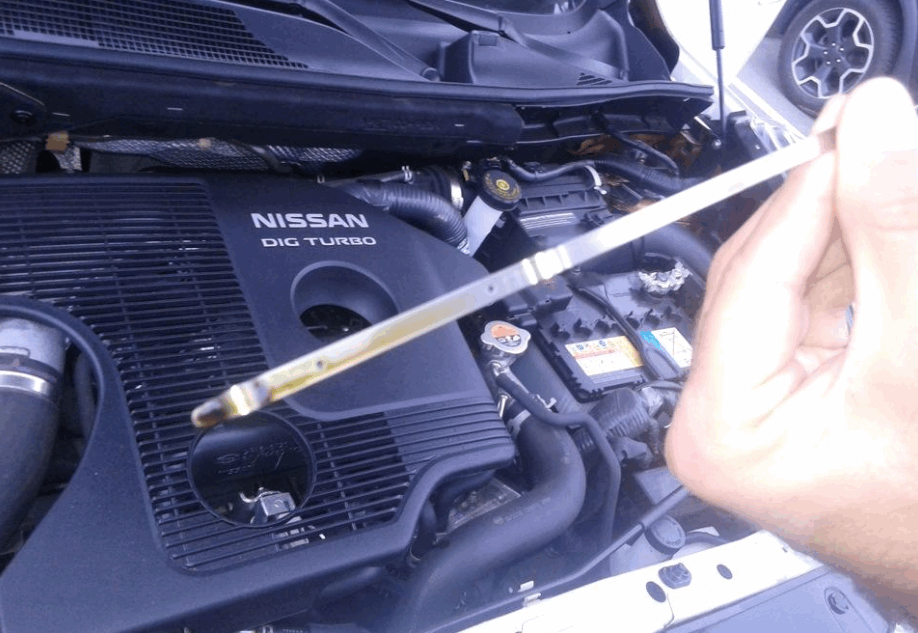
A Nissan CVT fluid level quick check gauge helps you check the fluid level in compatible Nissan continuously variable transmissions. Some Nissan CVTs have a service tube instead of a standard dipstick. The quick check gauge lets you measure the fluid level through this tube. However, the gauge reading alone cannot confirm the correct fluid level.
Several conditions affect the measurement. CVT fluid expands as its temperature rises, which changes the level on the gauge. The position of the vehicle also affects accuracy. In addition, Nissan uses different CVT designs across its vehicle lineup. Each transmission may require a specific checking procedure and fluid specification.
This guide explains how to use a Nissan CVT fluid level quick check gauge correctly. You will learn how to prepare the vehicle and take an accurate measurement. You will also learn how to read the gauge and recognize an incorrect fluid level. Finally, the guide covers common measurement mistakes and alternative checking methods. Always confirm the procedure for your Nissan model, model year, and CVT before you adjust the fluid level.
What Is a Nissan CVT Fluid Level Quick Check Gauge?
A Nissan CVT fluid level quick check gauge measures the CVT fluid level through the service tube on compatible Nissan transmissions. Technicians and vehicle owners can use this tool when the CVT lacks a standard dipstick. The gauge provides a physical reference for checking how high the fluid sits inside the transmission.
A quick check gauge does not work like a conventional dipstick. A standard dipstick usually stays inside the transmission and includes level markings for routine checks. A quick check gauge serves as a separate service tool. You insert it into the applicable tube only when you need to measure the fluid level.
The gauge also cannot determine the correct fluid level by itself. You must interpret its reading with the correct service information. CVT fluid temperature matters because the fluid expands as it becomes warmer. Nissan also uses different CVT designs, so one measurement may not apply to every transmission.
For example, two Nissan vehicles may use different CVT models and require different checking procedures. A gauge that physically fits both service tubes does not make their specifications identical. You should identify the vehicle, model year, and CVT before interpreting the reading.
The quick check gauge therefore provides one part of the inspection process. Correct vehicle information, fluid temperature, and measurement conditions provide the context needed to use the reading accurately.
Which Nissan Vehicles Can Use a CVT Fluid Level Quick Check Gauge?
Only Nissan vehicles with a compatible CVT and an applicable fluid level checking procedure should use a quick check gauge. Nissan has used different CVT designs across its models and model years. These transmissions do not share one universal fluid level procedure.
Start by identifying the exact Nissan model and model year. Next, confirm which CVT the vehicle uses. This information helps you determine whether the transmission supports a quick check gauge procedure. It also helps you find the correct measurement instructions.
Fluid specification provides another important distinction. Nissan CVTs may require different fluids, including Nissan NS 2 or NS 3. The required fluid depends on the transmission application. However, the fluid specification alone does not determine the correct gauge procedure. Two transmissions that use the same fluid can still have different service requirements.
Do not assume that a tool labeled for Nissan CVTs works the same way on every Nissan vehicle. Physical fit only confirms that the gauge can enter the tube. It does not confirm the correct insertion depth, fluid level range, or checking temperature.
Always match the gauge procedure to the specific vehicle and CVT. The applicable Nissan service information provides the correct reference. This step prevents an incorrect reading from leading to unnecessary fluid addition or removal.
What Should You Do Before Checking Nissan CVT Fluid Level?
Prepare the vehicle, confirm the correct procedure, and check CVT fluid temperature before measuring the fluid level. These steps create consistent conditions for an accurate gauge reading.
First, park the Nissan on a level surface. An uneven vehicle can change where the fluid sits inside the transmission. This change can affect the level shown on the gauge.
Next, identify the exact Nissan model, model year, and CVT. Nissan uses different CVT designs and service procedures. You should also confirm the required CVT fluid specification. Depending on the application, the transmission may require Nissan NS 2, NS 3, or another specified fluid.
Check the CVT fluid temperature before taking the final measurement. CVT fluid expands as it gets warmer. As a result, its measured height changes with temperature. A cold reading and a warm reading can show different levels in the same transmission.
You should also follow the required engine and selector conditions for the specific CVT. Some procedures require particular operating conditions before you take the measurement. Use the service information for the exact vehicle rather than applying one procedure to every Nissan CVT.
Complete these checks before inserting the gauge for the final reading. Correct preparation reduces measurement errors. It also helps prevent unnecessary fluid addition or removal.
How Do You Use a Nissan CVT Fluid Level Quick Check Gauge?
Use a Nissan CVT fluid level quick check gauge by inserting it into the applicable service tube and measuring the fluid height. You must then compare that measurement with the specification for the specific CVT and fluid temperature.
Start by confirming that the quick check procedure applies to the vehicle. Verify the Nissan model, model year, CVT, and required fluid. Then park the vehicle on a level surface. Bring the CVT fluid into the temperature range required by the applicable service procedure.
Follow the specified engine and selector conditions before taking the measurement. These conditions help establish a consistent fluid level inside the transmission.
Next, access the CVT fluid service tube and insert the clean gauge correctly. Follow the specified insertion method and depth for that transmission. Do not assume that every Nissan CVT uses the same insertion depth.
Remove the gauge carefully after taking the measurement. Locate the point where the CVT fluid reaches the gauge. This mark represents the measured fluid height under the current conditions.
Compare that measurement with the specification for the transmission and fluid temperature. Do not rely on a generic full mark or a specification from another Nissan CVT.
Repeat the check when the first reading appears inconsistent. Keep the vehicle and fluid temperature under the same conditions during the second measurement. If both readings agree, compare the result with the correct specification before adjusting the fluid.
This process follows a clear sequence: identify the CVT, establish the required conditions, measure the fluid, and interpret the result. Do not add or remove CVT fluid until you confirm that the measurement falls outside the applicable specification.
How Do You Read a Nissan CVT Fluid Level Quick Check Gauge?
Read a Nissan CVT fluid level quick check gauge by comparing the fluid mark with the specified range for the current fluid temperature. The reading can indicate a correct, low, or high fluid level. However, you need the correct specification to interpret the mark accurately.
Remove the gauge carefully after inserting it according to the applicable procedure. Look for the highest point where CVT fluid clearly wets the gauge. This point represents the measured fluid height. Avoid tilting or wiping the gauge before you identify the reading.
Next, compare the fluid mark with the correct reference for the specific Nissan CVT. A reading within the specified range indicates the correct fluid level. A reading below that range indicates a low measurement. A reading above the range indicates an excessive measurement.
Do not adjust the fluid after one unusual reading. Check the fluid temperature and vehicle position first. Then repeat the measurement under the same conditions. Two consistent readings provide a stronger basis for determining the fluid level.
The numbers or marks on a quick check gauge do not provide a universal full level. Nissan CVT designs can use different measurement references. Fluid temperature also changes the measured height. Therefore, always interpret the gauge with the service information for the exact vehicle and transmission.
Why Does CVT Fluid Temperature Affect the Gauge Reading?
CVT fluid temperature affects the gauge reading because the fluid changes volume as its temperature changes. Warmer fluid expands and occupies more space. Cooler fluid contracts and occupies less space. This physical change alters the fluid height that the gauge measures.
For example, a transmission can produce a lower reading when the CVT fluid is cold. The same amount of fluid can show a higher reading after its temperature rises. Comparing both readings with one fixed reference can lead to the wrong conclusion.
This relationship follows a simple sequence. Fluid temperature changes the fluid volume. The change in volume affects fluid height. The change in fluid height then affects the gauge reading.
For this reason, check the fluid within the temperature conditions specified for the particular Nissan CVT. Do not assume that normal engine temperature automatically means the CVT fluid has reached the correct checking range. Engine coolant and transmission fluid do not always reach the same temperature at the same time.
Use the method specified for the vehicle to determine CVT fluid temperature. Some service procedures use diagnostic data to monitor transmission fluid temperature. The exact method depends on the vehicle and CVT.
Temperature control makes repeated measurements more useful. Keep the fluid within the required range when you compare readings. This approach reduces measurement variation and helps you identify the actual CVT fluid level.
What Happens if Nissan CVT Fluid Is Too Low or Overfilled?
Low or excessive Nissan CVT fluid can affect lubrication, hydraulic operation, cooling, and overall transmission performance. The correct fluid level helps the CVT operate under its designed hydraulic and thermal conditions.
A low fluid level reduces the amount of fluid available to the transmission. The CVT depends on fluid for lubrication, hydraulic pressure, and heat management. An insufficient level can interfere with these functions. Fluid loss can result from a leak or an incorrect service procedure.
Too much CVT fluid also creates problems. Excess fluid leaves less space inside the transmission for normal fluid movement and expansion. Under certain operating conditions, excessive fluid can contribute to aeration. Aerated fluid contains air bubbles, which can interfere with stable hydraulic operation.
Transmission symptoms alone cannot confirm a low or excessive fluid level. Several CVT problems can produce similar behavior. For this reason, check the fluid level before adding or removing fluid.
Verify any abnormal gauge reading before making an adjustment. Confirm the fluid temperature, vehicle position, and measurement procedure. Then repeat the check under the same conditions. This process helps separate an actual fluid level problem from a measurement error.
Maintaining the specified level gives the CVT the fluid quantity its operating system requires. Accurate measurement therefore matters more than simply adding fluid when the transmission behaves abnormally.
What Are the Most Common Nissan CVT Fluid Level Checking Mistakes?
Six common mistakes can produce an inaccurate Nissan CVT fluid level reading. Most involve incorrect checking conditions, tool selection, or interpretation rather than a problem with the gauge itself.
Checking the fluid at the wrong temperature is a major source of error. CVT fluid changes volume with temperature. A reading outside the required temperature range may therefore indicate the wrong fluid height.
Using the wrong gauge or procedure creates another problem. Nissan uses several CVT designs. A tool that fits the service tube does not automatically provide the correct measurement for every transmission.
Applying one specification to every Nissan CVT can also produce an incorrect result. Always match the measurement reference to the exact vehicle and transmission.
Checking the vehicle on an uneven surface changes the position of fluid inside the CVT. Park the vehicle on a level surface before taking the measurement.
Misreading the wet mark on the gauge can lead to unnecessary adjustments. Remove the gauge carefully and identify the fluid mark before wiping it clean. Repeat an unclear measurement instead of estimating the result.
Finally, do not add or remove fluid after one abnormal reading. Confirm the checking conditions and take another measurement first. A repeated reading under consistent conditions provides better evidence of the actual fluid level.
Can You Check Nissan CVT Fluid Level Without a Quick Check Gauge?
You can check the Nissan CVT fluid level without a quick check gauge on some transmissions, but the correct method depends on the CVT design. Nissan does not use one fluid level checking method across every model and model year. You must identify the specific transmission before choosing an alternative procedure.
Some Nissan CVTs use a service tube that supports a gauge based measurement. Other designs use a level or overflow procedure. With an overflow system, the service procedure establishes the correct fluid level through a designated opening. The checking conditions still matter because fluid temperature affects fluid volume and height.
Do not replace the specified tool with an unrelated transmission dipstick. A generic dipstick may enter the service tube, but its markings may not match the Nissan CVT. Its length can also create a different measurement reference. As a result, a visible fluid mark does not automatically indicate the correct level.
The same principle applies to homemade measurement tools. A custom tool only provides useful information when its dimensions match a verified procedure. Without that reference, the measurement has little diagnostic value.
Identify the CVT first when a quick check gauge is unavailable. Then find the fluid level procedure for that transmission. Follow its temperature, vehicle position, and operating requirements. Use the measurement method specified for the particular Nissan CVT instead of creating a universal fluid level reference. This approach provides a more reliable basis for deciding whether the transmission needs a fluid level adjustment.
How Can You Get an Accurate Nissan CVT Fluid Level Reading?
An accurate Nissan CVT fluid level reading requires the correct checking method, fluid temperature, vehicle position, and transmission specification. The quick check gauge provides the measurement, but the correct service conditions give that measurement meaning.
Start by identifying the Nissan model, model year, and CVT. Then confirm that the transmission supports the quick check gauge procedure. Place the vehicle on a level surface and bring the CVT fluid into the required temperature range. Insert the gauge according to the applicable procedure and read the fluid mark carefully. Compare that reading with the specification for the specific transmission.
Repeat the measurement before adjusting an unusually high or low fluid level. Consistent readings under the same conditions help reduce errors caused by temperature, vehicle position, or incorrect gauge use.
Most importantly, avoid treating one gauge position as a universal Nissan CVT specification. Nissan uses different CVT configurations across its vehicle lineup. Match the Nissan CVT fluid level quick check gauge procedure to the specific transmission before adding or removing fluid. This approach provides a more reliable fluid level check and reduces unnecessary adjustments.