
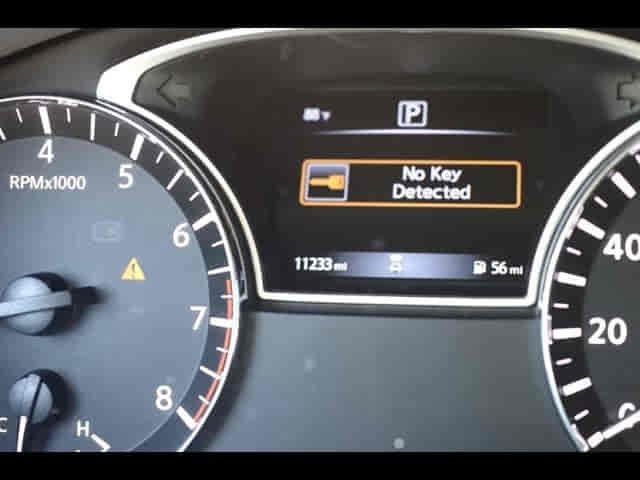
A Nissan vehicle that cannot detect the key fob can quickly become a frustrating problem because the Intelligent Key system controls vehicle access, push-button starting, and security functions. When the system fails to recognize the key, drivers may be unable to unlock the doors, start the engine, or use remote convenience features.
Many owners encounter warning messages such as “No Key Detected,” “Key System Error,” or “Incorrect Key ID.” In some situations, the vehicle starts intermittently, while in others it refuses to recognize the key fob entirely. These symptoms often appear unexpectedly, leading drivers to suspect a serious electrical fault.
The Nissan Intelligent Key system depends on multiple components working together. The key fob battery, radio frequency transmitter, key detection antennas, Body Control Module, immobilizer system, and vehicle battery must all function properly for successful key recognition.
Fortunately, most key detection problems are caused by battery issues, signal interference, programming errors, or communication faults rather than complete system failure. Understanding the root cause is essential for restoring normal operation.
This guide explains the 10 most common reasons a Nissan is not detecting the key fob and the solutions that resolve each problem.
What Are the Signs That Nissan Is Not Detecting the Key Fob?
The most common signs include warning messages on the instrument cluster, failure of push-button start, inability to unlock the doors, and intermittent key recognition problems.
Some drivers see a “No Key Detected” message even while holding the key fob inside the vehicle. Others find that the vehicle occasionally recognizes the key but fails during subsequent attempts.
Push-button start problems are another common symptom. Pressing the brake pedal and Start/Stop button may produce no response because the vehicle cannot verify the presence of a valid Intelligent Key.
Remote functions may also stop working. Door lock, unlock, trunk release, and panic alarm features can become unreliable or completely inoperative.
The exact symptom provides valuable diagnostic clues because different failures often point toward different components within the Intelligent Key system.
Why Is the Key Fob Battery Dead?
A dead key fob battery is the most common reason a Nissan fails to detect the Intelligent Key. The battery powers the transmitter that communicates with the vehicle’s keyless entry and immobilizer systems.
As the battery weakens, the key fob’s signal strength decreases. Initially, drivers may notice reduced operating range or occasional recognition failures. Eventually, the signal becomes too weak for the vehicle to detect consistently.
Battery-related issues often develop gradually. Drivers may need to hold the key closer to the Start/Stop button before complete failure occurs. This warning sign frequently appears days or weeks before the key stops functioning altogether.
Environmental conditions can accelerate battery depletion. Extreme temperatures, frequent use, and long periods of storage can shorten battery life and contribute to unexpected failures.
Replacing the key fob battery is often the simplest and most effective solution when Nissan cannot detect the Intelligent Key.
Why Is the Vehicle Battery Weak?
Many Nissan owners focus exclusively on the key fob while overlooking the vehicle battery. However, the Intelligent Key system depends heavily on stable vehicle voltage to operate correctly.
The Body Control Module, immobilizer system, key detection antennas, and electronic control units all require sufficient power. If the vehicle battery becomes weak, communication between these components may be interrupted.
Low voltage can create a wide range of symptoms including intermittent key recognition, dashboard warning messages, push-button start failures, and communication errors. These issues often appear during cold weather when battery performance naturally declines.
A weak battery may still provide enough power to illuminate dashboard lights while lacking the voltage necessary for proper Intelligent Key operation.
Testing the vehicle battery is an important troubleshooting step because low voltage can mimic more serious electronic faults.
Why Is Radio Frequency Interference Blocking the Signal?
The Nissan Intelligent Key communicates using radio frequency signals. If strong interference is present, the vehicle may struggle to detect or authenticate the key fob.
Common sources of interference include cell phone transmitters, radio towers, security systems, wireless devices, and electronic equipment. In certain environments, these signals can overwhelm or disrupt communication between the key and vehicle.
Interference-related problems often appear only in specific locations. A key fob that works normally at home may fail repeatedly in a parking garage, shopping center, airport, or industrial area.
Aftermarket electronic accessories can create similar issues. Remote starters, security systems, and wireless communication devices occasionally interfere with factory keyless entry systems.
Because RF interference is environmental rather than mechanical, moving the vehicle or key fob to another location may immediately restore functionality.
Why Is the Key Fob Damaged?
Physical damage can prevent the key fob from transmitting a valid signal. Although Intelligent Keys are designed for daily use, internal electronic components remain vulnerable to impact, moisture, and wear.
Dropping the key repeatedly can damage solder joints, circuit boards, battery contacts, and transmitter components. Internal damage may not be visible externally, making diagnosis more difficult.
Water exposure is another common cause. Moisture can corrode electronic circuits and interfere with signal transmission even after the key appears dry.
Button wear can create additional issues. Damaged switches may fail to activate communication functions properly, leading drivers to believe the vehicle is at fault.
A damaged key fob often produces symptoms such as intermittent operation, reduced signal range, or complete communication failure.
Why Has the Key Fob Lost Programming?
The Nissan Intelligent Key must remain electronically paired with the vehicle. If programming data becomes corrupted or synchronization is lost, the vehicle may no longer recognize the key.
Programming issues occasionally occur after battery replacement, module replacement, software updates, or electrical system faults. In these situations, the key may continue transmitting a signal while failing authentication.
The immobilizer system relies on encrypted identification codes stored within both the vehicle and the key fob. If these codes no longer match, the vehicle blocks starting attempts even when the key is physically present.
Drivers often encounter warning messages such as “Incorrect Key ID” when programming-related issues occur.
Reprogramming the key fob often restores communication by synchronizing identification data between the key and vehicle.
Why Is the Start/Stop Button Not Reading the Key?
The push-button start system contains dedicated detection hardware that verifies the presence of the Intelligent Key before engine startup. If this system fails, the vehicle may report that no key is detected despite the key being inside the cabin.
The Start/Stop button works closely with interior antennas and key detection modules. These components determine whether an authorized key is located within the vehicle.
When communication between these components becomes interrupted, the system may refuse to initiate the starting sequence. Drivers frequently experience situations where door unlocking functions work normally while push-button starting fails.
Wear within the button assembly, communication faults, and electrical issues can all affect key detection performance.
Because startup authorization relies on several interconnected systems, diagnosing push-button start problems often requires evaluating both the key and vehicle electronics.
Why Is the Key Detection Antenna Failing?
The Nissan Intelligent Key system relies on multiple antennas located throughout the vehicle to detect the presence of an authorized key fob. If one or more of these antennas fail, the vehicle may not recognize the key even when it is physically inside the cabin.
These antennas continuously transmit and receive low-frequency signals that help determine whether the key is located near the doors, inside the cabin, or outside the vehicle. When an antenna becomes damaged or loses communication with the control system, key detection accuracy decreases significantly.
Antenna failures often create inconsistent symptoms. The vehicle may recognize the key in certain locations inside the cabin but fail to detect it elsewhere. Some drivers find that placing the key near the Start/Stop button temporarily restores functionality.
Electrical connector issues can also affect antenna performance. Corrosion, loose wiring, and communication interruptions may prevent the antenna from transmitting detection signals properly.
Because the Intelligent Key system depends on accurate location tracking, antenna-related failures frequently result in intermittent or complete key recognition loss.
Why Is the Body Control Module Experiencing Problems?
The Body Control Module serves as the central controller for many electronic systems within a Nissan vehicle, including the Intelligent Key system. If the BCM develops communication or software issues, key detection problems can occur.
The BCM processes signals received from key detection antennas and determines whether an authorized key is present. It also communicates with the immobilizer system, door locks, alarm system, and push-button start system.
Low battery voltage, software corruption, electrical faults, and module communication errors can interfere with BCM operation. When this happens, the vehicle may incorrectly report that no key is present despite receiving signals from the key fob.
Symptoms of BCM-related issues often extend beyond key detection. Drivers may also experience power lock malfunctions, lighting problems, warning messages, and communication faults involving other vehicle systems.
Because the BCM acts as a communication hub, diagnosing module-related issues often requires professional diagnostic equipment capable of reading fault codes and module status information.
Why Is the Immobilizer System Blocking Key Recognition?
The immobilizer system is a critical security feature designed to prevent unauthorized vehicle operation. If the system cannot verify the key’s identity, it may intentionally block engine startup even when the key fob is physically present.
Every Nissan Intelligent Key contains an encrypted security code. The immobilizer system compares this code with information stored in vehicle memory before authorizing engine startup.
If the security codes do not match, the system assumes an unauthorized key is being used and prevents the engine from starting. This can occur because of programming errors, module replacement, electrical faults, or communication problems within the security system.
Drivers frequently encounter warning messages such as “Incorrect Key ID” or “Key System Error” when immobilizer-related issues occur. In many cases, the doors unlock normally while the vehicle refuses to start.
Because immobilizer systems are tightly integrated with vehicle security functions, reprogramming or advanced diagnostics may be required to restore proper operation.
Why Is the Intelligent Key System Software Faulty?
Modern Nissan vehicles rely heavily on software to manage Intelligent Key communication, authentication, and vehicle access functions. If software becomes corrupted or outdated, key recognition issues can develop.
The Intelligent Key system coordinates communication between multiple modules including the BCM, immobilizer, push-button start controller, and key detection antennas. Software faults can interrupt this communication and prevent successful authentication.
Unexpected battery failures, module replacement, failed software updates, and electrical disturbances can occasionally corrupt system data. When this happens, the vehicle may incorrectly report that no key is present even though all hardware components remain functional.
Software-related issues often produce intermittent symptoms. The system may function normally for days before suddenly failing without any apparent mechanical cause.
Manufacturers occasionally release software updates to improve system stability and address communication issues. Updating affected modules may resolve key recognition problems without replacing hardware components.
What Should You Do If Nissan Still Cannot Detect the Key Fob?
If the vehicle continues failing to detect the key fob after basic troubleshooting, a systematic diagnostic process becomes necessary. Identifying whether the problem originates from the key, vehicle electronics, or communication system significantly improves repair efficiency.
The first step is testing a spare key if one is available. If the spare key works normally, the original key fob is likely defective. If both keys produce the same symptoms, attention should shift toward the vehicle.
Replacing the key fob battery should be performed before more complex diagnostics. Because battery-related failures are extremely common, this simple step often resolves the problem immediately.
The vehicle battery should also be tested. Low system voltage can disrupt Intelligent Key communication and create symptoms that resemble module failures.
If warning messages remain present after these checks, professional diagnostics may be required. Specialized scan tools can evaluate BCM communication, immobilizer status, antenna operation, and Intelligent Key system fault codes more accurately than visual inspection alone.
Which Nissan Models Commonly Experience Key Detection Problems?
Key detection problems can affect virtually any Nissan model equipped with the Intelligent Key system. Because the technology is used across multiple vehicle platforms, the underlying causes are typically related to electronic communication rather than a specific model defect.
Vehicles such as Nissan Altima, Nissan Sentra, Nissan Rogue, Nissan Pathfinder, Nissan Murano, Nissan Maxima, Nissan Kicks, Nissan Frontier, and Nissan Armada frequently appear in discussions involving Intelligent Key troubleshooting.
Older vehicles are more likely to experience issues related to key fob wear, antenna degradation, BCM aging, and electrical component deterioration. Newer vehicles generally experience fewer hardware-related failures but remain vulnerable to software conflicts and communication issues.
Environmental factors also influence reliability. Vehicles exposed to moisture, extreme temperatures, and electrical interference may encounter key recognition issues more frequently than those operating under normal conditions.
The overall condition of the Intelligent Key system usually has a greater impact on reliability than the specific Nissan model.
How Can You Prevent Future Nissan Intelligent Key Issues?
Preventing Intelligent Key problems requires maintaining both the key fob and the vehicle’s electrical system. Because the system depends on continuous communication between multiple components, preventative maintenance significantly improves long-term reliability.
Replacing the key fob battery proactively is one of the most effective preventative measures. Waiting until the battery fails completely often leads to unexpected starting and access problems.
Protecting the key fob from physical damage is equally important. Avoiding drops, moisture exposure, and excessive heat helps preserve internal electronic components and signal strength.
Maintaining a healthy vehicle battery also improves Intelligent Key reliability. Stable system voltage ensures that communication modules, antennas, and security systems function correctly.
Keeping software updated further reduces the likelihood of communication conflicts. Manufacturers occasionally release updates that improve key detection performance and system stability.
Regular maintenance of both the key and vehicle electrical system helps ensure reliable unlocking, starting, and security operation.
Read more: Nissan Kicks Apple CarPlay Not Working
Conclusion
A Nissan that is not detecting the key fob may be affected by a dead key battery, weak vehicle battery, radio frequency interference, damaged key fob, programming issues, antenna failures, BCM faults, immobilizer problems, or software-related communication errors. Although these issues can prevent vehicle access and engine startup, many can be resolved without replacing expensive components.
Successful troubleshooting begins with identifying the specific symptom. Warning messages, push-button start failures, intermittent recognition problems, and remote function issues often indicate different root causes. Understanding where communication breaks down simplifies diagnosis and repair.
Most Intelligent Key problems can be corrected through battery replacement, signal verification, software updates, key reprogramming, and electrical system diagnostics. Major hardware failures remain less common than battery, communication, and programming-related issues.
By maintaining the key fob, vehicle battery, and Intelligent Key system properly, Nissan owners can reduce the likelihood of unexpected key detection failures and ensure reliable daily operation.
Nissan truck has moisture from heavy rain. Truck running on its own after being turn off. Sensors may be affected. Truck doesn’t recognize a keyless entry fob because of moisture somewhere under the hood. Not the greatest design imo.