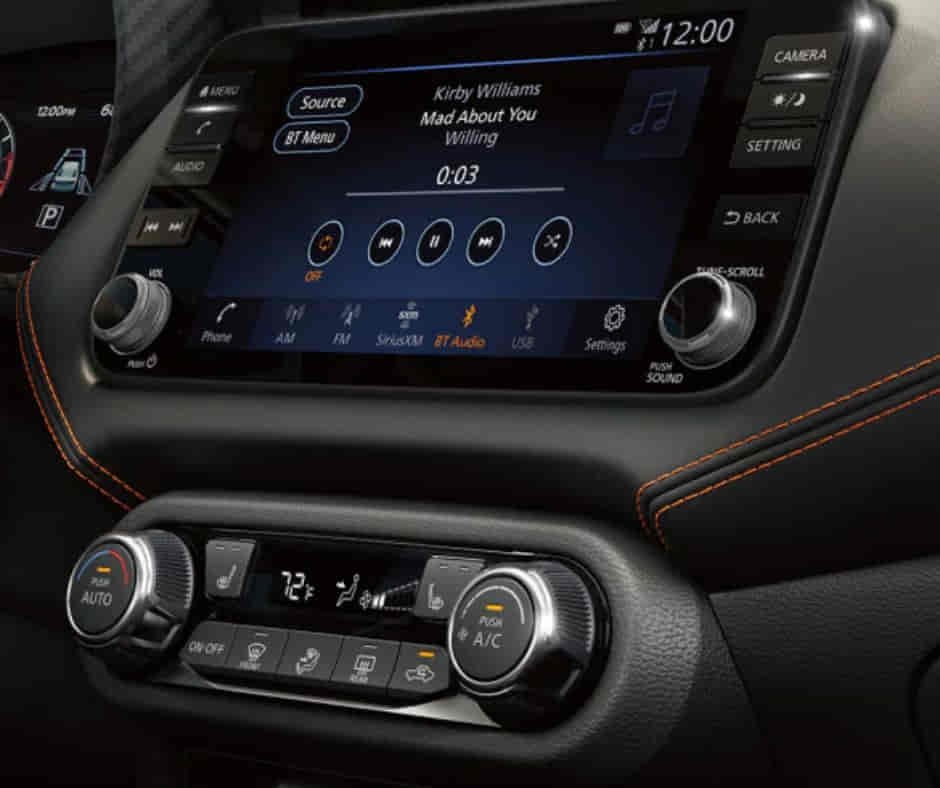
Bluetooth problems in a Nissan Kicks can prevent drivers from making hands-free calls, streaming music, accessing contacts, and using smartphone-connected features. Some drivers cannot pair their phones with the vehicle, while others experience random disconnections, audio playback failures, or devices that suddenly disappear from the Bluetooth menu.
The Nissan Kicks Bluetooth system relies on continuous communication between the NissanConnect infotainment platform and a compatible smartphone. If either device experiences software conflicts, corrupted pairing data, outdated firmware, or communication errors, Bluetooth functionality may become unstable or stop working completely.
Many Bluetooth issues appear immediately after smartphone updates, infotainment software changes, or connection interruptions. Although these problems can be frustrating, most do not require replacement parts. In many cases, restoring Bluetooth functionality only requires correcting settings, clearing stored data, updating software, or rebuilding the connection.
This guide explains the 10 most common reasons Nissan Kicks Bluetooth stops working and the solutions that restore reliable wireless communication.
What Are the Signs That Nissan Kicks Bluetooth Is Not Working?
The most common signs of Nissan Kicks Bluetooth problems include pairing failures, device detection issues, missing audio, failed contact synchronization, and unexpected connection interruptions. These symptoms indicate that communication between the infotainment system and the smartphone has been disrupted.
Some drivers cannot find their phones when scanning for Bluetooth devices. Others successfully complete the pairing process but discover that phone calls, music streaming, or voice commands do not function correctly. In some situations, the phone appears connected while important Bluetooth features remain unavailable.
Connection instability is another common symptom. The smartphone may connect normally when the vehicle starts but disconnect repeatedly during the drive. Delayed device recognition, inconsistent audio quality, and slow automatic reconnection also suggest underlying Bluetooth communication issues.
Identifying the specific symptom is important because different Bluetooth failures point toward different root causes. Pairing issues, audio problems, and disconnection errors often originate from separate areas of the communication process.
Why Is Bluetooth Turned Off on Either the Vehicle or the Phone?
Bluetooth frequently stops working because the feature has been disabled on either the Nissan Kicks infotainment system or the connected smartphone. Although this is one of the simplest causes, it remains one of the most frequently overlooked.
The NissanConnect system must actively broadcast Bluetooth availability before a smartphone can discover and connect to the vehicle. If Bluetooth is disabled within the infotainment settings, the vehicle becomes invisible to nearby devices.
The same principle applies to smartphones. If Bluetooth is turned off, disabled by battery optimization settings, or restricted by operating system permissions, the Nissan Kicks cannot establish communication even if the devices were paired previously.
Software updates sometimes reset Bluetooth preferences automatically. Drivers may assume Bluetooth remains enabled because the connection worked previously, only to discover that new security or privacy settings have disabled access in the background.
Because Bluetooth communication requires active participation from both devices, verifying settings on the vehicle and smartphone should always be the first diagnostic step.
Why Is Your Phone Already Connected to Another Device?
A smartphone may fail to connect to Nissan Kicks Bluetooth because it is actively communicating with another Bluetooth device. Modern phones frequently maintain connections with smartwatches, wireless earbuds, speakers, tablets, laptops, and other vehicles.
Bluetooth technology prioritizes existing communication sessions. If the smartphone is already directing audio toward another device, it may refuse to establish a new media connection with the vehicle. This creates situations where the Nissan Kicks detects the phone but cannot complete audio or communication setup.
Previously paired devices can create additional conflicts. Smartphones often reconnect automatically to familiar devices when they enter range. As a result, the phone may prioritize a wireless headset or speaker before attempting to communicate with the vehicle.
These conflicts are particularly common among users who frequently switch between multiple Bluetooth accessories throughout the day. The increasing number of connected devices creates additional opportunities for communication overlap and profile conflicts.
Removing unused Bluetooth pairings and temporarily disconnecting nearby accessories often resolves the issue immediately by allowing the Nissan Kicks to become the primary Bluetooth connection.
Why Is Nissan Kicks Bluetooth Memory Full?
Nissan Kicks Bluetooth performance can deteriorate when the infotainment system reaches its storage limit for paired devices. Every smartphone connected to NissanConnect creates stored records containing authentication credentials, user preferences, contact synchronization data, and communication settings.
As drivers upgrade phones and share vehicles with family members, the number of stored devices increases. Even when old devices are no longer used, their information remains within the Bluetooth database until manually removed.
An overloaded database increases processing demands during device discovery and connection attempts. The system must compare incoming requests against existing records, slowing connection times and increasing the likelihood of communication errors.
Full Bluetooth memory often produces symptoms such as failed pairing attempts, delayed connections, intermittent communication, and inconsistent device recognition. These issues may appear suddenly despite no obvious hardware failure.
Clearing unused devices reduces database complexity and helps restore normal Bluetooth performance by allowing the system to focus on actively used connections.
Why Has the Bluetooth Connection Become Corrupted?
A corrupted Bluetooth connection occurs when stored communication information between the Nissan Kicks and the smartphone becomes damaged, outdated, or inconsistent. The devices may continue recognizing each other while failing to communicate properly.
Bluetooth pairing stores multiple types of information, including authentication keys, permissions, communication profiles, and synchronization settings. If any portion of this information becomes corrupted, Bluetooth functionality can become unreliable.
Operating system updates are one of the most common causes of pairing corruption. When a smartphone receives a major update, security protocols and communication requirements may change. NissanConnect may continue relying on outdated pairing information that no longer matches the smartphone’s current configuration.
Unexpected power interruptions, infotainment freezes, failed software updates, and communication errors can also damage Bluetooth records. Once corruption occurs, connection reliability often deteriorates rapidly.
Removing the existing Bluetooth relationship and creating a completely new pairing usually resolves corruption-related issues by replacing damaged communication data with fresh authentication credentials.
Why Is NissanConnect Software Outdated?
Outdated NissanConnect software can prevent Bluetooth devices from connecting correctly because smartphone technology evolves much faster than vehicle infotainment systems. New versions of iOS and Android regularly introduce updated Bluetooth protocols, security standards, and communication requirements.
If NissanConnect software does not support these changes, compatibility issues become increasingly likely. Pairing failures, missing audio, connection instability, and device recognition problems often emerge when smartphones and infotainment systems operate on different technological standards.
Software bugs may contribute to the problem as well. Manufacturers release updates specifically to improve Bluetooth compatibility, resolve communication issues, and optimize overall infotainment performance. Vehicles operating on outdated software continue using older code that may already contain known Bluetooth-related issues.
Compatibility challenges become particularly noticeable after major smartphone updates. Drivers frequently report Bluetooth failures immediately after updating their phones because the infotainment system has not yet adapted to the new communication requirements.
Keeping NissanConnect software current helps maintain compatibility, improve connection stability, and reduce the likelihood of recurring Bluetooth problems.
Why Did an iPhone or Android Update Break the Bluetooth Connection?
An iPhone or Android update can disrupt a Nissan Kicks Bluetooth connection because operating system upgrades often modify Bluetooth security protocols, device permissions, and communication standards. While these updates are designed to improve smartphone performance, they can unintentionally create compatibility conflicts with the NissanConnect infotainment system.
Bluetooth connections rely on stored authentication credentials exchanged between the smartphone and the vehicle. When a new operating system introduces updated security requirements, previously saved Bluetooth profiles may no longer match. The Nissan Kicks may continue recognizing the phone, but communication fails before the connection can be fully established.
Permission changes frequently contribute to this issue. Many smartphone updates reset access settings related to Bluetooth, contacts, microphone usage, and location services. If one of these permissions becomes restricted, features such as hands-free calling, contact synchronization, or media streaming may stop functioning even though the device appears connected.
Software updates can also clear network preferences and Bluetooth cache files. When stored communication records become inconsistent, the connection between the vehicle and smartphone becomes unstable. Removing the existing Bluetooth connection and pairing the devices again typically restores compatibility by generating updated authentication credentials.
Why Is Bluetooth Connected but No Audio Is Playing?
A Nissan Kicks Bluetooth connection may appear active while audio playback remains unavailable because Bluetooth pairing and audio streaming operate through separate communication profiles. A successful connection does not automatically guarantee that media transmission is functioning correctly.
Bluetooth supports different profiles for different tasks. One profile manages hands-free calling, another handles music streaming, while additional profiles support contacts, messages, and voice commands. If the audio profile fails, the phone may display a successful connection while no sound reaches the vehicle speakers.
Incorrect source selection is one of the most common causes of missing audio. Nissan Kicks infotainment systems support several media inputs including radio, USB devices, Apple CarPlay, Android Auto, and Bluetooth Audio. If the system is currently using another source, Bluetooth audio remains unavailable despite an active connection.
Smartphone settings can create similar problems. Streaming applications may direct playback toward another connected device instead of the vehicle. Wireless earbuds, portable speakers, and smartwatches can unexpectedly become the preferred audio destination.
Corrupted media profiles, outdated software, and application-level conflicts may also interrupt audio transmission. Because the Bluetooth connection itself remains active, troubleshooting should focus specifically on media settings rather than pairing status alone.
Why Does Nissan Kicks Bluetooth Keep Disconnecting?
Repeated Bluetooth disconnections usually indicate unstable communication between the smartphone and the NissanConnect system. A properly functioning connection should remain active throughout the entire drive without interruption.
Signal interference is one of the most common causes. Smartphones constantly communicate with multiple wireless devices, including earbuds, smartwatches, fitness trackers, and mobile networks. These competing connections can weaken Bluetooth stability and increase the likelihood of unexpected disconnections.
Software conflicts frequently contribute to connection instability. Outdated NissanConnect software, smartphone firmware issues, and corrupted pairing records may interrupt communication sessions. Instead of maintaining a continuous connection, the system repeatedly disconnects and reconnects as it attempts to recover from transmission errors.
Battery optimization features on smartphones can also interfere with Bluetooth performance. Many devices reduce background wireless activity to conserve power. When Bluetooth services are restricted, the connection to the Nissan Kicks may drop unexpectedly.
Environmental factors sometimes play a role as well. Excessive system load, infotainment software instability, and communication interference from nearby wireless equipment can reduce connection reliability. Addressing these factors typically restores long-term Bluetooth stability.
Why Does NissanConnect Need a System Reset?
A NissanConnect reset is often necessary because temporary software conflicts can accumulate over time and interfere with Bluetooth communication. Like any computer-based platform, the infotainment system continuously processes data, manages active connections, and stores temporary information.
As cached files and communication records accumulate, system performance may gradually decline. Bluetooth discovery, pairing, and audio transmission can become unreliable when outdated information conflicts with current communication requirements.
Temporary software glitches commonly affect device recognition and connection stability. The infotainment system may stop detecting previously paired devices, reject new connection attempts, or freeze during Bluetooth operations. In many situations, these issues originate from software instability rather than hardware failure.
A system reset clears temporary memory and restarts critical communication services. This process refreshes Bluetooth functions, reloads operating components, and removes unstable background processes that may be affecting connectivity.
Factory resets provide a more comprehensive solution by deleting stored devices, user preferences, and Bluetooth records. This approach is especially useful when corrupted connection data continues causing problems despite repeated troubleshooting efforts.
Why Could the Bluetooth Module Be Failing?
A failing Bluetooth module is one of the less common but more serious causes of Nissan Kicks Bluetooth problems. Unlike software-related issues, hardware failures generally cannot be corrected through updates, resets, or pairing procedures.
The Bluetooth module manages wireless communication between the vehicle and external devices. It handles authentication requests, pairing procedures, active connections, and data transmission. When this component begins to fail, Bluetooth functionality becomes increasingly unreliable.
Early warning signs often include failed pairing attempts, inconsistent device detection, random communication interruptions, and disappearing Bluetooth options within the infotainment system. As the condition worsens, the vehicle may stop recognizing Bluetooth devices entirely.
Heat exposure, vibration, electrical fluctuations, and long-term component wear contribute to module degradation. Although these modules are designed for durability, prolonged operation under automotive conditions eventually affects reliability.
A Bluetooth module should only be considered suspect after software compatibility, device settings, pairing records, and system resets have been thoroughly evaluated. Professional diagnostic equipment is often required to confirm hardware-related faults.
What Should You Do If Nissan Kicks Bluetooth Still Does Not Work?
If Nissan Kicks Bluetooth continues to malfunction after basic troubleshooting, a more structured diagnostic approach becomes necessary. Identifying whether the problem originates from the smartphone, infotainment system, or communication network is essential for an effective repair.
The first step is ensuring that both the smartphone and NissanConnect system are running current software versions. Compatibility issues frequently occur when one device has been updated while the other remains unchanged.
Creating a completely new Bluetooth connection is often beneficial. Removing the smartphone from NissanConnect and deleting the vehicle from the phone’s Bluetooth settings eliminates corrupted authentication data and allows both devices to establish fresh communication credentials.
Testing a different smartphone can provide valuable diagnostic information. If another device connects successfully, the problem likely originates from the original phone. If multiple devices fail, attention should shift toward the vehicle’s infotainment platform or Bluetooth hardware.
Professional diagnostics become appropriate when software updates, resets, and pairing procedures fail to restore functionality. Advanced diagnostic tools can identify communication faults, software issues, and hardware failures that are not visible through standard system menus.
Which Nissan Kicks Model Years Report Bluetooth Problems Most Often?
Bluetooth issues can occur in any Nissan Kicks model year, but reports are generally more common among vehicles using earlier versions of NissanConnect software. As smartphone technology advances, older infotainment systems face increasing compatibility challenges.
Earlier Nissan Kicks models commonly experience pairing failures, delayed device recognition, audio streaming issues, and contact synchronization problems. These concerns often result from software limitations rather than hardware defects.
Vehicles produced during periods of rapid infotainment development may encounter additional compatibility challenges because smartphone operating systems evolve more quickly than automotive software platforms. As a result, software updates become increasingly important for maintaining reliable communication.
Newer Nissan Kicks models typically benefit from improved processing power, updated communication protocols, and enhanced Bluetooth compatibility. However, software bugs, smartphone updates, and corrupted pairing records can still create connectivity problems.
The condition of the infotainment system and software version often influence Bluetooth performance more significantly than the model year itself.
How Can You Prevent Future Nissan Kicks Bluetooth Problems?
Preventing Bluetooth issues requires maintaining compatibility between the smartphone and NissanConnect system. Because Bluetooth communication depends on both devices operating correctly, proactive maintenance significantly improves reliability.
Keeping software updated is one of the most effective preventative measures. NissanConnect updates frequently include compatibility improvements, bug fixes, and Bluetooth performance enhancements. Smartphone updates provide similar benefits by addressing communication issues and optimizing wireless connectivity.
Managing Bluetooth memory is equally important. Removing unused devices prevents the infotainment system from becoming overloaded with outdated connection records. A streamlined Bluetooth database improves connection speed and reduces communication conflicts.
Re-pairing devices after major software updates helps maintain compatibility by refreshing authentication credentials and communication settings. This simple step often prevents future connectivity problems from developing.
Monitoring smartphone battery optimization settings can further improve reliability. Restrictive power-saving features may interrupt Bluetooth services and contribute to unexpected disconnections.
Consistent maintenance helps ensure reliable hands-free calling, audio streaming, and smartphone integration throughout the life of the vehicle.
Read more: Nissan Almera Cranking but Not Starting
Conclusion
Nissan Kicks Bluetooth problems are typically caused by pairing conflicts, outdated software, corrupted connection data, smartphone updates, overloaded Bluetooth memory, or communication errors within the infotainment system. Although these issues can interrupt hands-free calling and media streaming, most do not require hardware replacement.
Successful troubleshooting begins with identifying the specific symptom. Pairing failures, missing audio, connection drops, and device recognition issues often point toward different root causes. Understanding where communication breaks down allows repairs to be completed more efficiently.
Most Bluetooth problems can be resolved through software updates, system resets, memory cleanup, and rebuilding Bluetooth connections. Only a small percentage of cases involve hardware-related failures such as a defective Bluetooth module.
By maintaining software compatibility, managing stored devices, and addressing communication issues proactively, Nissan Kicks owners can enjoy reliable Bluetooth performance and avoid recurring connectivity problems.