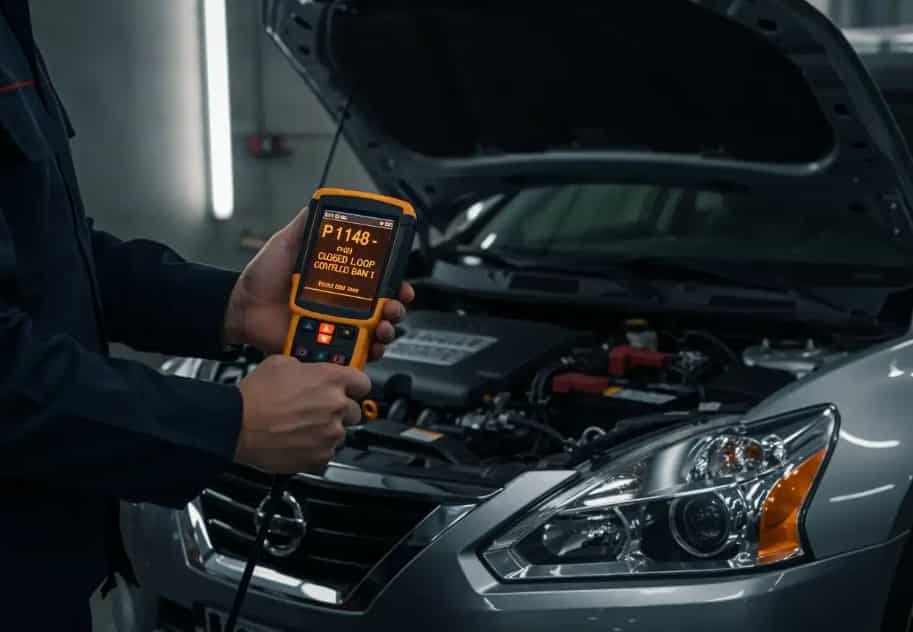
The Nissan P1148 code is an OBD II diagnostic trouble code that indicates a problem with the closed loop control function of the air fuel ratio system. The code appears when the Engine Control Module (ECM) cannot properly adjust the fuel mixture based on feedback from the Air Fuel Ratio (A/F) sensor.
The closed loop control system is responsible for maintaining the correct balance between air and fuel during engine operation. The ECM continuously monitors sensor signals and adjusts fuel injection to achieve efficient combustion. When the system cannot reach the expected operating condition, it stores the P1148 code and activates the Check Engine Light.
A Nissan P1148 code does not always mean the A/F sensor has failed. The problem can also come from damaged wiring, incorrect sensor readings, exhaust leaks, vacuum leaks, fuel delivery issues, or ECM control problems. Replacing the sensor without proper testing can result in unnecessary repair costs.
This guide explains the Nissan P1148 code in detail, including its meaning, common causes, symptoms, diagnostic process, repair methods, and prevention steps. Understanding how this fault develops helps vehicle owners and technicians identify the correct solution instead of replacing parts based only on the error code.
What Causes the Nissan P1148 Code?
The Nissan P1148 code is caused by problems that prevent the engine control system from maintaining the correct air fuel ratio. The ECM relies on accurate feedback from the Air Fuel Ratio sensor and other engine components. When these signals become incorrect, the ECM cannot control fuel adjustments properly.
There are 6 main causes of the Nissan P1148 code. A faulty Air Fuel Ratio sensor is one of the most common causes. This sensor measures oxygen levels in the exhaust and sends data to the ECM. If the sensor becomes slow or damaged, it provides incorrect readings. The ECM then makes incorrect fuel adjustments and triggers the fault code.
Wiring problems can also cause Nissan P1148. The A/F sensor needs a stable electrical connection to communicate with the ECM. Damaged wires, loose connectors, or corrosion can interrupt the signal. These electrical issues can create symptoms similar to a failed sensor.
An exhaust leak before the sensor can trigger the code as well. Outside air enters the exhaust stream through the leak. The sensor detects extra oxygen and sends inaccurate information to the ECM. The engine control system then adjusts the fuel mixture incorrectly.
Vacuum leaks are another possible cause. A vacuum leak allows unmeasured air to enter the engine. This changes the air fuel ratio and affects closed loop control. Fuel delivery problems can create similar conditions by changing the amount of fuel available for combustion.
In some cases, ECM problems can cause Nissan P1148. However, ECM failure is less common than sensor, wiring, or air fuel mixture problems. Proper diagnosis is necessary because the P1148 code identifies a control issue, not a specific failed component.
Testing each related system helps technicians find the actual cause. This prevents unnecessary part replacement and creates a more effective repair.
What Symptoms Does Nissan P1148 Code Cause?
The Nissan P1148 code causes symptoms related to incorrect air fuel mixture control and reduced engine efficiency. When the ECM cannot maintain proper closed loop operation, the engine may not receive the correct fuel adjustment. This affects combustion quality, fuel economy, and overall vehicle performance.
The most common symptom is the Check Engine Light. The ECM turns on the warning light when it detects that the closed loop control system cannot operate within the expected range. The vehicle may continue running, but the stored code indicates that the engine management system needs inspection.
Poor fuel economy is another common symptom. The A/F sensor provides important data for fuel adjustment. When the sensor sends incorrect information, the ECM may add too much fuel or reduce fuel incorrectly. This creates an inefficient combustion process and increases fuel consumption.
Drivers may also notice rough idle or unstable engine operation. Incorrect air fuel ratio control affects how smoothly the engine burns fuel. The problem is more noticeable during idle, low speed driving, or when the engine is under load.
Reduced acceleration and engine hesitation can occur when the fuel mixture is not properly controlled. The ECM may struggle to balance fuel delivery with engine demand. This can cause delayed throttle response and weaker engine performance.
In some cases, Nissan P1148 can contribute to higher emissions and possible catalytic converter damage. A continuously incorrect fuel mixture creates additional stress on the exhaust system. Fixing the underlying cause early helps protect engine components and prevents more expensive repairs.
The exact symptoms depend on the failed component. A faulty A/F sensor, wiring problem, vacuum leak, or fuel system issue can create similar signs. Proper diagnosis is required to identify the actual source of the Nissan P1148 code.
How Do You Diagnose Nissan P1148 Code?
The Nissan P1148 code is diagnosed by checking the entire air fuel control system instead of replacing parts immediately. The code only shows that the closed loop control function is not working correctly. A proper diagnosis identifies whether the problem comes from the A/F sensor, wiring, fuel system, air leaks, or another engine component.
The first step is scanning the vehicle with an OBD II scanner. The scanner confirms the stored trouble code and provides additional information from the ECM. Technicians should review freeze frame data because it shows engine conditions when the fault occurred, such as engine speed, temperature, load, and fuel adjustment values.
The next step is inspecting the Air Fuel Ratio sensor and its electrical connections. The sensor signal must match manufacturer specifications during engine operation. A slow response, incorrect voltage, or abnormal current signal can indicate a sensor problem. However, the sensor should only be replaced after confirming that the circuit and surrounding systems are working correctly.
Wiring inspection is also an important part of the diagnosis process. Technicians check the sensor connector, wiring harness, and electrical continuity between the sensor and ECM. Corrosion, damaged insulation, or loose connections can interrupt communication and create false sensor readings.
The fuel system and engine air intake system should also be tested. A vacuum leak can introduce extra air into the engine. A fuel delivery problem can create an incorrect mixture. Both conditions can trigger Nissan P1148 even when the A/F sensor works correctly.
A complete diagnosis follows a logical process. Checking the sensor, electrical system, fuel mixture, and engine conditions helps locate the real cause. This approach prevents unnecessary repairs and ensures the Nissan P1148 code is fixed correctly.
How Do You Fix Nissan P1148 Code?
The Nissan P1148 code is fixed by repairing the component that prevents the closed loop control system from working correctly. The correct repair depends on the diagnostic results. Replacing parts without identifying the cause can lead to unnecessary costs and the return of the same fault code.
The most common repair is replacing a faulty Air Fuel Ratio sensor. This sensor plays a critical role in measuring exhaust oxygen levels and helping the ECM adjust fuel delivery. If testing confirms that the sensor response is outside the manufacturer specification, replacement restores accurate fuel control.
Repairing damaged wiring is another common solution. A broken wire, corroded connector, or poor electrical connection can interrupt communication between the A/F sensor and ECM. Technicians should repair or replace damaged wiring before installing a new sensor because a new sensor cannot operate correctly with a faulty circuit.
Vacuum leaks and exhaust leaks must also be corrected when they cause Nissan P1148. A vacuum leak changes the amount of air entering the engine. An exhaust leak changes the oxygen reading received by the sensor. Repairing these leaks allows the ECM to receive accurate information again.
Fuel system problems may require additional repairs. Issues such as incorrect fuel pressure or poor injector operation can affect the air fuel mixture. Fixing these problems restores proper combustion and prevents the code from returning.
ECM repair or replacement is only necessary in rare cases. The ECM should be tested after confirming that the sensor, wiring, fuel system, and air intake system are operating correctly.
A successful Nissan P1148 repair requires identifying the actual failure point. A complete repair process improves engine performance, restores fuel efficiency, and reduces the risk of repeated Check Engine Light problems.
Can You Drive With Nissan P1148 Code?
You can usually drive a vehicle with a Nissan P1148 code for a short period, but ignoring the problem can create additional engine and emissions issues. The code does not always indicate immediate engine failure. However, it shows that the engine control system cannot maintain proper air fuel adjustment.
The driving risk depends on the cause of the fault. A minor sensor problem may only affect fuel economy and engine efficiency. A serious air fuel mixture problem can create poor combustion, reduced performance, and increased stress on engine components.
A vehicle with Nissan P1148 may continue operating with symptoms such as reduced acceleration, rough idle, or higher fuel consumption. These symptoms indicate that the ECM is compensating for incorrect sensor information. Continuous incorrect fuel adjustment can affect combustion quality and increase emissions.
Ignoring the code for a long time may damage the catalytic converter. A fuel mixture that is too rich can send excess fuel into the exhaust system. This creates additional heat and places extra stress on the catalytic converter.
Drivers should inspect the vehicle sooner if they notice severe symptoms. A flashing Check Engine Light, engine misfire, strong fuel smell, or major power loss requires immediate attention. These signs suggest a more serious engine management problem.
The safest approach is to diagnose Nissan P1148 as soon as possible. Early inspection helps prevent expensive repairs and identifies whether the issue comes from a sensor, wiring problem, air leak, or fuel system condition.
How Much Does It Cost to Repair Nissan P1148 Code?
The cost to repair a Nissan P1148 code depends on the failed component, diagnostic time, and vehicle model. The code itself does not identify a specific repair. A technician must first determine whether the problem comes from the A/F sensor, wiring, air leaks, fuel system, or another engine control component.
The first cost factor is the diagnostic inspection. A professional diagnosis usually includes scanning the ECM, checking freeze frame data, testing sensor signals, and inspecting related systems. This step is important because replacing parts without testing can increase repair expenses.
Air Fuel Ratio sensor replacement is one of the most common repairs for Nissan P1148. The total cost depends on the vehicle model and sensor accessibility. Some Nissan models require more labor because the sensor location makes removal more difficult.
Electrical repairs may have different costs depending on the damage. A simple connector repair is usually less expensive than replacing a damaged wiring section. Corrosion, broken wires, and poor connections must be repaired because they can cause the new sensor to fail again.
Additional repairs may increase the total cost when Nissan P1148 is caused by other problems. Vacuum leaks, exhaust leaks, fuel delivery issues, or ECM problems require different repair procedures. These issues must be identified before estimating the final repair cost.
The best way to reduce Nissan P1148 repair expenses is to perform accurate diagnosis first. Finding the root cause prevents unnecessary part replacement and creates a long lasting repair.
How Can You Prevent Nissan P1148 Code From Returning?
You can prevent the Nissan P1148 code from returning by maintaining the engine control system and addressing related problems early. The code often appears because of sensor failure, wiring issues, air leaks, or fuel mixture problems. Regular maintenance reduces the chance of these conditions developing.
Following the recommended Nissan maintenance schedule is one of the most effective prevention methods. Routine inspections help identify worn components before they affect engine performance. Checking the A/F sensor, electrical connectors, and related engine systems during maintenance can prevent future closed loop control problems.
Repairing engine air leaks quickly is also important. Vacuum leaks can change the air fuel ratio and force the ECM to make incorrect adjustments. Small leaks may not create major symptoms at first, but they can gradually affect fuel efficiency and engine operation.
Drivers should also avoid ignoring the Check Engine Light. A warning light does not always indicate a severe problem, but delayed diagnosis can allow a small issue to become a larger repair. Early inspection helps identify whether the cause is a sensor problem, wiring fault, or another engine condition.
Keeping electrical connections clean and protected can also reduce sensor communication problems. Moisture, corrosion, and damaged connectors can interfere with signals between the A/F sensor and ECM.
Preventing Nissan P1148 requires maintaining the complete air fuel control system. Proper engine care, timely repairs, and accurate diagnosis help maintain fuel efficiency and reduce the possibility of repeated trouble codes.
How Should You Handle Nissan P1148 Code?
The Nissan P1148 code should be handled through proper diagnosis before any repair decision is made. This trouble code indicates a problem with the closed loop control function, but it does not identify one specific failed component.
The most common causes include a faulty Air Fuel Ratio sensor, damaged wiring, vacuum leaks, exhaust leaks, and fuel system problems. Each issue affects how the ECM manages the air fuel mixture. Understanding the complete system helps technicians find the correct repair instead of replacing parts based only on the stored code.
A reliable repair process starts with an OBD II scan and continues with sensor testing, wiring inspection, and engine system checks. This approach reduces unnecessary expenses and improves repair accuracy. Replacing an A/F sensor may solve the problem in some cases, but other failures can create the same Nissan P1148 symptoms.
Regular maintenance also plays an important role in preventing the code from returning. Monitoring engine performance, repairing air leaks early, and addressing warning lights quickly help protect the fuel control system.
For vehicle owners who want to understand more Nissan fault codes, learning about Nissan diagnostic trouble codes can provide a better understanding of how modern engine management systems identify and report problems.