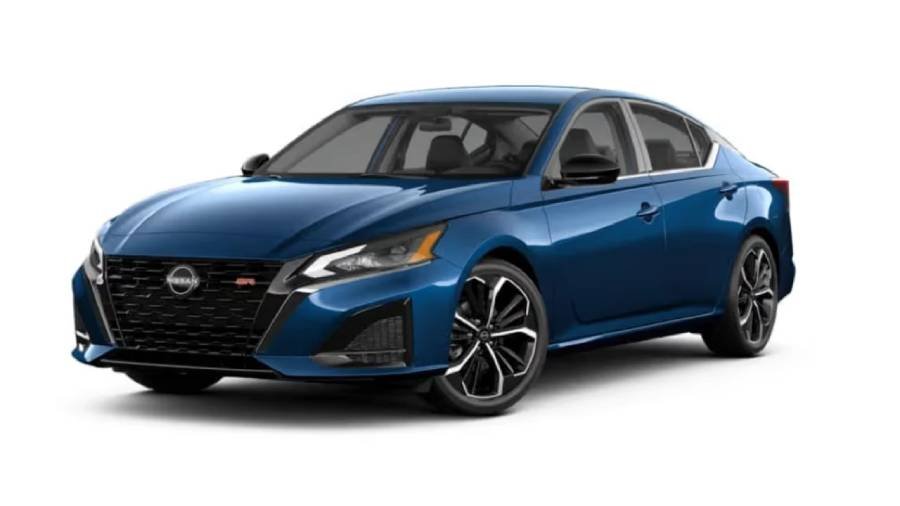
No, the Nissan Altima has not been discontinued. As of 2026, Nissan continues to sell the Altima in the United States, and the company has indicated that the sedan will continue into the 2027 model year. This is important because earlier reports suggested that Altima production could end after the 2025 or 2026 model year, creating confusion for buyers. In July 2026, Edmunds reported that a Nissan spokesperson confirmed the Altima remains an important part of the company’s lineup and that a 2027 model-year vehicle is planned.
The current product lineup provides additional evidence. Nissan officially lists the 2026 Altima with SV, SV Special Edition, SR, and SR Midnight Edition trims, starting at $27,580 for the SV. Nissan’s inventory system also shows new 2026 Altimas available through dealerships, including both front-wheel-drive and all-wheel-drive models.
For buyers, the key issue is therefore not whether the Altima has already disappeared, but how reliable the discontinuation reports are and what Nissan plans to do with the model next. The sections below examine the Altima’s current status, discontinuation timeline, 2026 availability, potential future, and what these factors mean if you are considering buying or already owning one.
Is the Nissan Altima being discontinued?
The Nissan Altima is not currently discontinued, and Nissan plans to offer a 2027 model year. This means reports that the Altima would disappear after the 2025 or 2026 model year no longer describe Nissan’s latest stated plans. In July 2026, a Nissan spokesperson told Edmunds that the Altima remains an important part of the company’s sedan lineup and confirmed that a 2027 Altima is planned.
The confusion comes from earlier reports about Nissan’s U.S. production plans. Automotive publications had reported that Altima production at Nissan’s Canton, Mississippi plant was expected to end as Nissan reorganized its manufacturing operations and prepared for new electrified vehicles. Those reports led to widespread claims that the Altima itself was being permanently discontinued. The distinction matters: ending or changing production at a particular plant does not necessarily mean Nissan is permanently retiring the Altima nameplate.
Current product information supports the updated status. Nissan lists the 2026 Altima as an active model in its U.S. lineup, with SV, SV Special Edition, SR, and SR Midnight Edition trims. The 2026 Altima starts at $27,580, and Nissan’s online inventory continues to list new vehicles for sale through dealerships.
For buyers, the most accurate distinction is between production changes and model discontinuation. Nissan may change where or how the Altima is produced while continuing to sell the vehicle. Based on the latest available information, buyers should not treat the Nissan Altima as a discontinued model.
When will the Nissan Altima be discontinued?
Nissan has not announced an official date for permanently discontinuing the Altima. Instead, the latest information indicates that the sedan will continue for the 2027 model year. Any claim that the Altima will definitely be discontinued after 2026 therefore goes beyond Nissan’s currently confirmed product plans.
Earlier discontinuation reports focused heavily on manufacturing changes at Nissan’s Canton plant. This created an important semantic difference between an expected production change and the end of the Altima nameplate. A manufacturer can stop producing a vehicle at one factory, move production, revise its product strategy, or introduce another model year without permanently retiring the model. Buyers should therefore look for a direct Nissan announcement about the Altima nameplate rather than treating factory-production reports as confirmation of discontinuation.
Model years can also make the timeline confusing. A vehicle carrying a particular model year can reach dealerships before that calendar year begins and remain in dealer inventory after factory production changes. For example, the presence of a 2026 Altima at a dealership does not by itself establish how long Nissan intends to manufacture the nameplate. Conversely, a change to a production schedule does not mean new Altimas immediately disappear from showrooms.
The confirmed 2027 model changes the practical timeline for prospective buyers. Rather than asking when an already-announced discontinuation will occur, buyers should monitor Nissan’s announcements about the 2027 Altima and subsequent model years. Until Nissan announces a final model year or formally confirms the end of the nameplate, there is no confirmed Nissan Altima discontinuation date.
Why is Nissan discontinuing the Altima?
Nissan has not confirmed a final discontinuation date for the Altima, but the model’s long-term future is uncertain because the company is restructuring its U.S. lineup, reducing costs, and reconsidering where the Altima fits alongside the redesigned Sentra. Nissan Americas product-planning chief Ponz Pandikuthira said the Altima would “soon depart,” while Nissan subsequently clarified that a 2027 model year is still planned. The two statements indicate that the Altima will continue in the short term but do not establish a long-term future for the nameplate.
Nissan’s broader restructuring provides important context. Under its Re:Nissan recovery plan, the automaker is targeting ¥500 billion in fixed and variable cost savings compared with fiscal year 2024. Nissan has also announced plans to reduce its global manufacturing footprint from 17 vehicle plants to 10 by fiscal year 2027. These measures show that vehicle programs and production capacity are being evaluated as part of a company-wide effort to improve profitability rather than as isolated decisions affecting only the Altima.
The Altima also occupies a difficult position within Nissan’s sedan lineup. Nissan has introduced an all-new 2026 Sentra, while the current-generation Altima has remained largely unchanged. According to reporting based on comments from Nissan’s product-planning leadership, the company sees the newer Sentra as capable of serving a larger portion of its remaining sedan customers. This creates overlap between two four-door models at a time when Nissan is trying to simplify its product portfolio.
Sales provide another piece of the picture, although they should not be treated as the sole reason for a potential discontinuation. Cars.com reported that Altima sales fell 31.9% year over year during the first half of 2026, while June sales were down 26.5%. However, the publication also noted that shrinking inventory and uncertainty surrounding the model’s future may be contributing to those declines. In other words, lower sales do not prove that buyers have simply abandoned the Altima.
Nissan’s changing electrification plans have also affected the product strategy surrounding its sedans. The company had planned new electric sedans as part of its future U.S. lineup, but those plans changed as Nissan reassessed EV demand and its broader recovery strategy. This helps explain why the Altima has survived longer than earlier reports predicted and why its eventual replacement path remains unclear. The most accurate conclusion is therefore that the Altima’s uncertain future results from a combination of Nissan’s restructuring, product-line consolidation, changing electrification plans, and the aging position of the current model—not from one single cause.
Is there a 2026 Nissan Altima?
Yes, there is a 2026 Nissan Altima, and Nissan currently lists it as an active model in its U.S. vehicle lineup. The existence of the 2026 model is significant because earlier reports had suggested that the Altima could disappear after the 2025 model year. Nissan instead carried the midsize sedan into 2026 and continues to market it through its official U.S. website.
The 2026 Altima is primarily a continuation of the existing generation rather than a full redesign. It retains a 2.5-liter four-cylinder engine producing up to 188 horsepower and 180 lb-ft of torque in front-wheel-drive configuration, while all-wheel drive remains available. Nissan also lists fuel economy of up to 26 mpg city and 36 mpg highway.
Nissan simplified the model range for 2026. The previous S and SL grades were removed, leaving the SV and SR as the principal trims, with additional configurations such as the SV Special Edition and SR Midnight Edition. The SR also received a standard 12.3-inch touchscreen and wireless charging, while the Midnight Edition adds appearance features including gloss-black 19-inch wheels, a rear spoiler, and other dark exterior details.
The 2026 model year should not be interpreted as proof that the Altima has secured a long-term future, however. Nissan has separately confirmed that a 2027 model year will be introduced, but the company has not announced a next-generation Altima or committed to keeping the nameplate beyond that point. The current situation is therefore more specific than either “the Altima is discontinued” or “the Altima is safe”: the Altima is available for 2026, a 2027 model is planned, and its future beyond that remains unresolved.
Can you still buy a new Nissan Altima?
Yes, you can still buy a new Nissan Altima in the United States. Nissan currently markets the 2026 Altima through its official U.S. website and provides an inventory search for shoppers looking for vehicles at Nissan dealerships. The 2026 lineup starts with the SV at a manufacturer’s suggested retail price of $27,580, before destination charges, taxes, options, and dealer fees.
Availability depends on location, trim, drivetrain, color, and individual dealer inventory. A buyer may find a 2026 Altima already on a dealer lot, while another configuration may be in transit or unavailable locally. Nissan offers both front-wheel-drive and available Intelligent All-Wheel Drive configurations, so shoppers looking for a specific drivetrain should check actual inventory rather than assuming every dealer carries the same selection.
Buyers may also encounter unsold Altimas from an earlier model year. A previous-model-year vehicle does not become used or mechanically obsolete simply because a newer model year has arrived. Dealers can continue selling remaining new inventory until those vehicles are purchased. This distinction becomes especially important when a vehicle faces an uncertain production future because factory production, model-year availability, and dealer inventory operate on different timelines.
The planned 2027 Altima provides another reason buyers should not assume new-vehicle availability is about to end immediately. Nissan has confirmed through a spokesperson that an Altima will return for the 2027 model year, although detailed specifications and the model’s longer-term future have not been confirmed. Buyers interested in an Altima therefore still have access to new vehicles, but they should compare current inventory and pricing with the forthcoming model year before making a purchase.
Should you buy a Nissan Altima if it is being discontinued?
A possible future discontinuation is not, by itself, a reason to avoid buying a Nissan Altima. The more useful decision is whether the purchase price, equipment, warranty coverage, expected ownership period, depreciation, and long-term maintenance requirements make the Altima competitive with other midsize sedans. A model can remain practical to own for years after production ends because the vehicles already on the road continue to require manufacturer and aftermarket support.
Price is one factor that can make an outgoing model attractive. When a vehicle approaches the end of its product cycle, dealers may have stronger incentives to move existing inventory, although discounts are not guaranteed and vary by location and stock levels. A buyer receiving a substantial discount on a new Altima could offset part of the potential disadvantage associated with purchasing an older platform. The correct comparison is therefore the Altima’s actual transaction price against similarly equipped alternatives rather than the MSRP alone.
Resale value requires more caution. Discontinuation does not automatically cause a vehicle’s resale value to collapse. Used-car values depend on several attributes, including age, mileage, condition, reliability, demand, supply, accident history, and the broader used-vehicle market. Ending production can influence demand or buyer perception, but it is only one variable. Buyers planning to trade their vehicle after a short ownership period should therefore give depreciation more weight than someone planning to keep an Altima for eight or ten years.
Long-term serviceability is another consideration, but production ending does not mean replacement parts disappear when the final vehicle leaves the assembly line. Thousands of Altimas from multiple model years remain in use, creating continuing demand for maintenance and repair components. Routine items such as brake components, filters, tires, batteries, and fluids are also fundamentally different from rare model-specific body, electronic, or interior components. The latter category can become more difficult or expensive to source as a vehicle ages, regardless of whether the model was formally discontinued.
Warranty coverage should also be evaluated separately from production status. A manufacturer ending a nameplate does not mean an eligible new vehicle instantly loses the warranty provided when it was sold. Buyers should verify the exact coverage, exclusions, start date, and duration in Nissan’s warranty documentation for the model year they purchase rather than relying on the vehicle’s future production status.
An Altima can therefore remain a reasonable choice for buyers who receive competitive pricing, plan to keep the vehicle for several years, value a conventional midsize sedan, and are satisfied with the current model’s features and powertrain. Buyers who prioritize the newest platform, hybrid powertrains, stronger certainty about future generations, or short-term resale value should compare the Altima more closely with alternatives before purchasing.
The discontinuation question should ultimately function as one part of the buying calculation rather than the entire calculation. The 2026 Altima remains a new vehicle that Nissan currently sells, and a 2027 model is planned. The greater uncertainty concerns what happens after that model year. For a buyer purchasing today, price, intended ownership period, features, warranty coverage, and alternative vehicles are more immediately relevant than assuming an unconfirmed future discontinuation makes the Altima a bad purchase.
Will Nissan Altima parts still be available after discontinuation?
Yes, Nissan Altima parts should remain available even if Nissan eventually discontinues the model. Ending production of a vehicle does not immediately end demand for its replacement parts. Altimas already on the road will continue to require scheduled maintenance, collision repairs, and mechanical repairs, which supports an ongoing market for both genuine Nissan components and aftermarket parts.
Parts availability also depends on the type of component. Routine maintenance items, including engine oil filters, air filters, brake pads, batteries, tires, spark plugs, and fluids, are generally easier to source because they require regular replacement and may be shared with other vehicles or supplied by multiple manufacturers. Model-specific components, including certain body panels, interior trim pieces, electronic modules, lighting assemblies, and specialized hardware, have a narrower market and may become harder to obtain as a vehicle becomes substantially older.
Nissan also operates an official parts network for its vehicles. Nissan states that Genuine Nissan Parts are designed, tested, and manufactured for its vehicles, while participating dealerships provide parts and service support. This service infrastructure does not depend on a vehicle remaining in new-car production indefinitely.
Time is a more important consideration than the discontinuation announcement itself. A recently discontinued vehicle with a large number of examples still on the road generally creates much stronger replacement-parts demand than a rare vehicle that has been out of production for decades. The Altima has also been sold across multiple generations, giving parts manufacturers and repair businesses an established customer base to serve.
Buyers should therefore distinguish between parts remaining available and every specific part remaining equally easy to obtain forever. Routine Altima maintenance should not suddenly become difficult because Nissan ends production. Availability of specialized components can gradually change as vehicles age, inventories decline, and suppliers adjust production.
Will Nissan still honor the Altima warranty after discontinuation?
A future discontinuation of the Nissan Altima would not automatically cancel the warranty on an eligible vehicle. Warranty coverage is determined by the terms attached to the vehicle, including its model year, in-service date, mileage, covered component, and applicable exclusions—not simply by whether Nissan continues producing new Altimas.
For the 2026 Altima, Nissan lists a 36-month/36,000-mile basic limited warranty and a 60-month/60,000-mile powertrain limited warranty. Nissan also states that new 2026 vehicles include scheduled maintenance coverage for three oil changes during the first two years or 24,000 miles, whichever occurs first. Buyers should review the applicable warranty booklet because individual components, maintenance requirements, exclusions, and coverage periods can differ.
The distinction between a nameplate ending and warranty coverage ending is important. If Nissan eventually stops building the Altima, vehicles already sold remain subject to the warranty terms that apply to them. A hypothetical production end in a future year would therefore not mean that a qualifying 2026 Altima suddenly loses its remaining basic or powertrain coverage on that date.
Warranty and parts availability are connected because a manufacturer needs a way to address covered defects during the applicable warranty period. Depending on the repair, this may involve replacing a component or performing another remedy permitted under the warranty terms. Owners should keep maintenance and repair records and use Nissan or an authorized dealer to confirm whether a specific problem qualifies for coverage.
Used Altima buyers need to examine warranty status more carefully. Remaining factory coverage depends on factors such as the vehicle’s original in-service date and mileage, while certified pre-owned vehicles may carry separate coverage under the applicable program. A used Altima should therefore be evaluated by its VIN, mileage, service history, and actual remaining coverage rather than by the assumption that every vehicle from the same model year has identical warranty time remaining.
For prospective buyers, possible future discontinuation should not be confused with the loss of manufacturer support the moment production ends. The more practical questions are how much warranty remains on the specific vehicle, which repairs are covered, where warranty service is available, and whether the owner follows the conditions required to maintain coverage.
What will replace the Nissan Altima?
Nissan has not confirmed a direct replacement for the Altima. The company plans to continue the sedan into the 2027 model year, so there is currently no announced successor that immediately takes over the Altima’s position in Nissan’s U.S. lineup. Reports about other Nissan sedans, crossovers, or electrified vehicles should therefore not be described as confirmed Altima replacements unless Nissan explicitly identifies them that way.
The redesigned Sentra is the closest relevant vehicle within Nissan’s current sedan strategy, but it is not a direct Altima replacement. The Sentra competes in the compact sedan segment, while the Altima is a midsize sedan with different dimensions, positioning, and buyer expectations. Nissan Americas product-planning chief Ponz Pandikuthira has indicated that the newer Sentra can address a larger share of the company’s sedan customers as Nissan reevaluates the role of the Altima. That creates product overlap, but overlap does not make the Sentra an official successor.
Nissan’s changing electrification strategy makes a direct replacement even less certain. Earlier product plans included new electric sedans for U.S. production, which contributed to speculation that an EV could eventually occupy the space left by the Altima. Nissan has since revised parts of its vehicle and manufacturing strategy as part of its broader restructuring. A previously planned EV should therefore not automatically be presented as the next Altima.
A crossover is also unlikely to qualify as a direct replacement simply because Nissan increasingly depends on SUVs. Models such as the Rogue can compete for the same household budget or attract buyers who might otherwise purchase a sedan, but they belong to different vehicle categories. A true replacement would require a clearer relationship in product positioning or an explicit statement from Nissan.
For buyers, the distinction matters because there is currently no confirmed vehicle that directly replaces the Nissan Altima. The 2027 Altima is planned to keep the nameplate alive in the short term. What happens after that remains uncertain until Nissan announces another model year, a redesigned Altima, a successor, or a formal end to the nameplate.
What happens to current Nissan Altima owners after discontinuation?
Current Nissan Altima owners would still be able to drive, maintain, repair, and service their vehicles if Nissan eventually discontinues the model. Discontinuation ends production of new examples; it does not remove existing Altimas from the road or automatically terminate the support associated with vehicles already sold.
Routine maintenance would remain the most predictable part of ownership. Altimas still require oil changes, filters, tires, brakes, batteries, fluids, inspections, and other scheduled services regardless of whether new Altimas are being assembled. Nissan dealerships, independent repair shops, parts retailers, and aftermarket manufacturers have an economic reason to continue supporting these vehicles while a substantial number remain in use.
Repairs involving specialized components require more consideration over the long term. An owner who needs a common maintenance component is in a different position from one who needs a model-specific electronic module, body panel, interior component, or discontinued trim piece many years after production ends. Specialized parts can become less readily available as a vehicle ages and supplier inventories decline. This is an aging-vehicle issue rather than an immediate consequence of discontinuation.
Existing owners also do not need to assume that a production announcement cancels their remaining warranty. Eligible vehicles continue to be governed by their applicable warranty terms. Mileage, time in service, the type of repair, exclusions, and maintenance requirements determine whether a claim is covered. Owners should keep service records and consult the applicable Nissan warranty documentation when a covered repair is in question.
Resale value is less predictable. The end of a model can influence buyer perception, but depreciation is also affected by mileage, condition, accident history, reliability, trim, local demand, vehicle supply, and the overall used-car market. An Altima with low mileage and a documented service history can therefore have a different resale outcome from a neglected example of the same model year. Discontinuation alone does not determine its future market value.
Owners planning to keep an Altima for several more years therefore have no immediate reason to replace the vehicle solely because the nameplate may eventually end. Vehicle condition, reliability, repair costs, remaining warranty coverage, and individual transportation needs provide more useful reasons for deciding when to keep, sell, or replace an existing Altima.
Read more: What Kind of Oil Does a Nissan Altima Take?
What cars should you consider instead of the Nissan Altima?
The main Nissan Altima alternatives include the Toyota Camry, Honda Accord, Hyundai Sonata, and Kia K5. All four compete for midsize-sedan buyers, but the best alternative depends on whether you prioritize hybrid efficiency, powertrain choice, technology, styling, long-term ownership, or purchase price. Buyers concerned about the Altima’s uncertain long-term future should compare these vehicles based on their actual ownership needs rather than choosing an alternative simply because the Altima could eventually be discontinued.
The Toyota Camry is a relevant alternative for buyers who prioritize fuel economy and hybrid power. Toyota moved the U.S. Camry lineup to an all-hybrid powertrain beginning with the 2025 model year. This creates a clear distinction from the current Altima, which uses a conventional gasoline powertrain. A buyer who expects to cover substantial annual mileage or specifically wants a hybrid midsize sedan should therefore include the Camry in the comparison.
The Honda Accord is another direct alternative because it occupies the same broad midsize-sedan category while offering both conventional gasoline and hybrid configurations. The Accord is particularly relevant for buyers who want to remain with a traditional sedan but prefer a model with an established hybrid option. Purchase price, equipment, fuel economy, insurance costs, and expected depreciation should still be compared at the trim level rather than assuming one nameplate is automatically the better value.
The Hyundai Sonata provides another route for buyers who want a midsize sedan with multiple powertrain choices. Depending on configuration, the Sonata lineup includes conventional gasoline and hybrid options. Its combination of technology, powertrain variety, and distinctive design makes it especially relevant to buyers who like the Altima’s sedan format but want to compare a different set of features before committing to a vehicle with an uncertain future.
The Kia K5 is worth considering for buyers focused on styling, technology, and a conventional gasoline midsize sedan. It competes in essentially the same purchasing environment as the Altima and can therefore serve as a useful direct comparison when evaluating equipment and pricing. As with the other alternatives, buyers should compare equivalent trims rather than base models with differently equipped versions.
A potential Altima buyer should compare at least six attributes: purchase price, powertrain, fuel economy, standard equipment, warranty coverage, and expected ownership period. For example, a discounted Altima may make more financial sense for someone planning to keep the car for eight years, while a hybrid competitor could be more attractive to a high-mileage driver who places greater value on fuel consumption.
The Altima also remains part of this comparison rather than automatically being eliminated from it. Nissan currently sells the 2026 model and plans a 2027 Altima, so buyers are not choosing between an available competitor and a vehicle that has already disappeared. The relevant question is whether the Altima offers enough value today to justify the uncertainty surrounding its longer-term future.
For buyers primarily concerned about discontinuation, comparing the Altima with current midsize sedans is more useful than waiting for an unconfirmed replacement. The Camry, Accord, Sonata, and K5 provide four established alternatives, while the Altima can still make sense when its price, features, drivetrain, and expected ownership period align with the buyer’s priorities.