
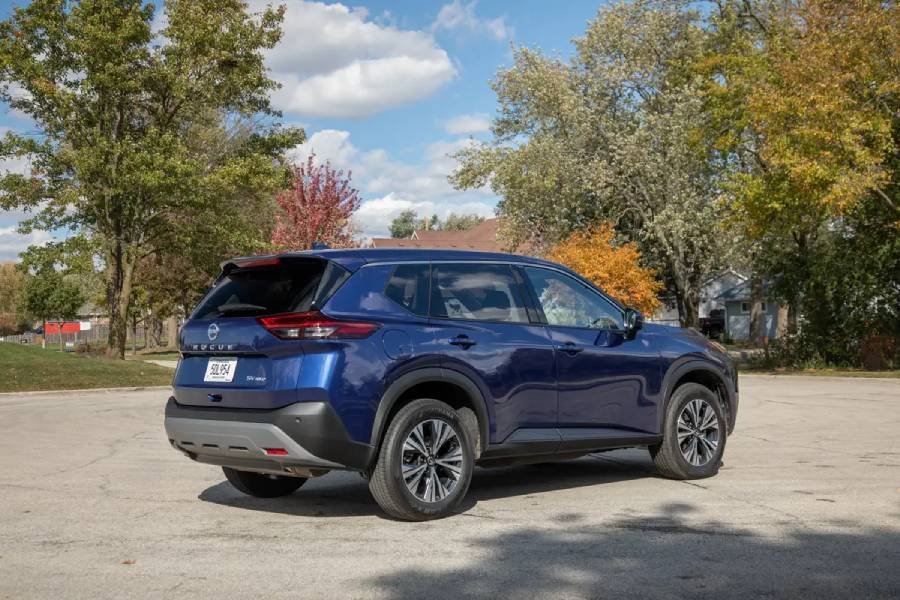
The Nissan Rogue bolt pattern is one of the primary wheel specifications to check when replacing factory wheels or choosing aftermarket rims. The bolt pattern identifies how the wheel’s lug holes are arranged and helps determine whether a wheel can physically attach to the vehicle hub. However, matching the bolt pattern alone does not confirm complete wheel fitment.
Nissan Rogue wheel specifications can vary by model year, generation, and trim, so checking the correct year is essential before buying a replacement or aftermarket wheel. Other specifications, including lug nut or thread size, center bore, wheel diameter, wheel width, offset, and tire size, also affect compatibility.
This guide breaks down Nissan Rogue bolt pattern specifications by year and explains the related wheel-fitment measurements you should verify. It also covers how to read and measure a bolt pattern, why two five-lug wheels are not necessarily interchangeable, and how to check an aftermarket wheel before installation. The goal is to give you the specific information needed to identify the correct Nissan Rogue wheel fitment for your vehicle.
What Is the Nissan Rogue Bolt Pattern?
The Nissan Rogue uses a 5×114.3 mm bolt pattern, also written as 5×4.5 inches. The specification means the wheel has 5 lug holes arranged around a 114.3 mm pitch circle diameter (PCD). Fitment databases covering the Rogue from 2008 onward report the same 5×114.3 pattern across its generations.
The first number, 5, identifies the number of lug holes on the wheel. The second number, 114.3 mm, identifies the diameter of the imaginary circle passing through the centers of those lug holes. In U.S. wheel specifications, the same pattern is commonly expressed as 5×4.5 inches. These two measurements describe the lug-hole arrangement rather than the wheel’s overall diameter or width.
The bolt pattern is an important first check when selecting replacement or aftermarket wheels for a Nissan Rogue. A wheel with a different PCD will not match the Rogue’s hub correctly, even when it has the same number of lug holes. For example, two wheels can both have 5 lug holes while using different pitch-circle diameters, making them incompatible without an appropriate fitment solution.
The bolt pattern is not the only wheel specification that matters. Nissan Rogue fitment also involves measurements such as center bore, wheel offset, wheel diameter, wheel width, and lug nut/thread specification. For example, published Rogue fitment data lists a 66.1 mm center bore and M12×1.25 thread specification for several model years, while factory wheel sizes and offsets vary by generation and trim.
For that reason, the 5×114.3 specification should be treated as the starting point rather than the complete answer to whether a particular wheel fits a Nissan Rogue. The next step is to check the bolt pattern for the specific model year and compare the remaining wheel specifications before purchasing or installing a wheel.
What Is the Nissan Rogue Bolt Pattern by Year?
The Nissan Rogue bolt pattern is 5×114.3 mm (5×4.5 inches) for model years 2008 through 2024. The specification uses 5 lug holes arranged on a 114.3 mm pitch circle diameter, and available fitment data does not show a bolt-pattern change between the first, second, and third Rogue generations.
| Model Year | Generation | Bolt Pattern | Lug Holes |
|---|---|---|---|
| 2008 | First generation | 5×114.3 mm (5×4.5″) | 5 |
| 2009 | First generation | 5×114.3 mm (5×4.5″) | 5 |
| 2010 | First generation | 5×114.3 mm (5×4.5″) | 5 |
| 2011 | First generation facelift | 5×114.3 mm (5×4.5″) | 5 |
| 2012 | First generation facelift | 5×114.3 mm (5×4.5″) | 5 |
| 2013 | First generation facelift | 5×114.3 mm (5×4.5″) | 5 |
| 2014 | Second generation | 5×114.3 mm (5×4.5″) | 5 |
| 2015 | Second generation | 5×114.3 mm (5×4.5″) | 5 |
| 2016 | Second generation | 5×114.3 mm (5×4.5″) | 5 |
| 2017 | Second generation facelift | 5×114.3 mm (5×4.5″) | 5 |
| 2018 | Second generation facelift | 5×114.3 mm (5×4.5″) | 5 |
| 2019 | Second generation facelift | 5×114.3 mm (5×4.5″) | 5 |
| 2020 | Second generation facelift / transition | 5×114.3 mm (5×4.5″) | 5 |
| 2021 | Third generation | 5×114.3 mm (5×4.5″) | 5 |
| 2022 | Third generation | 5×114.3 mm (5×4.5″) | 5 |
| 2023 | Third generation | 5×114.3 mm (5×4.5″) | 5 |
| 2024 | Third generation | 5×114.3 mm (5×4.5″) | 5 |
The first-generation Rogue covers 2008–2013, the second generation covers 2014–2020, and the third generation begins with the 2021 model year in the fitment sources reviewed. Despite these generation changes, the bolt pattern remains 5×114.3 mm. Wheel-Size lists 5×114.3 for the 2008–2010 first generation, 2011–2013 facelift, 2014–2016 second generation, 2017–2021 facelift, and third-generation applications.
The 2008–2013 models also use a 5×114.3 mm PCD, with published fitment data listing a 66.1 mm center bore and M12×1.25 thread size. For example, the 2008 and 2012 Rogue specifications both show 5×114.3 PCD, 66.1 mm center bore, and M12×1.25 threads.
The second-generation Rogue continues to use the same 5×114.3 mm bolt pattern. Fitment data for 2014–2020 models identifies the same PCD, while wheel dimensions, tire sizes, and offsets can vary by model year or configuration. For example, 2020 fitment data lists 17-inch, 18-inch, and 19-inch wheel applications with the same 5×114.3 bolt pattern.
The third-generation Rogue also retains the 5×114.3 mm bolt pattern. The 2021–2023 model years are specifically listed with this PCD, and 2024 fitment data reports the same specification. This means the Rogue’s bolt pattern has remained consistent across the major model-year transitions covered by these sources.
A matching 5×114.3 bolt pattern does not automatically mean that two Nissan Rogue wheels are interchangeable. Wheel diameter, width, offset, center bore, tire dimensions, and lug hardware also determine whether a specific wheel provides proper fitment. For example, published specifications for different Rogue years show changes in wheel dimensions and offset even though the PCD remains 5×114.3.
If you are selecting a wheel for a specific Nissan Rogue, use the exact model year and trim when checking fitment. The bolt pattern provides the first compatibility check, while the remaining wheel specifications determine whether the wheel correctly matches the vehicle’s hub, suspension, brakes, and tire requirements.
Did the Nissan Rogue Bolt Pattern Change Between Model Years?
The Nissan Rogue bolt pattern did not change across the 2008–2024 model years covered by the available fitment data. The Rogue uses a 5×114.3 mm (5×4.5-inch) bolt pattern across its first, second, and third generations. The generation changes affected other wheel specifications, but the basic five-lug, 114.3 mm PCD remained consistent.
The first-generation Rogue, covering the 2008–2013 model years, uses a 5×114.3 mm bolt pattern. The second-generation Rogue, introduced for 2014, retains the same pattern through 2020. The third-generation Rogue, beginning in 2021, also retains 5×114.3 mm. This consistency means the model year does not change the basic PCD specification within the range covered by the available data.
However, a shared bolt pattern does not mean that every Rogue wheel is interchangeable across every model year. Wheel diameter, width, offset, center bore, tire dimensions, and lug hardware can differ between generations, trims, and factory wheel configurations. For example, a wheel can use the correct 5×114.3 mm PCD while having an offset or diameter that is unsuitable for another Rogue application.
The most important distinction is between bolt-pattern compatibility and complete wheel fitment. Bolt pattern answers whether the lug-hole arrangement matches the vehicle hub. Complete fitment requires the wheel’s other dimensions to match the vehicle’s requirements. This is why checking only “5×114.3” is insufficient when purchasing used or aftermarket wheels.
For a Nissan Rogue wheel replacement, start with the exact model year and trim, then verify the complete wheel specification. Use the 5×114.3 mm bolt pattern as the first filter, followed by center bore, offset, wheel diameter, wheel width, tire size, and lug hardware. This approach reduces the risk of selecting a wheel that matches the PCD but does not fit the vehicle correctly.
What Other Nissan Rogue Wheel Specs Should You Check?
The bolt pattern is only one of several wheel specifications you should verify for a Nissan Rogue. Center bore, wheel offset, wheel diameter, wheel width, tire size, and lug hardware also affect whether a replacement or aftermarket wheel fits correctly. A wheel can have the correct 5×114.3 mm bolt pattern and still be unsuitable because another dimension does not match the vehicle.
Center bore determines how the wheel fits around the vehicle’s hub. It is the diameter of the center opening on the wheel, measured in millimeters. Published Nissan Rogue fitment data lists a 66.1 mm center bore for several model years, but the specification should still be verified against the exact vehicle and wheel before installation. A wheel with an undersized center bore cannot seat over the hub correctly, while a larger center bore can require appropriate hub-centric rings for some applications.
Wheel offset determines how far the wheel’s mounting surface sits from its centerline. Positive offset places the mounting surface toward the outer face of the wheel, while negative offset moves it toward the inner side. Offset affects the wheel’s position relative to the suspension, fender, and brake components. Therefore, two wheels with the same 5×114.3 mm bolt pattern can have different offsets and produce different clearances or wheel positioning.
Wheel diameter and width determine the physical dimensions of the wheel. Diameter describes the wheel size measured across the wheel, while width describes the distance between the wheel’s inner bead seats. Nissan Rogue applications use different factory wheel dimensions depending on model year and configuration. For example, available fitment data for the Rogue includes 17-inch, 18-inch, and 19-inch applications, showing why the model year’s complete specification matters rather than relying on bolt pattern alone.
Tire size must also match the selected wheel and vehicle. A wheel change can require a corresponding tire-size check because tire width, aspect ratio, and overall diameter affect clearance, handling, and vehicle systems. For example, replacing an OEM wheel with a wider aftermarket wheel requires checking whether the selected tire provides the correct fitment rather than choosing a tire solely because it fits the wheel diameter.
Lug nut and thread specifications determine whether the wheel can be securely fastened to the vehicle. Published fitment information for Nissan Rogue applications lists M12×1.25 threading, but the exact specification should be verified for the vehicle being serviced. The lug hardware must also match the wheel’s seat design because the correct thread alone does not guarantee that a lug nut seats properly against the wheel.
Brake and suspension clearance provide the final physical fitment check. A wheel can match the bolt pattern, center bore, and basic dimensions while still contacting a brake caliper, suspension component, or inner fender. This is particularly important when changing wheel diameter, width, or offset from the factory configuration. For an aftermarket wheel, the manufacturer’s vehicle-specific fitment information should be checked before installation.
The practical rule is straightforward: verify the complete wheel specification, not just the bolt pattern. Start with the exact Nissan Rogue model year and trim, confirm the 5×114.3 mm PCD, and then compare center bore, offset, diameter, width, tire size, lug hardware, and clearance. This sequence provides a more reliable wheel-fitment check than matching the lug pattern alone.
How Do You Read and Measure a Nissan Rogue Bolt Pattern?
To read a Nissan Rogue bolt pattern, identify the number of lug holes and the pitch circle diameter (PCD). A specification such as 5×114.3 mm means the wheel has 5 lug holes positioned around a 114.3 mm pitch circle. The same specification is commonly written as 5×4.5 inches when expressed in imperial units.
The first number represents the number of lug holes. The second number represents the diameter of the imaginary circle passing through the centers of those lug holes. Therefore, 5×114.3 mm does not mean that the wheel is 114.3 mm in diameter. It describes only the arrangement and spacing of the mounting holes.
To measure a five-lug bolt pattern, first count the lug holes and confirm that there are five. Then measure from the center of one lug hole to the appropriate point on the opposite lug-hole pattern. Five-lug patterns require a different measurement approach from four- or six-lug patterns because there is no lug hole directly opposite the starting hole.
The measurement should be taken carefully because measuring from the wrong points can produce an incorrect PCD. The center of each lug hole, rather than the outside edge of the hole or the edge of the lug nut, determines the bolt-pattern measurement. Record the result in millimeters and compare it with the vehicle’s published specification.
For a Nissan Rogue, the published bolt pattern is 5×114.3 mm (5×4.5 inches) for the model years covered in this guide. If a physical measurement differs substantially from this specification, verify the vehicle identification, model year, wheel, and measurement method before selecting a replacement wheel.
Bolt-pattern measurement is useful for confirming a wheel specification, but it should not be treated as a complete fitment test. After confirming the PCD, check the center bore, offset, wheel diameter, wheel width, tire dimensions, lug hardware, and brake clearance. These additional measurements determine whether the wheel is suitable for the Nissan Rogue rather than simply whether its lug holes match.
Can You Install Any Aftermarket Wheel With the Nissan Rogue Bolt Pattern?
No. A matching 5×114.3 mm bolt pattern does not by itself confirm that an aftermarket wheel fits a Nissan Rogue. The bolt pattern only confirms that the wheel’s lug-hole arrangement matches the vehicle’s mounting pattern. Complete fitment also depends on the wheel’s center bore, offset, diameter, width, lug hardware, tire dimensions, and clearance.
The first check is the bolt pattern. A Nissan Rogue wheel must use the correct five-lug, 114.3 mm PCD configuration. A wheel with five lug holes but a different PCD does not have the same mounting pattern. Matching the number of lug holes without matching the PCD therefore does not establish compatibility.
The second check is the center bore. The wheel’s center opening must provide the required clearance around the Rogue’s hub. A center bore that is too small prevents the wheel from seating correctly. A larger center bore may require a suitable hub-centric solution, depending on the wheel and application.
The third check is the wheel offset. Offset controls the wheel’s position relative to the hub mounting surface. An unsuitable offset can move the wheel too far inward or outward, affecting clearance around suspension components, brake components, and the fender. Two wheels can therefore share the same 5×114.3 mm bolt pattern while producing different fitment results.
The fourth check is wheel diameter and width. These dimensions determine the physical size of the wheel and influence the available tire options. Nissan Rogue factory applications use different wheel dimensions across model years and configurations, so an aftermarket wheel should be compared with the specifications for the exact vehicle rather than selected only by bolt pattern.
The fifth check is lug nut and thread compatibility. The lug hardware must match the vehicle’s thread specification and the wheel’s seat design. Published fitment data for Nissan Rogue applications includes M12×1.25 threading, but the exact specification should be verified against the vehicle and wheel before installation.
The sixth check is tire size and physical clearance. The selected tire must be compatible with the wheel width and vehicle, while the complete wheel-and-tire assembly must clear the brakes, suspension, and bodywork. A wheel that passes the bolt-pattern check can still create interference if its dimensions or offset are unsuitable.
Before purchasing an aftermarket wheel, verify the exact Nissan Rogue model year and trim, then compare the wheel’s complete specifications. The correct sequence is bolt pattern, center bore, offset, diameter, width, lug hardware, tire dimensions, and physical clearance. This approach confirms actual wheel fitment rather than assuming that every 5×114.3 mm wheel will fit the Rogue.
How Can You Check if a Wheel Fits Your Nissan Rogue?
To check whether a wheel fits a Nissan Rogue, verify the exact model year and trim first, then compare the wheel’s bolt pattern, center bore, offset, diameter, width, lug hardware, tire size, and physical clearance. The bolt pattern is the starting point, but complete wheel fitment requires all relevant specifications to work together.
Start by confirming the Nissan Rogue model year and trim. Wheel specifications can differ between vehicle generations and factory configurations even when the bolt pattern remains the same. Using the exact vehicle information prevents a wheel from being selected based on a specification that applies to a different Rogue configuration.
Next, confirm the bolt pattern. The Nissan Rogue specification covered in this guide is 5×114.3 mm, so the selected wheel must use the same lug-hole arrangement. Check both the number of lug holes and the PCD because matching only the number of holes does not establish compatibility.
Then compare the center bore and wheel offset. The center bore must provide the correct fit around the vehicle hub, while the offset determines where the wheel sits relative to the suspension and fender. An incorrect center bore or unsuitable offset can prevent proper installation or create clearance problems even when the bolt pattern matches.
After that, verify the wheel diameter and width. These measurements determine the physical dimensions of the wheel and influence which tire sizes can be used. The correct dimensions depend on the specific Rogue application, so compare the aftermarket wheel with the vehicle’s documented specifications rather than assuming that a larger or wider wheel will fit.
Check the lug nut or thread specification and the wheel’s lug-seat design before installation. The lug hardware must securely match both the vehicle and the wheel. Published Nissan Rogue fitment information includes M12×1.25 threading for the applications covered in the available source material, but the exact specification should be verified for the vehicle being serviced.
Finally, check tire dimensions and physical clearance. The complete wheel-and-tire assembly must clear the brake components, suspension, and surrounding bodywork throughout normal steering and suspension movement. This final check is particularly important when changing from the factory wheel dimensions to an aftermarket configuration.
A practical Nissan Rogue wheel-fitment check therefore follows this sequence:
- Identify the model year and trim.
- Confirm the 5×114.3 mm bolt pattern.
- Check the center bore.
- Compare the wheel offset.
- Verify wheel diameter and width.
- Confirm lug hardware and thread specification.
- Match the tire dimensions.
- Check brake, suspension, and fender clearance.
Following all 8 checks provides a more reliable fitment assessment than matching the Nissan Rogue bolt pattern alone. The goal is not simply to find a wheel with the correct PCD, but to confirm that the complete wheel-and-tire assembly is compatible with the specific Rogue.
What Is the Difference Between Nissan Rogue and Nissan Rogue Sport Wheel Fitment?
The Nissan Rogue and Nissan Rogue Sport are separate vehicle entities, so their wheel-fitment specifications should not be treated as interchangeable. A bolt pattern or wheel specification listed for one model should not be applied to the other without verifying the exact vehicle, model year, and trim.
The Nissan Rogue is the central vehicle covered by this guide, and its bolt pattern is 5×114.3 mm for the model years addressed above. Wheel fitment also depends on specifications such as center bore, offset, wheel diameter, wheel width, tire size, and lug hardware. These attributes must be evaluated against the specific Rogue application.
The Nissan Rogue Sport requires its own vehicle-specific fitment check. Even when two Nissan models share a similar lug configuration or appear similar in name, that does not establish complete wheel compatibility. Differences in wheel dimensions, offset, center bore, brake clearance, or other specifications can prevent a wheel from fitting correctly.
The model name is therefore an important part of the wheel-selection process. When checking an online fitment database, OEM specification, or aftermarket wheel listing, select Nissan Rogue rather than Nissan Rogue Sport when the vehicle being serviced is a Rogue. Then verify the exact model year and trim before relying on the listed specifications.
This distinction is especially important when purchasing used wheels. A seller may describe a wheel as a “Nissan 5-lug wheel” or identify it only by a Nissan model name, but those descriptions do not provide enough information to confirm fitment. The wheel’s complete specifications should be compared with the target vehicle before purchase.
For Nissan Rogue owners, the safest approach is to treat model, model year, and trim as separate fitment identifiers. Confirm the Rogue application first, verify the 5×114.3 mm bolt pattern, and then check the remaining wheel specifications. Do not use a Rogue Sport specification as a substitute for a Nissan Rogue specification unless a reliable fitment source specifically confirms compatibility.
Read more: Nissan Altima Rim Pattern Guide | Bolt Size, Offset & Fitment
Where Can You Verify Nissan Rogue Wheel Specifications?
To verify Nissan Rogue wheel specifications, use vehicle-specific OEM documentation first, then compare the information with a reputable wheel-fitment database or wheel manufacturer’s specifications. This approach is more reliable than using a generic bolt-pattern listing because complete wheel fitment depends on the model year, trim, and multiple wheel dimensions.
The Nissan owner’s manual and OEM documentation are appropriate starting points for identifying the vehicle configuration and factory wheel specifications. These sources provide vehicle-specific information that can help distinguish between different model years and trims. When an aftermarket wheel is being considered, the vehicle information should be matched against the wheel manufacturer’s published fitment data.
A reputable wheel-fitment database can provide additional specifications such as bolt pattern, center bore, wheel diameter, width, offset, and tire dimensions. These databases are useful for comparing configurations across model years, but the information should still be checked against an authoritative source when the specifications affect installation or safety.
The wheel manufacturer’s specifications are particularly important for aftermarket wheels. A manufacturer may list the compatible vehicle applications, PCD, center bore, offset range, wheel dimensions, load rating, and brake-clearance requirements. Use the manufacturer’s vehicle-specific application rather than assuming that a wheel fits because its bolt pattern matches.
When checking a used wheel, ask for the exact wheel specifications or OEM part number. A description such as “5-lug Nissan wheel” does not provide enough information to establish compatibility. Compare the part number or complete dimensions with the specifications for the exact Nissan Rogue model year and trim.
The available source material identifies the Nissan Rogue’s 5×114.3 mm bolt pattern and several related fitment specifications, but it does not provide a complete OEM specification table for every model year. Therefore, year-specific values should be verified before publication rather than inferred from the general bolt-pattern information.
The verification process should follow a consistent order: identify the exact Rogue model year and trim, confirm the bolt pattern, verify center bore and offset, check wheel diameter and width, confirm lug hardware, and then verify tire and brake clearance. This produces a complete fitment assessment and reduces the risk of relying on a single specification.
For an automotive blog, this verification approach also provides a useful distinction between a wheel having the correct bolt pattern and a wheel being fully compatible with the vehicle. The first is a mounting-pattern match; the second requires all relevant wheel and vehicle specifications to be compatible.