
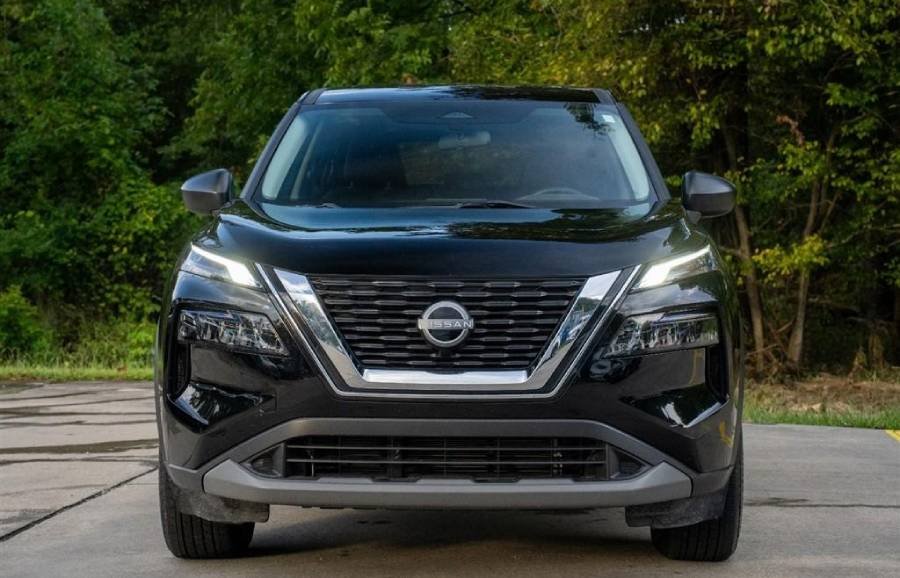
The Nissan Rogue does not have a traditional four-wheel-drive (4WD) system. Instead, the Rogue is available with front-wheel drive (FWD) or an all-wheel-drive (AWD) system, depending on the model year and configuration. Nissan refers to the AWD system on current Rogue models as Intelligent All-Wheel Drive.
The distinction matters because AWD and 4WD are different drivetrain systems. Nissan Rogue AWD is designed primarily to provide additional traction during everyday driving conditions such as rain, snow, acceleration, and slippery pavement. The system manages power delivery between the front and rear wheels as driving conditions change. A traditional 4WD system is generally associated with vehicles designed for more demanding terrain and may include hardware and driver-selectable functions that the Rogue does not provide.
For most Rogue owners, the more relevant choice is therefore FWD versus AWD rather than AWD versus 4WD. This guide explains which drivetrain the Nissan Rogue uses, how Intelligent AWD works, how it differs from traditional 4WD, which Rogue models offer AWD, and whether AWD is useful for snow and light off-road driving.
Does the Nissan Rogue Have 4WD?
The Nissan Rogue does not have a traditional 4WD system. The Rogue is a crossover SUV offered with front-wheel drive or all-wheel drive rather than the type of four-wheel-drive system commonly associated with off-road-oriented SUVs and pickup trucks.
The confusion comes primarily from the fact that AWD and 4WD can both send engine power to four wheels. However, the terms describe different drivetrain designs and operating purposes. A traditional 4WD system is typically engineered for demanding low-traction conditions and may provide driver-selectable drive modes, a transfer case, or low-range gearing. The Nissan Rogue does not use this type of drivetrain.
For Rogue buyers, searching for a “4WD Nissan Rogue” generally means looking for a Rogue equipped with AWD. An AWD Rogue provides additional traction without requiring the vehicle to use a conventional 4WD drivetrain. This distinction is important when comparing the Rogue with vehicles designed specifically for heavy off-road use.
The exact drivetrain specification should still be checked for the individual vehicle because Rogue configurations vary by model year and market. A Rogue listed as FWD powers the front wheels under normal operation, while a Rogue listed as AWD has a drivetrain capable of distributing power beyond the front wheels when the system requires additional traction.
Does the Nissan Rogue Have AWD?
Yes, the Nissan Rogue is available with all-wheel drive. Nissan uses an electronically managed AWD system on applicable Rogue configurations, including the Intelligent All-Wheel Drive system found on current models. AWD gives drivers an alternative to the standard front-wheel-drive configuration without turning the Rogue into a traditional 4WD vehicle.
The primary function of Rogue AWD is to manage traction during changing road conditions. The drivetrain can adjust how power is delivered as the vehicle accelerates or encounters surfaces with reduced grip. This makes AWD particularly relevant when driving through rain, snow, or slippery pavement where relying exclusively on the front wheels may provide less traction.
AWD availability should be verified by model year and trim rather than assumed from the Rogue name alone. Nissan has sold the Rogue across multiple generations and configurations, so drivetrain availability is not identical across every vehicle carrying the Rogue badge. Two Rogues from the same general model line can therefore have different drivetrains if one was configured with FWD and the other with AWD.
The practical distinction is straightforward: a Nissan Rogue labeled AWD is the four-wheel-traction option buyers should look for, while a Rogue labeled FWD is not a four-wheel-drive vehicle. Neither configuration should be described as traditional 4WD simply because the AWD version is capable of powering both axles.
How Does Nissan Rogue Intelligent AWD Work?
Nissan Rogue Intelligent AWD automatically manages power between the front and rear wheels to provide traction according to driving conditions. Unlike a traditional 4WD system that may require the driver to engage a specific four-wheel-drive setting, Intelligent AWD is designed to make drivetrain adjustments electronically as the vehicle operates.
During acceleration and conditions where additional traction is needed, the AWD system can direct power to both the front and rear wheels. This helps the vehicle use available tire grip more effectively instead of depending only on the front wheels. As driving conditions stabilize, the system can change the power distribution based on vehicle inputs and traction requirements. The exact control strategy and available drive settings vary by Rogue generation and model year.
This automatic operation is particularly useful when road grip changes quickly. On wet, snowy, or slippery pavement, for example, the system can respond to traction conditions without requiring the driver to manually switch between two-wheel drive and four-wheel drive. AWD also assists during acceleration because distributing power across both axles can help reduce excessive wheel slip when available traction is limited.
Intelligent AWD does not give the Rogue unlimited traction. The amount of grip available still depends heavily on the tires and road surface. AWD controls how engine power reaches the driven wheels, while the tires provide the physical contact with the road. For this reason, an AWD Rogue with unsuitable or heavily worn tires can have less usable grip than drivers might expect from an all-wheel-drive vehicle.
The system should also not be interpreted as traditional four-wheel drive simply because it can power both axles. Intelligent AWD is designed around automatic traction management and everyday road use, which separates its purpose from 4WD systems engineered for more demanding off-road conditions.
What Is the Difference Between Nissan Rogue AWD and 4WD?
The main difference is that Nissan Rogue AWD automatically manages power between the axles for changing road conditions, while traditional 4WD systems are generally designed to provide greater capability in demanding low-traction terrain. Both systems can power four wheels, but their hardware, controls, and intended applications are different.
The Rogue’s AWD system prioritizes traction during normal driving. Conditions such as rain, snow, slippery pavement, and acceleration can create situations where sending power beyond the front wheels is useful. The system manages this process electronically, reducing the amount of drivetrain intervention required from the driver.
Traditional 4WD systems are commonly found in trucks and off-road-oriented SUVs. Depending on the vehicle, these systems can include features such as a transfer case, selectable 4WD modes, and low-range gearing. Low-range gearing is particularly relevant to demanding off-road driving because it allows the drivetrain to deliver high torque at low vehicle speeds. The Nissan Rogue does not use a traditional low-range 4WD drivetrain of this type.
The differences can be summarized as follows:
| Feature | Nissan Rogue AWD | Traditional 4WD |
|---|---|---|
| Primary purpose | Everyday traction | Demanding low-traction terrain |
| System operation | Electronically managed | Varies by 4WD system |
| Four-wheel power | Available when the system requires it | Available according to system design and selected mode |
| Low-range gearing | No traditional 4WD low range | Available on some 4WD vehicles |
| Typical conditions | Rain, snow, slippery pavement | Mud, rocks, trails, and difficult terrain |
| Driver involvement | Primarily automatic | Often greater, depending on the system |
These differences explain why an AWD Nissan Rogue should not be classified as a traditional 4WD SUV. The Rogue’s AWD system is primarily a traction-management system for everyday driving, whereas traditional 4WD can provide specialized drivetrain functions for more difficult terrain. The two drivetrain types overlap in their ability to power four wheels, but that shared capability does not make them mechanically or functionally identical.
Is the Nissan Rogue AWD Good in Snow?
The Nissan Rogue AWD is well suited to driving in snow because its all-wheel-drive system can distribute power between the front and rear wheels when additional traction is required. This gives an AWD Rogue an advantage over a comparable FWD configuration when accelerating on snow-covered or slippery roads, although AWD does not eliminate the risk of losing traction.
Snow reduces the amount of grip available between the tires and road surface. In a FWD Rogue, engine power is delivered through the front wheels, so those tires must provide the traction needed to accelerate while also handling steering forces. An AWD Rogue can use both axles when the drivetrain determines that additional traction is necessary. Distributing power across more driven wheels can reduce excessive wheel slip and help the vehicle accelerate more effectively on low-grip surfaces.
The benefit of AWD is most noticeable when getting the vehicle moving or maintaining traction under changing road conditions. For example, starting from a stop on a snow-covered incline places greater traction demands on the driven wheels than cruising on dry pavement. An AWD system can use available grip at both axles instead of relying exclusively on the front axle. Similar benefits apply when driving through patches of snow, slush, or other slippery surfaces where available traction changes over a short distance.
AWD does not replace winter tires because the drivetrain and tires perform different functions. AWD determines where engine power is delivered, while the tires create the physical grip needed to accelerate, steer, and brake. AWD cannot create traction when the tires cannot grip the road, and it does not provide the same advantage during braking that drivers experience when accelerating with four driven wheels.
Drivers who regularly encounter snow should therefore consider both drivetrain configuration and tire selection. AWD improves the Rogue’s ability to use available traction, while suitable tires determine how much traction is actually available. Combining these two factors is more effective for winter driving than relying on AWD alone.
Is the Nissan Rogue AWD Good for Off-Road Driving?
The Nissan Rogue AWD can handle light-duty conditions such as gravel roads, dirt roads, and maintained unpaved surfaces, but it is not designed as a dedicated off-road 4WD vehicle. Intelligent AWD provides additional traction when road surfaces become slippery or uneven, but drivetrain traction is only one factor that determines off-road capability.
A purpose-built off-road vehicle may combine four-wheel drive with specialized hardware such as low-range gearing, substantial ground clearance, underbody protection, locking differentials, and tires designed for loose or uneven terrain. The Rogue does not use a traditional low-range 4WD system, so its capabilities should not be judged by the same standard as an SUV or truck engineered specifically for difficult trails.
Ground clearance and tires also establish practical limits. AWD may help a Rogue maintain forward traction on a loose gravel surface, but it cannot prevent the underside of the vehicle from contacting large rocks, deep ruts, or other obstacles. Similarly, road-oriented tires can become the limiting factor in deep mud or other loose terrain even when the drivetrain is capable of sending power to both axles.
This makes the Rogue AWD better suited to conditions that fall between normal paved-road driving and serious off-roading. Examples include maintained dirt access roads, gravel roads, snowy driveways, and other relatively mild low-traction surfaces. Drivers should evaluate the terrain itself rather than assuming that the AWD badge indicates unrestricted off-road capability.
Choose the Rogue AWD primarily for additional traction during everyday and light unpaved-road driving, not as a substitute for a traditional 4WD off-road vehicle. Drivers who regularly encounter deep mud, large obstacles, steep technical trails, or terrain requiring low-range gearing should look for a vehicle specifically engineered for those conditions.
Should You Choose a Nissan Rogue With FWD or AWD?
Choose a Nissan Rogue with AWD if you regularly drive in conditions where additional traction is useful; choose FWD if most of your driving takes place on paved roads in relatively mild conditions. The better drivetrain depends primarily on road conditions, climate, and how much value you place on additional traction compared with the costs associated with AWD.
Who Should Choose a Nissan Rogue With AWD?
A Nissan Rogue with AWD is the stronger choice for drivers who frequently encounter snow, rain, steep roads, or other low-traction surfaces. Intelligent AWD can distribute power between the front and rear axles when conditions require additional traction, giving the vehicle more opportunities to use the available grip.
Snow is one of the clearest reasons to consider AWD. When accelerating from a stop on a slippery road, relying on four driven wheels can provide an advantage over sending power only through the front wheels. The same principle applies to wet roads, loose gravel, and slippery inclines where the driven wheels have less grip available.
AWD also makes sense for drivers whose road conditions change throughout the year. A Rogue may spend most of its time on dry pavement but regularly encounter winter weather for several months. In this situation, AWD provides additional traction capability without requiring the driver to operate a traditional 4WD system.
The benefit should still be considered alongside appropriate tires. AWD helps distribute engine power, but it cannot compensate for tires that provide inadequate grip. Drivers facing severe winter conditions should treat AWD and suitable tires as complementary features rather than substitutes for each other.
Who Should Choose a Nissan Rogue With FWD?
A Nissan Rogue with FWD is suitable for drivers who primarily travel on paved roads and rarely encounter conditions that require additional driven-wheel traction. FWD sends engine power through the front wheels and provides the drivetrain capability required for typical commuting, highway travel, and urban driving.
Drivers in mild climates may have less practical need for AWD. If roads are predominantly dry or properly maintained and significant snowfall is uncommon, the additional traction capability of AWD may be used less frequently. FWD can therefore provide a simpler configuration for drivers whose environment does not regularly demand power at both axles.
FWD may also appeal to buyers prioritizing fuel consumption and ownership cost. An AWD drivetrain requires additional components to transfer power to the rear axle, adding mechanical complexity and weight compared with a corresponding FWD configuration. The exact effect on fuel economy and ownership expenses varies by model year and configuration, so buyers should compare specifications for the specific Rogue models they are considering.
The choice can therefore be reduced to a practical distinction: AWD prioritizes additional traction, while FWD is sufficient for many drivers who primarily use their Rogue on normal paved roads. Neither drivetrain is universally better because each addresses a different set of driving requirements.
Read more: Nissan Rogue Years to Avoid: Complete Guide for Used Buyers
Does AWD Affect Nissan Rogue Gas Mileage?
AWD can affect Nissan Rogue gas mileage, and comparable AWD configurations may use more fuel than their FWD counterparts. The difference results partly from the additional drivetrain components and mechanical work required to provide power to the rear axle.
An AWD drivetrain requires hardware beyond the components needed for a front-wheel-drive configuration. This equipment adds weight and introduces additional mechanical losses as power moves through the drivetrain. Greater vehicle weight and drivetrain resistance can increase the amount of energy required to move the vehicle, which can translate into higher fuel consumption.
The fuel-economy difference should not be represented by a single MPG figure for every Nissan Rogue. Engine specifications, trim level, wheels, drivetrain calibration, and model year can change EPA fuel-economy ratings. A valid comparison should therefore place an AWD Rogue against a comparable FWD Rogue from the same model year with equivalent specifications whenever possible.
Real-world fuel consumption also depends on conditions beyond drivetrain type. Driving speed, acceleration, traffic, temperature, tire pressure, cargo load, and road conditions can all affect the amount of fuel a Rogue consumes. An owner’s observed MPG can therefore differ from an official rating even when the drivetrain configuration is identical.
For buyers choosing between the two drivetrains, the trade-off is straightforward: AWD provides additional traction capability in exchange for additional drivetrain hardware and a potential fuel-economy penalty. Drivers who regularly need AWD traction may consider that trade-off worthwhile, while drivers in mild conditions may find that FWD better matches their everyday requirements.
Is the Nissan Rogue AWD or 4WD?
The Nissan Rogue is available with AWD rather than a traditional 4WD system. Depending on the model year and configuration, a Rogue can use either front-wheel drive or all-wheel drive. Buyers looking for a Rogue capable of sending power to both axles should therefore look for an AWD configuration rather than a 4WD designation.
Nissan Rogue AWD is designed primarily to improve traction during everyday driving. The system can manage power delivery between the front and rear axles as traction requirements change, making AWD useful on snow, wet pavement, gravel, and other low-grip surfaces. This operation differs from traditional 4WD systems that may use specialized hardware such as selectable four-wheel-drive modes or low-range gearing for demanding terrain.
The distinction also defines what drivers should expect from the Rogue. AWD can make the vehicle better suited to winter weather and changing road conditions, but it does not turn the Rogue into a dedicated off-road SUV. Tires, ground clearance, road conditions, and driver input continue to determine how much traction and capability the vehicle has.
For most buyers, the relevant drivetrain decision is therefore Nissan Rogue FWD versus AWD, not 4WD versus AWD. Choose AWD when additional traction is important for your climate and driving conditions. FWD remains suitable when most driving occurs on maintained paved roads and additional driven-wheel traction is not a priority.