
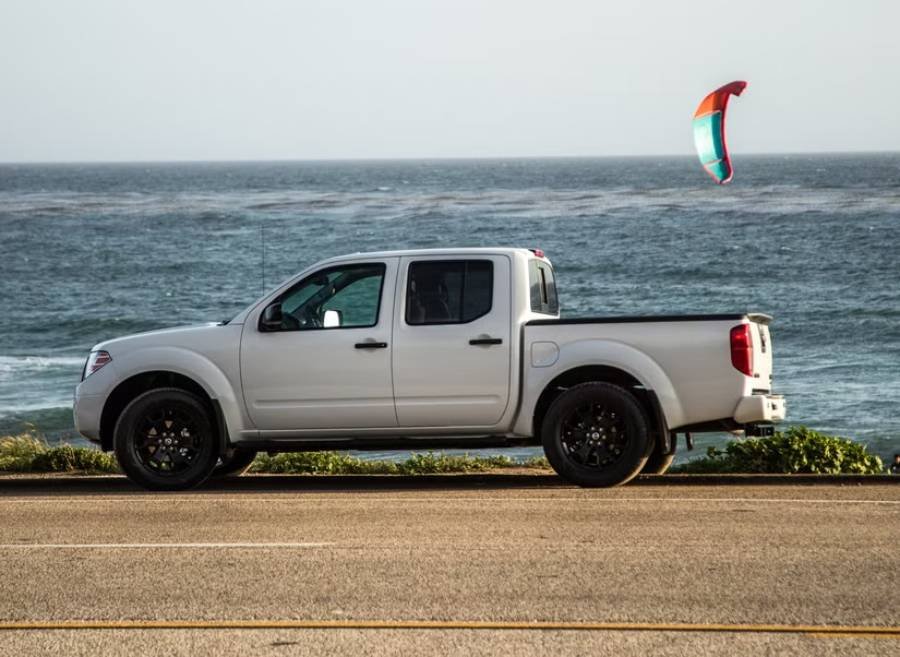
A Nissan Frontier rattling noise can come from the engine, exhaust system, drivetrain, suspension, or loose underbody components. The most likely cause depends on where the sound originates and when it occurs. A rattle during acceleration points to a different set of components than a noise that appears at idle, during startup, or while driving over bumps.
Start the diagnosis by identifying three details: the location of the noise, the driving condition that triggers it, and whether its frequency changes with engine RPM or vehicle speed. For example, a metallic rattle underneath the truck can indicate a loose heat shield or exhaust component, while a front-end rattle over uneven roads directs attention toward suspension components and loose hardware. A noise that follows engine RPM requires inspection of engine-bay and exhaust-related components before assuming the suspension is responsible.
A rattling Nissan Frontier should not be diagnosed from the sound alone. Some causes involve loose hardware that can be relatively straightforward to repair, while others require inspection of the engine, drivetrain, or suspension. This guide explains the main causes, symptom patterns, diagnostic process, safety considerations, and repair options for a Nissan Frontier rattling noise.
What Causes a Rattling Noise in a Nissan Frontier?
A Nissan Frontier rattling noise can originate from six main areas: the heat shields, exhaust system, engine, drivetrain, suspension, or loose underbody components. The location and operating condition of the noise provide the strongest clues about which area needs inspection. A metallic rattle below the cab, for example, should be investigated differently from a rattle that follows engine RPM or appears only when the truck crosses uneven pavement.
A loose or damaged heat shield is one possible source of a metallic rattle underneath the Nissan Frontier. Heat shields are positioned around hot exhaust components and can vibrate when their mounting points or fasteners no longer hold them securely. The resulting noise can become more noticeable at specific engine speeds because changes in RPM alter the vibration frequency of the exhaust system. A technician can distinguish this type of rattle by inspecting the shields, mounting points, and nearby exhaust components for movement or contact.
The exhaust system can produce a similar noise when a component or mounting point becomes loose or damaged. Exhaust pipes, hangers, muffler-related components, and the catalytic converter area should be considered when the sound comes from underneath the truck. The diagnostic distinction is important because an external exhaust component vibrating against another surface requires a different repair from an internal engine or drivetrain problem.
Engine-related rattles require closer attention when the noise originates in the engine bay and changes with engine speed. Timing-related components, accessory-drive components, and other moving engine parts can produce abnormal mechanical sounds as they wear or malfunction. However, a noise heard near the engine does not automatically confirm internal engine damage. Exhaust shields, brackets, and accessories located in the same area can transmit vibration through surrounding metal, making the source difficult to identify by sound alone.
The drivetrain becomes a stronger suspect when the rattle appears while the truck is moving, accelerating, or changing load rather than while it remains stationary. Transmission and driveline components operate under changing loads as power travels from the engine to the wheels. Comparing the noise during acceleration, steady-speed driving, deceleration, and stationary engine revving helps separate a drivetrain-related problem from an engine or exhaust vibration.
Suspension and front-end components should be inspected when the Nissan Frontier rattles primarily over bumps, potholes, or rough roads. Components such as sway bar links, ball joints, control-arm-related hardware, and other mounting points can develop movement as parts or bushings wear. Unlike an engine-speed-related rattle, this type of noise generally responds to suspension movement and road surface changes rather than RPM.
Loose underbody hardware can also create rattling without causing an immediate engine or drivetrain symptom. Skid plates, shields, brackets, fasteners, and other underbody components can vibrate or contact adjacent parts after hardware loosens or a component becomes damaged. This possibility is especially relevant when the truck otherwise operates normally and the sound is concentrated beneath the vehicle.
The six source areas should therefore be treated as diagnostic categories rather than a list of confirmed failures. The next step is to match the rattling noise to the condition that triggers it, because acceleration, idle, startup, and suspension movement narrow the possible causes more effectively than the word “rattle” alone.
Why Does My Nissan Frontier Rattle When Accelerating?
A Nissan Frontier that rattles during acceleration should first be checked for components affected by increased engine RPM, engine load, exhaust vibration, and drivetrain load. Acceleration changes several operating conditions simultaneously: the engine produces more torque, the exhaust system experiences different vibration frequencies, and the drivetrain transfers greater force to the wheels. A component that remains quiet at idle can therefore begin rattling when the accelerator is pressed.
The relationship between the rattle and engine RPM provides an important diagnostic clue. A noise that appears at a repeatable RPM range can result from a component reaching a vibration frequency at which it resonates against a nearby surface. Heat shields, exhaust hardware, brackets, and other mounted components are relevant examples. Reproducing the noise while the truck is stationary can help distinguish an RPM-related vibration from a problem that requires the drivetrain or wheels to be moving.
A rattle that occurs only while the Nissan Frontier is accelerating on the road requires a different diagnostic approach. The drivetrain experiences load when the engine transfers torque through the transmission and driveline, so a noise that cannot be reproduced by increasing RPM while stationary directs attention toward components affected by vehicle movement and load. The exact source still requires physical inspection because sound can travel through the chassis and make a drivetrain or exhaust rattle appear to originate elsewhere.
Why Does My Nissan Frontier Rattle at Low RPM?
A Nissan Frontier can rattle at low RPM when engine vibration causes a loose, worn, or poorly secured component to resonate within a specific engine-speed range. Low-RPM operation can place the engine and drivetrain under substantial load, particularly when accelerating in a higher gear or from a low road speed. This makes the relationship between RPM, throttle position, and vehicle movement useful for diagnosis.
Check whether the rattle begins and ends at approximately the same RPM each time. A narrow and repeatable RPM range supports the possibility of vibration-related resonance from components such as exhaust shields, brackets, or other mounted hardware. A rattle that instead becomes progressively stronger as engine load increases requires investigation beyond a simple loose shield because the noise may be associated with a component operating under load.
The stationary test provides another distinction. If increasing engine speed while parked reproduces the same rattle, components affected directly by engine RPM and vibration move higher on the diagnostic list. If the sound occurs only while accelerating on the road, vehicle load, drivetrain movement, and road-speed-dependent components require greater attention. This comparison does not identify the failed part by itself, but it substantially narrows the area that needs inspection.
Why Does My Nissan Frontier Rattle at Idle?
A Nissan Frontier that rattles at idle is more likely to have a vibration-related problem involving the engine, exhaust system, heat shields, brackets, or other components that move with engine vibration. Because the truck is stationary, wheel rotation and most suspension movement can be excluded from the initial diagnosis. This makes an idle rattle easier to isolate than a noise that occurs only while driving.
Engine vibration changes as idle speed and engine load change. A loose heat shield, exhaust bracket, or nearby metal component can remain quiet at one engine speed but begin vibrating when the engine reaches a frequency that causes it to resonate. For example, a metallic rattle that disappears after slightly increasing RPM can indicate that a component is vibrating only within the normal idle-speed range. The component still needs to be physically located because vibration can transmit sound through the exhaust system, frame, and body.
The behavior of the noise when electrical or mechanical loads change provides another diagnostic clue. If the rattle changes as engine speed changes, the source is more likely connected to engine vibration than to the suspension. A noise that remains unchanged regardless of RPM requires inspection of other components around the engine bay and underbody rather than assuming an internal engine problem.
Compare idle behavior in Park or Neutral with the sound heard while driving. A rattle that can be reproduced while the Nissan Frontier remains stationary directs the diagnosis toward components influenced by engine operation. A noise that disappears completely at idle but returns during acceleration or over bumps points toward a different operating condition and should be diagnosed under that condition.
An idle rattle should not automatically be classified as harmless simply because the truck continues to run normally. The source determines its severity. Loose external hardware and an internal mechanical problem can both produce rattling sounds, but their repair requirements and risks are different. Inspect the source when the noise is new, becomes progressively louder, or occurs with additional symptoms such as abnormal vibration, warning lights, or changes in engine performance.
Why Does My Nissan Frontier Rattle on Startup?
A Nissan Frontier can rattle on startup when an engine-related component, accessory, exhaust component, heat shield, or loose mounting point produces noise as the engine transitions from stationary to running. The duration of the rattle is one of the most useful diagnostic details. A sound lasting only during the first moments after startup should be investigated differently from a rattle that continues throughout idle.
Record whether the noise occurs on every startup or only under specific conditions. A repeatable startup rattle gives a technician a defined operating condition for reproducing the problem. If the noise disappears before the truck begins moving, suspension and road-speed-related components become less likely because neither wheel movement nor road impact is required to produce the sound.
Cold-start behavior provides another useful distinction. Engine operating conditions immediately after a cold start differ from those after the engine has reached normal operating temperature. Components also expand as their temperature rises, which can change clearances and vibration characteristics. For this reason, a rattle that appears only when the Nissan Frontier is cold should be documented separately from one that occurs during both cold and warm starts.
Compare the cold-start noise with a restart after the engine is warm. If the rattle consistently appears during cold starts but disappears during warm restarts, temperature is part of the symptom pattern and should be included in the diagnosis. If the same noise occurs regardless of engine temperature and follows RPM after startup, the investigation should focus more broadly on components affected by engine speed and vibration.
Do not diagnose a timing, engine, or exhaust failure solely from the fact that the Nissan Frontier rattles at startup. Similar metallic sounds can originate from different components positioned close together, and the chassis can transmit noise away from its actual source. The reliable diagnostic sequence is to establish when the noise begins, how long it lasts, whether temperature changes it, and where it is loudest before determining which component requires repair.
Why Does My Nissan Frontier Rattle When Driving Over Bumps?
A Nissan Frontier that rattles when driving over bumps is more likely to have a loose or worn suspension, front-end, or underbody component. Road impacts move the suspension and chassis while engine RPM may remain relatively stable, so a noise triggered specifically by potholes, speed bumps, or uneven pavement directs the diagnosis away from components that rattle only with engine speed.
Suspension components should be inspected when the sound comes from the front or rear of the truck and corresponds directly with wheel movement. Sway bar links, ball joints, control-arm-related components, bushings, and mounting hardware can develop wear or looseness that allows movement between parts. The resulting sound may resemble a metallic rattle or light clunk as the suspension changes position. Repeated noise over small, closely spaced bumps is particularly useful because it provides a consistent condition for reproducing the symptom.
The location of the sound helps narrow the inspection area. A rattle concentrated near one front wheel directs attention toward suspension and steering-related hardware on that side, while a sound closer to the center of the truck requires inspection of underbody and exhaust components as well. Sound can travel through the frame, so the location heard from the cabin should be treated as a starting point rather than proof that a specific component has failed.
Loose underbody hardware can produce similar symptoms without being part of the suspension. Skid plates, shields, brackets, and their fasteners can move when the chassis is disturbed by a bump. For example, a shield with a loose mounting point may remain quiet on smooth pavement but strike or vibrate against an adjacent surface when the truck crosses an uneven section of road.
Compare the rattle on rough roads with its behavior on smooth pavement. If the noise follows road impacts but does not change when engine RPM increases while the truck is stationary, suspension and underbody components become stronger diagnostic candidates. If the same metallic sound can also be reproduced by changing engine RPM while parked, the exhaust system, heat shields, and other vibration-sensitive components require inspection before concluding that the suspension is responsible.
A bump-related rattle deserves faster inspection when it is accompanied by steering looseness, abnormal handling, uneven vehicle movement, or a heavier knocking sound. These additional symptoms indicate that the problem may extend beyond a minor loose shield or fastener. The component causing the noise must be identified before deciding whether the Nissan Frontier is safe to continue driving.
Why Is My Nissan Frontier Rattling Underneath the Truck?
A rattling noise underneath a Nissan Frontier commonly directs the initial inspection toward the heat shields, exhaust system, exhaust mounting points, skid plates, brackets, and other underbody hardware. The exact source can be narrowed by determining whether the noise responds to engine RPM, acceleration, road impacts, or vehicle speed.
Start with components that can physically vibrate against another surface. A loose heat shield or underbody shield can create a thin metallic rattle when its fasteners no longer secure it firmly. Exhaust pipes and related hardware can also move as the engine and exhaust system vibrate. If sufficient clearance is lost, one component can intermittently contact a nearby shield, bracket, or body surface and create a noise that appears only within certain operating conditions.
Exhaust mounting points are another area to inspect when the noise comes from below the truck. The exhaust system requires support while still allowing controlled movement as the powertrain moves and components expand with heat. A damaged or displaced mounting component can change the position of the exhaust assembly and allow metal-to-metal contact. The resulting rattle may become more noticeable during acceleration because engine load and exhaust vibration change at the same time.
Skid plates and other protective underbody components should be checked when the Nissan Frontier has recently been serviced or driven on rough terrain. A loose fastener or displaced panel can create substantial noise even when the engine, transmission, and suspension are operating normally. Inspecting mounting points for missing, loose, damaged, or incorrectly positioned hardware helps separate these external rattles from mechanical noises originating inside major assemblies.
Use the trigger condition to distinguish an underbody vibration from other causes. A rattle that occurs at the same engine RPM while both parked and driving favors an engine-vibration or exhaust-related source. A noise produced mainly by bumps favors a loose underbody or suspension component. A rattle that requires the truck to be moving or accelerating but cannot be reproduced while stationary requires further investigation of components affected by drivetrain load and vehicle movement.
Do not reach underneath a running or unsupported Nissan Frontier to locate the sound manually. Visual inspection should be performed with the vehicle safely secured, and components near the exhaust system should be allowed to cool before they are touched. If the source cannot be identified from a safe inspection, reproducing the operating condition for a qualified technician is more useful than replacing parts based solely on where the noise appears to come from.
How Can You Diagnose a Nissan Frontier Rattling Noise?
Diagnose a Nissan Frontier rattling noise by identifying its location, reproducing the condition that triggers it, checking whether it follows engine RPM or vehicle movement, and inspecting the components associated with that pattern. This process narrows the possible causes before parts are removed or replaced. A rattle should not be diagnosed from its sound alone because engine, exhaust, drivetrain, suspension, and underbody components can produce similar metallic noises.
Begin by recording exactly when the rattle occurs. Determine whether it appears during startup, idle, acceleration, steady-speed driving, or travel over uneven pavement. Then note whether engine temperature, RPM, road speed, or vehicle load changes the noise. For example, a rattle that consistently begins within a narrow RPM range provides different diagnostic information from a noise triggered every time the front wheels cross a bump.
Next, reproduce the symptom under the simplest safe condition possible. If the same rattle occurs while the truck is stationary and engine RPM increases, wheel rotation and suspension movement are not required to create it. The initial inspection can therefore concentrate on the engine bay, exhaust system, heat shields, brackets, and other components affected by engine vibration. If the noise requires vehicle movement, the diagnostic scope expands to the drivetrain, suspension, wheels, and underbody components.
A visual inspection should follow the symptom-based assessment. Look for loose or missing fasteners, displaced shields, damaged brackets, abnormal component movement, and evidence of metal-to-metal contact. Inspection findings should confirm the suspected source rather than simply matching a component to a common rattling-noise description.
How Can You Identify Where the Rattling Noise Is Coming From?
Identify the source of a Nissan Frontier rattle by dividing the truck into four initial areas: the engine bay, front end, rear area, and underbody. Establishing the general location reduces the number of components that need to be inspected and makes the operating condition more meaningful.
An engine-bay rattle that changes with RPM directs attention toward components affected by engine operation and vibration. An underbody metallic noise requires inspection of heat shields, exhaust components, brackets, skid plates, and mounting hardware. A front-end rattle triggered by rough pavement shifts attention toward suspension and steering-related components. The same principle applies to a noise concentrated toward the rear of the truck.
Determine whether the sound follows engine speed or road speed after establishing its general location. Engine-speed-related noise changes as RPM rises or falls, including when the vehicle is stationary. Road-speed-related noise requires vehicle movement and changes as the truck travels faster or slower. A bump-related rattle instead responds primarily to suspension and chassis movement.
Avoid relying entirely on where the sound appears to come from inside the cabin. Metal structures can transmit vibration away from the component producing it, causing an underbody or exhaust noise to sound as though it originates in another part of the truck. Use the perceived location to define the first inspection area, then confirm the source through physical evidence and repeatable testing.
How Can Driving Conditions Help Identify the Cause?
Driving conditions identify a Nissan Frontier rattling-noise source by showing which vehicle systems are active when the noise appears. Five particularly useful conditions are idle, startup, acceleration, steady-speed driving, and driving over bumps. Comparing the sound across these conditions can eliminate entire groups of possible causes.
A rattle at idle indicates that vehicle movement is unnecessary to produce the symptom. Engine vibration, accessories, exhaust components, shields, and mounting points therefore deserve attention. A startup-only rattle narrows the condition further because it occurs during the transition from a stationary engine to normal operation. Recording whether the engine is cold or warm adds another diagnostic variable.
Acceleration introduces both engine RPM and drivetrain load. If the rattle occurs during acceleration but can also be reproduced by increasing RPM while stationary, an RPM- or vibration-sensitive component becomes a stronger candidate. If it occurs only when the truck is moving under load, drivetrain and movement-dependent components require closer inspection.
Steady-speed driving provides a useful comparison because engine load and suspension movement can differ from acceleration. Record whether the noise changes with vehicle speed, engine speed, throttle input, or road surface. A rattle tied closely to bumps and potholes instead directs the inspection toward suspension, front-end, and loose underbody components because chassis movement is the primary trigger.
Use these conditions together rather than treating one observation as a diagnosis. For example, “rattles at 1,500 RPM” is more diagnostically useful when combined with “occurs while parked and driving” and “comes from underneath the front of the truck.” Each additional observation reduces the number of plausible sources.
When Should a Mechanic Diagnose the Rattling Noise?
A mechanic should diagnose a Nissan Frontier rattling noise when the source cannot be safely identified, the noise becomes progressively worse, or it occurs with symptoms that indicate a mechanical or safety-related problem. Professional inspection is also appropriate when locating the source requires working beneath the truck or testing components that cannot be evaluated safely through a basic visual inspection.
Warning lights, loss of engine power, overheating, strong or new vibration, abnormal steering behavior, and changes in vehicle handling make the rattle more significant. These symptoms provide evidence that the problem may involve more than loose external hardware. Continuing to replace or tighten unrelated parts without establishing the source can hide the symptom temporarily while leaving the actual fault unresolved.
Professional diagnosis is also useful when the noise occurs only under specific driving conditions that cannot be reproduced while the truck is stationary. A technician can compare the symptom with vehicle speed, engine load, suspension movement, and other operating conditions before inspecting the suspected system. Diagnostic trouble codes can provide additional information when a monitored system has detected a fault, but the absence of a code does not prove that a mechanical rattle is harmless.
Provide the mechanic with a precise symptom description rather than stating only that the Nissan Frontier “rattles.” Record where the noise is loudest, whether the engine is cold or warm, the approximate RPM or road speed when it occurs, and whether acceleration or bumps trigger it. A repeatable symptom pattern gives the technician a more useful starting point and reduces unnecessary inspection of unrelated components.
Is It Safe to Drive a Nissan Frontier With a Rattling Noise?
A Nissan Frontier with a rattling noise may be safe to drive only when the source has been identified and confirmed not to affect vehicle operation or safety. The sound itself does not determine severity. A loose shield and a worn mechanical component can both create a rattle, but the consequences of continuing to drive are different.
A light metallic rattle caused by loose external hardware generally presents a different level of concern from a noise accompanied by changes in engine, drivetrain, steering, or suspension behavior. For example, a loose heat shield can vibrate without immediately affecting how the truck drives. A suspension-related rattle combined with steering looseness or unstable handling requires more urgent attention because the symptoms involve components that influence vehicle control.
Five warning signs make a Nissan Frontier rattling noise more concerning: warning lights, loss of engine power, overheating, strong vibration, and abnormal steering or handling. These symptoms indicate that the problem extends beyond an isolated sound and should not be evaluated only by whether the truck can still move. Stop driving and arrange an appropriate inspection when continued operation could worsen the fault or compromise vehicle control.
The progression of the noise also matters. A rattle that becomes louder, lasts longer, or begins occurring under additional driving conditions indicates that something has changed. For example, a noise initially heard only over large bumps but later appearing on smooth roads suggests increasing movement or deterioration somewhere in the affected system. The component should be inspected rather than waiting for another symptom to develop.
Do not assume the truck is safe simply because no warning light appears. Many loose exhaust, underbody, and suspension components do not necessarily trigger an electronic diagnostic warning. Mechanical inspection remains necessary when the noise is persistent, new, or progressively worsening.
How Do You Fix a Rattling Noise in a Nissan Frontier?
Fix a Nissan Frontier rattling noise by repairing, securing, or replacing the component confirmed to be producing the sound. There is no single repair for a rattle because the symptom can originate from the exhaust system, underbody hardware, suspension, engine, or drivetrain. Diagnosis should therefore come before parts replacement.
A loose heat shield or underbody component requires inspection of both the rattling part and its mounting points. The repair may involve securing loose hardware or replacing damaged mounting hardware or the affected component. Simply forcing a shield away from another surface without determining why it moved can leave the original mounting problem unresolved.
An exhaust-related rattle requires inspection of the affected exhaust component and its supports. Loose or damaged mounting hardware can allow the exhaust assembly to move and contact surrounding parts. A damaged exhaust component requires repair or replacement based on the actual failure rather than attempting to eliminate the noise by tightening unrelated fasteners.
Suspension-related rattles require replacement or repair of the component with confirmed wear or looseness. Sway bar links, ball joints, control-arm-related parts, bushings, and mounting hardware should not be replaced solely because they are common sources of front-end noise. The failed component should show physical looseness, wear, damage, or another finding that matches the symptom observed during driving.
Engine or drivetrain rattles require a more precise diagnosis before repair. These systems contain multiple moving components, and replacing parts based only on the character of the sound can lead to unnecessary repairs. Establish whether the noise follows RPM, engine load, vehicle speed, or drivetrain operation, then inspect the system associated with that pattern.
After any repair, reproduce the original operating condition to verify the result. If the Nissan Frontier previously rattled at a particular RPM, during acceleration, or over bumps, test it under the same condition after the repair. A repair is confirmed when the identified fault has been corrected and the original rattling symptom no longer occurs under the conditions that previously produced it.
How Much Does It Cost to Fix a Nissan Frontier Rattling Noise?
The cost to fix a Nissan Frontier rattling noise depends on the component causing it, the labor required to reach that component, and whether it needs adjustment, repair, or replacement. A loose fastener or heat shield can require relatively minor work, while suspension, drivetrain, or internal engine problems can involve substantially more labor and replacement parts. The rattling sound alone cannot provide an accurate repair estimate.
Minor external problems generally sit at the lower end of the repair spectrum. Loose heat shields, skid plates, brackets, and underbody hardware may require securing or replacing mounting hardware rather than replacing a major vehicle component. Cost increases when the mounting point itself is damaged or when another component must be removed to access the source of the vibration.
Exhaust-related costs depend on which part has failed. A loose mounting point requires a different repair from a damaged exhaust component or catalytic converter. The same distinction applies to suspension rattles. Replacing a worn link or piece of mounting hardware involves different parts and labor from repairing a more extensive suspension problem.
Engine and drivetrain noises can produce the widest variation in repair cost because these systems contain multiple components and may require additional diagnostic labor before the source is confirmed. A mechanic should identify the failed component before providing a meaningful estimate. Replacing a part because it is commonly associated with rattling can increase repair costs without eliminating the original noise.
An accurate estimate should therefore identify four items: the component producing the rattle, the specific failure, the required replacement or repair, and the labor needed to complete it. Comparing estimates is more useful after these details are established because two repair quotes may appear different simply because they cover different work.
How Can You Prevent Rattling Noises in a Nissan Frontier?
Prevent Nissan Frontier rattling noises by inspecting mounting hardware, exhaust and underbody components, suspension parts, and new mechanical noises before looseness or wear progresses. Prevention does not eliminate every possible rattle, but early inspection can stop a minor vibration or worn component from developing into a persistent noise or larger mechanical problem.
Inspect the exhaust system and visible underbody hardware periodically for loose, missing, damaged, or displaced components. Heat shields, brackets, skid plates, and mounting points are exposed to vibration and road conditions, making their physical condition relevant to rattling-noise prevention. A component that has begun moving should be secured or repaired according to its mounting design rather than left until it contacts another surface.
Check suspension components when new noises begin appearing over bumps or uneven roads. Wear that creates excessive movement can become progressively more noticeable as component clearances increase. Changes in steering feel or handling alongside a new front-end rattle make inspection more important because the symptom is no longer limited to noise.
Pay attention to changes in an existing rattle instead of monitoring only whether a new sound appears. An increase in volume, duration, or frequency provides evidence that the condition producing the noise has changed. For example, a rattle that originally occurs within one narrow RPM range but later appears across a broader range should be inspected again rather than treated as the same unchanged symptom.
Inspect relevant mounting points after work has been performed near the area where a new rattle develops. If the noise begins shortly after exhaust, underbody, engine-bay, or suspension service, the timing provides useful diagnostic context. It does not prove that the previous repair caused the noise, but it gives the inspection a logical starting point.
The most effective preventive habit is to document abnormal noises while they remain reproducible. Record the approximate RPM, vehicle speed, road condition, engine temperature, and location whenever a new rattle occurs. These details make later diagnosis more precise and help distinguish a developing mechanical problem from an isolated vibration.
Read more: Nissan Frontier 4WD Problems: Symptoms, Causes, and Fixes”””””
Should You Ignore a Nissan Frontier Rattling Noise If the Truck Drives Normally?
You should not ignore a Nissan Frontier rattling noise simply because the truck continues to drive normally. Normal acceleration, braking, steering, and engine operation can indicate that the problem has not yet produced an obvious drivability symptom, but they do not identify the component causing the noise or confirm that the underlying condition is harmless.
A loose external component illustrates why drivability alone is not enough for diagnosis. A heat shield, bracket, skid plate, or other piece of underbody hardware can vibrate while the engine and drivetrain continue operating normally. The truck may show no loss of power or handling problem even though a component requires securing or replacement. Identifying the source early can prevent the noise from becoming more severe or the loose component from affecting adjacent parts.
The same principle applies more strongly when the source has not been identified. Engine, drivetrain, exhaust, and suspension problems can produce rattling before additional symptoms become obvious. Treating every unexplained rattle as a minor vibration risks overlooking a developing mechanical problem. The appropriate response is to determine which operating condition produces the noise and inspect the components associated with that condition.
Four characteristics help determine how quickly an unexplained rattle should be investigated: location, operating condition, progression, and accompanying symptoms. Location identifies the first area to inspect. Operating condition shows whether the sound relates to engine RPM, acceleration, vehicle movement, or suspension travel. Progression establishes whether the problem is stable or becoming worse. Accompanying symptoms indicate whether the issue is beginning to affect another vehicle system.
A stable metallic rattle from a confirmed loose external component presents a different situation from an unidentified noise that becomes progressively louder. Likewise, a rattle accompanied by power loss, overheating, strong vibration, warning lights, steering changes, or abnormal handling requires greater attention than an isolated sound with a confirmed non-critical source. The additional symptoms change the diagnostic context even when both noises could initially be described as a “rattle.”
Use changes in the noise as a reason for reassessment. A Nissan Frontier that originally rattles only during acceleration but later begins making the same sound at idle has developed a different symptom pattern. A noise that spreads across a wider RPM range, occurs more frequently, or increases in intensity also provides evidence that the underlying condition has changed.
The practical rule is straightforward: identify the source before deciding that a Nissan Frontier rattling noise can be ignored. Determine when the rattle occurs, locate the general area, reproduce the symptom when it is safe to do so, and inspect the relevant components. Seek professional diagnosis when the source remains uncertain or when the noise is accompanied by changes in engine performance, vehicle control, temperature, or vibration.