
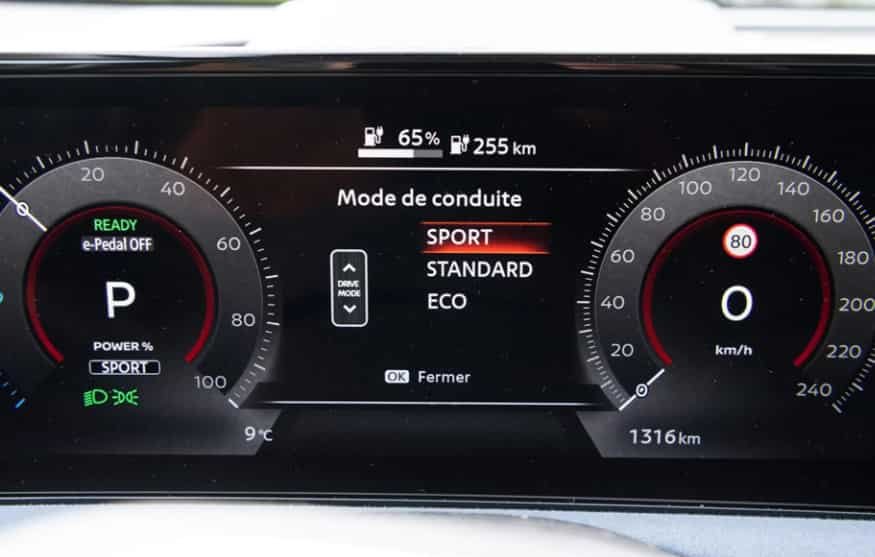
Electric vehicles continue to reshape modern transportation. Nissan supports this shift with innovative technologies that improve comfort, efficiency, and vehicle control. One feature that often attracts new owners is E Step. Many drivers ask the same question, what is E Step Nissan Ariya, and how does it improve everyday driving?
E Step helps you control the vehicle more naturally. When you lift your foot from the accelerator, the system slows the vehicle without requiring immediate brake pedal input. At the same time, regenerative braking captures energy and sends it back to the battery. As a result, the Ariya improves energy efficiency while delivering a smoother driving experience.
This feature becomes especially useful in city traffic, parking areas, and other situations that require frequent speed changes. Instead of constantly switching between two pedals, you can manage acceleration and deceleration with greater confidence. Therefore, many drivers find daily commuting less tiring and more enjoyable.
Understanding how E Step works also helps you use the feature correctly. It allows you to improve driving efficiency while maintaining better control in different road conditions. In this guide, you will learn what E Step is, how it works, when to use it, and how it compares with other one pedal driving systems available in today’s electric vehicles.
What Is E Step in the Nissan Ariya?
E Step is a smart driving feature available in the Nissan Ariya. It helps drivers control acceleration and deceleration with the accelerator pedal during normal driving. When you press the accelerator, the vehicle moves forward as expected. When you release the pedal, the system automatically slows the vehicle while recovering energy through regenerative braking.
Unlike a traditional gasoline vehicle, an electric vehicle can convert kinetic energy into electricity during deceleration. Instead of wasting that energy as heat, the Nissan Ariya sends it back to the battery. This process improves energy efficiency and supports the vehicle’s overall driving range.
E Step also makes daily driving feel smoother. Drivers do not need to move their foot between the accelerator and brake pedal as often in slow moving traffic. As a result, many people experience less fatigue during long commutes or busy city driving. The feature also gives drivers more confidence because it provides predictable and controlled deceleration.
Although E Step reduces the need to use the brake pedal, it does not replace the braking system. Drivers should still use the brake pedal whenever stronger braking or a complete stop is necessary. This design creates a familiar driving experience while adding the efficiency benefits of regenerative braking.
Many people confuse E Step with full one pedal driving. However, the two systems are not always the same. E Step focuses on smooth deceleration and energy recovery. It delivers a natural driving feel that helps drivers transition from gasoline vehicles to electric vehicles with greater confidence.
How Nissan’s E Step System Works
The Nissan Ariya uses an electric motor to power the vehicle. Unlike a gasoline engine, the electric motor can perform two different tasks. It can move the vehicle forward, and it can also slow the vehicle during deceleration.
When you press the accelerator, the electric motor draws energy from the battery. The motor then converts that energy into motion. The vehicle responds quickly because an electric motor delivers instant torque.
When you lift your foot from the accelerator, E Step changes how the motor operates. Instead of supplying power, the motor begins to recover energy. It creates resistance that slows the vehicle in a smooth and controlled way. At the same time, the motor converts kinetic energy into electrical energy.
The recovered electricity flows back into the high voltage battery. This process is known as regenerative braking. It helps reduce energy waste and improves overall driving efficiency. Although the amount of recovered energy depends on speed and road conditions, every recovery cycle supports better battery use.
The system also works with the conventional braking system. During gentle deceleration, regenerative braking provides most of the stopping force. If you need to slow down more quickly, the hydraulic brakes add extra braking power. This combination creates a smooth transition and helps maintain vehicle stability.
E Step constantly monitors vehicle speed, pedal input, and driving conditions. It adjusts the braking force in real time to deliver predictable performance. As a result, the vehicle feels smooth in traffic and remains easy to control in different driving situations.
Drivers notice the greatest benefit in urban environments. Frequent stops create more opportunities to recover energy. The feature also reduces the number of times you move your foot between the accelerator and brake pedal. This makes everyday driving more comfortable and less tiring.
E Step vs Traditional Braking
E Step and traditional braking slow the vehicle in different ways. Both systems improve safety, but they serve different purposes during everyday driving.
A traditional braking system relies on friction to reduce speed. When you press the brake pedal, the brake pads squeeze the brake discs and create friction. This action slows the wheels and brings the vehicle to a stop. However, the process releases heat and wastes the vehicle’s kinetic energy.
E Step works differently. It uses regenerative braking before the conventional brakes become necessary. As you lift your foot from the accelerator, the electric motor creates resistance and slows the vehicle. At the same time, it converts kinetic energy into electricity and sends that energy back to the battery. This process improves efficiency instead of wasting energy.
Another important difference is the driving experience. Traditional braking requires frequent movement between the accelerator and brake pedals. E Step reduces those movements during normal driving. Many drivers find this approach more comfortable, especially in heavy traffic or crowded urban areas.
Brake wear also changes with E Step. Since regenerative braking handles much of the deceleration, the conventional brakes operate less often during routine driving. As a result, the brake pads and brake discs may last longer than they would in a vehicle that depends only on friction braking.
Despite these advantages, E Step does not replace the conventional braking system. Drivers should always use the brake pedal when they need stronger stopping power or when traffic conditions change suddenly. The Nissan Ariya combines both systems to deliver smooth performance, reliable braking, and greater driving confidence.
Choosing between the two systems is not necessary because they work together. E Step improves efficiency and comfort during normal driving, while the conventional brakes provide maximum stopping power whenever the situation demands it.
E Step vs Nissan e Pedal
Many drivers use the terms E Step and e Pedal as if they mean the same thing. However, Nissan designed these systems for different driving experiences. Understanding the difference helps you choose the right feature and avoid confusion.
E Step focuses on smooth and controlled deceleration. When you release the accelerator, the vehicle slows down through regenerative braking. The system reduces the need to use the brake pedal during normal driving. However, you will still need the brake pedal in many situations, especially when coming to a complete stop or responding to changing traffic conditions.
The original e Pedal system offers a stronger one pedal driving experience. It allows the vehicle to slow down more aggressively after you release the accelerator. In some Nissan electric vehicles, the system can bring the vehicle to a complete stop without requiring immediate brake pedal input. This creates a driving style that feels different from a conventional vehicle.
The Nissan Ariya uses E Step to provide a more natural transition for drivers who are new to electric vehicles. Instead of delivering very strong deceleration, the system balances comfort, vehicle control, and energy recovery. Many drivers find this approach easier to learn because it feels familiar while still offering the benefits of regenerative braking.
Both systems use regenerative braking to recover energy during deceleration. Both systems also improve driving efficiency and reduce wear on the conventional brakes. The main difference lies in how the vehicle slows down after you release the accelerator and how much driver input remains necessary.
If you prefer a driving experience that closely resembles a gasoline vehicle, E Step may feel more comfortable. If you enjoy stronger one pedal driving, you may prefer a system that provides more aggressive deceleration. Nissan developed E Step to deliver a balanced experience that combines efficiency, comfort, and predictable vehicle control.
Benefits of E Step in Daily Driving
E Step offers more than a convenient driving feature. It improves comfort, supports energy efficiency, and helps drivers enjoy a smoother experience behind the wheel. These benefits become even more noticeable during everyday driving.
Improves Driving Comfort
City traffic often requires frequent acceleration and deceleration. E Step makes these changes feel smoother because the vehicle slows down as soon as you release the accelerator. You spend less time moving your foot between two pedals. As a result, daily driving feels more relaxed and less tiring.
Increases Energy Efficiency
Every time the vehicle slows down, E Step uses regenerative braking to recover energy. The system sends that energy back to the battery instead of wasting it as heat. This process helps the Nissan Ariya use electricity more efficiently. Although the improvement varies with driving conditions, efficient energy recovery can support a longer driving range over time.
Reduces Brake Wear
Traditional brakes create friction every time you slow the vehicle. E Step handles much of the deceleration during normal driving. Therefore, the conventional braking system operates less often. Lower brake usage can reduce wear on brake pads and brake discs, which may lower long term maintenance costs.
Delivers Better Vehicle Control
Smooth deceleration helps drivers maintain better control in different traffic situations. The vehicle responds in a predictable way when you lift the accelerator. This consistent behavior makes it easier to adjust your speed in traffic, parking areas, and residential streets.
Supports a More Enjoyable EV Experience
Many people drive an electric vehicle for the first time after years of owning gasoline cars. E Step helps make that transition easier. The feature feels familiar while introducing the advantages of regenerative braking. As drivers gain experience, they often develop smoother driving habits that improve both comfort and efficiency.
Makes Urban Driving More Efficient
Busy streets create many opportunities to recover energy through regenerative braking. Frequent stops and slow traffic allow E Step to work more often than it would on an open highway. For this reason, many Nissan Ariya owners notice the greatest benefits during city driving, where efficiency and comfort matter the most.
When Should You Use E Step?
E Step performs best in situations where you slow down and speed up frequently. The system uses regenerative braking to recover energy while providing smooth deceleration. It also helps reduce the effort required during everyday driving.
Driving in the City
Urban roads offer the ideal environment for E Step. Traffic lights, intersections, and busy streets require constant speed adjustments. E Step helps you slow down naturally each time you release the accelerator. At the same time, the system recovers energy and sends it back to the battery.
Driving in Heavy Traffic
Traffic jams often force drivers to stop and move every few seconds. E Step makes these conditions easier to manage. You can control the vehicle more smoothly without moving your foot to the brake pedal as often. As a result, long commutes become less tiring.
Parking and Low Speed Maneuvers
Parking garages and crowded parking lots demand precise speed control. E Step responds immediately when you ease off the accelerator. The smooth deceleration makes it easier to position the vehicle and drive through tight spaces with confidence.
Everyday Commuting
Many commuters follow the same route every day. If your journey includes traffic signals, roundabouts, or slow moving traffic, E Step can improve both comfort and efficiency. Frequent deceleration gives the system more opportunities to recover energy through regenerative braking.
Situations That Require Extra Caution
E Step supports normal driving, but it cannot replace the conventional braking system. Always use the brake pedal when you need stronger stopping power or an immediate stop. This is especially important during emergency situations, on steep downhill roads, or when driving on wet, snowy, or icy surfaces. Using both systems together gives you better control and helps keep every journey safe.
Limitations and Safety Notes
E Step makes everyday driving easier, but it cannot handle every driving situation. Understanding its limits helps you use the feature correctly and safely.
The system works best during normal driving. It provides smooth deceleration and recovers energy through regenerative braking. However, the amount of braking force depends on your speed, battery condition, and road environment. You may notice different levels of deceleration as these conditions change.
E Step also cannot replace the conventional braking system. You should always keep your foot ready to use the brake pedal when necessary. Quick reactions remain essential in heavy traffic, emergency situations, and unexpected road hazards.
Road conditions also affect system performance. Wet roads, snow, ice, loose gravel, and steep hills can reduce traction. In these situations, drivers should reduce speed and rely on the brake pedal whenever additional stopping power is required. Safe driving habits remain more important than any driver assistance feature.
New Nissan Ariya owners may need a short adjustment period. The vehicle slows down differently than a traditional gasoline car. After a few days of regular driving, most drivers become familiar with the system and learn how to control speed more smoothly.
E Step works as a driving aid rather than an autonomous system. Drivers must stay alert, monitor traffic, and remain fully responsible for controlling the vehicle at all times. Using the feature correctly allows you to enjoy better comfort, improved efficiency, and a safer driving experience.
Frequently Asked Questions
Does E Step increase the driving range of the Nissan Ariya?
E Step can improve overall driving efficiency by recovering energy during deceleration. The system sends that energy back to the battery through regenerative braking. The actual increase in driving range depends on traffic, road conditions, driving style, and weather.
Does E Step replace the brake pedal?
No. E Step supports everyday driving, but it does not replace the conventional braking system. You should always use the brake pedal when you need stronger braking or a complete stop.
Is E Step the same as Nissan e Pedal?
No. Both systems use regenerative braking, but they deliver different driving experiences. E Step provides smooth deceleration and a more familiar feel, while e Pedal offers stronger one pedal driving in supported Nissan models.
Can you turn E Step on or off?
Yes. Nissan allows drivers to switch E Step on or off using the dedicated control inside the vehicle. This gives you the flexibility to choose the driving style that best suits your preferences and road conditions.
Does E Step work on the highway?
Yes. E Step functions during highway driving, but its benefits are more noticeable in urban areas. City traffic creates more opportunities for regenerative braking because drivers slow down and accelerate more often.
Does E Step help reduce brake wear?
Yes. E Step uses regenerative braking during normal deceleration, so the conventional brakes operate less frequently. Over time, this may reduce wear on brake pads and brake discs.
Is E Step suitable for new EV drivers?
Yes. Many first time EV owners adapt to E Step quickly because the system delivers smooth and predictable deceleration. After a short learning period, most drivers find the feature comfortable and easy to use.
Is E Step safe to use in all weather conditions?
E Step remains available in different weather conditions, but drivers should always adjust their driving to match the road surface. Wet roads, snow, ice, and loose gravel can reduce traction. In these situations, you should drive carefully and use the brake pedal whenever additional stopping power is needed.
Conclusion
Understanding what is E Step Nissan Ariya helps you get more value from every drive. The system combines smooth deceleration with regenerative braking to improve efficiency, reduce brake wear, and make daily driving more comfortable. While it does not replace the conventional braking system, it supports better vehicle control during normal driving conditions.
E Step also highlights one of the biggest advantages of electric vehicles. Instead of wasting energy during deceleration, the Nissan Ariya recovers part of that energy and stores it in the battery. This process helps improve overall efficiency and creates a more refined driving experience, especially in busy urban environments.
Whether you are new to electric vehicles or already familiar with EV technology, learning how E Step works can help you drive with greater confidence. By using the feature in the right situations and understanding its limitations, you can enjoy smoother acceleration, more predictable deceleration, and better energy management throughout every journey.
If you are considering the Nissan Ariya, E Step is one of the features worth exploring. It combines comfort, efficiency, and intuitive vehicle control in a way that makes everyday driving easier. As more drivers switch to electric vehicles, technologies like E Step continue to show how smart engineering can improve both convenience and performance.