
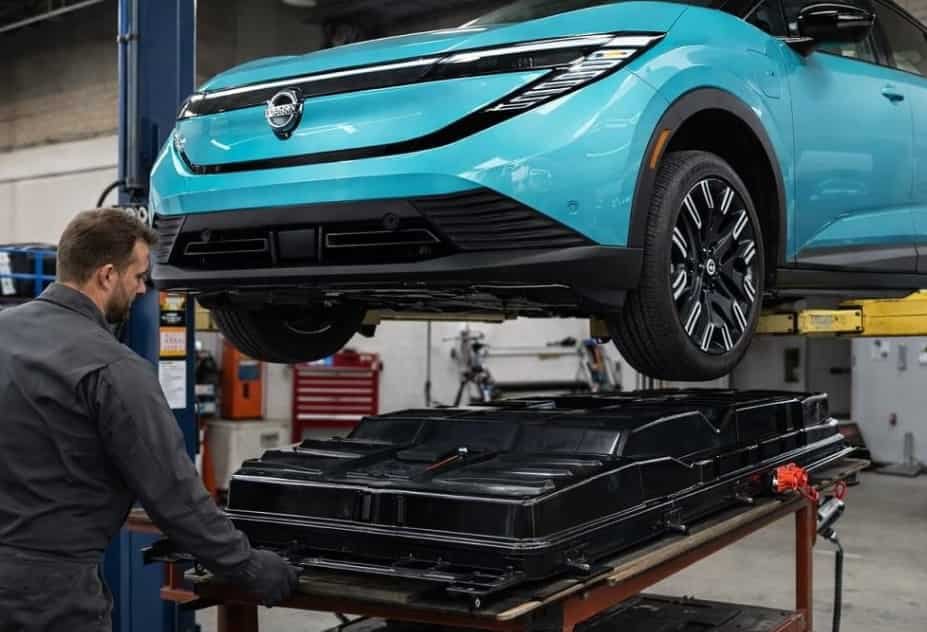
A Nissan Leaf battery does not have a fixed replacement schedule. Most battery packs last between 8 and 15 years. The actual lifespan depends on climate, charging habits, driving patterns, and battery care.
Electric vehicle batteries do not need replacement based on mileage alone. Owners usually replace a Nissan Leaf battery when its capacity drops and affects daily driving. The main cause is battery degradation, which reduces the amount of energy the lithium-ion cells can store.
Battery degradation happens gradually. A Nissan Leaf battery usually loses capacity over time instead of stopping suddenly. As the battery loses energy storage ability, the vehicle’s driving range becomes shorter and charging performance may change.
Several factors can speed up battery degradation. High temperatures, frequent fast charging, heavy usage, and poor charging habits can reduce battery lifespan. Understanding these factors helps Nissan Leaf owners know when to check battery health and consider replacement.
This article explains Nissan Leaf battery lifespan, replacement signs, replacement costs, and ways to extend battery life. These details help owners make better decisions about EV maintenance and long-term ownership.
How Long Does a Nissan Leaf Battery Usually Last?
A Nissan Leaf battery usually lasts 8 to 15 years under normal driving conditions. The exact lifespan depends on battery chemistry, climate, charging behavior, and how often the vehicle is used. Unlike gasoline engines that require scheduled replacements, Nissan Leaf batteries lose capacity gradually through a process called battery degradation.
Battery degradation happens because lithium-ion battery cells experience chemical changes during charging and discharging cycles. Each cycle slightly reduces the battery’s ability to store energy. Over several years, this capacity loss becomes noticeable through reduced driving range and fewer available battery capacity bars on the Nissan Leaf dashboard.
The battery lifespan also changes between different Nissan Leaf generations. Earlier models, especially the first generation introduced in 2011, used battery packs that were more sensitive to high temperatures because they did not include an active liquid cooling system. Later models improved battery durability through updated battery chemistry and better thermal management.
Climate plays an important role in Nissan Leaf battery longevity. High temperatures increase chemical reactions inside lithium-ion cells and accelerate capacity loss. Owners who regularly park or charge their vehicles in extremely hot environments may experience faster degradation compared with drivers in moderate climates.
Charging habits also affect battery health. Frequent charging to 100% and leaving the vehicle fully charged for long periods can increase battery stress. Maintaining a balanced charging routine helps reduce unnecessary wear and supports longer battery performance.
For most Nissan Leaf owners, battery replacement is not an annual maintenance requirement. The replacement decision depends on battery condition, remaining capacity, and whether the reduced driving range still meets daily transportation needs.
When Does a Nissan Leaf Battery Need To Be Replaced?
A Nissan Leaf battery needs replacement when its reduced capacity affects normal vehicle use. There is no specific year or mileage that requires every owner to replace the battery. The correct replacement time depends on battery health, driving range, and the cost of restoring performance.
The most common sign of battery replacement need is a significant reduction in driving range. A Nissan Leaf with a healthy battery can travel according to its original EPA-rated range. As the battery loses capacity, the vehicle covers fewer miles after each full charge. For example, a Nissan Leaf that originally traveled 150 miles may provide a much shorter range after several years of degradation.
Battery capacity bars provide another indication of battery condition. The Nissan Leaf dashboard displays remaining capacity through battery health bars. When the vehicle loses multiple capacity bars, it indicates that the battery pack has lost a measurable amount of energy storage ability.
A battery health inspection can provide a more accurate evaluation. Technicians use battery diagnostic tools to measure the State of Health (SOH), which shows the percentage of original battery capacity remaining. A battery with significantly reduced SOH may require replacement if it no longer supports the owner’s transportation needs.
Other warning signs include longer charging times, inconsistent range estimates, and noticeable performance changes during driving. These symptoms do not always mean the battery requires immediate replacement, but they indicate that the battery needs evaluation.
Replacing a Nissan Leaf battery becomes a practical decision when the lost capacity creates daily inconvenience. Owners should compare replacement costs with the vehicle’s current value and expected future use before choosing a new battery pack.
What Causes Nissan Leaf Battery Degradation?
Nissan Leaf battery degradation happens because lithium-ion battery cells lose their energy storage ability over time. Every charging and discharging cycle creates chemical changes inside the battery cells. These changes gradually reduce battery capacity and shorten the vehicle’s driving range.
There are 4 main factors that accelerate Nissan Leaf battery degradation: high temperatures, frequent fast charging, deep discharge cycles, and long periods of extreme charge levels. Each factor affects battery cells differently and can reduce long-term performance.
High temperature is one of the strongest causes of battery aging. Heat increases chemical reactions inside lithium-ion cells and speeds up the breakdown of battery materials. Nissan Leaf owners who regularly park their vehicles outdoors in very hot climates may experience faster capacity loss than owners in cooler regions.
Charging habits also influence battery lifespan. Frequent DC fast charging creates more heat compared with slower charging methods. Occasional fast charging does not usually damage the battery significantly, but repeated high-temperature charging can increase battery stress over many years.
Deep discharge cycles can also affect battery health. Allowing the battery to reach very low charge levels frequently forces the cells to operate under greater stress. Maintaining a moderate charge level helps reduce unnecessary strain on the battery pack.
Long periods at very high or very low charge levels may increase degradation as well. Keeping a Nissan Leaf battery at 100% charge for extended periods can create additional stress on the lithium-ion cells, especially in hot environments.
Understanding these causes helps owners protect their Nissan Leaf battery and delay replacement. Proper charging habits, suitable parking conditions, and regular battery monitoring can support longer battery performance.
How Much Does It Cost To Replace a Nissan Leaf Battery?
The cost to replace a Nissan Leaf battery depends on the battery capacity, model year, battery condition, and replacement option. A complete battery pack replacement can cost several thousand dollars because the battery pack contains many lithium-ion cells and requires specialized installation.
Older Nissan Leaf models often have lower replacement costs because they use smaller battery packs. For example, early Nissan Leaf versions came with 24 kWh and 30 kWh battery options, while newer versions use larger packs such as 40 kWh and 62 kWh. Larger battery capacity usually increases replacement costs because the pack contains more battery cells.
Owners have several replacement options depending on their budget and vehicle condition. A new battery pack provides the highest capacity and longest expected lifespan, but it usually has the highest price. A refurbished or used battery pack costs less, but its remaining capacity depends on previous usage and battery health.
The decision to replace a Nissan Leaf battery should consider the vehicle’s current value. If the battery replacement cost approaches the price of another used electric vehicle, purchasing a different vehicle may become a more practical choice. However, replacing the battery can make sense when the vehicle remains reliable and meets the owner’s transportation needs.
Battery warranty coverage can also reduce replacement expenses for eligible vehicles. Nissan provides battery warranty protection for specific model years and conditions, especially when battery capacity falls below the warranty threshold within the covered period.
Before replacing a Nissan Leaf battery, owners should perform a battery health assessment. Checking remaining capacity, State of Health (SOH), and replacement options helps determine whether a new battery provides enough value compared with keeping or replacing the vehicle.
How Can You Extend Nissan Leaf Battery Life?
You can extend Nissan Leaf battery life by reducing battery stress and maintaining healthy charging habits. Lithium-ion batteries lose capacity naturally over time, but proper usage can slow the degradation process and help the battery maintain usable performance for longer.
Avoiding extreme temperatures is one of the most effective ways to protect a Nissan Leaf battery. High heat increases chemical reactions inside battery cells and accelerates aging. Parking the vehicle in a shaded area or a garage can reduce heat exposure, especially during hot weather conditions.
Maintaining a balanced charging routine also supports battery longevity. Charging the battery before it reaches very low levels reduces stress on the cells. At the same time, avoiding unnecessary long periods at a full 100% charge can help preserve battery health, especially when the vehicle remains unused for several days.
Using fast charging appropriately can also reduce unnecessary battery stress. DC fast charging provides convenience during long trips, but repeated fast charging in high temperatures generates additional heat inside the battery pack. Using slower Level 1 or Level 2 charging for daily driving helps create a more stable charging pattern.
Monitoring battery condition allows owners to identify degradation early. Nissan Leaf drivers can track changes in driving range, charging behavior, and battery capacity indicators. Regular monitoring helps owners adjust their charging habits before significant capacity loss occurs.
Battery maintenance does not stop natural aging, but it can influence how quickly degradation happens. By managing temperature exposure, charging patterns, and daily usage, Nissan Leaf owners can maximize battery lifespan and delay replacement.
Is Replacing a Nissan Leaf Battery Worth It?
Replacing a Nissan Leaf battery is worth it when the vehicle still provides reliable performance and the replacement cost is lower than buying another electric vehicle. The decision depends on battery condition, vehicle age, repair costs, and the owner’s long-term transportation needs.
A battery replacement can be a practical choice for owners who have a well-maintained Nissan Leaf. The electric motor, drivetrain, and other vehicle components usually require less maintenance than traditional gasoline engines. If these systems remain in good condition, installing a replacement battery can extend the useful life of the vehicle for several more years.
The vehicle’s current market value is an important factor in this decision. A Nissan Leaf with severe battery degradation may have a lower resale value because buyers consider future battery costs. However, a battery replacement can restore driving range and improve the ownership experience when the vehicle’s other components remain reliable.
Replacing the battery may not be the best option when repair costs exceed the vehicle’s overall value. Owners should compare the price of a replacement battery with alternatives such as purchasing another used EV or upgrading to a newer Nissan Leaf model.
Battery technology improvements also influence the decision. Newer replacement packs may offer higher capacity than the original battery in some cases. This upgrade can improve driving range and make an older Nissan Leaf more practical for modern driving needs.
The best approach is to evaluate battery health, replacement options, and total ownership costs before making a decision. A Nissan Leaf battery replacement is not only a repair expense but also an investment in extending the vehicle’s usable lifespan.
How Often Do You Have To Replace a Nissan Leaf Battery?
A Nissan Leaf battery does not require replacement after a specific number of years. Most battery packs last between 8 and 15 years, but the actual lifespan depends on climate, charging habits, battery chemistry, and daily usage. Owners should focus on battery condition instead of relying only on vehicle age.
The main reason for Nissan Leaf battery replacement is capacity loss caused by battery degradation. A battery usually declines gradually, which means drivers can monitor changes in driving range, charging behavior, and battery health before making a replacement decision.
Replacing a Nissan Leaf battery becomes necessary when reduced capacity affects normal transportation needs. Owners should evaluate the remaining battery capacity, replacement cost, and the overall condition of the vehicle before choosing a repair option.
Proper battery care can delay replacement. Managing charging habits, avoiding extreme heat exposure, and monitoring battery health help maintain better long-term performance. For many Nissan Leaf owners, understanding battery lifespan and degradation provides the information needed to make a practical decision about EV ownership.