
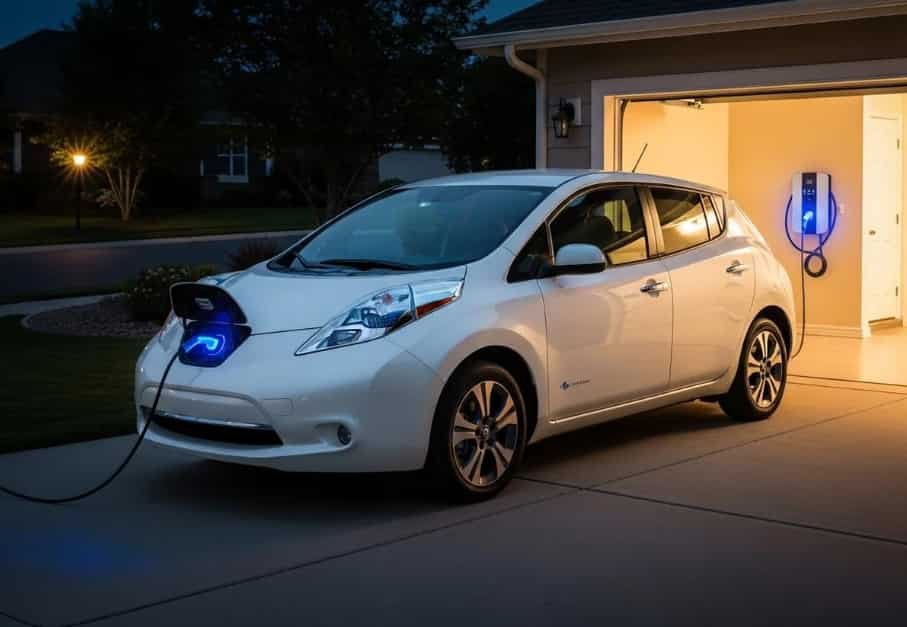
A Nissan Leaf usually needs charging every few days for normal daily driving. However, the exact schedule depends on battery capacity, driving distance, weather, and driving habits.
Electric vehicles work differently from gasoline cars. Owners do not refuel based on a fixed tank size. They charge the battery when the remaining range no longer meets their driving needs.
Most Nissan Leaf owners do not need to charge their car every day. A driver with a short commute may charge once or twice per week. A driver with longer daily trips may need to charge every day.
The battery size also affects charging frequency. Older Nissan Leaf models use smaller battery packs, such as 24 kWh and 30 kWh versions. Newer models, including the Nissan Leaf Plus, use larger batteries that provide longer driving ranges.
Knowing how often to charge a Nissan Leaf helps owners build an efficient charging routine. It also helps maintain battery performance and avoid unnecessary charging cycles. This guide explains charging frequency, battery range, charging habits, and the best charging schedule for different Nissan Leaf drivers.
How often do you have to charge a Nissan Leaf?
A Nissan Leaf usually needs charging every 3 to 7 days for drivers with average daily use. However, some owners need to charge more often because their daily mileage is higher or their driving conditions consume more battery power. The charging schedule depends mainly on three factors: battery capacity, driving distance, and energy consumption.
The battery capacity determines how much energy a Nissan Leaf can store before the next charge. Older Nissan Leaf models used smaller battery packs, including 24 kWh and 30 kWh versions. Newer models use larger 40 kWh batteries, while the Nissan Leaf Plus uses a 62 kWh battery pack. A larger battery allows the vehicle to travel farther before the owner needs to recharge.
Driving distance has the biggest effect on charging frequency. A person who drives 20 to 30 miles per day may only need to charge a Nissan Leaf once or twice per week. A person who drives 60 to 100 miles per day will use more battery capacity and may need to charge every night. The vehicle does not follow a fixed charging schedule because each driver uses energy differently.
Driving conditions also change how often a Nissan Leaf requires charging. Highway driving, cold temperatures, steep roads, and heavy air conditioning use more electricity. For example, a Nissan Leaf traveling on highways during winter will consume battery power faster than the same vehicle driving short distances in mild weather.
The most practical charging routine is to recharge the Nissan Leaf when the remaining battery range no longer covers the next planned trips. Many owners charge at home overnight because Level 2 home chargers can restore enough range for daily driving. This approach creates a simple routine while reducing the need for frequent public charging.
How far can a Nissan Leaf drive before it needs charging?
A Nissan Leaf can drive between approximately 70 and 226 miles on a full charge, depending on the battery version, driving conditions, and vehicle age. The driving range determines how often owners need to recharge because a vehicle with a larger battery can complete more miles before reaching a low state of charge.
The battery size creates the biggest difference in Nissan Leaf range. Early Nissan Leaf models used a 24 kWh battery and provided a shorter driving range. Later versions increased battery capacity with 30 kWh and 40 kWh packs. The Nissan Leaf Plus introduced a 62 kWh battery that delivers a significantly longer range for drivers who travel farther distances.
Battery capacity directly affects charging frequency because the battery stores the energy needed for movement. A larger battery does not make the vehicle consume less electricity, but it increases the amount of energy available before charging becomes necessary. For example, a Nissan Leaf with a 62 kWh battery can complete longer trips before needing a recharge compared with a model using a 24 kWh battery.
Driving conditions also affect the actual range of a Nissan Leaf. Cold weather reduces battery efficiency because the vehicle uses more energy to maintain cabin temperature and battery performance. Highway driving also consumes more electricity because higher speeds increase aerodynamic resistance. In contrast, slower city driving often allows the vehicle to travel more miles using the same amount of energy.
Battery age is another important factor. Lithium ion batteries gradually lose capacity over time through normal use. A Nissan Leaf with an older battery may have a shorter range than the original factory estimate. Monitoring battery health helps owners understand their actual driving distance and create a more accurate charging routine.
Understanding Nissan Leaf range allows drivers to plan charging based on real usage instead of relying only on manufacturer estimates. The best charging schedule comes from combining the vehicle’s battery capacity with personal driving patterns.
Do you need to charge a Nissan Leaf every day?
Most Nissan Leaf owners do not need to charge their vehicle every day. The charging schedule depends on how many miles they drive, how much battery range remains, and when they need the vehicle again. Daily charging works well for some drivers, but it is not necessary for every owner.
Drivers with short daily commutes usually do not need frequent charging. For example, someone who travels 20 miles per day may use only a small portion of the battery capacity. If the Nissan Leaf has enough remaining range for several trips, the owner can wait and charge later instead of connecting the vehicle every night.
Drivers with longer commutes may need daily charging. A person who travels 70 miles or more each day can consume a large part of the available battery range. Charging overnight at home allows the vehicle to start each morning with enough energy for the next trip.
Occasional drivers also follow a different charging pattern. Someone who uses a Nissan Leaf only for short weekend trips may charge once every one or two weeks. However, keeping the battery at an appropriate charge level helps maintain battery condition during longer periods of inactivity.
Charging a Nissan Leaf every day does not automatically damage the battery. Modern Nissan Leaf models use a battery management system that monitors battery conditions and helps control charging performance. The important factors are charging habits, temperature exposure, and avoiding repeated extreme battery levels.
The best charging routine matches personal driving needs. Owners should charge when the available range no longer covers upcoming trips. This approach provides enough energy for daily transportation while supporting long term battery performance.
What is the best charging schedule for a Nissan Leaf battery?
The best charging schedule for a Nissan Leaf battery depends on daily driving needs, battery condition, and available charging options. A good routine keeps enough range for planned trips while reducing unnecessary battery stress.
Most Nissan Leaf owners should charge the battery before the remaining range becomes too low. Regularly allowing the battery to reach very low levels can increase charging frequency and create inconvenience for daily use. Maintaining a practical charge level helps drivers avoid unexpected range problems.
Many owners use overnight charging because it matches normal driving patterns. A Nissan Leaf parked at home during the night can regain energy before the next trip. Level 2 home charging is especially useful because it provides enough power for regular commuting without requiring frequent visits to public charging stations.
Battery state of charge also affects long term battery performance. Lithium ion batteries experience less stress when owners avoid repeated extreme charging conditions. For daily driving, many drivers prefer keeping the battery within a moderate range instead of constantly charging from nearly empty to full capacity.
Driving habits should determine the charging routine. A person with a short commute may only need occasional charging, while someone with longer trips may benefit from a daily charging schedule. The goal is not to charge as often as possible but to maintain enough battery range for regular transportation.
For example, a Nissan Leaf owner who drives 30 miles each day can create a simple routine by charging several times per week at home. A driver who travels longer distances may charge every night to ensure sufficient range for the next morning.
A consistent charging schedule makes Nissan Leaf ownership easier and helps drivers balance convenience with battery care. The ideal routine depends on individual usage rather than a single charging rule for every owner.
How long does it take to charge a Nissan Leaf?
The charging time of a Nissan Leaf depends on the charging method, battery size, and available power supply. A smaller battery usually takes less time to recharge, while larger battery packs require more energy and longer charging periods. The three main charging options are Level 1 charging, Level 2 charging, and DC fast charging.
Level 1 charging uses a standard household outlet and provides the slowest charging speed. This method is suitable for drivers with short daily trips because the vehicle can gain additional range while parked for many hours. However, Level 1 charging is less practical for owners who regularly use most of the battery capacity each day.
Level 2 charging is the most common home charging solution for Nissan Leaf owners. It uses a higher power connection and restores battery range much faster than a standard outlet. Many drivers install Level 2 chargers at home because overnight charging can provide enough range for normal commuting.
DC fast charging provides the fastest way to restore battery energy during longer trips. Nissan Leaf models commonly use the CHAdeMO connector for fast charging. This charging method allows drivers to add significant range in a shorter period compared with home charging options. However, frequent fast charging may create more heat, which can affect battery conditions over time.
The charging time also changes based on battery capacity. A Nissan Leaf with a smaller battery pack requires less energy to reach full charge, while Nissan Leaf Plus models with larger batteries need more time. The remaining battery level also matters because charging speed can decrease when the battery approaches full capacity.
Choosing the right charging method helps Nissan Leaf owners create an efficient charging routine. Most daily drivers benefit from home charging, while fast charging provides flexibility for longer journeys.
Is charging a Nissan Leaf every day bad for the battery?
Charging a Nissan Leaf every day does not automatically damage the battery. Modern Nissan Leaf models use lithium ion batteries with a battery management system that controls important factors such as charging conditions, temperature, and battery performance. The effect of charging depends more on charging habits than the number of times the vehicle connects to a charger.
Daily charging can be useful for drivers with regular long distance trips. For example, a person who drives 60 miles every day may need to recharge each night to maintain enough range for the next morning. This routine does not create a problem when the charging environment and battery conditions remain within normal limits.
Battery degradation happens through normal use over time. Lithium ion batteries gradually lose capacity because of charging cycles, heat exposure, and age. A Nissan Leaf battery does not lose performance simply because the owner plugs it in frequently. The amount of energy used, charging temperature, and battery storage conditions have a greater effect on long term battery health.
Extreme charging habits can create additional battery stress. Repeatedly allowing the battery to become completely empty or exposing the vehicle to very high temperatures for long periods can accelerate capacity loss. Owners can reduce these risks by maintaining a practical charge level and parking the vehicle in suitable conditions.
Home charging is usually the preferred option for daily Nissan Leaf use because it provides a stable charging environment. Level 2 charging overnight allows owners to restore range without depending heavily on public fast chargers.
A consistent charging routine helps Nissan Leaf owners balance convenience and battery care. Charging every day is acceptable when the vehicle requires that energy for regular transportation. The most important factor is using a charging schedule that matches driving needs while protecting battery performance.
How do driving habits affect how often you charge a Nissan Leaf?
Driving habits have a direct effect on how often a Nissan Leaf needs charging. The same Nissan Leaf model can have different charging schedules because each driver uses energy differently. Speed, acceleration, weather, road conditions, and climate control usage all influence how quickly the battery loses power.
Driving speed affects battery consumption because higher speeds require more energy. Highway driving usually uses more electricity than city driving because air resistance increases as speed rises. For example, a Nissan Leaf used mainly for highway trips may need charging more often than the same vehicle used for shorter urban journeys.
Acceleration habits also change energy usage. Rapid acceleration requires more power from the battery, while smoother driving uses energy more efficiently. Drivers who maintain steady speeds and avoid unnecessary acceleration can often increase the distance they travel before the next charge.
Weather conditions create another important difference. Cold temperatures can reduce Nissan Leaf range because the battery operates less efficiently and the vehicle uses additional energy for heating. Hot weather can also affect energy consumption because air conditioning requires electricity from the battery.
Road conditions and driving environments also influence charging frequency. A Nissan Leaf traveling on steep roads uses more energy because the motor needs additional power to overcome elevation changes. Heavy traffic can create different energy patterns because frequent acceleration and braking affect overall efficiency.
Climate control usage is another factor that owners should consider. Heating systems generally consume more energy than basic ventilation, while air conditioning also reduces available range during hot weather. Managing cabin temperature efficiently helps preserve battery range.
Understanding these factors allows Nissan Leaf owners to predict charging needs more accurately. Instead of following a fixed charging schedule, drivers can adjust their routine based on how they actually use the vehicle.
Conclusion
A Nissan Leaf does not follow one fixed charging schedule because charging frequency depends on battery capacity, driving distance, and personal driving habits. Most owners charge every few days, while drivers with longer daily trips may need to recharge every night.
The best charging routine focuses on maintaining enough range for upcoming journeys while supporting long term battery performance. Drivers should consider their daily mileage, battery condition, weather conditions, and charging options when creating a schedule.
A Nissan Leaf with a larger battery pack can travel farther before charging, while older models with smaller batteries usually require more frequent charging. Home charging remains the most convenient solution for regular use because it allows owners to restore range overnight.
Charging a Nissan Leaf every day is not harmful by itself when owners follow proper charging habits. The key factors are avoiding extreme battery conditions, managing temperature exposure, and choosing a charging method that matches driving needs.
Understanding how often to charge a Nissan Leaf helps owners use their vehicle more efficiently. A practical charging routine improves convenience, supports battery health, and makes electric vehicle ownership easier.