
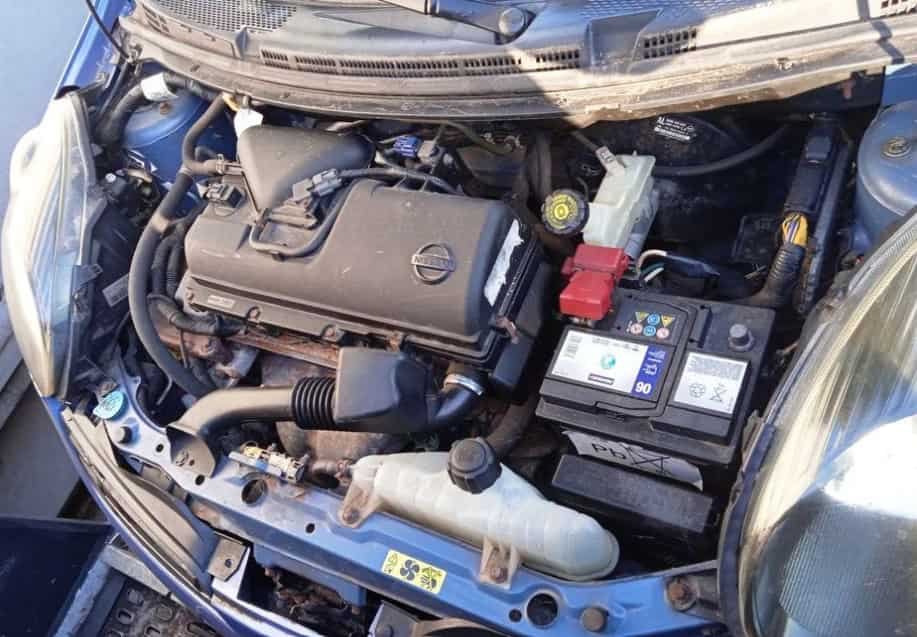
A Nissan Micra may fail to start after a battery change because of a loose terminal, low battery voltage, reversed polarity, a blown fuse, a weak ground connection, an immobilizer fault, or a problem in the starter circuit. The correct fix depends on what happens when you turn the key or press the start button.
A Micra with no dashboard lights usually has a power supply problem. Rapid clicking often points to low voltage or poor contact at the battery terminals. One loud click may indicate a starter motor or starter solenoid fault. Normal cranking without ignition shifts the diagnosis toward the immobilizer, fuel system, crankshaft position sensor, or engine control system.
The battery replacement may be the direct cause of the no start condition, but it can also expose an existing electrical or mechanical fault. A worn starter, failing alternator, damaged cable, or weak key fob battery may become noticeable only after the original battery is removed.
This guide explains 12 causes and fixes in a practical diagnostic order. Start with the battery installation, terminal condition, and voltage. Then inspect the grounds, fuses, immobilizer, starter circuit, and engine management system. Stop further testing and seek professional help if you notice smoke, hot cables, a burning smell, or signs of reversed battery polarity.
Why Is My Nissan Micra Not Starting After a Battery Change?
A Nissan Micra may stop starting after a battery change for several reasons. In most cases, the problem involves the battery, electrical connections, the starter system, or the engine management system. Finding the correct fault early helps you avoid replacing parts that still work properly.
Start with the battery installation. A loose battery terminal often causes a no start condition. The dashboard may still light up, but the starter motor cannot draw enough current. Incorrect battery polarity, low battery voltage, or the wrong battery specification can create the same symptom. These problems appear immediately after the battery replacement, so they should always be your first checks.
Next, inspect the main electrical connections. A damaged ground cable, blown main fuse, or faulty fusible link can interrupt power to important systems. Some electrical accessories may continue to work, which can make the fault difficult to recognize. However, the Engine Control Module or Body Control Module may not receive stable power, preventing the engine from starting.
The battery change does not always create the problem. It often exposes a fault that already existed. A worn starter motor, failing starter relay, weak ignition switch, or immobilizer issue may become obvious once the new battery restores normal voltage. That is why you should diagnose the symptom instead of blaming the battery immediately.
Before replacing any component, observe how the vehicle behaves. Check whether the dashboard lights turn on. Listen for clicking sounds. Notice whether the engine cranks or remains completely silent. These simple observations narrow the diagnosis and help you identify the real cause much faster.
What Should You Check First When a Nissan Micra Will Not Start?
Always begin with the battery because it was the last component you replaced. Make sure both battery terminals sit fully on the battery posts. Tighten each clamp until it cannot move by hand. Even a small amount of movement can reduce current flow to the starter motor.
Next, check the vehicle’s electrical power. Turn on the headlights, interior lights, and dashboard. If nothing works, inspect the battery connections again. A discharged battery, loose cable, or blown main fuse can cut power to the entire vehicle.
Measure the battery voltage with a digital multimeter before moving to other tests. A healthy battery should read about 12.6 volts with the engine off. A lower reading suggests the battery needs charging or further testing. Do not assume a new battery is fully charged because many replacement batteries lose charge during storage.
Now try to start the engine and listen carefully. Rapid clicking usually indicates low battery voltage or poor terminal contact. One loud click often points to the starter motor or starter solenoid. If the engine cranks at normal speed but does not start, shift your attention to the immobilizer, fuel system, ignition system, or crankshaft position sensor.
Finally, look at the warning lights on the dashboard. Pay close attention to the immobilizer or key indicator. A flashing key symbol may show that the vehicle cannot recognize the key after the battery replacement. Record every symptom before disconnecting the battery again. These details make the next stage of diagnosis much easier and more accurate.
Can Loose Battery Terminals Stop a Nissan Micra From Starting?
Loose battery terminals are one of the most common reasons a Nissan Micra will not start after a battery change. The battery may supply enough power for the dashboard and interior lights, but the starter motor needs much more current. A poor connection limits that current and prevents the engine from cranking.
Start by inspecting both battery terminals. Each clamp should sit fully on the battery post without any movement. Hold the clamp and try to twist it by hand. If it moves, it cannot deliver a stable electrical connection. Dirt, corrosion, or paint residue can also reduce conductivity, even when the terminal looks clean.
Look closely at the battery cables as well. A damaged cable, cracked terminal, or stretched connector increases electrical resistance. As resistance rises, the starter motor receives less current. This often causes slow cranking, rapid clicking, or a complete no crank condition.
Disconnect the negative terminal before cleaning the battery posts. Remove any corrosion with a battery terminal brush or fine sandpaper. Reinstall the positive terminal first, then reconnect the negative terminal. Tighten both clamps until they remain secure without overtightening them.
If the engine still refuses to start, do not assume the terminals are fault free. A hidden high resistance connection can produce the same symptoms. A voltage drop test across the battery cables provides a more accurate result than a visual inspection alone. This simple test quickly confirms whether the battery can deliver enough current to the starter motor.
Can a Weak or Discharged New Battery Prevent the Nissan Micra From Starting?
Yes. A new battery can still prevent the engine from starting. Many replacement batteries leave the factory fully charged, but they may lose voltage during storage or transportation. A battery with low charge cannot supply enough current for the starter motor, especially in cold weather.
Begin by checking the battery voltage with a digital multimeter. A healthy battery should measure around 12.6 volts before starting the engine. A reading close to 12.4 volts indicates a partial charge. Anything below 12.2 volts suggests that the battery needs charging before further diagnosis.
Do not rely on voltage alone. Some batteries show normal voltage but fail when placed under load. This usually happens when an internal cell becomes weak or damaged. During cranking, the voltage drops sharply and the starter motor cannot turn the engine at normal speed.
Watch how the vehicle responds during each starting attempt. Slow cranking, repeated clicking, or fading dashboard lights often indicate that the battery cannot provide enough current. These symptoms become more obvious after several unsuccessful attempts because each attempt removes more charge from the battery.
Charge the battery with a suitable charger before replacing any other parts. If the problem continues, perform a battery load test or install a known good battery for comparison. This approach confirms whether the replacement battery is truly defective or whether another fault prevents the engine from starting.
Can the Wrong Battery Specification Cause a Nissan Micra No Start Condition?
An incorrect battery specification can also stop a Nissan Micra from starting. Every model requires a battery with the correct size, terminal layout, capacity, and cold cranking amperage. A battery that does not meet these requirements may fit inside the battery tray but still fail during normal operation.
Cold cranking amperage plays an important role during engine starting. The starter motor needs a large amount of current for a short period. A battery with a lower rating may power the lights and radio without enough reserve to crank the engine. This problem becomes more noticeable during winter or after the vehicle has been parked for several days.
Terminal orientation also matters. A battery with reversed terminal positions can stretch the battery cables or prevent the clamps from sitting correctly. Poor cable routing increases stress on the connectors and may create an unstable electrical connection.
Some Nissan Micra models use start stop technology. These vehicles require an AGM or EFB battery instead of a conventional flooded battery. Installing the wrong battery type can reduce charging performance and shorten battery life. In some cases, it also causes electrical faults or warning lights.
Always compare the replacement battery with the original unit before installation. Check the owner’s manual, the battery label, or a trusted battery fitment guide. Using the correct specification reduces the risk of starting problems and helps the charging system operate as designed.
Can Reversed Battery Polarity Damage a Nissan Micra?
Yes. Reversed battery polarity can cause serious electrical damage in a Nissan Micra. Connecting the positive cable to the negative terminal and the negative cable to the positive terminal sends current through the electrical system in the wrong direction. Even a brief mistake can damage important components.
The first signs often appear immediately. You may notice a large spark, a burning smell, or complete electrical failure. In some cases, the dashboard remains dark after reconnecting the battery. In others, the vehicle loses power as soon as you turn the ignition on. These symptoms usually indicate that a protective component has failed.
Start by disconnecting the battery as soon as you discover the mistake. Do not try to start the engine again because additional current may damage more electrical components. Inspect the main fuse and the fusible links before checking anything else. These parts protect the wiring and control modules from excessive current.
If the main fuse has blown, replace it with a fuse of the correct rating only after confirming that the battery cables are connected correctly. Never install a higher rated fuse because it can expose the wiring to further damage. If the replacement fuse fails immediately, stop testing and inspect the circuit for a short.
Reversed polarity can also damage the alternator, Engine Control Module, Body Control Module, or other electronic systems. If the vehicle still does not start after replacing the damaged fuse, scan the electrical system for fault codes. Professional diagnosis is often the safest option because electronic modules may require further testing before replacement.
Can a Damaged Ground Cable Stop a Nissan Micra From Starting?
A damaged ground cable can stop a Nissan Micra from starting even when the battery is fully charged. The battery supplies electrical power, but the current must return through the ground circuit. If that path becomes weak or disconnected, the starter motor cannot complete the circuit.
Begin by inspecting the negative battery cable. Make sure it fits tightly against the battery terminal and shows no signs of corrosion. Follow the cable to the chassis and confirm that the mounting point remains clean and secure. Dirt, rust, or moisture can reduce electrical contact over time.
Next, inspect the engine ground strap. This cable connects the engine to the vehicle body and carries the high current used by the starter motor. A broken or corroded ground strap often causes slow cranking, rapid clicking, or an intermittent no start condition. Some vehicles may also show flickering dashboard lights during a starting attempt.
A simple jumper cable test can help confirm the fault. Connect one end of the jumper cable to the battery negative terminal and attach the other end to a clean metal point on the engine. Try starting the engine again. If the engine starts normally, the original ground connection requires cleaning or replacement.
Replace damaged ground cables instead of repairing them temporarily. A new cable provides lower resistance and improves long term reliability. After installing the replacement, tighten every mounting point securely and protect the connections from future corrosion.
Can a Blown Fuse or Fusible Link Prevent the Nissan Micra From Starting?
Yes. A blown fuse or damaged fusible link can prevent a Nissan Micra from starting after a battery change. These components protect the electrical system from excessive current. If a short circuit occurs during battery installation, they often fail before more expensive parts become damaged.
Start with the main battery fuse because it carries power to several important systems. Then inspect the ignition fuse, starter circuit fuse, Engine Control Module fuse, Body Control Module fuse, and fuel pump fuse. A fault in any of these circuits can interrupt the starting process.
Do not rely only on a visual inspection. Some fuses develop small cracks that are difficult to see. Use a digital multimeter or a continuity tester to confirm that each fuse still conducts electricity. This method produces a much more reliable result than checking the fuse by eye.
Remember that fuse locations vary between Nissan Micra generations. The K11, K12, K13, and K14 models do not always use the same fuse layout. Always compare your inspection with the owner’s manual or the fuse box diagram for your specific model year.
Replace every failed fuse with another fuse of the same amperage. Never install a larger fuse because it removes an important layer of protection. If the replacement fuse blows again, another electrical fault remains in the circuit. Find and repair the underlying problem before attempting to start the engine again.
Can the Immobilizer Prevent a Nissan Micra From Starting After a Battery Change?
Yes. The immobilizer can prevent a Nissan Micra from starting after a battery change. The system verifies the electronic code stored in the key before allowing the engine to start. If the immobilizer cannot recognize the key, it blocks the fuel injection or ignition system.
Watch the dashboard when you switch on the ignition. A flashing key symbol or immobilizer warning light often indicates that the system has rejected the key. The engine may crank normally, but it will not start because the Engine Control Module does not receive authorization.
Start with the simplest checks. Use the original key if you have been using a spare. Replace the key fob battery if the remote functions have become weak or inconsistent. Then lock and unlock the vehicle before trying to start the engine again. This process sometimes restores normal communication between the key and the immobilizer.
If the warning light remains on, scan the vehicle for fault codes. A diagnostic scanner can identify communication problems between the immobilizer, Body Control Module, and Engine Control Module. The stored codes often point to the affected circuit and reduce unnecessary troubleshooting.
Some immobilizer faults require key programming or module synchronization. These procedures need professional diagnostic equipment. If basic checks do not solve the problem, contact a qualified technician instead of replacing electronic components without testing.
Does the Engine Control Module Need to Reset After a Battery Change?
In most cases, the Engine Control Module resets automatically after a battery replacement. The module stores adaptive values that improve idle quality, throttle response, and fuel delivery. Disconnecting the battery clears part of this learned data, so the engine may behave differently during the first few drive cycles.
You may notice a rough idle, unstable engine speed, or slower throttle response immediately after reconnecting the battery. These symptoms usually disappear as the Engine Control Module collects new operating data. The learning process often finishes after several normal driving cycles.
Some Nissan Micra models require an idle relearn procedure after battery replacement. Follow the procedure described in the service manual for your specific model. Performing the correct relearn helps the Engine Control Module restore normal idle speed more quickly.
If the engine will not start at all, do not assume that the Engine Control Module needs programming. A reset rarely causes a complete no start condition. Check the battery voltage, electrical connections, starter circuit, and immobilizer before suspecting the control module.
Scan the vehicle if the check engine light remains on after the battery replacement. Diagnostic trouble codes provide useful information and help identify faults that prevent the engine from starting. Clearing the codes without fixing the underlying problem rarely solves the issue.
Can a Faulty Starter Motor or Starter Solenoid Cause a No Start Condition?
Yes. A faulty starter motor or starter solenoid can stop a Nissan Micra from starting even after installing a new battery. The battery supplies electrical power, but the starter motor must turn the engine before combustion can begin. If the starter fails, the engine cannot crank.
Listen carefully when you turn the key or press the start button. One loud click often points to a faulty starter solenoid. Rapid clicking usually indicates low voltage or excessive resistance in the battery cables. Complete silence may suggest a failed starter relay, ignition switch, or electrical connection.
Check the battery voltage before testing the starter motor. A weak battery can produce symptoms that closely resemble a faulty starter. Once you confirm that the battery is fully charged, inspect the starter wiring for loose connectors, corrosion, or damaged insulation.
A voltage drop test helps determine whether the starter receives enough current. If the wiring passes the test but the starter still fails to operate, the starter motor or solenoid may have worn internal components. Brushes, bearings, and electrical contacts wear over time and eventually reduce starting performance.
Replace the starter assembly only after completing the electrical checks. Many starter motors are replaced unnecessarily because the actual fault lies in the battery cables, ground circuit, or starter relay. A systematic diagnosis saves money and prevents repeated repairs.
Can a Faulty Ignition Switch Prevent the Engine From Starting?
Yes. A faulty ignition switch can prevent a Nissan Micra from starting after a battery change. The battery may supply full power, but the ignition switch controls the electrical signal that activates the starter system. If the switch fails, the starter motor never receives the command to operate.
Pay attention to what happens when you turn the key. If the dashboard lights come on but the engine remains completely silent, the ignition switch may not send power to the starter relay. In some cases, the warning lights flicker or disappear when you turn the key to the start position. These symptoms often indicate a worn electrical contact inside the switch.
Try starting the vehicle several times. A worn ignition switch may work intermittently before it fails completely. If the engine starts only after moving the key slightly or trying again, inspect the switch before replacing other components.
Confirm the diagnosis by testing the starter control circuit with a multimeter. If the battery, starter relay, and wiring operate correctly but the switch does not provide voltage in the start position, replace the ignition switch. Always verify the fault before installing new parts.
Why Does the Engine Crank but Not Start After a Battery Change?
If the engine cranks normally but does not start, the battery and starter motor usually work correctly. The fault often affects fuel delivery, ignition, engine timing, or the immobilizer system. These systems must operate together before the engine can run.
Start by checking the immobilizer warning light. A flashing key symbol often indicates that the vehicle does not recognize the key. The engine may crank without allowing fuel injection or spark. This is one of the most common causes after reconnecting the battery.
Next, inspect the fuel and ignition systems. A failed fuel pump, faulty ignition coil, or worn spark plugs can prevent combustion even when the starter motor turns the engine at normal speed. Listen for the fuel pump when you switch on the ignition and scan the engine for diagnostic trouble codes if possible.
The crankshaft position sensor also plays an important role. The Engine Control Module depends on this sensor to calculate ignition timing and fuel injection. If the sensor fails, the engine usually cranks but never starts. A diagnostic scan often confirms this fault within a few minutes.
Do not replace parts based on guesswork. Follow a logical test sequence and verify each system before moving to the next. This approach reduces repair costs and speeds up the diagnosis.
Can a Failing Alternator Cause Starting Problems After a Battery Replacement?
Yes. A failing alternator can create starting problems even after installing a new battery. The alternator recharges the battery while the engine runs. If it cannot produce enough charging voltage, the battery gradually loses power until the engine no longer starts.
A new battery often hides the problem for a short time. The vehicle may start normally for several days because the battery holds enough stored energy. Once the charge drops below a safe level, slow cranking or a complete no-start condition returns.
Watch for other warning signs while driving. A battery warning light, dim headlights, weak electrical accessories, or fluctuating dashboard lights often indicate poor charging performance. These symptoms usually appear before the battery becomes completely discharged.
Measure the charging voltage with the engine running. A healthy charging system normally produces between 13.8 and 14.7 volts. A lower reading suggests that the alternator, voltage regulator, or charging circuit requires further inspection.
Replace the alternator only after confirming the charging fault. Loose drive belts, damaged wiring, or poor electrical connections can produce the same symptoms. A complete charging system test identifies the true cause and prevents unnecessary repairs.
How Do You Diagnose a Nissan Micra That Will Not Start After a Battery Change?
Begin with the battery because it was the last component you replaced. Confirm that both terminals are clean, tight, and connected to the correct posts. Then measure the battery voltage to verify that it holds a full charge.
Next, observe how the vehicle responds during a starting attempt. Check whether the dashboard lights turn on, listen for clicking sounds, and note whether the engine cranks. These observations quickly narrow the list of possible faults.
Continue by inspecting the main fuse, ground cable, starter circuit, and immobilizer system. Test each component instead of replacing it immediately. A simple voltage or continuity test often identifies the fault within minutes.
Scan the vehicle if the engine still refuses to start. Diagnostic trouble codes provide valuable information about the Engine Control Module, immobilizer, ignition system, and sensors. Use the scan results together with the physical inspection to confirm the repair.
A structured diagnosis saves both time and money. It also reduces the risk of replacing good components while the real fault remains hidden.
When Should You Take Your Nissan Micra to a Mechanic?
Some starting problems require professional equipment and advanced testing. Seek expert help if the vehicle still refuses to start after completing the basic checks. Continuing to replace parts without a confirmed diagnosis often increases repair costs.
Arrange a professional inspection if the main fuse continues to blow, the immobilizer warning light remains active, or the Engine Control Module stores multiple fault codes. These conditions usually require specialized diagnostic tools and manufacturer procedures.
You should also contact a mechanic if you connected the battery with reversed polarity. This mistake can damage electronic control modules, sensors, and the charging system. Professional testing identifies hidden damage before it causes additional failures.
Do not ignore unusual signs such as smoke, a burning smell, overheating cables, or repeated electrical failures. These symptoms may indicate a serious wiring fault that requires immediate attention.
A qualified technician can perform voltage drop tests, charging system analysis, starter current tests, and electronic diagnostics. These procedures locate the fault accurately and restore reliable starting performance without unnecessary part replacement.
Conclusion
A Nissan Micra that will not start after a battery change does not always have a faulty battery. Loose terminals, poor ground connections, blown fuses, immobilizer faults, starter problems, and charging system failures can all produce similar symptoms. The key is to diagnose the vehicle in a logical order instead of replacing parts at random.
Start with the simplest checks, including the battery installation, voltage, and cable connections. Then inspect the starter circuit, immobilizer, and engine management system. If the fault remains after these tests, use a diagnostic scanner or seek professional assistance. A systematic approach helps you identify the real cause faster, reduces repair costs, and gets your Nissan Micra back on the road with confidence.