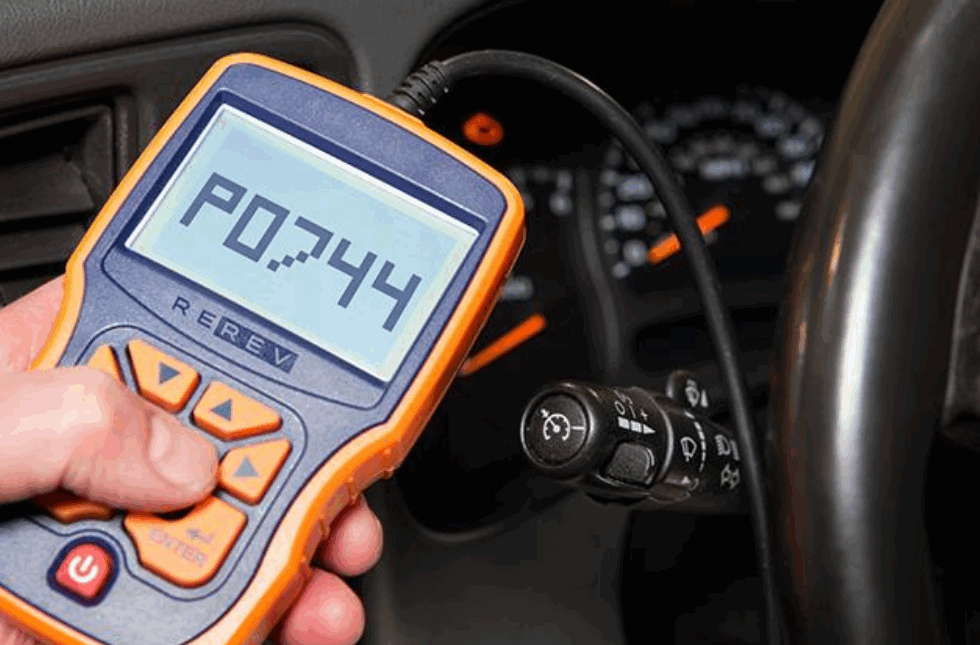
Nissan P0744 indicates a problem with the torque converter clutch lock up function. However, the code does not automatically mean that the transmission needs replacement. Several faults can cause this code. These include a faulty TCC solenoid, damaged wiring, or a faulty electrical connector. A control valve problem can also cause P0744. In some cases, hydraulic or internal torque converter problems are responsible.
The first step is to identify the actual cause. Nissan P0744 can cause several symptoms. These include abnormal engine RPM, transmission slipping, harsh shifting, and reduced driving performance. The Check Engine Light can also turn on. However, the severity depends on the underlying transmission problem.
Therefore, diagnosing P0744 requires more than reading the code. First, a technician checks the stored diagnostic codes and available transmission data. Next, the technician inspects the wiring and electrical connections. The TCC solenoid is then tested when required. Further testing can include hydraulic pressure checks or mechanical inspection.
This guide explains what Nissan P0744 means and why it occurs. It also explains the symptoms, diagnostic process, and repair options. In addition, it explains when driving with P0744 becomes a concern. Most importantly, the guide shows why the code alone does not determine which transmission component needs replacement.
What Does Nissan P0744 Mean?
Nissan P0744 indicates a problem with the torque converter clutch lock up function. The torque converter transfers engine power to the transmission. Its clutch can lock the connection between the engine and transmission during certain driving conditions. This lock up helps reduce slip and improves transmission efficiency.
The transmission control module monitors this operation while the vehicle is running. It sends commands to the torque converter clutch system and checks whether the expected lock up occurs. If the clutch does not operate as commanded, the vehicle can store the P0744 diagnostic trouble code. Therefore, P0744 identifies a problem with the lock up function rather than automatically identifying one failed component.
The torque converter clutch depends on several parts working together. These include the TCC solenoid, electrical wiring, connectors, control valves, hydraulic circuits, and mechanical components inside the transmission. A problem with any of these areas can affect clutch operation. For example, a faulty solenoid can prevent the clutch from receiving the correct hydraulic control.
Does Nissan P0744 Mean the Transmission Has Failed?
No, Nissan P0744 does not by itself prove that the transmission has failed. The code only identifies an abnormal torque converter clutch condition. Further testing is needed to determine the root cause.
For example, a wiring fault can create the same diagnostic code as a faulty solenoid or an internal mechanical problem. Because these faults require different repairs, replacing the transmission without proper testing can lead to unnecessary expense. A correct diagnosis should identify the affected circuit, component, or mechanical system before major repairs are recommended.
What Symptoms Does Nissan P0744 Cause?
Nissan P0744 can cause abnormal engine RPM, transmission slipping, harsh shifting, and reduced driving performance. The Check Engine Light can also turn on when the transmission control system detects the fault. However, the exact symptoms depend on how the torque converter clutch is failing.
Abnormal RPM is one important symptom to watch for. The torque converter clutch should lock under specific driving conditions. When it does not lock correctly, the engine and transmission can remain less efficiently connected. As a result, engine RPM may stay higher than expected during steady driving. This condition can also affect fuel efficiency.
Transmission slipping can occur when the torque converter clutch does not maintain the expected lock up. The driver may notice that engine speed changes without a matching change in vehicle speed. In addition, the transmission may feel less responsive during acceleration. These symptoms do not prove that the torque converter itself has failed. Further diagnosis is still required.
Harsh or abnormal shifting can also occur. The transmission control system depends on correct hydraulic and electronic operation. Therefore, a fault in the TCC system can change how the transmission behaves during certain shifts. The Check Engine Light may appear at the same time. When several symptoms occur together, scanning for additional transmission codes can provide useful diagnostic information.
Can Nissan P0744 Cause Transmission Slipping or Abnormal RPM?
Yes, Nissan P0744 can be associated with transmission slipping or abnormal RPM. The torque converter clutch controls the connection between the engine and transmission during lock up. If that function does not operate correctly, the transmission may show abnormal operating behavior.
However, these symptoms have several possible causes. A technician should compare the symptoms with diagnostic data before identifying the failed component. This approach helps separate a TCC control problem from a broader transmission fault.
What Causes Nissan P0744?
Nissan P0744 has five main groups of possible causes: a faulty TCC solenoid, wiring or connector faults, control valve problems, transmission fluid or hydraulic problems, and internal torque converter faults. The code identifies a torque converter clutch lock up problem. However, it does not identify the exact failed component. Therefore, each possible cause requires a different diagnostic approach.
A faulty TCC solenoid can prevent the torque converter clutch from operating correctly. The solenoid controls fluid flow within the transmission system. If it fails electrically or mechanically, the clutch may not receive the required hydraulic control. As a result, the transmission control system can detect an incorrect lock up condition.
Wiring and connector faults can produce a similar result. Damaged wires, poor electrical connections, or an open circuit can interrupt communication with the TCC control system. Consequently, the solenoid may not respond correctly even when the component itself is functional. This is why the electrical circuit should be inspected before replacing major transmission components.
Control valve problems can also affect P0744. The control valve directs hydraulic fluid to the required transmission components. If the valve does not operate correctly, the TCC may not receive the correct hydraulic pressure. Transmission fluid condition can also affect hydraulic operation. In addition, an internal torque converter problem can prevent the clutch from achieving proper lock up.
Can a TCC Solenoid or Wiring Problem Cause Nissan P0744?
Yes, a TCC solenoid or wiring problem can cause Nissan P0744. These components directly affect the electrical and hydraulic control of the torque converter clutch. However, the code alone cannot distinguish between an electrical fault, a hydraulic problem, or an internal mechanical failure. Proper testing is required before selecting the repair.
How Do You Diagnose Nissan P0744?
To diagnose Nissan P0744, start by confirming the code and then identify whether the fault is electrical, hydraulic, or mechanical. Reading the code alone is not enough to determine the failed component. A proper diagnosis should follow a logical testing sequence. This approach reduces the risk of replacing a working transmission component.
First, scan the vehicle and confirm that P0744 is present. Check for additional transmission codes at the same time. Related codes can provide useful information about the transmission control system. Next, review the available diagnostic data and driving conditions associated with the fault. This information can help determine when the torque converter clutch fails to operate correctly.
Next, inspect the TCC wiring and electrical connectors. Look for damaged wires, loose connections, corrosion, or other visible problems. Then, test the TCC solenoid according to the specifications for the specific Nissan model and transmission. A solenoid can fail electrically or mechanically. Therefore, both the circuit and component operation should be evaluated.
If the electrical system and solenoid pass inspection, further testing may be necessary. Hydraulic pressure checks can help identify problems with transmission fluid flow or control valves. Mechanical inspection may also be required when the available evidence points to an internal torque converter problem. Nissan diagnostic procedures can vary by model and transmission type, so the applicable service information should determine the exact test values and sequence.
How Do You Determine the Root Cause of Nissan P0744?
Determine the root cause by moving from basic electrical checks to component, hydraulic, and mechanical testing. Start with the stored code and related data. Then inspect the wiring and connectors. After that, test the TCC solenoid and control system. If those components pass, continue with hydraulic or mechanical checks as required.
This sequence matters because the same P0744 code can result from different faults. A wiring repair requires a very different solution from a failed torque converter. Therefore, the final repair should follow the confirmed cause rather than the code alone.
How Do You Fix Nissan P0744?
The correct Nissan P0744 repair depends on the confirmed cause of the torque converter clutch problem. A wiring fault requires a different repair from a faulty TCC solenoid. Likewise, a control valve problem requires a different solution from internal torque converter damage. Therefore, the diagnostic results should determine the repair.
If the wiring or electrical connector is faulty, the repair focuses on restoring the TCC circuit. A technician may repair damaged wiring or correct a poor electrical connection. Afterward, the system should be tested again to confirm that the TCC operates correctly and that P0744 does not return.
If the TCC solenoid is faulty, solenoid replacement may resolve the problem when the diagnostic tests confirm it as the cause. The correct replacement procedure depends on the Nissan model and transmission. Therefore, the applicable service information should determine the required component and testing procedure.
A control valve or valve body problem requires inspection of the hydraulic control system. The control valve regulates fluid flow within the transmission. If it cannot provide the required hydraulic control, the torque converter clutch may not lock correctly. In this situation, repairing or replacing the affected control component may restore normal operation.
When Does Nissan P0744 Require a Torque Converter or Transmission Replacement?
Nissan P0744 requires major transmission repair only when testing confirms an internal mechanical problem. A faulty torque converter may require repair or replacement when the clutch cannot operate correctly because of internal damage. However, P0744 alone does not prove that the torque converter or transmission has failed.
Transmission replacement should therefore be the final repair decision, not the first assumption. Proper diagnosis should first rule out wiring faults, solenoid problems, and control system issues. This approach helps prevent unnecessary replacement of an expensive transmission assembly.
Is It Safe to Drive a Nissan With P0744?
Driving with Nissan P0744 should be approached with caution because the code indicates a torque converter clutch lock up problem. The code does not show the severity of the underlying fault by itself. A Nissan that still drives normally can have a different risk level from one that shows slipping, abnormal shifting, or worsening transmission behavior.
A Check Engine Light without noticeable driving problems does not confirm an immediate transmission failure. However, the vehicle still needs proper diagnosis. The fault can involve the TCC solenoid, wiring, control valve, hydraulic system, or torque converter. If the underlying problem continues, transmission operation can become less predictable.
The symptoms should guide the next step. For example, abnormal RPM can indicate that the torque converter clutch is not locking as expected. Transmission slipping can also indicate a more serious operating problem. Harsh shifting or reduced driving performance provides additional evidence that the transmission system needs attention.
Therefore, avoid treating P0744 as a code that can simply be cleared without investigation. First, confirm the code and check for related transmission codes. Next, identify the underlying cause through electrical, hydraulic, or mechanical testing. The repair decision should then follow the confirmed fault.
The supplied source material also identifies situations in which cold water can affect vehicle related systems, but it does not provide a specific driving distance or time limit for operating a Nissan with P0744.
How Much Does It Cost to Repair Nissan P0744?
The cost to repair Nissan P0744 depends on the component causing the torque converter clutch problem. A wiring fault usually requires a different repair from a faulty TCC solenoid. Likewise, a control valve problem can require a different level of work from internal torque converter damage. Therefore, the P0744 code alone cannot establish one fixed repair cost.
The diagnostic process is an important part of the total repair expense. A technician may need to scan the transmission system, inspect the wiring, test the TCC solenoid, and perform additional hydraulic or mechanical checks. The more extensive the fault, the more diagnostic work may be required before the repair can begin.
A wiring or connector problem represents one repair path. A faulty TCC solenoid represents another. If testing identifies a control valve or valve body problem, the repair can become more involved. Internal torque converter damage can require still more work because the affected transmission components may need to be removed or replaced.
The Nissan model and transmission type also affect the repair process. Different transmission systems can use different components and diagnostic procedures. For this reason, a repair estimate should be based on the specific vehicle and the confirmed cause of P0744.
Why Does Nissan P0744 Repair Cost Vary So Much?
Nissan P0744 repair costs vary because the same diagnostic code can result from several different faults. A damaged wire does not require the same repair as an internally damaged torque converter. Therefore, replacing an expensive transmission component before confirming the cause can create unnecessary costs.
The available source material identifies several possible repair related components, including the TCC solenoid, control valve, torque converter, and transmission assembly. However, it does not provide reliable price ranges for these repairs. A specific dollar estimate would therefore require additional model, year, transmission, labor rate, and parts cost information.
How Can You Prevent Nissan Transmission Problems Related to P0744?
You can reduce the risk of transmission problems by following the correct service requirements and addressing transmission symptoms early. P0744 can involve several parts of the torque converter clutch system. Therefore, prevention starts with maintaining the transmission system and responding to warning signs before they become more serious.
First, follow the transmission service requirements for the specific Nissan model. Transmission fluid plays an important role in hydraulic control. Poor fluid condition can affect transmission operation and may contribute to problems within the hydraulic system. However, fluid service requirements differ between transmission designs. The correct Nissan service information should determine the appropriate maintenance procedure.
Next, pay attention to changes in transmission behavior. Abnormal RPM, slipping, harsh shifting, or a Check Engine Light can indicate a developing transmission problem. Addressing these symptoms early allows a technician to identify the cause before additional problems develop.
In addition, do not ignore a recurring P0744 code after clearing it. A temporary code can return when the underlying fault remains. Therefore, repeated P0744 occurrences should lead to proper electrical, hydraulic, or mechanical diagnosis.
Finally, avoid replacing major transmission components based only on the diagnostic code. P0744 identifies a torque converter clutch lock up problem, but it does not identify the failed component. Proper testing can distinguish a wiring fault from a solenoid, control valve, or internal transmission problem. This approach supports a more accurate repair decision.
What Should You Do When Your Nissan Shows P0744?
When a Nissan shows P0744, the first step is to identify why the torque converter clutch is not locking correctly. The code does not identify one specific failed component. Therefore, replacing the transmission based only on P0744 is not an appropriate first step.
Start by confirming the diagnostic code and checking for related transmission codes. Next, inspect the TCC wiring and electrical connectors. Then, test the TCC solenoid according to the specifications for the specific Nissan model and transmission. If these components pass inspection, further hydraulic or mechanical testing may be necessary.
The repair should match the confirmed cause. A wiring problem may require circuit repair. A faulty TCC solenoid may require solenoid replacement. A control valve problem may require hydraulic system repair. Internal torque converter damage can require a more extensive transmission repair. Therefore, accurate diagnosis determines the appropriate repair path.
Nissan P0744 is a torque converter clutch lock up fault, not automatic proof of transmission failure. Understanding this distinction helps prevent unnecessary repairs. It also gives technicians a clear diagnostic path from the stored code to the actual cause. By following the correct testing sequence, the repair can target the failed component instead of replacing major transmission parts without confirmation.