
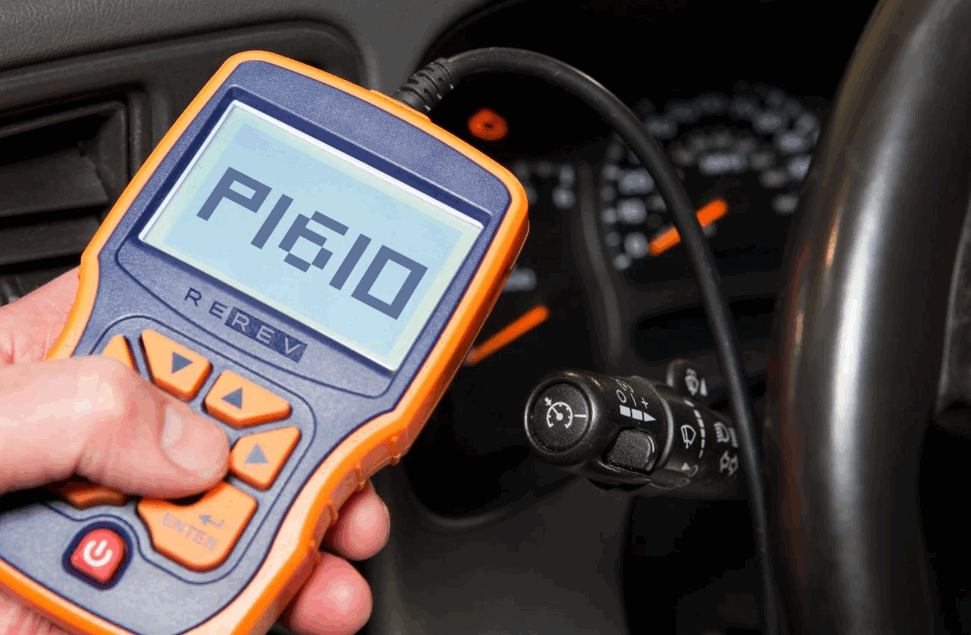
Nissan P1610 is a NATS “LOCK MODE” diagnostic trouble code. It can prevent the engine from starting. Nissan service information identifies P1610 with the vehicle’s anti theft system. The exact trigger depends on the Nissan model and NATS configuration.
Some Nissan service manuals link P1610 to repeated starting attempts with an unregistered key. Other cases involve communication problems between the BCM and ECM. These conditions can cause NATS to enter Lock Mode and block normal engine starting.
When P1610 appears, check more than the engine control system. The diagnosis should include the NATS immobilizer system, registered key, BCM, ECM and related diagnostic trouble codes. Battery condition also matters during the diagnostic process.
Some Nissan models provide a specific ignition procedure to exit Lock Mode. The procedure uses a registered key and follows a defined ignition sequence. Other cases require NATS initialization with Nissan diagnostic equipment.
This guide explains what Nissan P1610 means and why it appears. It also covers the main symptoms, causes and diagnostic steps. You will learn how to address Lock Mode and when key registration or NATS initialization becomes necessary.
Nissan uses different NATS configurations across models and model years. Always match the diagnostic procedure to the specific vehicle before performing a repair.
What does Nissan P1610 mean?
Nissan P1610 means that the NATS immobilizer system has entered LOCK MODE. NATS stands for Nissan Anti Theft System. This system controls whether the vehicle can authorize engine starting.
Lock Mode prevents normal engine starting when NATS detects a condition that requires additional security checks. The exact trigger depends on the Nissan model and its NATS configuration. Nissan service information links P1610 with conditions involving an unregistered key and repeated starting attempts. Some procedures also associate the code with BCM or ECM related faults.
The registered key plays an important role in this process. NATS checks the key before the vehicle allows the engine to start. If the system does not recognize the key, the starting process can fail. Repeated attempts with an unregistered key can also cause NATS to enter LOCK MODE on applicable Nissan models.
P1610 therefore does not identify a simple mechanical engine fault. It points to a security and engine authorization condition. The diagnostic process should examine the key, NATS status, stored DTCs, BCM, ECM and battery condition. Checking these areas helps identify the reason for the Lock Mode condition instead of simply clearing the code.
The meaning of P1610 can also differ in its trigger conditions across Nissan models and model years. For this reason, technicians should use the service information for the specific vehicle. A correct diagnosis depends on matching the NATS procedure to that vehicle’s system.
What symptoms does Nissan P1610 cause?
The main symptom of Nissan P1610 is an engine that will not start. NATS enters LOCK MODE and prevents normal engine starting. Nissan service manuals describe this condition across several models, although the exact trigger varies by vehicle and NATS configuration.
A no start condition can appear after repeated starting attempts. Some Nissan models enter LOCK MODE after five or more consecutive attempts. An unregistered key can trigger this condition on applicable vehicles. BCM or ECM communication problems can also trigger P1610 on certain Nissan models.
The security indicator can provide another diagnostic clue. Its behavior depends on the vehicle and the specific fault. Nissan technical information advises checking the security indicator during and after engine cranking. If the indicator stays off in certain P1610 cases, the problem may not involve NATS.
P1610 can also appear with other NATS or engine related DTCs. These additional codes can point to the underlying problem. Nissan procedures therefore recommend checking other stored DTCs before treating P1610 as an isolated fault. Codes such as P1611 through P1615 and several B codes can appear in some Nissan diagnostic procedures.
The key symptom remains the same: the vehicle fails to start because the security system has not granted normal engine start authorization. The diagnostic path depends on the model, key type and other stored fault codes.
What causes Nissan P1610?
Nissan P1610 has several possible causes, but the main causes involve the NATS system, key recognition, and engine control communication. The exact cause depends on the Nissan model and NATS configuration. Nissan service information should guide the diagnosis for the specific vehicle.
An unregistered key is one documented cause of P1610. NATS checks the key before it allows the engine to start. If the system does not recognize the key, repeated starting attempts can place the vehicle in LOCK MODE. Some Nissan procedures specify five or more consecutive starting attempts under these conditions.
A BCM or ECM fault can also cause P1610 on some Nissan models. The BCM communicates with the vehicle’s security system and other control modules. The ECM controls engine operation and receives the authorization needed for starting. A communication or control problem can therefore affect the NATS start authorization process. Nissan service information lists BCM and ECM faults among possible conditions related to P1610 on applicable models.
Battery condition should also be checked during a P1610 no start diagnosis. A weak battery can affect vehicle starting and electronic system operation. Nissan technical information for certain models instructs technicians to check battery voltage and state of charge during P1610 diagnosis. This does not mean that a weak battery causes every P1610 code. It means battery condition must be verified before deeper NATS diagnosis.
Other stored DTCs can reveal the underlying problem. Nissan diagnostic procedures may include additional NATS codes and body control codes when P1610 appears. Checking these codes before replacing components helps prevent unnecessary parts replacement. The correct diagnosis should therefore follow the vehicle specific service procedure rather than assume that P1610 has one universal cause.
How do you diagnose Nissan P1610?
Diagnose Nissan P1610 by checking the stored DTCs, key recognition, NATS status and engine starting function. Start with the diagnostic scan before replacing any component. Nissan service procedures use CONSULT to confirm P1610 and check for other stored faults.
First, check all stored DTCs in the relevant control modules. Other DTCs can identify the problem that caused the Lock Mode condition. Some Nissan procedures specifically instruct technicians to diagnose other BCM or engine codes before continuing with P1610. This step helps avoid unnecessary replacement of the BCM or ECM.
Next, check the key used to start the vehicle. Use a registered key when testing the engine start function. An unregistered key can trigger Lock Mode on applicable Nissan systems. Check the security indicator and confirm whether the vehicle recognizes the key.
Then, check the battery and basic electrical condition. Low voltage can affect starting and electronic control systems. A battery check is especially useful when the vehicle has a no start condition.
After these checks, confirm whether NATS remains in Lock Mode. Some Nissan procedures use a registered key and a specific ignition cycle to restore engine starting. Other vehicles require NATS initialization with CONSULT. The exact procedure depends on the Nissan model and system configuration.
Finally, verify that the engine starts normally and that P1610 does not return. If the vehicle still will not start, continue with model specific NATS, BCM and ECM diagnosis.
How do you get a Nissan out of P1610 Lock Mode?
You can exit Nissan P1610 Lock Mode on applicable models by using a registered key and the correct ignition sequence. The procedure varies by Nissan model and NATS configuration. Nissan service manuals show a three cycle procedure on several models.
First, turn the ignition switch OFF. Then turn the ignition switch ON with a registered key. Do not start the engine. Wait for 5 seconds. Turn the ignition switch OFF and wait another 5 seconds. Repeat this ON and OFF sequence two more times. This creates three complete cycles. After the third cycle, try to start the engine with the registered key. Nissan service information uses this procedure for several vehicles with P1610 Lock Mode.
The registered key is essential during this procedure. An unregistered key will not provide the NATS authorization required for normal engine starting. Some Nissan vehicles use an Intelligent Key or a key slot, while others use a mechanical key. The correct method therefore depends on the vehicle configuration.
If the engine still does not start, do not repeat the ignition sequence indefinitely. Check for other stored DTCs and diagnose those faults first. Some Nissan procedures require NATS initialization with CONSULT after the Lock Mode procedure fails. If initialization also fails, the service procedure may require further BCM or ECM diagnosis.
Do not treat this procedure as a universal P1610 reset for every Nissan. Some models use different Lock Mode conditions and recovery procedures. For example, Nissan documentation shows different trigger counts and procedures across models. Always use the service information for the specific Nissan before performing the reset.
Does Nissan P1610 require key programming or NATS initialization?
Nissan P1610 does not automatically mean that the key needs programming. Lock Mode recovery, key registration and NATS initialization are separate procedures. The correct procedure depends on the Nissan model, NATS configuration and the cause of the no start condition.
A registered key is the first point to check when P1610 appears. NATS must recognize the key before it can authorize engine starting. If the key is already registered, the vehicle may only need the applicable Lock Mode recovery procedure. Nissan service information describes procedures that use a registered key to restore normal engine starting.
Key registration becomes relevant when NATS does not recognize the key. This situation can occur after a key replacement or when the vehicle has an unregistered key. Programming a key does not repair a separate BCM, ECM or NATS communication fault. The underlying fault must still be diagnosed.
NATS initialization is different from key registration. Initialization synchronizes the required security information between the vehicle control modules. Some Nissan service procedures call for NATS initialization when the normal Lock Mode recovery procedure does not restore engine starting. Nissan diagnostic equipment such as CONSULT may be required for this process.
Do not program a new key simply because P1610 appears. First check the stored DTCs, verify the key, inspect battery condition and confirm the NATS status. If these checks do not resolve the problem, follow the model specific NATS procedure.
The key point is simple: P1610 identifies a NATS Lock Mode condition, not an automatic requirement for key programming. Proper diagnosis determines whether the vehicle needs Lock Mode recovery, key registration, NATS initialization or further BCM and ECM testing.
What should you check if Nissan P1610 keeps coming back?
If Nissan P1610 returns after clearing the code, diagnose the underlying NATS fault instead of repeatedly resetting it. A returning P1610 means the condition that triggered Lock Mode may still exist. The correct diagnostic path depends on the Nissan model and its NATS configuration.
Start by scanning the vehicle again and checking every stored DTC. Other NATS, BCM or ECM codes can identify the underlying problem. Nissan service information for some models directs technicians to check additional codes when P1610 appears. These codes can provide a more specific direction for further testing.
Next, verify the registered key. NATS must recognize the key before the engine can receive normal start authorization. Test with a known registered key when available. If the vehicle does not recognize the key, investigate key registration or the NATS system before replacing other components.
Battery condition also deserves attention. A weak battery can affect starting and electronic system operation. Check battery voltage and state of charge before performing deeper electrical diagnosis. Nissan technical information for certain models includes battery checks in the P1610 no start procedure.
If the key and battery check correctly, continue with NATS, BCM and ECM diagnosis. Check the communication between the relevant control modules when the service procedure requires it. NATS initialization may also become necessary on applicable vehicles.
Do not replace the BCM or ECM simply because P1610 returns. Confirm the related fault first. After the repair, clear the stored DTCs and verify that the engine starts normally. Then rescan the vehicle to confirm that P1610 does not return.
How can you confirm that Nissan P1610 is fixed?
You can confirm that Nissan P1610 is fixed when the engine starts normally and the code does not return. Clearing the diagnostic trouble code alone does not prove that the repair solved the problem. The vehicle must pass a complete starting and NATS verification.
Start the vehicle with a registered key after completing the required repair procedure. The engine should start normally without another no start condition. Check the security indicator and confirm that it behaves normally for the specific Nissan model.
Next, scan the vehicle again for stored DTCs. P1610 should remain cleared after the engine starts and the vehicle completes the required checks. Also check for other NATS, BCM and ECM codes. A returning code indicates that the underlying problem still needs attention.
If the vehicle still will not start, check the registered key, battery condition and NATS status again. Further diagnosis may involve the BCM, ECM or NATS initialization. The correct procedure depends on the Nissan model and its security system configuration.
Nissan P1610 is therefore best treated as a NATS Lock Mode condition rather than a simple code to erase. A proper repair identifies why the vehicle entered Lock Mode, restores the required start authorization and confirms normal engine operation. Following the model specific Nissan service procedure provides the most reliable way to verify the repair.