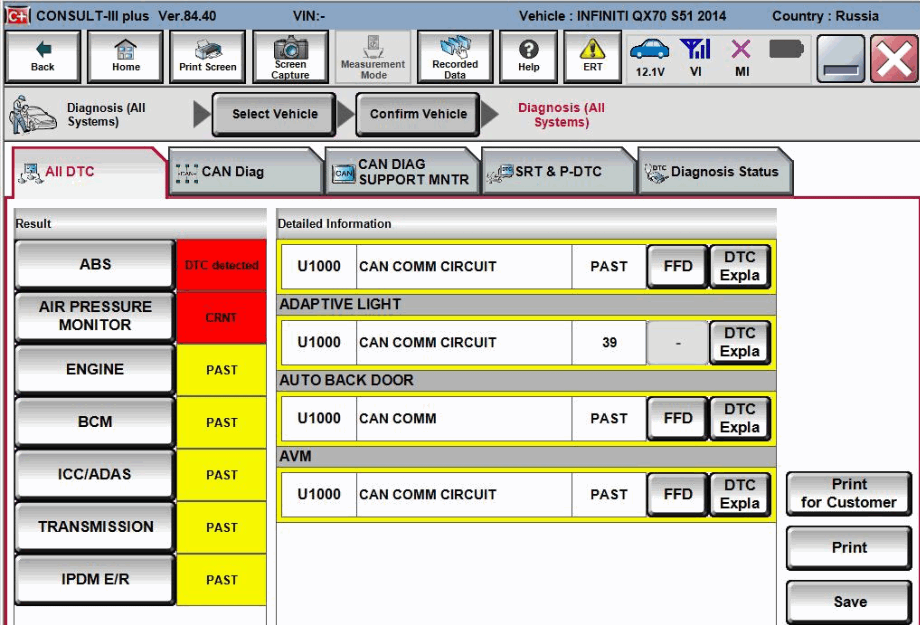
Nissan U1001 is a network communication code that indicates a problem within the vehicle’s Controller Area Network, or CAN system. This network allows electronic control modules to exchange data with each other. These modules include the Engine Control Module, Transmission Control Module, Body Control Module, and ABS control module. A communication failure between these modules can trigger the U1001 code.
Several electrical problems can cause Nissan U1001. Damaged CAN wiring can interrupt data transmission between control modules. Loose connectors, corrosion, poor grounds, and unstable battery voltage can also disrupt communication. A faulty control module can cause the code as well. However, technicians should test the electrical system before replacing any module.
Diagnosing Nissan U1001 starts with a complete scan of the vehicle’s control modules. Related trouble codes can help identify the affected circuit or module. The next checks should cover battery voltage, wiring, connectors, power circuits, and ground connections. Advanced CAN testing may become necessary when these basic checks reveal no clear fault. This guide explains the meaning, severity, symptoms, causes, diagnosis, and fixes for Nissan U1001. It also explains repair costs and why the code may return.
What Does the Nissan U1001 Code Mean?
Nissan U1001 indicates a communication problem between electronic control modules on the vehicle’s CAN network. CAN stands for Controller Area Network. This network creates a shared communication system for electronic modules throughout the vehicle.
Modern Nissan vehicles use several control modules to manage different systems. The Engine Control Module manages key engine functions. The Transmission Control Module controls transmission operation on applicable models. The Body Control Module manages many electrical and body functions. Other modules control systems such as ABS and vehicle stability functions. These computers exchange information through the CAN network.
A communication problem occurs when a module cannot send or receive the expected data. An interruption can affect one circuit, one module, or a larger part of the network. Wiring damage can disrupt this data flow. Poor electrical connections, power problems, and ground faults can create similar communication issues.
U1001 identifies the communication fault, but it does not identify a failed component by itself. For this reason, replacing an ECU based only on U1001 can lead to an incorrect repair. Technicians must determine which module detected the problem and check other stored codes. They should also inspect the electrical conditions that support CAN communication.
The exact diagnostic context can vary between Nissan models and control systems. Therefore, technicians should use the code alongside vehicle specific diagnostic information. This approach connects U1001 to the affected network and helps locate the actual source of the communication problem.
How Serious Is the Nissan U1001 Code?
Nissan U1001 can range from a stored communication fault to a serious problem that affects vehicle operation. The severity depends on the affected module, related trouble codes, and the symptoms the vehicle displays.
A Nissan may store U1001 after a temporary communication interruption. In this situation, the vehicle may start, drive, and operate normally. The code still deserves diagnosis because an intermittent electrical fault can return. Loose connections or unstable voltage can create problems that appear only under specific conditions.
An active communication failure requires more attention. Control modules depend on shared data to operate vehicle systems correctly. A network problem can therefore produce warning lights, electrical malfunctions, starting problems, or abnormal vehicle behavior. The exact effects depend on which modules lose communication.
Drivers should treat U1001 as more urgent when the vehicle shows significant operating problems. Starting failure, engine performance issues, transmission problems, or multiple warning lights indicate a broader diagnostic concern. Communication faults involving important control systems also require prompt inspection.
Driving decisions should depend on the vehicle’s actual condition rather than the U1001 code alone. A normally operating vehicle with a stored code presents a different situation from a vehicle with active faults. Scan all modules and review related DTCs before judging the severity. This information shows whether U1001 represents an isolated event or an active network problem.
What Are the Symptoms of Nissan U1001?
Nissan U1001 can cause warning lights, starting problems, drivability issues, electrical faults, and communication errors between control modules. However, the exact symptoms depend on which part of the CAN network has a problem. Some vehicles may also store U1001 without showing an obvious symptom.
Dashboard warning lights provide one possible sign of a communication fault. The check engine light may appear when a related system detects a problem. Other warning indicators may also turn on when affected modules stop exchanging required data. Multiple warning lights can point toward a network issue rather than one isolated component.
Starting and drivability problems can occur when important modules lose communication. The engine may have trouble starting if the required control units cannot exchange data correctly. Communication problems can also accompany abnormal engine or transmission behavior. These symptoms require a complete scan because U1001 alone does not identify the affected system.
Electrical problems can provide another clue. Some vehicle functions may operate incorrectly when the Body Control Module or another electronic unit loses network communication. A diagnostic scanner may also fail to communicate with an affected module. This result can help narrow the diagnostic area.
Some Nissan vehicles show no noticeable symptoms when U1001 appears as a stored or intermittent code. A temporary voltage drop or brief connection problem can interrupt communication and leave a fault record. Technicians should therefore evaluate current symptoms, related DTCs, and module communication together. These details show whether the code represents an active fault or a previous interruption.
What Causes the Nissan U1001 Code?
The main causes of Nissan U1001 involve faults in CAN wiring, electrical connectors, voltage supply, ground circuits, or control modules. Each problem can interfere with the data that electronic modules send across the CAN network. Diagnosis must identify the actual cause before any major component replacement.
Damaged CAN wiring is a primary area to inspect. The network uses communication circuits to carry data between modules. A damaged wire, open circuit, or electrical short can interrupt these signals. Wiring damage may result from physical wear, previous repairs, moisture, or problems near connectors and harness routing points.
Loose or corroded connectors can also interrupt network communication. Electrical terminals need reliable contact to carry power, ground, and communication signals. Corrosion increases resistance and can weaken that connection. Moisture or damaged terminals can create similar faults. An intermittent connector problem may explain why U1001 disappears and later returns.
Low or unstable system voltage can affect several modules at the same time. Control modules need a stable electrical supply to operate and communicate correctly. A weak battery, charging problem, or interrupted power circuit can disrupt module operation. For this reason, technicians should verify voltage and power supply before moving to advanced network tests.
Poor ground connections create another possible cause. Excessive resistance at a ground point can interfere with module operation even when the module itself remains functional. Inspecting relevant grounds can prevent unnecessary replacement of expensive electronic components.
A faulty control module can also contribute to U1001, but technicians should not assume module failure from the code alone. They should first verify wiring, connectors, voltage, power, and grounds. A module becomes a stronger suspect only after these checks rule out external electrical faults.
How Do You Diagnose Nissan U1001?
Diagnosing Nissan U1001 requires checking all stored codes, system voltage, wiring, connectors, power circuits, grounds, and CAN communication. Start with basic electrical checks before testing the CAN network. This sequence helps prevent incorrect diagnoses and unnecessary module replacement.
First, scan every control module that the diagnostic tool can access. Record current, stored, and related communication codes before clearing anything. Multiple U codes can reveal which modules have lost communication. A scanner that cannot communicate with one module can also provide an important diagnostic clue.
Next, check the battery and electrical supply. Control modules need stable voltage to communicate correctly. Inspect the battery condition and verify the charging system when necessary. Low voltage or an unstable power supply can affect several modules at once. Correct any confirmed voltage problem before continuing with network diagnosis.
Inspect the relevant wiring and electrical connectors next. Look for damaged insulation, broken wires, loose terminals, corrosion, moisture, and previous wiring repairs. Pay close attention to connectors near the affected modules. Physical damage can create an intermittent fault that appears only during vibration or changes in vehicle conditions.
Power and ground circuits also require verification. Confirm that the suspected module receives the correct power supply. Then inspect its ground connections for damage, corrosion, or excessive resistance. A module cannot communicate correctly when it lacks reliable power or ground.
When Should You Test the CAN Bus Electrically?
Test the CAN bus electrically when basic voltage, wiring, connector, power, and ground checks do not identify the fault. Advanced testing can help locate an open circuit, short circuit, or abnormal network condition.
CAN testing may involve checking the communication circuits and comparing measurements with Nissan service information for the specific vehicle. Technicians may need to examine CAN H and CAN L operation at relevant connectors. The correct test points and expected values can differ by model and system.
Do not condemn a control module only because communication has stopped. Verify the network and the module’s electrical supply first. This process separates an external communication problem from an internal module failure.
How Do You Fix the Nissan U1001 Code?
Fix Nissan U1001 by repairing the wiring, connector, power, ground, network, or control module fault identified during diagnosis. There is no single repair that fixes every U1001 code. The correct repair must address the condition that interrupted CAN communication.
Repair damaged wiring when testing identifies an open circuit, short circuit, or damaged harness section. The repair must restore reliable electrical continuity and protect the circuit from further damage. Wiring problems near connectors also require careful inspection because movement can create intermittent communication faults.
Repair connector problems when terminals have corrosion, poor contact, moisture damage, or physical defects. A loose terminal can interrupt communication even when the surrounding wiring looks normal. Correct the terminal or connector fault rather than replacing an unrelated control module.
Resolve power and ground problems when testing confirms them. A weak electrical supply can prevent a module from operating correctly. Poor grounds can create similar symptoms. Correcting these faults may restore normal communication without replacing the module.
Address battery or charging system problems when unstable voltage causes the communication failure. However, do not replace the battery simply because U1001 appears. Test the battery and charging system first and repair only confirmed faults.
Replace or repair a control module only when diagnosis confirms an internal failure. Some replacement modules may also require programming or configuration for the specific Nissan. Follow the correct service procedure when programming applies.
After completing the repair, clear the stored trouble codes with a suitable diagnostic scanner. Operate or drive the vehicle under appropriate conditions and scan all modules again. If U1001 returns, continue diagnosis instead of repeatedly clearing the code.
Can You Clear Nissan U1001 Without Fixing the Problem?
You can clear Nissan U1001 with a compatible diagnostic scanner, but clearing the code does not repair the communication fault. The code can return when the vehicle detects the same CAN communication problem again. A permanent solution requires diagnosis and repair of the underlying cause.
A scan tool removes the stored diagnostic information from the relevant control module. However, this action does not repair damaged wiring, improve a poor ground, or restore a faulty electrical connection. It also cannot correct a defective module. The vehicle continues to monitor its electronic systems after technicians clear the code.
U1001 may return quickly when an active communication fault remains present. For example, a damaged CAN circuit can interrupt module communication again as soon as the affected systems operate. A persistent power or ground problem can produce a similar result. The returning code confirms that clearing it did not correct the original condition.
An intermittent fault can make the situation less obvious. U1001 may stay absent after technicians clear it because the communication problem only occurs under certain conditions. Vibration, moisture, temperature changes, or an unstable connection may trigger the fault later. This behavior makes intermittent electrical problems harder to locate.
The correct process is to diagnose the fault, complete the required repair, and then clear the stored codes. Afterward, operate the vehicle under appropriate conditions and scan the modules again. A follow up scan helps confirm whether CAN communication remains stable and whether U1001 has returned.
How Much Does It Cost to Fix Nissan U1001?
The cost to fix Nissan U1001 depends on the actual cause because the code does not identify one specific failed component. A wiring or connector problem requires a different repair from a power supply fault or failed control module. Diagnostic labor also contributes to the total cost.
Simple electrical faults generally require fewer repair steps than complex network problems. A technician may locate corrosion, a loose terminal, or visible wiring damage during the initial inspection. The final cost then depends on the location of the damage, required parts, and labor needed to restore the connection.
Electrical diagnosis can become more involved when the fault occurs intermittently. The technician may need additional time to inspect circuits, verify power and grounds, and reproduce the communication failure. Advanced CAN testing can add diagnostic labor when basic checks do not reveal the cause.
A control module fault can increase the total repair cost. The repair may include module replacement and additional setup procedures. Some Nissan modules require programming or configuration after installation. The exact requirements depend on the vehicle, module, and repair procedure.
For these reasons, a repair estimate should follow diagnosis rather than the U1001 code alone. Owners should ask what fault testing confirmed and which repair will correct it. This approach provides a more useful estimate and reduces the risk of paying for unnecessary electronic components.
Why Does Nissan U1001 Come Back After Repair?
Nissan U1001 can return after a repair when the original communication fault remains unresolved or an intermittent electrical problem still affects the CAN network. The returning code does not always mean that the new part or previous repair has failed. It indicates that a control module detected another communication problem.
Intermittent wiring faults are one possible reason. A damaged wire may maintain contact while the vehicle remains stationary. Vibration and movement can interrupt that connection while driving. Harness damage near connectors, mounting points, or previous repair areas deserves additional inspection when U1001 returns.
Connector problems can produce similar behavior. A loose terminal may create normal contact during one test and lose contact later. Corrosion or moisture can also increase electrical resistance and disrupt communication. Cleaning the visible connector area may not solve the problem when a terminal has internal damage.
Unstable voltage and poor grounds can also cause repeated communication faults. Control modules need consistent power and reliable ground connections. A voltage drop can interrupt module operation for a short period. Excessive resistance at a ground connection can create another intermittent condition. Testing these circuits under relevant operating conditions can reveal faults that a visual inspection misses.
U1001 can also return when the first diagnosis addressed a symptom instead of the actual network problem. Replacing a module will not repair damaged CAN wiring or a poor power connection. Technicians should scan all available modules again when the code returns. They should compare related DTCs and identify which modules currently lose communication.
A successful repair should restore stable network communication rather than simply keep the warning light off. Confirm the repair by clearing the codes, operating the vehicle, and performing another complete scan. Further diagnosis remains necessary when U1001 or related communication codes return.
What Should You Do When Your Nissan Has the U1001 Code?
Start by scanning all available control modules when your Nissan has the U1001 code. Record U1001 and any related trouble codes before clearing them. These codes can help identify the affected module or communication path. The vehicle’s symptoms can also show whether the fault is intermittent or currently affecting operation.
Check the battery voltage and electrical supply before replacing any components. Then inspect the relevant CAN wiring, connectors, power circuits, and ground connections. Look for damaged wires, loose terminals, corrosion, moisture, and other conditions that can interrupt communication. Perform advanced CAN testing when these basic checks do not identify the source.
Repair the confirmed electrical or network fault before clearing U1001. Replace a control module only when diagnostic testing confirms an internal failure. A module replacement may also require programming or configuration on some Nissan vehicles. Following the correct diagnostic sequence reduces unnecessary parts replacement and helps identify the actual communication problem.
After the repair, clear the stored codes and operate the vehicle under appropriate conditions. Scan all available modules again to confirm that communication remains stable. Continue diagnosis if U1001 returns. Nissan U1001 identifies a CAN communication problem, but the code alone does not identify a failed part. Accurate diagnosis remains the key to selecting the correct repair.