
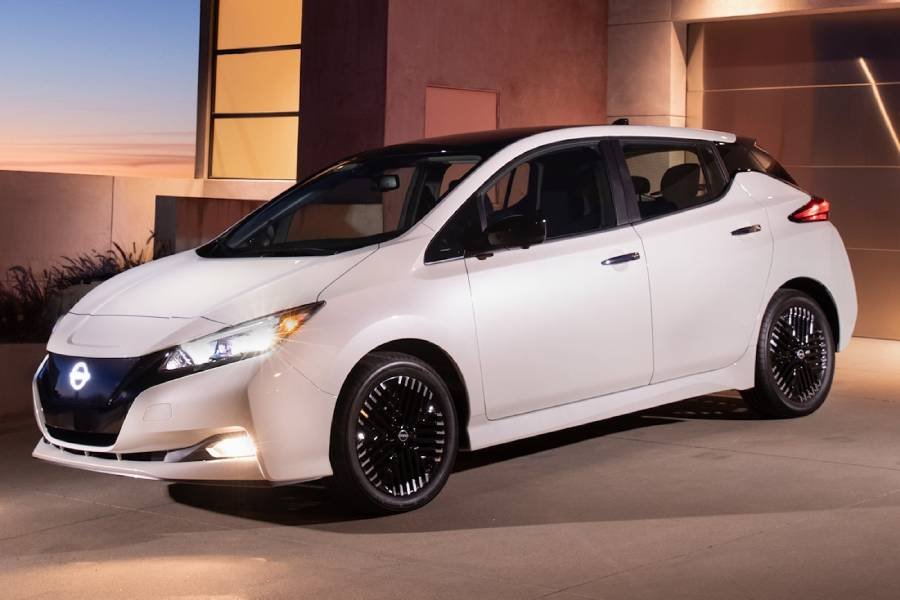
The Nissan Leaf air conditioning system uses an electrically powered compressor to cool the cabin, rather than relying on a compressor mechanically driven by a gasoline engine. Because the Leaf is a battery-electric vehicle, its climate control system draws electrical energy while circulating refrigerant through the air-conditioning circuit to remove heat from the cabin.
Air conditioning therefore contributes to the Nissan Leaf’s overall energy consumption. The amount of energy required for cooling changes with factors such as outside temperature, cabin temperature, climate-control settings, and the cooling load placed on the system. Energy used for climate control is energy that is not available for propulsion, so running the A/C can affect the vehicle’s available driving range.
The Nissan Leaf also includes climate-control functions designed to manage cabin comfort and energy use, including temperature controls, recirculation, and pre-conditioning on applicable models. Understanding how these functions interact with the compressor, refrigerant system, traction battery, and other HVAC components helps owners use the system more effectively. This guide explains how Nissan Leaf air conditioning works, its main components, its effect on battery consumption and driving range, common cooling problems, and the maintenance required to keep the system operating correctly.
How Does the Air Conditioning System in a Nissan Leaf Work?
The Nissan Leaf air conditioning system cools the cabin by using electrical energy to operate the A/C compressor and circulate refrigerant through a closed cooling circuit. Unlike a conventional gasoline vehicle, the Leaf does not need a running combustion engine to mechanically drive the compressor. The electric compressor allows the climate control system to operate whenever the vehicle can supply the electrical power required by the system.
The cooling process relies on refrigerant transferring heat from inside the passenger compartment to the outside environment. The compressor raises the pressure of the refrigerant and moves it toward the condenser, where heat is released. The refrigerant then passes through the system toward the evaporator. Inside the evaporator, the refrigerant absorbs heat from cabin air passing across its surface. The blower sends the resulting cooler air through the vents and into the passenger compartment.
Cabin temperature is controlled by more than the compressor alone. The Nissan Leaf climate control system coordinates cooling demand with temperature settings, fan operation, airflow direction, and sensor information. When the cabin requires stronger cooling, the system can increase the cooling load. As the cabin approaches the selected temperature, the system can reduce the amount of cooling required. This variable operation is one reason A/C energy consumption is not constant throughout every journey.
The electric architecture also allows the Nissan Leaf to provide climate-control functions that do not depend on an idling gasoline engine. For example, applicable climate-control and pre-conditioning functions can cool the passenger compartment before driving under supported operating conditions. This distinction is important because the Leaf must manage cabin comfort and propulsion from the vehicle’s available electrical energy rather than from the mechanical output of an internal-combustion engine.
What Parts Make Up the Nissan Leaf Air Conditioning System?
The Nissan Leaf air conditioning system consists of an electric compressor, condenser, evaporator, refrigerant circuit, blower system, cabin air filter, sensors, and climate controls. These components perform different functions, but they operate as one HVAC system to remove cabin heat, distribute conditioned air, and maintain the temperature selected by the occupants.
The electric A/C compressor is a central component because it circulates refrigerant and creates the pressure conditions required for the refrigeration cycle. The condenser then allows heat carried by the refrigerant to move out of the system. After the refrigerant passes through the appropriate pressure-control stage, it reaches the evaporator, where it absorbs heat from air that will be supplied to the cabin. The refrigerant repeatedly moves through this closed circuit while cooling is required.
The blower motor and ventilation system handle air movement rather than refrigerant movement. The blower pushes air across the HVAC components and through the selected dashboard, footwell, or windshield outlets. The cabin air filter sits in the incoming-air path and captures airborne contaminants before the air reaches the passenger compartment. A restricted filter can reduce airflow even when the refrigeration circuit itself is still capable of producing cold air.
Sensors and climate-control inputs determine how the components respond to cabin conditions and driver settings. Temperature selection, fan settings, airflow modes, recirculation, and automatic climate functions influence how the HVAC system operates. This separation between refrigeration, airflow, and electronic control is important when diagnosing problems: weak vent airflow, insufficient cooling, and incorrect climate-control behavior can originate from different parts of the system rather than from a single A/C component.
How Do You Use the Air Conditioning in a Nissan Leaf?
You use Nissan Leaf air conditioning by setting the desired cabin temperature and selecting the appropriate automatic or manual climate-control functions. The exact controls vary by model year and trim, but the system generally allows the driver to manage temperature, fan speed, airflow direction, recirculation, and windshield defogging. Automatic climate control can coordinate several of these functions without requiring the driver to adjust each setting separately.
AUTO mode is designed to maintain the selected cabin temperature by adjusting climate-control operation according to current conditions. Instead of keeping the compressor and fan at the same output continuously, the system responds to the difference between the selected temperature and the conditions inside the vehicle. A hot cabin can initially require greater cooling, while maintaining an already comfortable cabin generally places a lower cooling demand on the system.
Recirculation changes where the HVAC system obtains the air supplied to the cabin. Recirculation sends cabin air back through the climate-control system instead of continuously drawing outside air into the vehicle. During hot conditions, this allows the system to repeatedly cool air that has already been partially cooled rather than constantly processing hotter outside air. Fresh-air mode remains useful when outside air is needed to manage cabin air quality or moisture.
The defogging and defrost functions prioritize windshield visibility by directing conditioned airflow toward the glass. These functions should be treated differently from normal cabin cooling because their primary purpose is moisture and visibility management. Climate-control operation can therefore change according to the selected mode even when the driver has not significantly changed the target cabin temperature.
How Much Battery Does Nissan Leaf Air Conditioning Use?
Nissan Leaf air conditioning consumes energy from the vehicle’s electrical system, but there is no single battery-consumption figure that applies to every journey. Cooling demand changes continuously according to ambient temperature, cabin heat, solar exposure, selected temperature, vehicle conditions, and the amount of time required to reach and maintain the target cabin temperature. A/C consumption should therefore be evaluated as a variable electrical load rather than a fixed percentage of battery capacity.
Cooling a heat-soaked cabin requires more work than maintaining a cabin that is already close to the selected temperature. For example, a Leaf parked in direct sunlight on a hot day can begin a journey with a substantial difference between cabin temperature and the driver’s temperature setting. The climate control system must initially remove that accumulated heat. Once the cabin approaches the target temperature, the cooling requirement can decrease because the system is maintaining conditions rather than producing the initial temperature reduction.
The driver’s settings also affect the cooling load. Selecting a substantially lower cabin temperature can require the climate-control system to remove more heat, particularly when outside temperatures are high. Fan speed affects how quickly conditioned air moves through the cabin, while recirculation can reduce the amount of hot outside air that needs to be cooled under suitable conditions. These controls interact with each other, so fan speed alone does not provide a reliable measurement of total A/C energy consumption.
Does Nissan Leaf A/C Use More Battery in Hot Weather?
Nissan Leaf air conditioning can use more energy in hot weather because a larger temperature difference between the cabin and the desired temperature increases the cooling demand. Direct sunlight can increase this load further by heating the seats, dashboard, interior surfaces, and enclosed cabin air. The A/C system must remove part of this accumulated thermal energy before it can maintain a comfortable cabin temperature.
The greatest cooling demand can occur near the beginning of a trip when the vehicle has been parked in hot conditions. Once the interior has cooled, the energy required to maintain the selected temperature can change. This means that A/C consumption during the first part of a hot-weather journey should not automatically be treated as the consumption rate for the entire trip.
Outside temperature is also only one part of the calculation. Two Nissan Leaf vehicles operating at the same ambient temperature can experience different climate-control loads if one has been parked in shade and the other in direct sunlight. Cabin starting temperature, solar exposure, selected temperature, trip duration, and climate settings all contribute to the actual load. For this reason, a universal claim that Nissan Leaf A/C consumes a specific percentage of the battery would require defined test conditions rather than a single figure applied to every vehicle and journey.
Does Air Conditioning Reduce Nissan Leaf Driving Range?
Air conditioning can reduce Nissan Leaf driving range because the climate control system uses electrical energy that would otherwise remain available for vehicle operation. The traction battery stores a finite amount of usable energy, and both propulsion and cabin climate control contribute to total energy consumption. When the A/C requires more power, the vehicle has less stored energy available for the remainder of the journey.
The effect on range is not constant because air-conditioning demand changes throughout a trip. Cooling a cabin that has been parked in direct sunlight can create a relatively high initial load, while maintaining an already cooled cabin requires a different level of energy. Outside temperature, solar exposure, target cabin temperature, trip duration, and climate-control settings therefore influence how much A/C operation contributes to overall energy consumption.
Trip length also changes the relative impact of climate control. On a short journey, the initial cabin cooldown can represent a larger portion of the total energy used during the trip. On a longer journey, the system has more time operating after the cabin has reached the selected temperature. This distinction explains why a single range-loss percentage cannot accurately describe every Nissan Leaf journey without specifying the test conditions.
The relationship can be summarized as climate-control demand → electrical consumption → available battery energy → available driving range. However, this does not mean drivers should avoid air conditioning whenever maximum range is desired. A more useful approach is to reduce unnecessary cooling demand while maintaining a safe and comfortable cabin.
How Can You Use Nissan Leaf Air Conditioning More Efficiently?
Nissan Leaf owners can improve air-conditioning efficiency by reducing the amount of heat the climate control system must remove and avoiding unnecessary HVAC demand. Five practical approaches are managing cabin heat before departure, using pre-conditioning when appropriate, selecting a reasonable cabin temperature, using recirculation under suitable conditions, and maintaining unrestricted HVAC airflow.
Reducing heat buildup before driving lowers the initial cooling load. Parking in shade or using measures that limit direct solar heating can reduce the amount of heat accumulated by the dashboard, seats, trim, and cabin air. When the interior starts closer to the desired temperature, the A/C has less thermal energy to remove during the initial cooldown period.
Using pre-conditioning can also reduce the amount of cabin cooling that must occur after the journey begins. On Nissan Leaf models equipped with the applicable climate-control functions, pre-conditioning allows the cabin temperature to be managed before departure. Its effect on battery energy depends on how and when the function is used, including whether the vehicle is connected to external power.
Selecting an appropriate temperature is more efficient than demanding maximum cooling when maximum cooling is unnecessary. A large difference between cabin conditions and the selected temperature creates greater cooling demand. Once the cabin becomes comfortable, allowing the automatic climate-control system to maintain the target temperature can avoid unnecessary manual changes to fan and cooling settings.
Recirculation can improve cooling efficiency in hot conditions because the HVAC system can process cabin air that has already been cooled instead of continuously introducing hotter outside air. Recirculation should still be used according to cabin conditions because fresh-air and defogging requirements can make outside airflow necessary.
Maintaining the HVAC airflow path is equally important. A heavily restricted cabin air filter can reduce the volume of air reaching the passenger compartment, which can make cooling performance feel weak even when the refrigeration circuit is operating. Replacing the filter according to the applicable maintenance requirements and investigating persistent airflow problems helps the climate-control system deliver conditioned air effectively.
What Is Nissan Leaf Climate Pre-Conditioning?
Nissan Leaf climate pre-conditioning allows the climate control system to heat or cool the cabin before the driver begins a journey. Instead of waiting until the vehicle is already on the road to bring the interior toward a comfortable temperature, applicable Nissan Leaf models can operate climate control before departure. This is particularly useful when the cabin has become very hot or cold while parked.
Pre-conditioning changes when the vehicle handles part of the cabin’s heating or cooling load. Without pre-conditioning, the climate control system may face its greatest demand immediately after the journey begins because it must bring the cabin from its starting temperature toward the selected temperature. Pre-conditioning starts this process earlier, so the cabin can be closer to the desired temperature when the driver enters the vehicle.
The energy source during pre-conditioning is important when considering its effect on available battery energy. When supported by the vehicle and charging conditions, climate control can operate while the Nissan Leaf is connected to external power. The exact behavior and available functions depend on the Leaf model year, specification, charging status, and climate-control configuration, so the same pre-conditioning procedure should not be assumed for every Nissan Leaf.
Can Pre-Conditioning Help Preserve Nissan Leaf Driving Range?
Pre-conditioning can help preserve more battery energy for driving when cabin heating or cooling is performed while the Nissan Leaf is connected to an external power source under supported conditions. The benefit comes from shifting part of the climate-control demand to the period before departure rather than increasing the battery’s physical capacity or the vehicle’s underlying efficiency.
For example, a Nissan Leaf parked in hot weather may require substantial initial cooling after the driver enters the vehicle. Pre-cooling the cabin before departure reduces the amount of temperature change required once driving begins. The climate control system may still need to operate during the journey, but it can begin from a cabin temperature closer to the selected target.
Pre-conditioning should therefore be understood as an energy-management strategy rather than a method that directly adds driving range. Its practical effect depends on outside temperature, starting cabin temperature, charging conditions, departure timing, and the amount of climate control required after departure.
Does the Nissan Leaf Use a Heat Pump for Climate Control?
Some Nissan Leaf versions use a heat-pump climate system, but heat-pump availability varies by model year, trim level, specification, and market. It is therefore inaccurate to state that every Nissan Leaf has the same heat-pump configuration. Owners should verify the equipment fitted to their specific vehicle when determining how its heating system operates.
A heat pump transfers thermal energy instead of relying exclusively on electrical resistance to generate cabin heat. In simplified terms, it uses a refrigerant circuit and related HVAC components to move heat into the passenger compartment. Air conditioning uses the refrigeration process to remove heat from the cabin, while heat-pump heating uses the system to support heat transfer in the opposite thermal direction.
The distinction matters most when discussing energy consumption in cold weather. Cabin heating places an electrical load on an electric vehicle just as cabin cooling does in hot weather. A heat-pump system can manage part of that heating demand differently from a resistance-only heating system, which is why HVAC configuration can influence cold-weather energy use.
Heat-pump performance should not be treated as identical under every outside temperature. Heating demand and system efficiency change with environmental conditions, and the Nissan Leaf’s exact HVAC design also differs across versions. For this reason, comparisons of winter energy consumption or driving range should identify the relevant Leaf model and operating conditions rather than attribute one result to every Nissan Leaf.
Read more: How To Program Nissan Leaf Key Fob: DIY Guide
Why Is My Nissan Leaf Air Conditioning Not Blowing Cold Air?
A Nissan Leaf air conditioner can stop blowing cold air because of refrigerant problems, compressor faults, restricted airflow, or electrical and climate-control faults. These problems can produce similar symptoms from the driver’s perspective, but they affect different parts of the HVAC system. Identifying whether the problem involves air temperature, airflow volume, compressor operation, or climate controls helps narrow down the source of the fault.
A refrigerant problem can reduce the system’s ability to remove heat from cabin air. The A/C relies on refrigerant circulating through the compressor, condenser, expansion stage, and evaporator to transfer heat out of the passenger compartment. A refrigerant leak or another problem that prevents the circuit from operating correctly can therefore result in insufficient cooling. Simply adding refrigerant does not identify why the refrigerant level became inadequate, so a recurring loss of cooling requires diagnosis of the underlying system.
Compressor faults can also prevent effective cooling. The Nissan Leaf uses an electrically driven A/C compressor, making compressor operation an essential part of refrigerant circulation. A compressor that does not operate correctly can interrupt the refrigeration cycle even when the blower continues pushing air through the vents. The presence of airflow therefore does not confirm that the refrigeration circuit itself is working.
Restricted airflow creates a different symptom. A dirty or heavily restricted cabin air filter can reduce the amount of air delivered through the vents, making the climate control system appear less effective. In this situation, the refrigeration circuit may still cool the air, but insufficient airflow limits how quickly that conditioned air reaches the cabin. Weak airflow and warm airflow are different diagnostic symptoms and should not automatically be attributed to the same component.
Electrical and control faults form another category because the Nissan Leaf climate system depends on electronic controls, sensors, and electrically powered components. A fault in these systems can interfere with compressor commands, fan operation, temperature regulation, or other HVAC functions. Diagnosis becomes particularly important when the controls behave abnormally, cooling stops intermittently, or basic airflow checks do not explain the problem.
What Nissan Leaf A/C Problems Require Professional Diagnosis?
Refrigerant leaks, compressor faults, persistent electrical problems, and faults involving high-voltage A/C components require appropriate professional diagnosis. These problems go beyond routine owner maintenance because identifying the cause can require HVAC service equipment, electrical testing, refrigerant-system procedures, or work around electric-vehicle electrical systems.
Persistent loss of cooling is one reason to have the system inspected rather than repeatedly treating the symptom. If refrigerant has escaped from a closed circuit, locating the cause of the loss is more useful than assuming that refrigerant recharge alone is the repair. Similarly, replacing unrelated components without determining whether the problem originates in the compressor, refrigerant circuit, airflow system, or electronic controls can add cost without correcting the fault.
Electrical diagnosis is particularly important on an electric vehicle because the Nissan Leaf does not use the same compressor arrangement as a conventional engine-driven A/C system. Owners can perform basic observations, such as checking whether airflow is weak or whether climate-control settings are correct, but repair procedures involving high-voltage components should not be treated as routine DIY maintenance.
How Should You Maintain the Nissan Leaf Air Conditioning System?
Nissan Leaf air conditioning maintenance should focus on maintaining unrestricted airflow, monitoring cooling performance, and diagnosing refrigerant or component faults when symptoms appear. The HVAC system does not require every component to be replaced or serviced at the same interval, so maintenance should distinguish scheduled items such as the cabin air filter from faults that require condition-based diagnosis.
The cabin air filter is one of the primary routine maintenance items associated with HVAC airflow. As the filter collects dust and other airborne material, restriction can increase and airflow through the ventilation system can decline. Replacement intervals can vary according to model year, market, maintenance schedule, and operating environment. Vehicles regularly driven in dusty conditions may also place different demands on the filter than vehicles operated in cleaner environments.
Refrigerant should not be treated in the same way as a consumable that must simply be topped up whenever cooling becomes weak. The refrigeration circuit depends on maintaining the correct operating conditions, and an inadequate refrigerant charge can indicate a leak or another system issue. If cooling performance declines significantly or repeatedly after service, the cause should be diagnosed rather than relying on repeated recharging as a permanent solution.
Owners should also pay attention to changes in HVAC behavior. Persistent warm air, noticeably weak airflow, abnormal climate-control operation, and recurring loss of cooling are four signs that the system should be inspected. Each symptom points toward a different diagnostic path: weak airflow can indicate an airflow restriction, while air that continues to remain warm can require investigation of the refrigeration or control system.
Maintaining Nissan Leaf air conditioning ultimately means maintaining the system as a combination of refrigeration, airflow, and electronic control components. Keeping the cabin air path unrestricted addresses routine airflow maintenance, while refrigerant, compressor, electrical, or high-voltage faults require diagnosis based on the actual symptom. This approach avoids replacing parts unnecessarily and helps preserve reliable cabin cooling without treating every A/C problem as the same fault.