
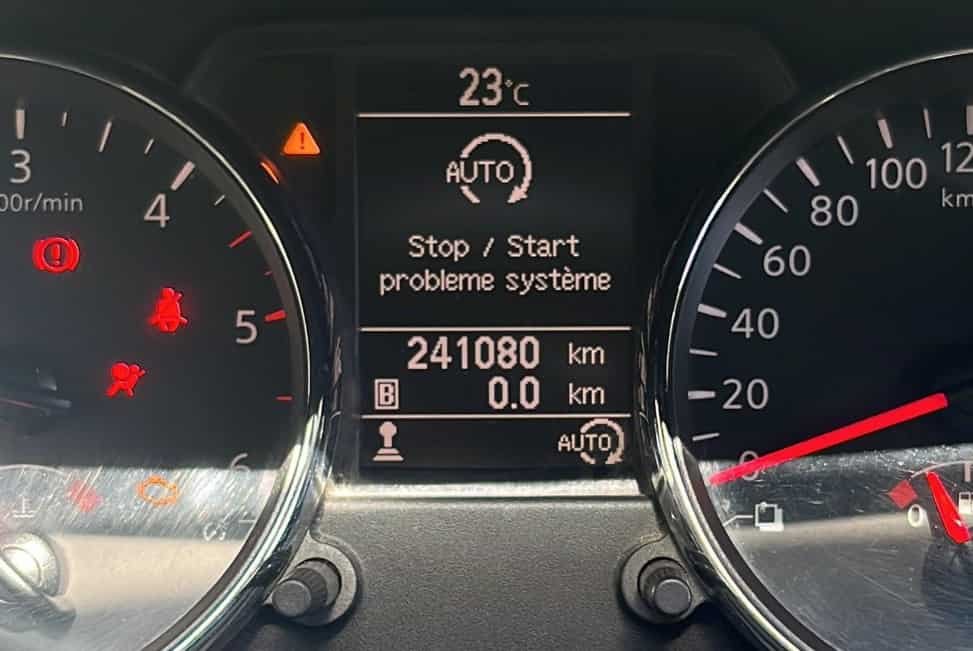
The Nissan Qashqai Stop Start system helps reduce fuel consumption when the vehicle stops in traffic. It switches the engine off for a short time and restarts it when you are ready to move. When the system reports a Nissan Qashqai Stop Start fault, it can no longer operate as intended. The warning may appear because of a failed component or an operating condition that prevents the system from working.
Many drivers assume the battery has failed as soon as the warning appears. However, the battery is only one part of the system. The alternator, battery management system, brake switch, clutch switch and several sensors also control Stop Start operation. If one of these components sends incorrect information, the system stays inactive to protect the vehicle.
A correct diagnosis always starts with the symptoms instead of replacing parts immediately. For example, the engine may continue running because the battery charge is low or the air conditioning needs extra power. In these situations, the system works exactly as Nissan designed it. A flashing warning light or a persistent system fault message, however, usually indicates that the vehicle requires further inspection.
This guide explains what a Nissan Qashqai Stop Start fault means and why it happens. You will also learn how to identify the most common causes, diagnose the problem step by step and choose the correct repair. Finally, you will discover when the vehicle is safe to drive and how to prevent the same fault from returning.
What Does a Nissan Qashqai Stop-Start Fault Mean?
A Nissan Qashqai Stop-Start fault means the automatic engine stop and restart system cannot operate correctly. In most cases, the control module detects a condition that prevents the system from working safely. The warning does not always indicate a failed component. Instead, it tells the driver that the system cannot complete its normal operating cycle.
Many drivers confuse a Stop-Start fault with a system that simply does not activate. However, these situations are not the same. The system may remain inactive because the battery charge is too low, the engine is still cold or the climate control requires extra power. These operating conditions temporarily suspend the feature even though every major component still works correctly.
A genuine fault appears when the vehicle detects abnormal data from one or more components. The problem may involve the battery, alternator, Battery Management System, brake pedal switch, clutch switch or bonnet switch. The Engine Control Module constantly checks these inputs before allowing the engine to shut down at a stop. If one signal falls outside the expected range, the module disables the Stop-Start function to maintain reliable engine operation.
The dashboard warning also provides important clues about the severity of the problem. A vehicle that simply keeps the engine running at traffic lights often experiences normal system inhibition rather than a mechanical failure. In contrast, a flashing Stop-Start indicator or a persistent system fault message usually points to a confirmed electrical or electronic issue. Reading the warning together with the vehicle’s operating conditions helps narrow the diagnosis before any parts are tested or replaced.
For this reason, the first step is never to replace the battery automatically. A logical diagnosis begins by identifying the warning type, checking whether the required operating conditions are present and scanning the control modules for stored fault codes. This approach reduces unnecessary repairs and helps identify the real cause much faster.
What Are the Symptoms of a Nissan Qashqai Stop-Start Fault?
A Nissan Qashqai Stop-Start fault usually develops before the system stops working completely. The vehicle often shows clear warning signs that point to an electrical or mechanical problem. Recognizing these symptoms early helps prevent unnecessary repairs and reduces the risk of a complete starting failure. It also makes the diagnostic process much more accurate.
The most common symptom is that the engine no longer switches off when the vehicle stops at traffic lights or in slow-moving traffic. Although this behavior often raises concern, it does not always indicate a fault. The system may remain active in the background but temporarily suspend automatic engine shutdown because the battery charge is low, the engine temperature is outside the normal range or the air conditioning needs additional power.
A flashing Stop-Start warning light or a system fault message deserves much more attention. These warnings usually indicate that the control module has detected abnormal data from one or more components. In some vehicles, the engine may restart more slowly than usual after the Stop-Start function activates. Other drivers notice weak engine cranking during a normal start or experience a system that works one day but fails the next. These symptoms often suggest a declining battery, unstable charging voltage or an intermittent sensor fault.
Some symptoms become more obvious when several warning signs appear together. For example, a Stop-Start fault combined with dim headlights, slow cranking and a battery warning light often points to a charging system problem rather than a software issue. On the other hand, a Stop-Start warning that appears without any starting difficulty may indicate a faulty brake switch, bonnet switch or Battery Management System sensor. Looking at the complete symptom pattern gives a clearer picture than focusing on a single warning.
Drivers should also pay attention to changes after replacing the battery. A new battery does not always restore normal Stop-Start operation. The system may still remain inactive if the replacement battery has the wrong specification, the Battery Management System has not completed its relearning process or another hidden fault remains unresolved. Identifying these symptoms early allows technicians to confirm the real cause before replacing additional components.
What Are the Most Common Causes of a Nissan Qashqai Stop-Start Fault?
A weak 12-volt battery remains the most common cause of a Nissan Qashqai Stop-Start fault. The Stop-Start system demands more from the battery than a conventional starting system. It must support repeated engine restarts while maintaining enough power for the vehicle’s electrical equipment. As the battery ages, its ability to hold and deliver charge gradually declines. The engine may still start normally, but the control module can disable the Stop-Start function because the battery no longer meets the required performance threshold.
The charging system also plays a critical role in Stop-Start operation. The alternator must keep the battery at an appropriate state of charge while supplying power to the vehicle’s electrical systems. If the charging voltage becomes unstable or remains below specification, the battery cannot recover after repeated starts. Short journeys make this problem even worse because the alternator has little time to recharge the battery. As a result, the Stop-Start system often suspends operation to prevent an unexpected starting failure.
Several sensors and safety switches also influence whether the system can operate. The Battery Management System continuously measures battery condition and reports this information to the Engine Control Module. At the same time, the brake pedal switch, clutch switch and bonnet switch confirm that the vehicle meets the safety requirements for automatic engine shutdown and restart. If any of these components send incorrect or inconsistent signals, the control module disables the Stop-Start function until the fault has been corrected.
Incorrect battery replacement can create similar symptoms. Many Nissan Qashqai models require an EFB or AGM battery because these batteries tolerate frequent charging and discharging cycles much better than conventional lead-acid batteries. Installing the wrong battery type may allow the engine to start normally while preventing the Stop-Start system from working correctly. In some cases, the Battery Management System also requires a relearning or registration procedure after battery replacement. Skipping this step can cause the warning to remain even though the new battery is fully functional.
Electrical wiring faults and software issues are less common, but they should not be ignored. Damaged connectors, poor ground connections or communication faults between control modules can interrupt the information that the Stop-Start system relies on. However, technicians should investigate these possibilities only after confirming that the battery, charging system and sensor inputs operate within specification. Following this diagnostic order prevents unnecessary parts replacement and greatly improves the accuracy of the repair.
Under Which Conditions Will the Nissan Qashqai Stop-Start System Not Work?
The Nissan Qashqai Stop-Start system only operates when every required condition has been satisfied. Many drivers believe the system should activate every time the vehicle stops. However, Nissan designed the feature to prioritize reliability and safety over fuel savings. If even one operating requirement falls outside the acceptable range, the engine continues running until normal conditions return.
Battery condition is one of the most important requirements. The control module constantly monitors the battery’s state of charge, voltage and overall health before allowing the engine to switch off. If the battery cannot guarantee a reliable restart, the system remains disabled. This decision protects the driver from a situation where the engine may fail to restart in traffic. A battery that still starts the engine each morning can therefore prevent the Stop-Start function from operating during daily driving.
Engine temperature and climate control demand also influence system availability. The engine must reach an appropriate operating temperature before the Stop-Start function becomes active. At the same time, the climate control system may keep the engine running to maintain cabin comfort or clear the windscreen. During very hot or very cold weather, the vehicle often gives priority to heating or cooling instead of reducing fuel consumption. This behavior is completely normal and does not indicate a system fault.
Driver inputs also determine whether the system can activate. Automatic models require firm brake pedal pressure while the vehicle is stationary. Manual models require the correct clutch and gear position before the engine shuts down. The control module also checks that the bonnet is fully closed and confirms that the Stop-Start function has not been switched off manually. If any required input is missing or inconsistent, the system continues normal engine operation without displaying a fault.
Understanding these operating conditions helps drivers distinguish between normal system behavior and a genuine malfunction. A Stop-Start system that occasionally remains inactive during extreme temperatures or heavy electrical demand usually works exactly as intended. In contrast, a flashing warning light, repeated fault message or permanent loss of Stop-Start operation suggests that the vehicle requires a systematic diagnosis rather than normal operating adjustments.
How Do You Diagnose a Nissan Qashqai Stop-Start Fault?
Diagnosing a Nissan Qashqai Stop-Start fault requires a structured process instead of guesswork. Many Stop-Start problems produce similar symptoms, even though the root causes are completely different. Replacing the battery without testing or clearing warning codes without identifying the fault often wastes time and money. A systematic inspection helps isolate the real problem before any components are replaced.
The diagnosis should begin with the dashboard warning and the vehicle’s operating conditions. First, confirm whether the Stop-Start warning light flashes, remains steady or appears with a system fault message. Next, check whether the engine was fully warmed up, the climate control demanded maximum heating or cooling and the Stop-Start switch had been turned off manually. These simple checks often explain why the system remained inactive without indicating a mechanical failure.
The next step focuses on the battery and charging system. Inspect the battery terminals for corrosion, loose connections or damaged cables. Then verify that the installed battery matches the manufacturer’s specification. A professional battery tester should measure the battery’s state of charge, state of health and cold cranking performance instead of relying only on voltage. After confirming battery condition, test the alternator under different electrical loads to ensure it maintains stable charging voltage throughout normal operation.
Electronic diagnosis becomes essential if the battery and charging system pass every test. A compatible diagnostic scanner should check the Engine Control Module, Body Control Module and Battery Management System for stored fault codes. Live data also provides valuable information because it shows whether the brake switch, clutch switch, bonnet switch and battery sensor report accurate values in real time. Comparing these signals helps identify faulty components that may not trigger an obvious warning.
A logical diagnostic sequence reduces unnecessary repairs and improves accuracy. Testing the battery, charging system and electronic inputs in the correct order allows technicians to eliminate common faults before investigating more complex wiring or software issues. This approach not only shortens repair time but also increases the likelihood of fixing the Nissan Qashqai Stop-Start fault on the first attempt.
How Do You Fix a Nissan Qashqai Stop-Start Fault?
The correct repair depends entirely on the confirmed cause of the Nissan Qashqai Stop-Start fault. Many owners replace the battery as soon as the warning appears, but this approach does not always solve the problem. A successful repair begins with accurate diagnosis and ends with a final system check. Skipping these steps increases the chance of recurring faults and unnecessary expenses.
If testing confirms that the battery has deteriorated, replacing it with the correct specification is usually the most effective solution. Nissan Qashqai models equipped with Stop-Start technology typically require an EFB or AGM battery that can withstand frequent charging and discharging cycles. Installing a conventional lead-acid battery may restore normal engine starting but still prevent the Stop-Start system from operating. After installation, the battery terminals should remain clean and secure, and the charging system should be tested to confirm stable voltage under normal driving conditions.
When the battery remains in good condition, attention should shift to the supporting components. A faulty Battery Management System sensor can report inaccurate battery data and prevent the control module from activating the Stop-Start function. Brake pedal, clutch pedal and bonnet switches also require careful inspection because the system depends on their signals before shutting down the engine. Repairing damaged wiring, adjusting a faulty switch or replacing a defective sensor often restores normal operation without replacing major components.
Charging system faults require a different repair strategy. A worn alternator, poor ground connection or damaged charging cable can leave the battery in a constant state of undercharge. In this situation, replacing the battery alone provides only temporary improvement because the new battery quickly develops the same problem. Confirming alternator output and repairing the charging circuit ensures the battery receives enough energy to support repeated engine restarts.
Software problems and control module faults are much less common, but they can occur after electrical repairs or battery replacement. In these situations, the vehicle may require a software update, battery relearning procedure or module programming with manufacturer-approved diagnostic equipment. Once every repair has been completed, the technician should clear any stored fault codes, road test the vehicle and confirm that the Stop-Start system activates normally under suitable operating conditions. This final verification ensures the original fault has been eliminated instead of temporarily hidden.
How Do You Reset the Nissan Qashqai Stop-Start System?
Many drivers search for a quick reset after seeing a Nissan Qashqai Stop-Start fault. However, there is no universal reset that permanently fixes every problem. Restarting the vehicle or clearing the warning light may remove the message for a short time, but neither action repairs the underlying fault. If the original problem remains, the warning usually returns after a few driving cycles.
The first step is to determine whether the system has stored a genuine fault or simply suspended operation because of current driving conditions. If the battery charge is low or the engine has not reached its normal operating temperature, the Stop-Start function often becomes available again after the battery recharges or the engine warms up. In these cases, the system restores normal operation automatically without requiring any manual reset.
Battery replacement introduces another situation that many owners misunderstand. Some Nissan Qashqai models require the Battery Management System to recognize the characteristics of the new battery before the Stop-Start function can operate normally. If this learning process does not complete correctly, the vehicle may continue displaying a Stop-Start fault even though the battery is new and fully charged. Following the manufacturer’s battery registration or relearning procedure allows the control module to calculate battery condition accurately and manage the charging system correctly.
Clearing diagnostic trouble codes should only take place after the fault has been repaired. Erasing the codes too early removes valuable diagnostic information and makes future troubleshooting more difficult. Once the repair is complete, the technician should clear the stored codes, drive the vehicle under normal operating conditions and confirm that the Stop-Start system activates without displaying any warning messages. This final check verifies that the repair solved the original problem instead of temporarily hiding it.
If the warning returns after a reset, further diagnosis becomes necessary. Persistent faults usually indicate a battery problem, unstable charging voltage, an incorrect battery specification or a sensor that continues to send invalid data. Repeating the reset procedure rarely resolves these issues. Identifying the failed component and repairing it remains the only reliable way to restore normal Stop-Start operation.
Is It Safe to Drive With a Nissan Qashqai Stop-Start Fault?
In most situations, you can continue driving with a Nissan Qashqai Stop-Start fault if the engine starts normally and no other warning lights appear. The Stop-Start system mainly improves fuel efficiency. It is not a critical driving function. When the system stops working, the engine simply continues running while the vehicle is stationary. Fuel consumption may increase slightly, but normal driving usually remains unaffected.
However, you should not ignore the warning. The Stop-Start system depends on the battery, charging system and several electronic control units. A fault in one of these components may disable the system before other symptoms appear. For example, a weak battery may still start the engine today. After several short trips or cold mornings, it may no longer provide enough power for a reliable start.
The warning becomes more serious when other symptoms appear at the same time. Slow cranking, a battery warning light or dim headlights often indicate a charging problem. Repeated engine stalling or unstable dashboard electronics also require immediate attention. These symptoms usually point to a fault that affects more than the Stop-Start system alone.
You should also consider how often the warning appears. A warning that disappears after a long drive may result from temporary operating conditions. A warning that returns every day usually indicates an unresolved electrical or mechanical fault. In that situation, a complete diagnostic inspection is the safest option.
A Nissan Qashqai with only the Stop-Start function disabled can usually be driven to a repair workshop. Even so, you should arrange an inspection as soon as possible. Seek professional assistance immediately if the engine struggles to start, several warning lights appear or the charging system stops working. Early diagnosis reduces the risk of further electrical damage and helps restore reliable vehicle operation.
How Much Does It Cost to Fix a Nissan Qashqai Stop-Start Fault?
The cost of repairing a Nissan Qashqai Stop-Start fault depends on the confirmed cause. A simple battery recharge costs far less than replacing an alternator or a control module. For this reason, a professional diagnosis should always come before ordering replacement parts. An accurate inspection often saves both time and money.
Battery-related repairs are the most common and usually the least expensive. If the battery still passes a health test, a full recharge may restore normal Stop-Start operation. However, an aging battery often requires replacement instead. Many Qashqai models use an EFB or AGM battery, which costs more than a standard lead-acid battery. The higher price reflects the battery’s ability to support frequent engine restarts.
Sensor and switch repairs usually fall into the mid-range cost category. A faulty brake switch, clutch switch or bonnet switch often requires little labour. Even so, technicians should confirm the fault before replacing any component. Similar symptoms can result from low battery voltage or poor electrical connections. Replacing the wrong part only increases the final repair bill.
Alternator and wiring repairs usually cost more because they require additional testing and labour. A technician must verify charging voltage, inspect the wiring harness and check ground connections before replacing the alternator. In some cases, repairing a damaged cable solves the problem without installing new parts. A complete diagnosis helps identify the most cost-effective solution.
Control module faults are the least common but often the most expensive to repair. Some vehicles only require a software update or battery relearning procedure. Others may need module programming with dealer-level diagnostic equipment. Module replacement should always remain the last option because software or wiring issues can produce the same warning. Following the correct diagnostic sequence prevents unnecessary repairs and keeps the total repair cost under control.
Conclusion: When Should You Seek Professional Help for a Nissan Qashqai Stop-Start Fault?
A Nissan Qashqai Stop-Start fault does not always mean a major component has failed. In many cases, the system disables itself because the battery charge is too low or the operating conditions are unsuitable. However, a warning that appears repeatedly should never be ignored. Finding the real cause early often prevents a more expensive repair later.
The safest approach is to follow a logical diagnostic process. Start by checking the battery condition and charging system. Next, inspect the brake switch, clutch switch and bonnet switch. Finally, scan the control modules for stored fault codes and review the live data. This method helps identify the faulty component without replacing parts unnecessarily.
Professional diagnosis becomes essential when the warning returns after battery replacement or when the engine cranks slowly. You should also seek expert assistance if the vehicle displays several warning lights at the same time or struggles to restart after stopping. These symptoms often indicate a charging system fault, an electrical problem or a control module issue that requires specialist equipment.
Fixing the correct fault restores more than the Stop-Start function. It also improves starting reliability and protects the vehicle’s electrical system. A systematic inspection reduces repair costs, prevents repeat failures and helps your Nissan Qashqai perform as designed for the long term.