
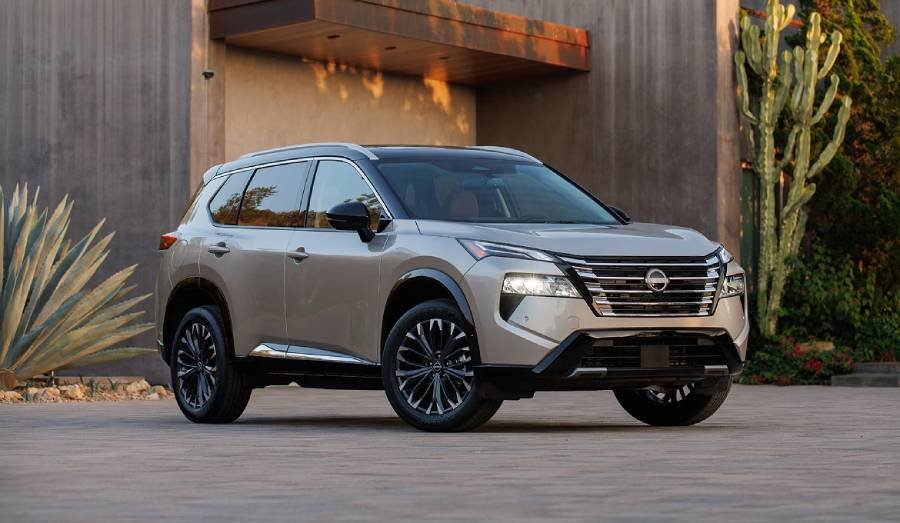
Nissan began using continuously variable transmissions (CVTs) decades ago, before the technology became common across its passenger-car lineup. The company’s CVT history includes several distinct stages: early adoption in Japan, expansion into the U.S. market, the development and wider use of Xtronic CVT technology, and the eventual introduction of CVTs across high-volume models such as the Altima, Sentra, Maxima, Rogue, Murano, and Versa.
The key distinction is that the first Nissan to use a CVT and the point when Nissan began using CVTs widely are not the same milestone. Nissan introduced the technology selectively before expanding it to more vehicle classes and engine configurations. As a result, determining whether a specific Nissan has a CVT requires checking its model, model year, engine, drivetrain, and market rather than relying on the Nissan badge alone.
This article traces Nissan’s CVT history from its earliest applications through widespread Xtronic adoption. It also identifies when major Nissan models received CVTs, explains why Nissan expanded the technology, and shows how buyers can determine whether a particular Nissan uses a CVT or a conventional automatic transmission.
When Did Nissan Start Using CVT Transmissions?
Nissan started using CVT transmissions in 1992, when it introduced the N-CVT in the second-generation Nissan March K11 in Japan. The March, sold as the Micra in many overseas markets, became Nissan’s first production vehicle to offer a continuously variable transmission. Nissan’s own technical documentation identifies the 1992 March as the first application of its belt-driven CVT technology.
The original N-CVT used two variable-diameter pulleys connected by a steel belt instead of the fixed gear ratios found in a conventional automatic transmission. Changing the effective diameter of the pulleys allowed the transmission to vary its ratio continuously. This design allowed the engine to operate closer to an efficient speed without shifting through a fixed sequence of gears.
Nissan did not immediately install CVTs across its entire vehicle lineup after the 1992 introduction. The first application was suited to a small-displacement compact car, while higher-output engines required CVTs capable of handling substantially more torque. Nissan expanded that capability in 1997 with the HYPER CVT, which was developed for front-wheel-drive vehicles with engines in the 2.0-liter class. This marked an important step from small-car CVT use toward broader applications.
The technology expanded again in 1999 when Nissan began selling the Cedric and Gloria with the EXTROID CVT. Unlike the belt-driven system used in the March, the EXTROID CVT was developed for rear-wheel-drive vehicles with 3.0-liter-class engines. By the early 2000s, Nissan had extended CVT applications from compact cars into larger and more powerful passenger vehicles.
Therefore, 1992 is the starting point of Nissan’s production CVT history, not the year when every Nissan switched to a CVT. Nissan’s transition occurred progressively as the company developed transmissions capable of serving different engine sizes, vehicle classes, and drivetrain configurations.
What Was the First Nissan Model With a CVT?
The Nissan March K11 was the first Nissan production model to use a CVT, receiving Nissan’s N-CVT when the second-generation March was introduced in 1992. The March is known as the Nissan Micra in many markets, so references to the early Nissan March CVT and Nissan Micra K11 can describe vehicles from the same model family.
Nissan’s Heritage Collection identifies N-CVT as the company’s first continuously variable transmission system. The transmission was available as an option in the K11 March lineup rather than replacing every manual or automatic transmission offered with the model. Nissan’s historical material specifically associates the CVT option with the 1.3-liter version, an important distinction when identifying an individual K11 by engine and transmission.
The N-CVT was a belt-drive transmission using pulleys and a steel belt to provide continuously changing ratios. Its use in a compact car reflected a major limitation of early automotive CVTs: torque capacity. A transmission suitable for a small engine could not simply be installed behind larger, higher-torque engines without further engineering. Nissan subsequently addressed this limitation through additional generations of CVT technology.
The March therefore represents the beginning of a longer development path rather than the point at which CVTs became standard across Nissan vehicles. The 1992 N-CVT established the initial production application, the 1997 HYPER CVT expanded belt-driven CVT technology into the 2.0-liter class, and later developments extended CVT use into substantially larger vehicles. This progression explains why the answer to “When did Nissan start using CVT?” is earlier than the model years most U.S. Nissan owners associate with Xtronic CVTs.
When Did Nissan Start Using CVT in the United States?
Nissan introduced a CVT to the U.S. market for the 2003 model year with the Nissan Murano. The first-generation Murano was launched as a midsize crossover and paired its 3.5-liter V6 engine with Nissan’s continuously variable transmission. This was a significant step because Nissan was no longer limiting CVT technology to small-displacement vehicles in its home market.
The 2003 Murano used a CVT capable of handling the higher torque output of a V6 engine. Earlier belt-driven CVTs were primarily associated with smaller engines because belt strength, pulley design, hydraulic control, and heat management limited the amount of torque the transmission could reliably transfer. Improvements in these areas allowed Nissan to apply CVT technology to a substantially larger vehicle.
The Murano also marked the beginning of Nissan’s broader CVT expansion in the United States. Nissan subsequently introduced CVTs into higher-volume passenger cars and crossovers rather than restricting the transmission to a single specialty model. The Altima, Maxima, Sentra, Versa, and Rogue became important parts of this expansion during the 2000s.
This distinction matters when answering when Nissan started using CVTs. Nissan’s production CVT history began in Japan in 1992, while its major U.S. CVT rollout began about a decade later with the 2003 Murano. A Nissan built before or after either date should therefore not be assumed to have a CVT based solely on its model year. Transmission availability differed by model, engine, trim, drivetrain, and market.
When Did Nissan Start Using Xtronic CVT?
Nissan began expanding its Xtronic CVT technology during the early 2000s, with the technology becoming increasingly important to the company’s global transmission strategy throughout that decade. Xtronic refers to Nissan’s family and branding of electronically controlled continuously variable transmissions rather than an entirely separate transmission category from CVT.
The distinction between Nissan’s first CVT and Xtronic is important. Nissan had already introduced the N-CVT in 1992 and developed additional systems such as the HYPER CVT before Xtronic became associated with its newer generation of CVT technology. As a result, saying Nissan “started using CVT when it introduced Xtronic” would omit roughly a decade of earlier Nissan CVT development.
Xtronic CVTs combine continuously variable ratios with electronic transmission control. Instead of selecting a fixed first, second, third, or fourth gear during normal operation, the transmission can adjust its ratio according to factors such as vehicle speed, accelerator input, engine load, and driving conditions. This allows the engine and transmission control systems to select a ratio appropriate for the required combination of acceleration and efficiency.
Nissan progressively expanded Xtronic applications as its CVTs became capable of working with a wider range of engines and vehicle classes. The technology moved beyond compact cars and appeared in midsize sedans, larger sedans, and crossovers. The Murano demonstrated that a CVT could be paired with Nissan’s 3.5-liter V6, while later applications in vehicles such as the Altima, Sentra, Rogue, and Versa brought CVTs into higher-volume segments.
Xtronic also evolved rather than remaining one unchanged transmission design. Nissan introduced different CVT configurations for different torque requirements and continued modifying ratio range, friction, control logic, packaging, and related components. Later versions also incorporated programmed or simulated shift behavior in certain applications to produce acceleration characteristics more similar to transmissions with fixed gear steps.
For this reason, “Nissan Xtronic CVT” describes a developing family of Nissan CVT applications, not one transmission installed unchanged across every model and model year. Identifying the transmission in a specific Nissan requires the model, model year, engine, drivetrain, and market because two vehicles carrying the Xtronic designation can use different CVT units and calibrations.
When Did Nissan Start Using CVT Across Most of Its Lineup?
Nissan expanded CVT use across its lineup primarily during the 2000s, with the technology moving into several high-volume U.S. models by the second half of the decade. The transition was gradual because Nissan developed different CVT generations for different engine outputs and vehicle classes rather than installing one transmission design across every vehicle.
Nissan’s own CVT development timeline shows three broad stages. The first generation began with the March and smaller engines in the early 1990s. The second generation expanded CVT applications to vehicles with engines in the 2.0- to 2.5-liter range. The third generation extended Xtronic CVT applications to larger vehicles and included models such as the Murano, Maxima, Altima, Sentra, and Versa. This progression allowed Nissan to move CVT technology from a relatively specialized transmission into a mainstream part of its passenger-vehicle strategy.
The U.S. rollout accelerated during the 2000s. The Murano demonstrated that Nissan could pair a CVT with a 3.5-liter V6, while subsequent applications brought the technology to higher-volume sedans and compact vehicles. By the 2007 model year, Nissan was offering CVTs in major U.S. nameplates including the Altima, Maxima, Sentra, and Versa. The Rogue joined Nissan’s U.S. lineup for the 2008 model year with an Xtronic CVT, further extending the technology into the growing compact-crossover segment.
This expansion does not mean that every Nissan switched to a CVT. Trucks, sports cars, large SUVs, and certain other models continued to use conventional automatic or manual transmissions. Nissan’s CVT strategy was concentrated primarily in passenger cars and crossovers where continuously variable ratios could support the company’s fuel-efficiency and drivability objectives.
Which Nissan Models Started Using CVT and in What Year?
Major U.S. Nissan models adopted CVTs at different times, with the Murano leading the expansion and several high-volume cars following during the 2000s. Model year is important because a Nissan nameplate can exist for several generations before receiving a CVT, and transmission availability can also differ by engine, trim, or drivetrain.
| Nissan Model | Early U.S. CVT Model Year | Transmission Context |
|---|---|---|
| Murano | 2003 | CVT paired with a 3.5-liter V6 |
| Maxima | 2007 | Xtronic CVT introduced with the 3.5-liter V6 |
| Altima | 2007 | CVT became available with the fourth-generation Altima |
| Sentra | 2007 | CVT offered with the redesigned sixth-generation Sentra |
| Versa | 2007 | CVT offered on applicable versions of the first-generation Versa |
| Rogue | 2008 | Xtronic CVT used when the Rogue entered the U.S. market |
The Nissan Murano was the key early U.S. application. Introduced for the 2003 model year, the first-generation Murano combined a 3.5-liter V6 with a CVT. Its significance went beyond the model itself because it demonstrated that Nissan’s CVT technology could handle a larger engine and crossover application rather than remaining limited to compact cars.
The Nissan Altima added a CVT with its fourth generation for the 2007 model year. This was particularly significant for Nissan’s U.S. strategy because the Altima competed in the high-volume midsize sedan segment. CVT availability in a mainstream vehicle such as the Altima brought the transmission technology to substantially more American drivers than Nissan’s earlier specialized applications.
The Nissan Maxima also moved to an Xtronic CVT for the 2007 model year. Pairing the transmission with the Maxima’s V6 demonstrated Nissan’s continued expansion of high-torque CVT applications. The Maxima is also an example of why transmission history needs to be examined by generation: earlier Maximas used conventional automatic or manual transmissions even though later versions became strongly associated with Nissan’s Xtronic CVT.
The Nissan Sentra began offering a CVT with the redesigned 2007 model. The sixth-generation Sentra brought Nissan’s CVT strategy into the compact sedan segment in the United States. Transmission configuration still depended on the specific version, so the presence of a CVT should be confirmed for an individual vehicle rather than inferred from the Sentra name alone.
The Nissan Versa also offered CVT technology during its first U.S. generation. The Versa arrived in the United States during the same period in which Nissan was rapidly expanding its CVT applications. Applicable 2007 Versa configurations could be equipped with a CVT, extending the technology into Nissan’s smaller and more affordable passenger-car segment.
The Nissan Rogue launched in the United States for the 2008 model year with an Xtronic CVT. Its arrival extended Nissan’s CVT strategy into another important crossover segment. The Rogue subsequently became one of Nissan’s major U.S. nameplates, making it one of the models most commonly associated with Xtronic CVT technology.
These dates also explain why there is no single model year in which Nissan “switched to CVT.” 1992 marks Nissan’s first production CVT application, 2003 marks an important U.S. expansion point with the Murano, and the 2007–2008 period marks the broader spread of CVTs across several mainstream Nissan models in the United States. For a used vehicle, the model year, generation, engine, drivetrain, and original transmission specification provide a more accurate answer than the Nissan model name alone.
Why Did Nissan Switch to CVT Transmissions?
Nissan expanded its use of CVT transmissions primarily to improve fuel efficiency while maintaining smooth acceleration across a wide range of vehicle sizes. Unlike a conventional automatic transmission with a fixed number of gear ratios, a CVT can continuously adjust its ratio according to vehicle speed, engine load, and accelerator input. This gives the powertrain more flexibility to keep the engine operating within an efficient range.
Fuel economy was a major factor in Nissan’s CVT strategy. A conventional automatic must shift between predetermined ratios, while a CVT can select ratios continuously within its available range. During steady driving, the transmission can reduce engine speed when high power is unnecessary. During acceleration, it can change the ratio to place the engine closer to the operating range required for additional power. Nissan therefore used CVT technology as one method of reducing fuel consumption without relying exclusively on changes to the engine.
A second reason was the ability to expand the transmission’s ratio range. Nissan progressively developed CVTs with wider ratios, allowing the transmission to provide a lower ratio for initial acceleration and a higher ratio for efficient cruising. A wider ratio spread gives the powertrain greater flexibility because the vehicle can use substantially different transmission ratios at low and high speeds without adding more fixed gears.
A third reason was smooth power delivery. A CVT does not need to move sequentially through fixed first, second, third, and higher gears during normal operation. Instead, the pulley system changes the effective transmission ratio continuously. This eliminates the conventional gear changes that can interrupt acceleration and allows engine output to be delivered without the same sequence of upshifts.
Nissan’s ability to reduce internal transmission losses also contributed to broader CVT adoption. The company continued developing pulley systems, belts, hydraulic controls, transmission fluids, electronic controls, and related components to reduce friction and improve efficiency. These engineering changes were important because a theoretical advantage in ratio selection provides limited benefit if excessive mechanical or hydraulic losses consume the energy saved elsewhere.
The expansion from the 1992 March to larger vehicles demonstrates how these objectives shaped Nissan’s CVT development. Early applications were suitable for relatively small engines, while later designs increased torque capacity and expanded the available ratio range. This progression eventually allowed Nissan to pair CVTs with compact-car engines, four-cylinder midsize vehicles, crossovers, and V6-powered models such as the Murano and Maxima.
Nissan’s decision was therefore not based on a single advantage. The company’s CVT strategy combined four closely related objectives: improved fuel efficiency, a wider usable ratio range, smoother acceleration, and reduced transmission energy losses. As Nissan developed CVTs capable of handling higher torque, the technology became practical for a larger portion of its passenger-car and crossover lineup.
Did Nissan Stop Using Traditional Automatic Transmissions?
No, Nissan did not replace every conventional automatic transmission with a CVT. The company expanded CVT use heavily in passenger cars and crossovers, but other Nissan vehicles continued to use conventional geared automatic transmissions because transmission requirements differ according to vehicle weight, engine torque, towing demands, drivetrain configuration, and intended use.
Passenger cars and road-focused crossovers became the primary areas for Nissan’s Xtronic CVT expansion. Models such as the Altima, Sentra, Maxima, Murano, Rogue, and Versa demonstrate this strategy. These vehicles operate primarily in conditions where fuel efficiency, smooth acceleration, and a broad continuously variable ratio range can provide practical advantages.
Nissan’s trucks and some larger utility vehicles followed a different transmission strategy. Vehicles designed for higher towing loads, heavier-duty operation, or substantially greater torque have commonly used geared automatic transmissions instead of the same CVTs installed in Nissan passenger cars. Fixed-ratio automatics can be engineered around the torque capacity, towing requirements, and operating conditions expected from these vehicle categories.
Performance vehicles are another exception. A sports car has different powertrain priorities from an economy-focused sedan or family crossover. Acceleration response, driver control, engine characteristics, torque capacity, and performance targets influence the transmission selected for a particular vehicle. Nissan has therefore continued using manual and geared automatic transmissions where those designs better match the vehicle’s intended function.
Transmission type can also change between generations of the same Nissan model. A nameplate that uses a conventional automatic in one generation may use a CVT in another, while different markets or powertrain configurations can receive different transmissions. This is why statements such as “all Nissans after 2007 have CVTs” are inaccurate.
The reliable way to identify a Nissan’s transmission is to check the exact model, model year, engine, drivetrain, and market specification. For example, knowing that Nissan was widely using CVTs by the late 2000s does not prove that an individual Nissan from that period has one. The transmission must be identified from the specifications for that particular configuration.
Nissan’s broader transmission history is therefore a process of diversification rather than complete replacement. CVTs became central to many passenger cars and crossovers, while conventional automatics and manual transmissions remained appropriate for vehicle categories with different operating requirements.
How Can You Tell If a Nissan Has a CVT?
You can determine whether a Nissan has a CVT by checking its exact model year, powertrain specifications, owner’s manual, or transmission identification information. The model name alone is not always enough because Nissan has sold the same nameplate with different transmissions depending on generation, engine, trim, drivetrain, and market.
The first method is to check the vehicle’s official specifications for its model year. Nissan specification sheets identify the transmission installed with each available powertrain and commonly describe a CVT-equipped vehicle using terms such as “Continuously Variable Transmission” or “Xtronic CVT.” This method is particularly useful when researching a used Nissan before inspecting the vehicle in person.
The owner’s manual provides another reference, although the manual must correspond to the correct model year and market. Transmission-related sections explain operating procedures, fluid requirements, warning indicators, and other information specific to the vehicle. A reference to Xtronic CVT operation or CVT fluid provides evidence that the applicable powertrain uses a continuously variable transmission.
Vehicle identification and service information can provide a more specific answer when several transmissions were available within the same model year. The VIN, build information, transmission code, or manufacturer service data can be used to identify the original powertrain configuration. This is more reliable than assuming every example of a particular Nissan model uses the same transmission.
Driving behavior can provide clues, but it should not be the primary identification method. A traditional CVT can change ratios without the distinct upshifts of a conventional geared automatic, allowing engine speed to remain relatively steady during acceleration. However, newer CVT control systems can simulate stepped shifts, so the presence of apparent gear changes does not prove that a Nissan has a conventional automatic.
The most reliable identification process therefore uses documentation rather than driving feel. Check the model year and engine first, confirm the transmission in Nissan’s specifications or owner’s manual, and use vehicle-specific identification information when multiple transmissions were available. This approach is especially important for used Nissan vehicles from transition periods when CVTs, conventional automatics, and manual transmissions could exist within the same model family.
Read more: Nissan GT-R Transmission Problems: 7 Fixes Every Owner Must Know
Which Nissan Model Years Should Used-Car Buyers Check for CVT?
Used-car buyers should check the exact transmission fitted to any Nissan from a model generation in which CVT was offered rather than treating one calendar year as the dividing line. Nissan introduced CVTs model by model, so there is no universal year after which every used Nissan has a continuously variable transmission.
For U.S. vehicles, several milestones provide useful starting points. The Murano used a CVT from its 2003 model-year introduction, while CVT applications expanded significantly with models such as the Altima, Maxima, Sentra, and Versa around the 2007 model year. The Rogue entered the U.S. market for 2008 with an Xtronic CVT. These dates identify when CVT research becomes particularly relevant for buyers of those nameplates, but they do not establish that every Nissan produced during the same years used a CVT.
Transmission identification is only the first step when evaluating a used CVT-equipped Nissan. Buyers should examine four areas: transmission specification, maintenance history, service records, and vehicle-specific manufacturer information. The transmission specification establishes which CVT the vehicle uses. Maintenance records show whether required transmission-fluid services and inspections were performed. Repair records can reveal previous transmission-related work. Manufacturer information can identify applicable recalls, service campaigns, warranty extensions, or technical guidance for the exact model and model year.
Maintenance history deserves particular attention because CVTs rely on transmission fluid for hydraulic operation, lubrication, cooling, and friction characteristics within the system. Using the correct fluid specification and following the applicable maintenance guidance are therefore more informative than judging a vehicle solely by the general reputation of Nissan CVTs.
A road test can supplement the documentation review. Buyers should pay attention to abnormal hesitation, unusual noises, warning lights, inconsistent acceleration, or behavior that differs from the manufacturer’s normal operating characteristics. These symptoms do not independently diagnose a failed CVT because engine, electronic, drivetrain, and transmission faults can produce overlapping symptoms. A qualified inspection and diagnostic scan provide stronger evidence when a problem is suspected.
Used-car buyers should also avoid treating every Nissan CVT as the same transmission. Nissan has used multiple CVT designs and revisions across different vehicle classes, engines, and generations. A CVT installed in an early compact Nissan is not technically identical to a later unit designed for a larger crossover or V6-powered vehicle. Reliability information is therefore most useful when it refers to the exact model, generation, model year, engine, and transmission rather than Nissan CVTs as one category.
The practical rule is to evaluate a used Nissan by its specific powertrain configuration, not simply by whether the vehicle has a CVT. Nissan’s CVT history spans multiple decades and transmission generations, making model-specific service history and technical information more useful than a single claim about all Nissan CVTs.
Does Nissan Still Use CVT Transmissions Today?
Yes, Nissan still uses Xtronic CVT transmissions in several current passenger cars and crossovers. CVT remains an active part of Nissan’s powertrain strategy rather than a technology the company abandoned after its widespread adoption during the 2000s.
Nissan identifies the Sentra, Kicks, Rogue, Versa, and Altima among its current CVT-equipped models. The technology has also continued to evolve. Nissan states that its current CVTs are not identical to the units introduced more than two decades ago, and the company has made changes to efficiency, durability, control software, and transmission design across successive generations.
The latest Nissan CVTs also demonstrate how the technology has moved beyond the original goal of providing continuously variable ratios. Current CVT-equipped Nissan models use D-Step Logic Control, which adjusts transmission behavior using inputs such as vehicle speed and accelerator position. This programming can create a more stepped acceleration feel even though the transmission remains continuously variable rather than using a conventional set of fixed gears.
Nissan has continued developing the hardware as well. The company introduced its CVT-Xs series in 2023, and newer applications have reached models including the Sentra and Kicks. Nissan reports that the latest CVTs used in the Sentra, Kicks, and Rogue improve fuel efficiency by 4% to 8% compared with the preceding generation of Nissan CVTs. These developments show that Nissan is still investing in CVT technology rather than simply continuing to manufacture an unchanged older design.
Current model specifications confirm the technology’s continued use. The 2026 Nissan Altima uses an Xtronic CVT, while the 2026.5 Rogue pairs its 1.5-liter VC-Turbo engine with an Xtronic CVT. The 2026 Sentra also uses an Xtronic CVT. Exact availability should still be checked by model year and configuration because Nissan’s overall lineup includes several transmission types.
CVT is therefore only one part of Nissan’s current transmission strategy. Depending on the vehicle, Nissan also uses geared automatic transmissions and electric-drive reduction systems. Trucks, larger SUVs, sports cars, electrified vehicles, and passenger cars have different powertrain requirements, so the presence of an Xtronic CVT should never be assumed simply because a vehicle carries the Nissan badge.
Nissan’s current lineup completes a CVT development path that began with early applications in Japan and expanded substantially in the United States during the 2000s. The technology remains particularly relevant to Nissan passenger cars and crossovers, but the specific CVT design, programming, and application have changed considerably across generations.