
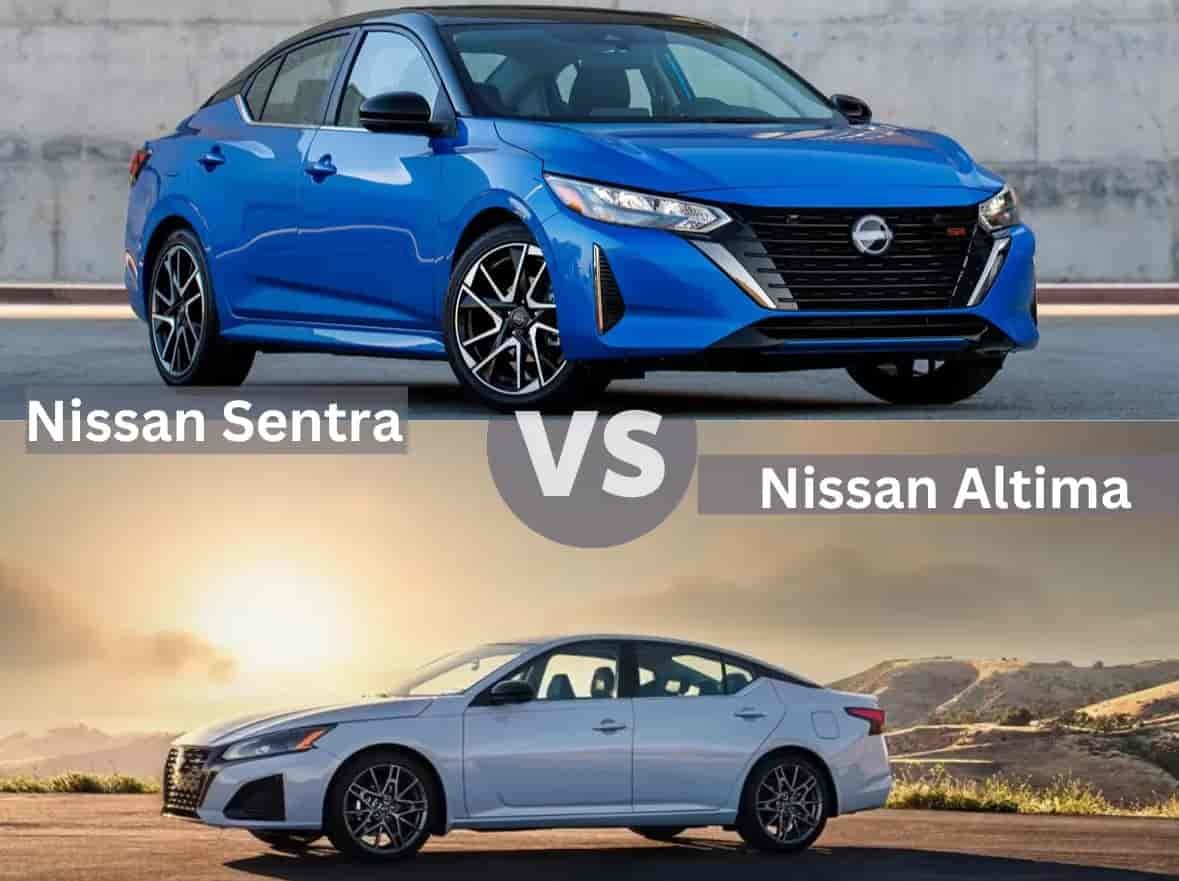
Choosing between the Nissan Sentra and Nissan Altima is difficult because both sedans target different types of drivers. The Nissan Sentra is a compact sedan designed for affordability, fuel efficiency, and easier city driving. The Nissan Altima is a midsize sedan built for stronger engine performance, larger cabin space, and more highway comfort. While both vehicles belong to the Nissan sedan lineup, they deliver different ownership experiences in pricing, interior space, technology, and long-distance comfort.
The biggest difference between Nissan Sentra and Altima is vehicle size and performance level. The Sentra focuses on lower ownership costs and practical commuting. The Altima focuses on comfort, power, and family-friendly usability. Buyers comparing these two sedans often want to know which model delivers better fuel economy, which sedan feels more comfortable for daily driving, and which car offers better long-term value.
This comparison explains the top 10 differences between Nissan Sentra and Altima, including engine performance, cabin space, fuel efficiency, technology features, safety systems, maintenance costs, and driving comfort. By the end of this guide, you will know which Nissan sedan fits your budget, lifestyle, and driving needs more effectively.
What Are the Main Differences Between Nissan Sentra and Altima?
The main difference between the Nissan Sentra and Nissan Altima is vehicle class. The Nissan Sentra is a compact sedan, while the Nissan Altima is a midsize sedan. This size difference changes cabin space, driving comfort, engine performance, pricing, and long-distance usability. Buyers looking for an affordable commuter car usually prefer the Sentra. Drivers wanting more passenger room and stronger highway performance often choose the Altima.
The Nissan Sentra is smaller, lighter, and easier to maneuver in urban environments. Parking in crowded areas becomes simpler because the Sentra has a shorter body length and tighter turning radius. This makes the Sentra practical for students, first-time drivers, and daily commuting. The smaller dimensions also help improve fuel economy and reduce ownership costs over time.
The Nissan Altima focuses more on comfort and performance. The larger body creates additional rear-seat legroom, wider seating space, and better ride stability at higher speeds. Drivers who spend long hours on highways usually notice less cabin fatigue in the Altima because the suspension absorbs road imperfections more effectively. Families also benefit from the larger trunk space and improved passenger comfort during road trips.
Pricing is another major difference between Nissan Sentra and Altima. The Sentra starts at a lower MSRP because it targets budget-conscious buyers. The Altima costs more because it offers larger dimensions, stronger engines, and additional premium features. Insurance and maintenance costs also tend to be slightly higher for the Altima due to its midsize classification.
Technology and drivetrain availability separate these sedans further. The Nissan Altima offers available all-wheel drive, which is uncommon in midsize sedans at this price range. The Nissan Sentra only comes with front-wheel drive. Buyers living in snowy or wet climates may find the Altima more suitable for year-round driving conditions.
Which Car Has Better Engine Performance?
The Nissan Altima has better engine performance than the Nissan Sentra because it produces more horsepower, stronger acceleration, and improved highway passing capability. The Sentra focuses more on fuel efficiency and smooth commuting rather than sporty performance. Drivers prioritizing responsive acceleration usually prefer the Altima.
The Nissan Sentra uses a 2.0-liter 4-cylinder engine that produces approximately 149 horsepower. This engine is designed for efficient city driving and predictable daily commuting. Acceleration feels smooth at lower speeds, but the Sentra is not engineered for aggressive driving or rapid highway merging. The continuously variable transmission (CVT) also prioritizes efficiency over performance tuning.
The Nissan Altima delivers significantly more power. Most trims use a 2.5-liter 4-cylinder engine generating around 188 horsepower. This extra power improves highway acceleration, uphill driving, and overtaking performance. Drivers notice quicker throttle response and stronger mid-range acceleration compared to the Sentra. The larger engine also helps the Altima feel more stable when carrying multiple passengers or cargo.
Another important performance difference is drivetrain availability. The Nissan Altima offers optional all-wheel drive, while the Nissan Sentra only uses front-wheel drive. AWD improves traction during rain, snow, and slippery road conditions. Drivers in colder regions often consider this feature a major advantage because it increases driving confidence during winter months.
Ride quality also changes because of vehicle size. The Nissan Altima feels more composed at highway speeds due to its larger wheelbase and heavier structure. The Sentra feels lighter and more agile in city traffic, but road noise and vibration become more noticeable during long-distance driving. Buyers choosing between these sedans should consider whether they prioritize fuel savings or stronger driving dynamics.
Which Sedan Gets Better Fuel Economy?
The Nissan Sentra delivers better fuel economy than the Nissan Altima because of its smaller engine, lighter body weight, and compact sedan design. Drivers focused on reducing fuel costs usually find the Sentra more economical for daily commuting and city traffic.
The Nissan Sentra achieves approximately 30 MPG in city driving and up to 40 MPG on highways depending on trim level and driving conditions. These numbers make the Sentra one of the more fuel-efficient compact sedans in its segment. Lower fuel consumption becomes especially valuable for drivers with long commutes or high annual mileage.
The Nissan Altima also provides strong fuel economy for a midsize sedan, but it consumes more fuel than the Sentra due to its larger engine and heavier structure. Most Altima trims deliver around 27 MPG in city driving and approximately 39 MPG on highways. While these numbers remain competitive, the Altima prioritizes performance and cabin space over maximum efficiency.
Fuel expenses over five years can create a noticeable ownership cost difference between these sedans. Drivers traveling 15,000 miles annually may spend hundreds of dollars less on fuel with the Sentra. This difference becomes more important as gas prices increase. Budget-conscious buyers often choose compact sedans specifically because of these long-term savings.
Driving environment also affects fuel economy results. The Nissan Sentra performs especially well in stop-and-go urban traffic because the smaller engine requires less energy during low-speed acceleration. The Altima performs more efficiently during highway cruising because the larger engine maintains speed more comfortably at lower RPM levels.
Drivers choosing between Nissan Sentra and Altima should balance fuel efficiency with cabin space and performance needs. The Sentra is the better option for maximizing MPG and lowering fuel expenses. The Altima is better for drivers who want stronger acceleration and midsize comfort while still maintaining respectable fuel economy.
Which Car Has More Interior Space?
The Nissan Altima has more interior space than the Nissan Sentra because it belongs to the midsize sedan category. The larger body dimensions create additional legroom, shoulder room, and trunk capacity. Families and drivers who frequently carry passengers usually notice the difference immediately during long trips.
Rear-seat comfort is one of the biggest advantages of the Nissan Altima. Adult passengers receive more legroom and wider seating space, which improves comfort during highway travel. Taller passengers also benefit from the larger cabin because entering and exiting the vehicle feels less restrictive compared to the Sentra. This makes the Altima more practical for family transportation and rideshare driving.
The Nissan Sentra still provides respectable interior space for a compact sedan. Nissan redesigned the Sentra cabin to maximize seating comfort and improve headroom compared to older generations. Small families, students, and commuters usually find the cabin spacious enough for daily use. However, rear-seat passengers may feel tighter during longer journeys, especially when the front seats are positioned far back.
Cargo capacity also separates these two sedans. The Nissan Altima offers a larger trunk, allowing drivers to transport more luggage, groceries, or travel equipment. Families taking road trips often benefit from the additional storage flexibility. The Sentra trunk remains practical for normal commuting needs, but it cannot match the midsize utility of the Altima.
Interior design quality differs slightly as well. Higher Altima trims include more soft-touch materials, upgraded seating surfaces, and premium cabin finishes. The Sentra focuses more on affordability while still maintaining a modern dashboard layout and comfortable front seats. Buyers prioritizing upscale interior comfort generally lean toward the Altima.
Which Nissan Sedan Is More Comfortable for Daily Driving?
The Nissan Altima is more comfortable for daily driving on highways and long-distance trips, while the Nissan Sentra is easier to drive in crowded urban environments. Comfort depends largely on driving habits, commute length, and road conditions.
The Nissan Altima provides a smoother ride because its larger suspension system absorbs road imperfections more effectively. Drivers experience less vibration on rough pavement, expansion joints, and uneven highways. The longer wheelbase also improves stability at higher speeds, making the Altima feel calmer during extended driving sessions. Cabin insulation is stronger as well, which reduces road and wind noise.
Seat comfort is another major advantage of the Altima. Nissan equips many trims with upgraded seat cushioning and ergonomic support designed for longer driving periods. Drivers who commute daily or frequently travel on highways often experience less fatigue inside the Altima compared to smaller compact sedans.
The Nissan Sentra performs better in tight urban traffic and crowded parking areas. The smaller dimensions improve visibility and maneuverability, allowing drivers to navigate narrow streets more confidently. Parking also requires less effort because the Sentra occupies less space. For drivers spending most of their time in city environments, this practicality improves everyday usability significantly.
Ride firmness differs between these sedans. The Sentra suspension is slightly firmer because of the smaller body structure and lighter weight. While this setup helps agility, road imperfections become more noticeable during longer trips. The Altima isolates passengers from rough surfaces more effectively, especially at highway speeds.
Climate and driving conditions also influence comfort preferences. Drivers in snowy regions may prefer the Altima because optional all-wheel drive improves traction and stability during winter driving. The Sentra remains reliable in normal weather conditions but lacks the AWD capability available on the Altima.
Which Car Has Better Technology and Safety Features?
The Nissan Altima offers more premium technology features, but both the Nissan Sentra and Nissan Altima provide strong safety systems and modern connectivity options. Nissan equips both sedans with many standard driver-assistance technologies through Nissan Safety Shield 360.
Safety features are one of the strongest aspects of both vehicles. Standard systems often include automatic emergency braking, lane departure warning, blind-spot monitoring, rear cross-traffic alert, and rear automatic braking. These technologies help reduce collision risks during daily driving and improve driver awareness in heavy traffic conditions.
The Nissan Sentra delivers excellent value because many advanced safety features come standard even on lower trims. Budget-conscious buyers benefit from receiving modern driver-assistance systems without upgrading to expensive packages. This makes the Sentra highly competitive against other compact sedans such as the Toyota Corolla and Honda Civic.
The Nissan Altima expands technology offerings further with available premium upgrades. Higher trims may include larger infotainment displays, wireless smartphone integration, premium Bose audio systems, navigation features, and enhanced digital driver displays. Drivers wanting a more upscale technology experience generally prefer the Altima because of these additional luxury-oriented features.
Infotainment usability remains simple in both sedans. Apple CarPlay and Android Auto compatibility allow drivers to access navigation, music streaming, calls, and messaging directly through the touchscreen system. Physical buttons for climate and audio controls also improve convenience because drivers can make adjustments without navigating complicated menus.
Driver confidence technologies also differ slightly between trims. The Nissan Altima may include ProPILOT Assist, which combines adaptive cruise control with steering assistance for highway driving. This feature reduces driver fatigue during long-distance travel and congested traffic situations. The Sentra offers many safety features but typically provides fewer advanced semi-autonomous driving technologies than the Altima.
Which Sedan Costs Less to Own?
The Nissan Sentra costs less to own than the Nissan Altima because it has a lower starting price, better fuel economy, and lower insurance expenses. Buyers focused on affordability usually choose the Sentra because compact sedans generate fewer long-term ownership costs than midsize sedans.
The Nissan Sentra starts at a lower MSRP than the Altima. This lower purchase price reduces monthly loan payments and decreases the total financing burden for budget-conscious buyers. Students, first-time car owners, and commuters often prioritize lower upfront costs when selecting a sedan.
Fuel savings also contribute to lower ownership expenses. The Sentra consumes less fuel because of its lighter body and smaller engine. Drivers with long daily commutes may save hundreds of dollars annually on gasoline compared to the Altima. Over five years, this difference becomes financially significant.
Insurance costs are usually lower for the Nissan Sentra as well. Compact sedans generally cost less to insure because replacement parts, repair costs, and vehicle values are lower than midsize models. Younger drivers especially benefit from reduced insurance premiums because insurance rates already tend to be higher for inexperienced motorists.
Maintenance expenses remain relatively affordable for both sedans because Nissan parts are widely available. However, the Altima may cost slightly more to maintain due to larger tires, more powerful engines, and optional AWD components. Additional drivetrain complexity can increase repair costs over time if major maintenance becomes necessary.
Depreciation also affects long-term value. The Nissan Altima may retain stronger resale value in certain markets because midsize sedans appeal to family buyers seeking comfort and space. However, the Sentra often delivers better value relative to its lower purchase price and operating costs.
Which Nissan Sedan Is Better for Families?
The Nissan Altima is better for families because it provides more rear-seat space, improved highway comfort, and a larger cargo area. Families traveling regularly with children or multiple passengers usually benefit from the additional cabin room offered by the Altima.
Rear-seat legroom is one of the largest advantages of the Nissan Altima. Parents installing child safety seats often find the extra space more practical because it creates additional clearance between front and rear passengers. Adults sitting in the back seats also experience greater comfort during long-distance travel.
The larger trunk improves family usability significantly. The Altima can carry more luggage, groceries, sports equipment, and travel bags than the Sentra. Families taking vacations or weekend road trips often need the additional storage flexibility provided by a midsize sedan.
Ride quality matters for family comfort as well. The Nissan Altima absorbs bumps and road imperfections more smoothly than the Sentra, reducing passenger fatigue during longer drives. Highway stability is also stronger because the Altima has a longer wheelbase and heavier structure. This creates a quieter and more relaxed cabin environment.
The Nissan Sentra can still work well for small families or couples with limited space requirements. It offers enough room for daily commuting, school transportation, and grocery shopping while maintaining lower fuel costs. Families prioritizing affordability over maximum cabin size may still find the Sentra practical.
Safety technology remains strong in both sedans. Nissan Safety Shield 360 provides multiple driver-assistance systems designed to improve passenger protection. Features such as blind-spot monitoring and automatic emergency braking are especially valuable for family drivers navigating busy traffic conditions.
Which Nissan Sedan Is Better for Students and Young Drivers?
The Nissan Sentra is better for students and young drivers because it costs less, consumes less fuel, and is easier to maneuver in city environments. First-time drivers often prioritize affordability, safety, and simple handling characteristics, which makes the Sentra a more practical option.
Lower ownership costs are one of the biggest advantages for younger drivers. The Sentra has a lower purchase price, reduced fuel expenses, and cheaper insurance rates compared to the Altima. Students managing limited budgets often benefit more from compact sedan economics than midsize sedan comfort upgrades.
Parking and maneuverability also favor the Sentra. The smaller body size makes parallel parking easier and improves confidence in crowded urban environments. New drivers usually adapt more quickly to compact vehicles because visibility and turning control feel less intimidating during daily driving.
Fuel efficiency becomes especially important for younger owners with long commutes to school or work. The Nissan Sentra delivers excellent highway and city MPG ratings, helping drivers reduce monthly transportation expenses. Rising fuel prices can significantly impact younger buyers with tighter financial limitations.
The Nissan Sentra also provides strong safety value. Standard driver-assistance systems help inexperienced drivers avoid common traffic mistakes and improve awareness during lane changes or emergency braking situations. Features such as blind-spot monitoring and rear automatic braking increase driver confidence substantially.
The Nissan Altima still appeals to some younger buyers who prioritize performance and interior comfort. Drivers wanting stronger acceleration, larger cabin space, or optional AWD may prefer the Altima despite the higher ownership costs. However, for most students and first-time drivers, the Sentra delivers better overall practicality and affordability.
Should You Buy the Nissan Sentra or Nissan Altima?
You should buy the Nissan Sentra if you prioritize affordability, fuel efficiency, and easier city driving. The Sentra is the better option for commuters, students, first-time drivers, and buyers looking to reduce long-term ownership costs. Its compact size improves maneuverability, parking convenience, and fuel economy while still providing modern safety technology and comfortable daily usability.
The Nissan Altima is the better choice for drivers who want more interior space, stronger performance, and greater highway comfort. Families, long-distance commuters, and drivers living in colder climates often benefit from the Altima’s larger cabin, smoother ride quality, and available all-wheel drive system. The additional horsepower also improves acceleration and highway confidence.
Budget plays a major role when comparing Nissan Sentra vs Altima. The Sentra offers stronger value for buyers focused on minimizing monthly payments, insurance costs, and fuel expenses. The Altima requires a larger financial investment but delivers more comfort, performance, and premium technology features in return.
Driving environment also affects the better choice. Urban drivers usually prefer the Sentra because it feels lighter and easier to handle in traffic congestion. Highway drivers often prefer the Altima because the larger sedan remains quieter and more stable at higher speeds. Buyers should match the vehicle to their daily driving conditions rather than choosing based only on price.
Both sedans provide strong safety systems and modern infotainment technology. Nissan Safety Shield 360 improves driver confidence through features such as automatic emergency braking, blind-spot monitoring, and lane departure warning. This makes both models competitive choices within their respective sedan categories.
The best Nissan sedan depends on your priorities. The Nissan Sentra delivers better efficiency and affordability. The Nissan Altima delivers better comfort, cabin space, and performance. Buyers who clearly define their budget, driving habits, and passenger needs usually find the decision much easier.
How Does Nissan Sentra Compare to Toyota Corolla and Honda Civic?
The Nissan Sentra competes directly with compact sedans such as the Toyota Corolla and Honda Civic. The Sentra stands out for its comfortable seating, strong standard safety technology, and affordable pricing. Buyers comparing compact sedans often choose between fuel efficiency, interior quality, and long-term ownership costs.
The Toyota Corolla focuses heavily on reliability and fuel economy, while the Honda Civic emphasizes sporty handling and stronger engine options. The Nissan Sentra positions itself between these competitors by balancing comfort, affordability, and modern driver-assistance features. Drivers wanting a smooth commuting experience without paying premium pricing often find the Sentra appealing.
How Does Nissan Altima Compare to Toyota Camry and Honda Accord?
The Nissan Altima competes with midsize sedans such as the Toyota Camry and Honda Accord. One major advantage of the Altima is available all-wheel drive, which remains uncommon in this vehicle segment. Drivers living in regions with snow or heavy rain often consider AWD a significant benefit.
The Toyota Camry focuses on reliability and hybrid efficiency, while the Honda Accord prioritizes interior refinement and driving dynamics. The Nissan Altima differentiates itself through comfortable highway driving, competitive pricing, and balanced performance. Buyers looking for midsize comfort without entering luxury sedan pricing often compare these three vehicles closely.
What Should You Test During a Nissan Sedan Test Drive?
Drivers comparing Nissan Sentra vs Altima should evaluate ride comfort, visibility, acceleration, seat support, and cabin noise during a test drive. These factors influence long-term driving satisfaction more than specifications alone.
Test parking maneuverability in tighter spaces because compact and midsize sedans feel very different in urban traffic conditions. Evaluate rear-seat comfort if passengers regularly travel in the back seats. Drivers should also test highway acceleration because the performance gap between Sentra and Altima becomes more noticeable at higher speeds.
Technology usability is another important factor. Buyers should test infotainment responsiveness, smartphone connectivity, and visibility of digital displays while driving. Safety technology alerts should also feel helpful rather than distracting during normal traffic situations.
A proper test drive helps buyers determine whether affordability or comfort matters more for their lifestyle. The Nissan Sentra excels in efficiency and practical commuting. The Nissan Altima performs better in comfort-focused and long-distance driving situations.