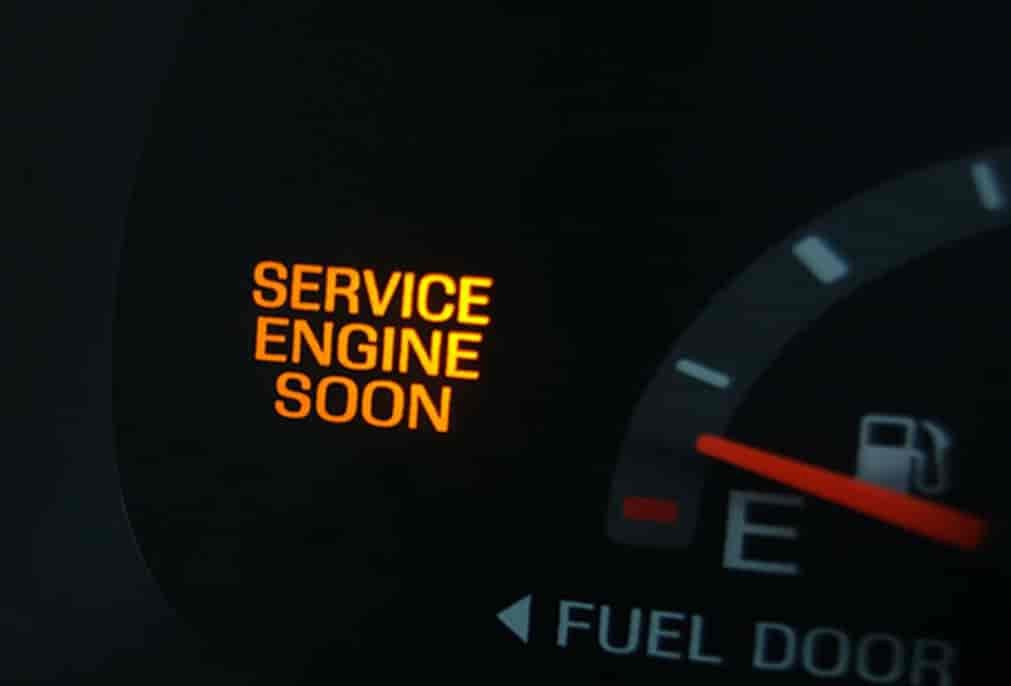
A service engine soon light blinking is one of the most serious warning signs a vehicle can display. Unlike a solid warning light, a blinking light usually indicates an active engine misfire that can quickly damage critical engine and exhaust components. In many cases, continuing to drive with a flashing warning light can overheat the catalytic converter, reduce engine performance, increase fuel consumption, and lead to expensive repair costs.
An engine misfire happens when one or more cylinders fail to burn fuel correctly. This problem often starts with faulty spark plugs, failing ignition coils, clogged fuel injectors, vacuum leaks, or sensor failures. As unburned fuel enters the exhaust system, the catalytic converter experiences excessive heat that may permanently damage its internal structure. Replacing a damaged catalytic converter alone can cost between $900 and $2,500 depending on the vehicle model.
A blinking service engine soon light may also appear together with rough idling, shaking, hesitation during acceleration, reduced power, fuel smell, hard starting, or loud engine vibrations. These symptoms usually indicate that the vehicle requires immediate diagnosis instead of delayed maintenance.
This guide explains 9 common causes of a service engine soon light blinking, how dangerous the problem can become, what repairs may be necessary, and what drivers should do immediately to prevent severe engine damage.
What Does a Service Engine Soon Light Blinking Mean?
A service engine soon light blinking usually means the engine is experiencing an active misfire that requires immediate attention. The warning appears when the engine control module detects combustion problems severe enough to damage the exhaust system or reduce engine performance. In most vehicles, a flashing warning light is considered more urgent than a steady warning light.
An engine misfire happens when one or more cylinders fail to ignite the air-fuel mixture correctly. This interruption causes incomplete combustion and sends unburned fuel into the exhaust system. The problem often develops because of worn spark plugs, faulty ignition coils, clogged fuel injectors, vacuum leaks, or sensor failures. Modern vehicles continuously monitor combustion efficiency through the OBD2 diagnostic system, allowing the warning light to blink when misfires exceed safe operating limits.
Several symptoms commonly appear together with a blinking service engine soon light. Drivers often notice rough idling, engine shaking, poor acceleration, power loss, fuel smell, increased exhaust emissions, or loud vibrations while driving. In severe cases, the vehicle may enter limp mode to reduce engine stress and protect internal components from further damage.
Ignoring this warning can quickly increase repair costs. A simple ignition coil replacement costing less than $300 can eventually lead to catalytic converter failure exceeding $2,000 if the misfire continues for an extended period.
Why Is a Blinking Service Engine Soon Light More Serious Than a Solid Light?
A blinking service engine soon light is more serious than a solid light because it usually signals an active engine misfire capable of causing immediate mechanical damage. A steady warning light often indicates a less urgent issue such as a loose gas cap, minor sensor malfunction, or emissions problem. A flashing light, however, warns that combustion problems are occurring continuously while the engine is running.
The biggest risk involves damage to the catalytic converter. During a misfire, unburned fuel enters the exhaust system and burns inside the catalytic converter instead of inside the engine cylinder. This abnormal combustion creates excessive heat that can melt the converter’s internal honeycomb structure. Once the catalytic converter overheats, exhaust flow becomes restricted, engine performance drops sharply, and repair costs increase significantly.
A blinking warning light may also indicate severe ignition timing issues, fuel delivery problems, or low compression inside one or more cylinders. These conditions can increase engine temperature, damage pistons, wear out valves, and place additional stress on the crankshaft and exhaust components. In turbocharged engines, prolonged misfires may also damage the turbocharger because of unstable exhaust pressure and excessive heat buildup.
Most manufacturers recommend reducing speed immediately when the warning light starts flashing. High RPM driving increases fuel flow and combustion pressure, accelerating damage inside the exhaust and ignition systems. Even driving for 20 to 30 additional minutes under heavy load can worsen the condition considerably.
Can You Continue Driving With a Service Engine Soon Light Blinking?
You should not continue driving with a service engine soon light blinking unless reaching a nearby repair shop is absolutely necessary. A flashing warning light indicates that the engine is operating under unsafe conditions that may cause severe mechanical damage within a short period.
The level of danger depends on how the vehicle behaves while driving. If the engine shakes violently, loses power, stalls, produces loud knocking noises, or smells strongly of fuel, the vehicle should be stopped immediately. These symptoms often indicate a severe misfire that can rapidly overheat the catalytic converter or damage internal engine components. Continuing to drive under these conditions may increase repair costs from a few hundred dollars to several thousand dollars.
Short-distance driving at low speed may sometimes be possible if the engine still runs relatively smoothly and the warning light flashes intermittently instead of continuously. However, aggressive acceleration, highway driving, towing, or climbing steep hills should be avoided because heavy engine load increases combustion stress and exhaust temperature.
Drivers should check for additional warning signs before deciding whether to continue driving. White smoke, black smoke, overheating, fuel odor, hard starting, or sudden RPM fluctuations usually indicate a worsening mechanical problem. Using an OBD2 scanner can also help identify whether the issue involves ignition coils, spark plugs, injectors, oxygen sensors, or more serious engine failures.
In most situations, scheduling immediate diagnosis is the safest decision. Early repairs usually prevent expensive secondary damage and reduce the risk of complete engine or catalytic converter failure.
What Damage Can Happen If You Ignore a Blinking Service Engine Soon Light?
Ignoring a blinking service engine soon light can lead to severe engine damage, catalytic converter failure, and expensive repair costs. A flashing warning light usually means the engine is misfiring continuously, allowing unburned fuel to enter the exhaust system. This condition increases exhaust temperature rapidly and places extreme stress on multiple engine components.
The catalytic converter is often the first major component to fail. Under normal conditions, the converter processes exhaust gases at controlled temperatures. During a misfire, however, raw fuel burns inside the converter instead of inside the combustion chamber. Temperatures can rise above safe operating limits and melt the converter’s internal ceramic structure. Once damaged, exhaust flow becomes restricted and the engine may lose significant power.
Prolonged misfires can also damage spark plugs, ignition coils, oxygen sensors, pistons, cylinder walls, and exhaust valves. In turbocharged engines, unstable combustion may create irregular exhaust pressure that affects turbocharger performance and durability. Severe misfires sometimes cause carbon buildup, fuel dilution inside engine oil, and overheating that accelerates internal wear.
Repair costs increase quickly when the problem is ignored. Replacing spark plugs may cost between $100 and $400 depending on the vehicle. A failed catalytic converter, however, can exceed $2,500 on luxury or performance vehicles. If internal engine damage develops, repair costs may rise well beyond $5,000.
Several warning signs indicate worsening damage. Common symptoms include rough acceleration, heavy vibrations, fuel smell, poor fuel economy, engine overheating, and loud knocking sounds. Drivers who continue operating the vehicle under these conditions risk complete engine failure.
Can an Engine Misfire Cause a Service Engine Soon Light Blinking?
An engine misfire is one of the most common causes of a service engine soon light blinking. Modern vehicles monitor combustion activity continuously through crankshaft sensors and ignition timing systems. When one or more cylinders fail to burn fuel correctly, the engine control module detects irregular crankshaft speed and activates the flashing warning light.
A misfire occurs when the combustion process becomes incomplete or unstable. The problem usually starts because of faulty spark plugs, weak ignition coils, clogged fuel injectors, vacuum leaks, low fuel pressure, or poor air-fuel mixture balance. Mechanical problems such as low compression, damaged valves, or timing chain issues may also trigger misfires in more serious cases.
Several symptoms usually appear together with an engine misfire. The engine may shake at idle, hesitate during acceleration, lose power under load, or produce loud vibrations while driving. Drivers often notice poor fuel economy because the engine burns fuel inefficiently when cylinders fail to fire correctly. In severe cases, the vehicle may struggle to start or stall unexpectedly.
Misfires become especially dangerous during highway driving or heavy acceleration. Higher RPM increases fuel delivery and combustion pressure, causing larger amounts of unburned fuel to enter the exhaust system. This condition rapidly overheats the catalytic converter and increases the risk of permanent damage.
OBD2 trouble codes commonly associated with engine misfires include P0300 for random misfires and P0301 through P0308 for cylinder-specific misfires. These codes help mechanics identify whether the issue involves ignition, fuel delivery, airflow, or mechanical engine failure.
Can Bad Spark Plugs Cause a Service Engine Soon Light Blinking?
Bad spark plugs are a leading cause of a service engine soon light blinking because they directly affect combustion quality inside the cylinders. Spark plugs generate the electrical spark required to ignite the air-fuel mixture. When plugs wear out or become fouled, combustion becomes weak, inconsistent, or completely interrupted.
Several conditions can damage spark plugs over time. Carbon buildup, oil contamination, excessive heat, incorrect spark plug gaps, and normal wear gradually reduce spark efficiency. Most spark plugs require replacement between 30,000 and 100,000 miles depending on plug material and driving conditions. Copper spark plugs wear faster than platinum or iridium plugs.
Faulty spark plugs usually create noticeable performance problems before complete failure occurs. Common symptoms include rough idling, slow acceleration, engine hesitation, poor fuel economy, hard starting, and increased exhaust emissions. In many cases, drivers also notice stronger engine vibrations while accelerating uphill or merging onto highways.
A weak spark prevents proper combustion and allows unburned fuel to enter the exhaust system. This condition contributes directly to catalytic converter overheating and activates the blinking warning light. If multiple spark plugs fail simultaneously, the engine may run extremely rough and lose substantial power.
Replacing worn spark plugs early is one of the cheapest ways to prevent larger engine repairs. Standard spark plug replacement usually costs far less than repairing catalytic converters, ignition systems, or internal engine components damaged by prolonged misfires.
Can a Faulty Ignition Coil Trigger a Service Engine Soon Light Blinking?
A faulty ignition coil can easily trigger a service engine soon light blinking because the coil controls spark delivery to the engine cylinders. Ignition coils convert low battery voltage into the high voltage required to ignite the air-fuel mixture. When a coil weakens or fails completely, the affected cylinder may stop firing correctly and create a severe engine misfire.
Modern vehicles often use one ignition coil per cylinder. This design improves ignition timing accuracy but also increases the chance of individual coil failures over time. Heat exposure, electrical overload, oil contamination, and internal insulation breakdown are among the most common reasons ignition coils fail. Vehicles with high mileage frequently experience coil deterioration after prolonged heat cycling inside the engine bay.
Several symptoms usually appear before complete ignition coil failure develops. Drivers commonly notice rough idle, engine hesitation, poor acceleration, sudden power loss, reduced fuel economy, and intermittent shaking during acceleration. In some cases, the engine may run normally at low speed but misfire heavily under load or during highway driving.
A failed ignition coil creates incomplete combustion and sends unburned fuel into the exhaust system. This condition rapidly increases catalytic converter temperature and activates the blinking warning light. If the problem continues, the converter may overheat and suffer permanent internal damage.
OBD2 codes such as P0351 through P0362 often indicate ignition coil circuit problems depending on cylinder location. Mechanics usually confirm coil failure through live misfire data, resistance testing, or coil swapping between cylinders.
Can Fuel Injector Problems Cause a Service Engine Soon Light Blinking?
Fuel injector problems can cause a service engine soon light blinking because injectors control how fuel enters each cylinder during combustion. When injectors become clogged, leak fuel, or fail electronically, the engine receives an incorrect air-fuel mixture that disrupts combustion stability.
Dirty fuel injectors are one of the most common fuel system problems in high-mileage vehicles. Carbon deposits gradually restrict injector spray patterns and reduce fuel atomization efficiency. Instead of delivering a fine fuel mist, damaged injectors may spray unevenly or deliver insufficient fuel volume. This imbalance causes cylinders to misfire under acceleration or during heavy engine load.
Several warning signs commonly appear with injector-related problems. Drivers may notice hard starting, rough idle, hesitation, reduced throttle response, poor fuel economy, fuel smell, or engine vibration. Severe injector failure can also produce black exhaust smoke because excess fuel enters the combustion chamber without burning efficiently.
Leaking injectors create additional risks because raw fuel may wash oil from cylinder walls and dilute engine oil. Over time, this condition increases internal engine wear and reduces lubrication quality. Excess fuel entering the exhaust system also overheats the catalytic converter and contributes to blinking warning light activation.
Fuel injector repair costs vary depending on the severity of the problem. Professional injector cleaning may cost between $100 and $300, while replacing multiple injectors can exceed $1,000 on direct-injection engines used in many modern vehicles.
Can a Bad Catalytic Converter Cause a Service Engine Soon Light Blinking?
A bad catalytic converter can cause a service engine soon light blinking, especially when the converter becomes overheated or internally restricted because of prolonged engine misfires. The catalytic converter reduces harmful exhaust emissions by converting toxic gases into safer compounds before they exit the exhaust system.
Inside the converter, a ceramic honeycomb structure coated with precious metals reacts chemically with exhaust gases at high temperatures. When unburned fuel enters the exhaust system during a misfire, combustion occurs inside the converter instead of inside the cylinders. This abnormal heat buildup can melt or crack the internal honeycomb structure.
Several symptoms commonly indicate catalytic converter failure. Drivers often notice sluggish acceleration, reduced engine power, sulfur or rotten egg smell, excessive engine heat, poor fuel economy, rattling noises under the vehicle, or difficulty reaching higher speeds. In severe cases, exhaust restriction becomes so significant that the engine struggles to maintain normal RPM.
A clogged catalytic converter also increases backpressure inside the exhaust system. Excessive backpressure interferes with engine airflow, reduces combustion efficiency, and creates additional stress on valves, pistons, and turbochargers. This condition can worsen existing misfires and create a cycle of increasing engine damage.
Catalytic converter replacement is one of the most expensive repairs linked to a blinking service engine soon light. Replacement costs commonly range from $900 to more than $2,500 depending on the vehicle model, emissions regulations, and converter design. Luxury vehicles and turbocharged engines often require even more expensive components.
Can an Oxygen Sensor Trigger a Service Engine Soon Light Blinking?
A faulty oxygen sensor can trigger a service engine soon light blinking because the sensor helps control the engine’s air-fuel mixture. Oxygen sensors monitor exhaust gas composition and send real-time data to the engine control module. The system then adjusts fuel delivery to maintain efficient combustion and stable emissions performance.
When an oxygen sensor fails, the engine may receive incorrect fuel mixture calculations. Some engines begin running excessively rich, meaning too much fuel enters the combustion chamber. Others run lean, where insufficient fuel creates unstable combustion temperatures. Both conditions increase the risk of engine misfires and may activate a blinking warning light.
Several symptoms commonly appear when oxygen sensors stop working correctly. Drivers often notice rough idling, poor fuel economy, sluggish acceleration, fuel smell, increased exhaust emissions, and hesitation during throttle input. In severe cases, the engine may misfire repeatedly because the incorrect fuel mixture disrupts proper combustion timing.
Faulty oxygen sensors also place additional stress on the catalytic converter. Rich fuel mixtures allow unburned fuel to enter the exhaust system, while lean mixtures increase combustion temperature inside the cylinders. Both conditions contribute to overheating and shorten catalytic converter lifespan significantly.
OBD2 codes such as P0130 through P0167 commonly indicate oxygen sensor circuit or performance problems. Replacing a failed oxygen sensor early usually prevents larger fuel system and exhaust repairs later.
Can a Vacuum Leak Cause a Service Engine Soon Light Blinking?
A vacuum leak can cause a service engine soon light blinking because it disrupts the engine’s air-fuel ratio and creates unstable combustion conditions. Vacuum leaks occur when unmetered air enters the intake system through cracked hoses, damaged gaskets, loose intake components, or failing vacuum lines.
Modern engines calculate fuel delivery based on measured airflow entering the intake system. When extra air bypasses sensors and enters through a leak, the engine receives more oxygen than expected. This condition creates a lean air-fuel mixture that increases combustion temperature and raises the risk of cylinder misfires.
Several symptoms usually appear with a vacuum leak. Drivers commonly notice rough idle, fluctuating RPM, hissing sounds from the engine bay, poor acceleration, hard starting, engine stalling, or reduced fuel efficiency. Small leaks may only affect idle quality at first, while larger leaks can cause severe drivability problems under acceleration.
Vacuum leaks become more dangerous when combined with ignition or fuel system issues. Lean combustion conditions increase stress on spark plugs, valves, pistons, and exhaust components. Continuous lean misfires also increase catalytic converter temperature and may activate the blinking warning light.
Mechanics often diagnose vacuum leaks using smoke testing, live fuel trim data, or propane testing around intake components. Common leak locations include intake manifold gaskets, PCV hoses, brake booster lines, and throttle body connections.
Can a Mass Air Flow Sensor Cause a Service Engine Soon Light Blinking?
A faulty mass air flow sensor can cause a service engine soon light blinking because the sensor measures the amount of air entering the engine. The engine control module depends on this airflow data to calculate accurate fuel delivery during combustion.
The mass air flow sensor is usually installed between the air filter and throttle body. As air enters the intake system, the sensor measures airflow volume and sends electrical signals to the engine computer. If the sensor becomes dirty or damaged, airflow readings become inaccurate and the engine may run too rich or too lean.
Several problems commonly damage mass air flow sensors over time. Dirt accumulation, contaminated air filters, oil residue from aftermarket intake systems, moisture exposure, and electrical failures can reduce sensor accuracy. High-mileage vehicles frequently experience airflow sensor contamination after years of dust and debris exposure.
Common symptoms of a failing mass air flow sensor include rough idle, hesitation during acceleration, poor throttle response, engine stalling, reduced fuel economy, and unstable RPM. Some vehicles may also experience difficulty shifting automatic transmissions because engine load calculations become inaccurate.
Incorrect airflow data creates combustion instability that may eventually trigger engine misfires. Rich fuel mixtures increase catalytic converter temperature, while lean conditions raise combustion heat inside the cylinders. Both situations increase the likelihood of a blinking warning light appearing during driving.
OBD2 codes such as P0100 through P0104 often indicate mass air flow sensor performance issues. Cleaning the sensor sometimes restores normal operation, but damaged units usually require replacement to prevent ongoing misfires and fuel delivery problems.
What Should You Do Immediately When the Service Engine Soon Light Starts Blinking?
You should reduce speed and diagnose the vehicle immediately when the service engine soon light starts blinking. A flashing warning light usually indicates an active engine misfire that can damage the catalytic converter and internal engine components within a short period.
The first step is to avoid heavy acceleration and high RPM driving. Hard acceleration increases fuel delivery and combustion pressure, which sends larger amounts of unburned fuel into the exhaust system. Driving slowly at reduced engine load helps minimize additional damage while moving the vehicle to a safer location or repair facility.
Drivers should also pay attention to how the vehicle behaves. Severe shaking, loud knocking sounds, overheating, fuel smell, white smoke, or major power loss often indicate dangerous combustion problems. If these symptoms appear together with the blinking warning light, stopping the vehicle immediately is usually the safest decision.
Checking basic problems may also help identify obvious causes. Loose ignition coil connectors, disconnected vacuum hoses, damaged intake tubing, or low engine oil levels sometimes contribute to misfires. However, modern vehicles typically require electronic diagnostics to identify the exact failure accurately.
Restarting the engine occasionally clears temporary misfire conditions caused by sensor glitches or moisture buildup. If the warning light continues blinking after restarting, professional diagnosis becomes necessary as soon as possible.
How Can You Check OBD2 Trouble Codes for a Blinking Service Engine Soon Light?
You can check OBD2 trouble codes using an OBD2 scanner connected to the vehicle’s diagnostic port. The OBD2 system stores fault codes whenever the engine control module detects abnormal sensor readings, ignition failures, fuel delivery problems, or combustion irregularities.
Most vehicles manufactured after 1996 include a standardized OBD2 diagnostic connector located beneath the dashboard near the steering column. After connecting the scanner, the device communicates with the engine control module and displays stored diagnostic trouble codes. These codes help identify the system responsible for triggering the blinking warning light.
Several common trouble codes are strongly associated with engine misfires. Code P0300 indicates random or multiple cylinder misfires, while P0301 through P0308 identify specific cylinders experiencing combustion failure. Ignition coil failures may trigger codes such as P0351 through P0362, while oxygen sensor and airflow sensor problems generate separate sensor-related codes.
Basic code readers are inexpensive and suitable for simple diagnostics. More advanced scan tools provide live data including fuel trims, ignition timing, misfire counters, oxygen sensor activity, and airflow readings. Mechanics often rely on this real-time information to identify whether the issue involves spark, fuel delivery, airflow imbalance, or mechanical engine damage.
Clearing codes without repairing the underlying problem is not recommended. The warning light usually returns quickly if the engine continues misfiring, and delaying repairs may increase damage to the catalytic converter and exhaust system.
When Should You Call a Mechanic for a Service Engine Soon Light Blinking?
You should call a mechanic immediately if the service engine soon light continues blinking after restarting the vehicle or if severe drivability symptoms appear. A flashing warning light usually indicates an active problem that requires professional diagnosis before major engine damage develops.
Certain symptoms indicate a high-risk mechanical condition. Drivers should stop driving and contact a mechanic if the engine shakes violently, stalls repeatedly, overheats, produces loud metallic noises, or loses substantial power. Strong fuel smell and visible smoke from the exhaust also suggest dangerous combustion problems that may damage the catalytic converter rapidly.
Professional diagnosis becomes especially important when multiple systems are involved. Modern engines depend on precise coordination between ignition components, fuel injectors, airflow sensors, oxygen sensors, variable valve timing systems, and electronic control modules. A mechanic uses advanced diagnostic equipment to identify whether the problem originates from electrical failure, fuel imbalance, airflow restriction, or internal engine damage.
Ignoring a blinking warning light for several days often increases repair costs significantly. Early ignition coil or spark plug replacement may cost only a few hundred dollars. Continued driving, however, may eventually damage the catalytic converter, oxygen sensors, pistons, or valves and increase repair expenses dramatically.
Vehicles that enter limp mode also require immediate inspection. Limp mode limits engine power intentionally to reduce further damage. This condition usually indicates that the engine control module has detected severe combustion or emissions system failure requiring urgent repairs.
How Much Does It Cost To Fix a Service Engine Soon Light Blinking?
The cost to fix a service engine soon light blinking depends on which component is causing the engine misfire or combustion problem. Minor ignition issues may cost less than $200 to repair, while severe catalytic converter or internal engine damage can exceed several thousand dollars.
Spark plug replacement is usually one of the cheapest repairs. Most vehicles require between $100 and $400 for new spark plugs depending on engine size and plug type. Ignition coil replacement commonly costs between $150 and $600 because many modern engines use individual coils for each cylinder.
Fuel injector repairs vary significantly based on injector design and engine configuration. Professional injector cleaning may cost around $100 to $300, while replacing multiple direct-injection fuel injectors can exceed $1,200 on some vehicles. Vacuum leak repairs are often less expensive and usually involve replacing hoses, intake gaskets, or damaged connectors.
Mass air flow sensor and oxygen sensor replacement costs are generally moderate. Most oxygen sensor replacements range from $150 to $500 including labor, while mass air flow sensor replacement often costs between $200 and $700 depending on the vehicle brand and sensor design.
Catalytic converter replacement is usually the most expensive repair associated with a blinking warning light. Standard replacement costs commonly range from $900 to over $2,500. Luxury vehicles, turbocharged engines, and performance cars often require more expensive emissions components because of stricter exhaust system design.
Diagnostic fees may also increase total repair cost. Many repair shops charge between $80 and $180 for advanced diagnostic testing using professional scan tools and live engine data analysis. However, early diagnosis often prevents much larger repair bills later.
How Can You Prevent a Service Engine Soon Light From Blinking Again?
Regular maintenance is the best way to prevent a service engine soon light from blinking again. Most flashing warning lights develop because small ignition, fuel, or airflow problems are ignored until they create severe engine misfires.
Replacing spark plugs at recommended intervals is one of the most effective preventive measures. Worn spark plugs increase combustion instability gradually and place additional stress on ignition coils and catalytic converters. Many manufacturers recommend replacing standard spark plugs between 30,000 and 60,000 miles, while iridium plugs may last close to 100,000 miles.
Routine ignition system inspections also reduce the risk of sudden misfires. Mechanics should check ignition coils, wiring connectors, battery voltage, and grounding points regularly because weak electrical performance affects combustion efficiency directly. Catching ignition problems early often prevents catalytic converter damage later.
Fuel system maintenance plays an important role as well. Using high-quality fuel, replacing clogged fuel filters, and cleaning fuel injectors periodically help maintain proper fuel atomization and stable combustion. Dirty injectors and poor fuel delivery commonly contribute to rough idle and cylinder misfires in high-mileage vehicles.
Drivers should also monitor intake and airflow components carefully. Replacing dirty air filters, repairing vacuum leaks, and cleaning the mass air flow sensor help maintain accurate airflow calculations inside the engine control module. Incorrect airflow readings often create lean or rich fuel mixtures that eventually trigger warning lights.
Paying attention to early symptoms can prevent expensive repairs. Rough idle, hesitation during acceleration, poor fuel economy, engine vibration, or hard starting usually appear before the warning light begins flashing. Diagnosing these problems early reduces stress on the catalytic converter and lowers long-term repair costs significantly.