
When a Nissan vehicle needs a repaint or even a small touch up, one of the most common problems owners face is color mismatch. A shade that looks “almost right” on paper often looks completely wrong once applied on the car. This is where the Nissan paint code becomes essential because it is the exact identifier that ensures the color matches the original factory finish. Without it, even professional body shops can struggle to reproduce the correct tone, especially with metallic or pearl finishes that change under different lighting conditions.
For any vehicle from Nissan Motor Co., Ltd., the paint code is not just a technical detail but a critical reference used across manufacturing, repair, and refinishing processes. It ensures that every panel of the vehicle maintains consistency with the original OEM standard. Understanding how to find and use this code helps avoid costly repaint errors and preserves both the appearance and resale value of the car.
In this guide, you will learn exactly how to find your Nissan paint code, where to look on different models, how to decode it, and how to apply it correctly for touch up or full repaint work. The goal is to give you a clear and practical understanding so you can confidently achieve accurate color matching without confusion or guesswork.
What Is a Nissan Paint Code
A Nissan paint code is a unique alphanumeric identifier that defines the exact exterior color of a vehicle. It is not the same as a simple color name like black, white, or silver. The paint code represents a precise factory formula used to create a consistent color finish on every vehicle.
Each Nissan vehicle from Nissan Motor Co., Ltd. uses this code to ensure accurate color production. Manufacturers use it during production, repair, and repainting. This process keeps the color consistent with the original factory standard. Even small changes in the formula can create visible differences in shade. This becomes more obvious under sunlight or on metallic and pearl finishes.
Many people confuse the paint code with the color name. However, they are different. A color name is often a marketing label. It may vary by region or model year. The paint code stays constant as the official technical reference. This is why professionals always rely on the paint code instead of the color name.
The paint code is also different from the VIN. The VIN identifies the vehicle and its specifications. It does not directly show the paint formula. You need the paint code to match the correct exterior color.
Understanding the Nissan paint code helps you avoid color mismatch during repairs. It also helps you choose the right touch up paint or repaint service. With the correct code, you get a factory accurate finish and protect the vehicle’s appearance and value.
Why Nissan Paint Code Is Important for Accurate Color Matching
The Nissan paint code plays a critical role in achieving accurate color matching during any repair or repaint process. Car paint is not a single fixed color. It is a complex formula that includes pigments, metallic flakes, and clear coat layers. Even a small variation in this formula can create a visible difference in shade. This is especially true under sunlight or different lighting conditions.
When you use the correct paint code for a vehicle from Nissan Motor Co., Ltd., you ensure that the paint supplier or body shop follows the exact factory specification. This helps maintain consistency across all panels of the vehicle. Without the correct code, technicians may rely on color names or visual matching, which often leads to mismatched results.
Accurate paint matching also protects the overall appearance of the car. A slight color difference between repaired and original panels can make the repair obvious. This reduces the visual quality of the vehicle and may affect buyer perception. In resale situations, visible repaint differences can also lower the vehicle’s value.
The paint code also helps reduce unnecessary repaint costs. When technicians use the correct reference from the start, they avoid trial-and-error mixing. This saves both time and materials during the repair process. It also improves efficiency in body shops and ensures a more predictable outcome.
In short, the Nissan paint code is not just a technical detail. It is the foundation of accurate color reproduction. It ensures that every repair matches the original factory finish and keeps the vehicle looking consistent, professional, and well maintained.Why Nissan Paint Code Is Important for Accurate Color Matching
The Nissan paint code plays a critical role in achieving accurate color matching during any repair or repaint process. Car paint is not a single fixed color. It is a complex formula that includes pigments, metallic flakes, and clear coat layers. Even a small variation in this formula can create a visible difference in shade. This is especially true under sunlight or different lighting conditions.
When you use the correct paint code for a vehicle from Nissan Motor Co., Ltd., you ensure that the paint supplier or body shop follows the exact factory specification. This helps maintain consistency across all panels of the vehicle. Without the correct code, technicians may rely on color names or visual matching, which often leads to mismatched results.
Accurate paint matching also protects the overall appearance of the car. A slight color difference between repaired and original panels can make the repair obvious. This reduces the visual quality of the vehicle and may affect buyer perception. In resale situations, visible repaint differences can also lower the vehicle’s value.
The paint code also helps reduce unnecessary repaint costs. When technicians use the correct reference from the start, they avoid trial-and-error mixing. This saves both time and materials during the repair process. It also improves efficiency in body shops and ensures a more predictable outcome.
In short, the Nissan paint code is not just a technical detail. It is the foundation of accurate color reproduction. It ensures that every repair matches the original factory finish and keeps the vehicle looking consistent, professional, and well maintained.
Where to Find Your Nissan Paint Code
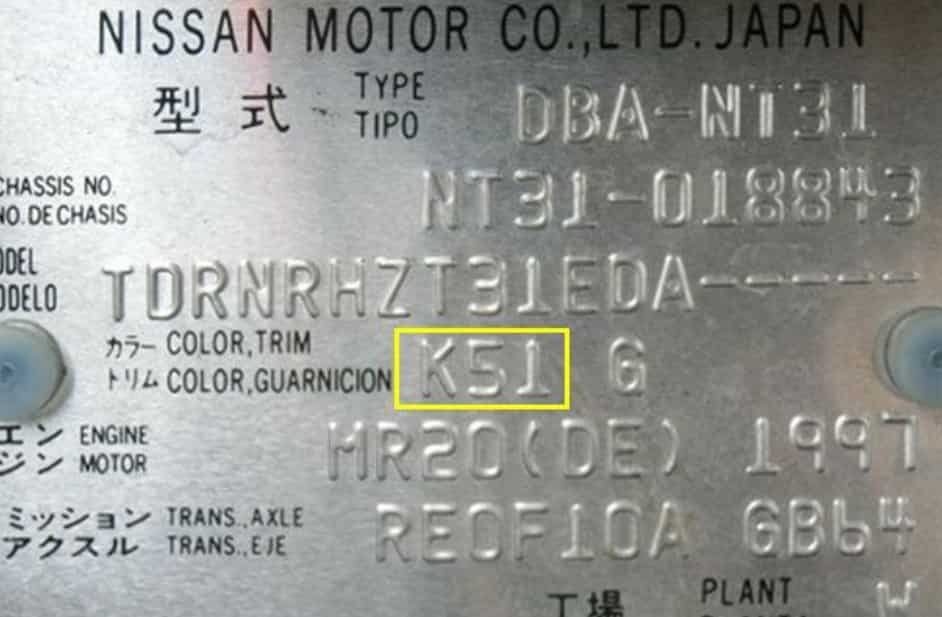
You can find the Nissan paint code in several locations on your vehicle. Nissan places this code on factory labels to help identify the exact exterior color for repairs and repainting. The most common location is the driver side door jamb. Open the driver door and look at the sticker on the frame. This label usually contains vehicle details and the paint code.
Another common location is the engine bay. Some Nissan models place the information sticker near the front of the engine compartment. You should check the inner panels or the top support area. The paint code often appears as a short alphanumeric code on this label.
For some vehicles from Nissan Motor Co., Ltd., you may also find the paint code on a metal identification plate. This plate can be located in the engine bay or near the firewall area. It depends on the model and production year.
In some cases, the paint code may appear in the trunk area. You can check near the spare tire cover or inside the trunk lining. Older Nissan models sometimes place labels in this position.
If you cannot find the label, you can also check the owner’s manual or service booklet. Some documents include factory color information or reference codes. However, the physical sticker on the vehicle remains the most reliable source.
Finding the correct paint code is important before ordering touch up paint or starting a repaint job. Always double check the label carefully to avoid mistakes and ensure accurate color matching.
VIN vs Paint Code: What’s the Difference?
Many car owners confuse the VIN with the paint code, but these two identifiers serve completely different purposes. The VIN, or Vehicle Identification Number, is a unique code that identifies the entire vehicle. It contains information about the manufacturer, model, engine type, production year, and other technical specifications. However, it does not directly provide the exact exterior paint formula.
The Nissan paint code, on the other hand, focuses only on the exterior color of the vehicle. It defines the exact factory paint formulation used during production. This includes details such as pigment mix, metallic content, and finish type. Because of this, the paint code is essential when you need to repair or repaint a vehicle with an exact color match.
For vehicles from Nissan Motor Co., Ltd., the VIN can sometimes help you access general vehicle data through databases or dealer systems. However, it still cannot replace the paint code when it comes to physical color matching. Two vehicles with the same model and year can still have different paint codes depending on the trim or regional options.
Another important difference is usage. The VIN is mainly used for registration, insurance, and vehicle tracking. The paint code is used in body repair, refinishing, and touch up paint selection. Professionals in automotive repair always rely on the paint code when mixing or ordering paint to ensure accuracy.
Understanding this difference helps avoid common mistakes. If you rely only on the VIN, you may end up with an incorrect color match. Using the correct paint code ensures the final result matches the original factory finish and maintains the vehicle’s appearance.
How to Decode Nissan Paint Codes
Nissan paint codes use short alphanumeric strings to represent specific factory colors. Each code links directly to a predefined paint formula used during vehicle production. These codes usually consist of three characters, although some variations may appear depending on model year or region.
Each code corresponds to a precise mix of pigments and finish types. For example, a code may define whether the color is solid, metallic, or pearl. This structure helps maintain consistency across all vehicles produced by Nissan Motor Co., Ltd.. Even if two colors look similar, their paint codes ensure they are treated as distinct formulas.
To decode a Nissan paint code, you first identify the code on the vehicle label. Then you match it with an official Nissan color chart or OEM database. These charts translate the code into the correct color name and formulation. This step is important because color names alone can be misleading or inconsistent across markets.
Some common Nissan paint codes include examples like QAB for pearl white or KH3 for solid black. Each code defines not only the color but also how it reflects light. Metallic and pearl finishes often contain additional layers that affect the final appearance.
It is important to use the exact paint code when ordering touch up paint or scheduling a repaint. Even a small mismatch in decoding can lead to noticeable differences in shade. Professionals in body repair always rely on the code rather than visual matching to ensure accuracy.
Understanding how to decode Nissan paint codes helps you avoid errors and achieve a factory accurate finish. It also improves communication with paint suppliers and repair technicians, making the entire restoration process more reliable and consistent.
Model-Specific Nissan Paint Code Locations
The location of a Nissan paint code is not always the same across all models. Nissan places the paint code label in different areas depending on the vehicle design, production year, and manufacturing region. This is why knowing model-specific locations helps you find the code faster and avoid unnecessary searching.
For popular sedans like the Nissan Altima, the paint code is most commonly found on the driver side door jamb. You should open the driver door and inspect the information sticker on the frame. This remains the most reliable location for most model years.
For SUVs such as the Nissan Rogue, the paint code is also usually located on the driver side door jamb. In some versions, it may appear in the engine bay on a secondary identification sticker. These SUVs often include multiple labels, so it is important to check both areas.
Smaller models like the Nissan Sentra follow a similar pattern. The paint code is typically placed on the door pillar label. This label also includes tire pressure and manufacturing information, so you need to locate the specific alphanumeric paint code line.
For models like the Nissan X Trail or Qashqai, the paint code may appear on the firewall area inside the engine bay or on the door frame. These models sometimes vary depending on production market, especially between Japan, Europe, and Asia versions.
Across all models from Nissan Motor Co., Ltd., the safest approach is to check both the driver side door jamb and the engine bay. These two locations cover most production variations and help ensure you find the correct factory paint code without confusion.
Common Mistakes When Finding Paint Codes
Many car owners make simple mistakes when trying to find the Nissan paint code, and these errors often lead to incorrect paint orders and poor color matching results. One of the most common mistakes is confusing the paint code with other labels on the vehicle. Many stickers include multiple codes for production, trim, and options, but only one refers to the exterior paint color.
Another frequent mistake is assuming the VIN contains the paint code. The VIN provides detailed vehicle information, but it does not directly specify the paint formula. Relying on the VIN alone often leads to incorrect color selection, especially when multiple paint options exist for the same model year of vehicles from Nissan Motor Co., Ltd..
Some users also fail to check all possible locations. They may only look at the door jamb and miss additional labels in the engine bay or trunk area. This becomes a problem when the primary sticker is faded, damaged, or missing. Checking only one location reduces the chance of finding the correct code.
Another mistake is misreading worn or unclear labels. Over time, heat and sunlight can fade the sticker, making characters difficult to distinguish. A single incorrect character in the paint code can result in a completely different color mix.
Many people also rely on visual matching instead of the official code. While a color may look similar in daylight, even small differences in metallic or pearl finishes become noticeable after painting. This leads to mismatched panels and inconsistent appearance.
Avoiding these mistakes ensures accurate identification of the Nissan paint code and helps achieve a factory correct finish during any repair or repaint process.
How to Use Nissan Paint Code for Touch-Up and Repainting
Once you have identified the correct Nissan paint code, the next step is using it properly for touch-up or full repaint work. This code acts as the main reference for paint suppliers and body shops to recreate the exact factory color. Without it, color matching becomes guesswork and often leads to visible differences between repaired and original panels.
For touch-up repairs, you should provide the paint code directly when ordering paint. Most suppliers use this code to mix or pre-produce the exact color formula. This ensures that small scratches or chips blend naturally with the surrounding surface. When applied correctly, the repair becomes almost invisible under normal viewing conditions.
For larger repaint jobs, professional body shops use the Nissan paint code to prepare a full paint mix. They follow the OEM formula to match the original finish of the vehicle. This process includes adjusting for metallic or pearl effects when needed. Technicians also test spray samples before applying paint to the entire panel to ensure accuracy.
For vehicles from Nissan Motor Co., Ltd., using the correct paint code is especially important because even the same color name can have different variations depending on production year or region. The code eliminates this uncertainty and provides a precise match for restoration work.
It is also important to consider paint aging. Over time, exposure to sunlight and weather can slightly change the original color. In such cases, professionals may adjust the formula slightly while still using the paint code as the base reference.
Using the correct Nissan paint code ensures a consistent, factory-like finish. It improves the quality of touch-up work, reduces repaint errors, and helps maintain the overall appearance and value of the vehicle.
Conclusion
Finding and using the correct Nissan paint code is essential for achieving accurate color matching in any repair or repaint process. This code represents the exact factory paint formula used on your vehicle, not just a simple color name. When you rely on it, you reduce the risk of mismatched panels and ensure a consistent, professional finish.
Throughout this guide, you have learned where to locate the paint code on different Nissan models, how it differs from the VIN, and why it plays such an important role in body repair. You have also seen how decoding the paint code helps you communicate correctly with paint suppliers and technicians, ensuring the right color mix every time.
For vehicles from Nissan Motor Co., Ltd., the paint code is a key part of maintaining OEM quality standards. Whether you are doing a small touch-up or a full repaint, this code helps preserve the original factory appearance and protects the long-term value of your car.
In the end, taking a few minutes to find the correct paint code can save you from costly repaint mistakes and unnecessary rework. It gives you confidence that your vehicle will look consistent, clean, and true to its original design. If you plan any cosmetic repair in the future, always start with the paint code as your first and most important reference.