
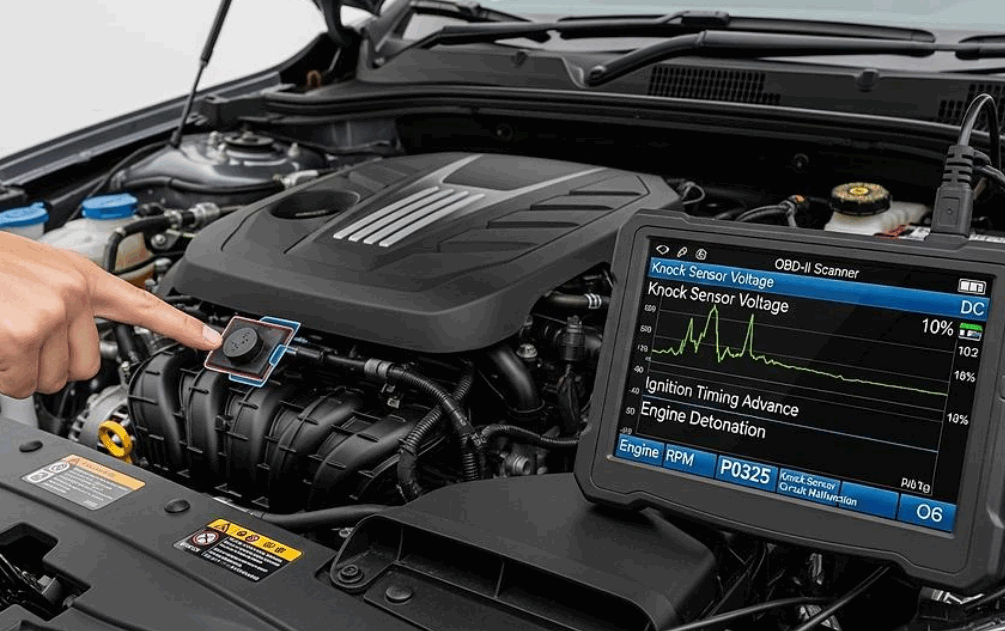
Nissan P0325 is a diagnostic trouble code that indicates a problem with the knock sensor circuit. The knock sensor detects engine vibration associated with combustion knock and sends a voltage signal to the engine control module (ECM). Nissan service information identifies P0325 when the ECM receives an excessively high or low voltage signal from the knock sensor. The code does not automatically mean that the knock sensor itself has failed. A damaged harness, poor electrical connection, open circuit, or shorted circuit can also trigger P0325.
When Nissan P0325 appears, the correct approach is to diagnose the complete sensor circuit before replacing any component. The diagnosis should confirm the code, inspect the wiring and connectors, test the circuit, and then evaluate the knock sensor according to the specifications for the specific Nissan model and engine. Nissan service procedures for different engines show that circuit continuity and wiring faults must be checked before condemning the sensor.
This guide explains what Nissan P0325 means, the symptoms and causes associated with the code, how to diagnose the knock sensor circuit, and how to repair the confirmed fault. It also explains whether you can drive with P0325 and what factors affect the repair cost.
What Does Nissan P0325 Mean?
Nissan P0325 means the ECM has detected an abnormal signal from the knock sensor circuit. The knock sensor monitors engine vibrations caused by combustion. It then sends a voltage signal to the ECM. Nissan service documentation describes P0325 as a condition where the knock sensor signal falls outside the expected range. The main causes include an open circuit, a short circuit, damaged wiring, poor connectors, or a faulty knock sensor.
The knock sensor plays an important role in the engine control system. It helps the ECM detect abnormal combustion inside the engine. The ECM uses this information to manage engine operation. When the sensor sends an incorrect signal, the ECM cannot rely on that information. As a result, the vehicle stores P0325 and may turn on the Check Engine Light.
P0325 does not automatically mean that the knock sensor has failed. A wiring problem can produce the same code. A damaged connector can also interrupt the sensor signal. An open or shorted circuit can create the same diagnostic condition. For this reason, replacing the sensor without testing the circuit can lead to an unnecessary repair.
The correct diagnosis starts with an OBD II scan. The technician should confirm P0325 and check for other diagnostic trouble codes. The next steps include inspecting the wiring, checking the connectors, testing circuit continuity, and evaluating the knock sensor. Nissan uses different specifications across its models and engines, so technicians should follow the service information for the specific vehicle.
In short, Nissan P0325 indicates a problem with the knock sensor circuit. The code does not prove that the sensor itself has failed. A complete circuit and sensor diagnosis should come before component replacement.
What Symptoms Can Nissan P0325 Cause?
Nissan P0325 can trigger the Check Engine Light and may affect engine performance. The exact symptoms depend on the vehicle, engine, and cause of the circuit fault. Some vehicles may show only the warning light. Others may develop noticeable changes in engine operation.
The Check Engine Light is the most direct symptom of a stored P0325 code. The ECM detects an abnormal knock sensor signal and stores the diagnostic trouble code. A driver may discover P0325 during a routine OBD II scan even when the vehicle still drives normally. This situation does not rule out a circuit problem. It only means the fault has not created an obvious drivability complaint.
P0325 can also appear with changes in engine performance. A faulty knock sensor signal can prevent the ECM from receiving reliable information about engine vibration. The engine control system may then adjust its operation based on the available information. Depending on the Nissan model and the underlying fault, the driver may notice reduced performance, rough engine operation, or changes in fuel economy.
The symptoms can also point toward a broader engine control problem when other diagnostic codes appear with P0325. For example, additional codes may indicate related sensor, wiring, or engine management faults. A technician should therefore scan the vehicle for all stored and pending codes before starting the repair.
Nissan P0325 does not produce the same symptoms on every vehicle. The Check Engine Light is the clearest indicator, while performance changes depend on the specific Nissan model, engine, and cause of the knock sensor circuit fault.
What Causes Nissan P0325?
The main causes of Nissan P0325 include a faulty knock sensor, damaged wiring, poor electrical connections, an open circuit, and a short circuit. Nissan service information lists problems with the knock sensor and its harness or connectors among the main causes of this code. The ECM stores P0325 when it detects an abnormal signal from the knock sensor circuit.
A faulty knock sensor can produce P0325 when the sensor no longer sends the expected signal. The sensor uses a piezoelectric element to detect engine vibration. The ECM relies on this signal to monitor combustion conditions. When the sensor develops an internal fault, its output may fall outside the expected range.
Damaged wiring can also trigger P0325. A broken wire can interrupt the signal between the sensor and ECM. A damaged wire can also create an unwanted connection with another circuit. Heat, vibration, and contact with engine components can damage wiring over time. These faults can make the ECM interpret the sensor signal as abnormal.
Electrical connector problems create another common diagnostic path. Loose terminals, damaged connectors, or poor electrical contact can interrupt the knock sensor signal. Corrosion can also increase electrical resistance at the connection. The ECM may then detect an unstable or incorrect signal and store P0325.
The exact cause depends on the Nissan model and engine. A technician should therefore inspect the complete circuit before replacing the knock sensor. P0325 identifies a circuit fault, so the diagnosis should determine whether the sensor, wiring, connector, open circuit, or short circuit caused the code.
How Do You Diagnose Nissan P0325?
Diagnosing Nissan P0325 starts with confirming the code and checking the complete knock sensor circuit. Do not replace the knock sensor before testing the circuit. Nissan service procedures check the wiring and connectors before they replace the sensor. They also check the circuit for an open connection or a short to ground or power.
First, use an OBD II scanner to confirm P0325. Check for additional diagnostic trouble codes at the same time. Other codes can provide useful information about related electrical or engine control problems. Nissan service procedures also specify testing conditions before technicians confirm P0325. For example, some procedures require battery voltage above 10 volts at idle.
Next, inspect the knock sensor wiring and connectors. Look for broken wires, damaged insulation, loose terminals, corrosion, or poor connections. Then check circuit continuity between the knock sensor and ECM. Nissan procedures also require checks for shorts to ground and shorts to power. If the circuit fails these tests, repair the wiring or connectors before testing the sensor.
If the circuit passes inspection, test the knock sensor using the specifications for the exact Nissan model and engine. Nissan service manuals provide different terminal numbers and test values for different engines. For example, one Nissan service procedure specifies a knock sensor resistance of approximately 500 to 620 kΩ at 25°C. Do not apply this value to every Nissan engine. Always follow the service information for the specific vehicle.
After the repair, clear P0325 and perform the required confirmation procedure. Then scan the vehicle again to verify that the code does not return.
How Do You Fix Nissan P0325?
The correct repair for Nissan P0325 depends on the fault found during diagnosis. Do not replace the knock sensor simply because the scanner shows P0325. Nissan service procedures identify the knock sensor, wiring harness, connectors, open circuits, and short circuits as possible causes. The repair should target the confirmed fault.
If the wiring has damage, repair the affected section and restore the correct electrical connection. Broken wires can interrupt the signal between the knock sensor and ECM. A shorted wire can also create an incorrect signal. The technician should test the repaired circuit again before moving to another component.
If the connector has a loose terminal, corrosion, or physical damage, repair or replace the affected connector. A poor connection can interrupt the knock sensor signal even when the sensor itself works correctly. The technician should confirm proper electrical continuity after the connector repair.
Replace the knock sensor when testing confirms sensor failure. The replacement procedure varies between Nissan models and engines. Some sensors require significant access work because of their location on the engine. The technician should use the correct replacement part and follow the service procedure for the specific vehicle.
After completing the repair, clear the stored P0325 code with an OBD II scanner. Then perform the applicable confirmation procedure and scan the vehicle again. A successful repair should remove the original fault and prevent P0325 from returning.
When Should You Replace the Nissan Knock Sensor?
Replace the sensor when the diagnostic tests show that the sensor does not meet the required specifications. If the wiring or connector has the fault, repair that circuit instead. This approach avoids unnecessary parts replacement and addresses the actual cause of the code.
Is It Safe to Drive With Nissan P0325?
You can often drive a Nissan with P0325 for a short distance when the vehicle runs normally and shows no serious symptoms. However, you should diagnose the code as soon as possible. P0325 indicates a problem with the knock sensor circuit, so the ECM may not receive reliable information from the sensor.
The risk depends on the actual cause of the code. A damaged connector or wiring fault may create an electrical problem without causing an immediate drivability issue. A failed knock sensor can also store the code while the engine continues to run. However, additional diagnostic codes or noticeable engine problems can indicate a broader fault that needs faster attention.
Pay attention to changes in engine operation. Severe loss of power, rough running, unusual engine noise, stalling, or other warning lights should not be ignored. These symptoms may indicate another engine or control system problem alongside P0325. In that situation, continued driving can make diagnosis more difficult and may increase the risk of further damage.
The Check Engine Light also matters. If the light remains on and the vehicle drives normally, arrange a diagnostic inspection soon. If the light flashes or the engine runs poorly, stop driving when it is safe and have the vehicle inspected.
Nissan P0325 does not automatically mean the vehicle is unsafe to drive. The safest decision depends on the vehicle’s symptoms, additional codes, and the condition that caused the knock sensor circuit fault.
How Much Does It Cost to Fix Nissan P0325?
The cost to fix Nissan P0325 depends on the cause of the fault. A diagnostic scan alone does not determine the final repair cost. The technician must identify whether the problem comes from the knock sensor, wiring, connector, or another part of the circuit.
A wiring repair can cost less than replacing a knock sensor when the damaged section is easy to access. A connector repair can also remain relatively simple when the technician can reach the affected terminal without removing major engine components. The labor cost increases when the knock sensor sits in a difficult location.
The Nissan model and engine also affect the repair cost. Different engines use different knock sensor locations, wiring layouts, and service procedures. Some applications require more labor to reach the sensor. The cost of diagnosis also depends on how much testing the technician needs to identify the fault.
The main cost factors are diagnostic labor, parts, wiring or connector repairs, sensor accessibility, and labor time. For this reason, a single price does not apply to every Nissan P0325 repair. A technician should inspect the vehicle and confirm the failed component before giving an accurate repair estimate.
Replacing the knock sensor without testing the circuit can also increase the total cost unnecessarily. If a damaged wire caused P0325, a new sensor will not correct the underlying problem. Proper diagnosis helps ensure that the repair addresses the actual cause.
What Should You Do After Getting Nissan P0325?
After getting Nissan P0325, confirm the code and diagnose the complete knock sensor circuit before replacing any parts. Start by using an OBD II scanner to confirm P0325 and check for additional diagnostic trouble codes. Then inspect the knock sensor wiring, connectors, and terminals for visible damage or poor connections.
Next, test the circuit for continuity and check for open or shorted circuits. If the wiring and connectors pass inspection, test the knock sensor using the specifications for the specific Nissan model and engine. Nissan uses different testing procedures and specifications across its vehicles, so technicians should follow the correct service information.
Repair the confirmed fault rather than replacing parts based only on the stored code. Repair damaged wiring or connectors when they cause the problem. Replace the knock sensor when testing confirms sensor failure. After completing the repair, clear the code and perform the appropriate confirmation procedure. Then scan the vehicle again to make sure P0325 does not return.
Nissan P0325 identifies a knock sensor circuit problem, but it does not automatically identify a failed knock sensor. A systematic diagnosis helps find the actual fault, avoid unnecessary parts replacement, and restore the engine control system correctly.