
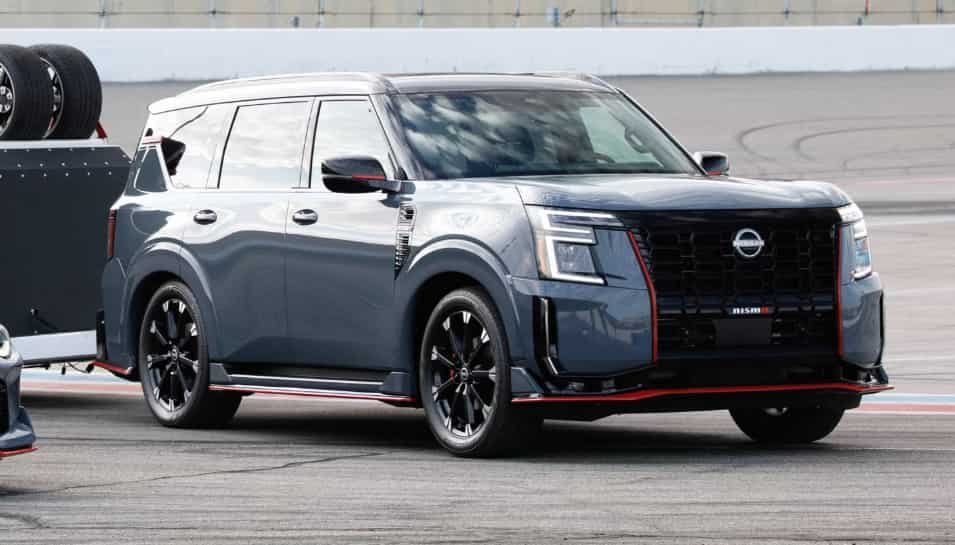
The topic of Nissan Armada Gas Mileage: Real World MPG, City vs Highway Fuel Economy Explained matters a lot for drivers who are considering a full size SUV. The Nissan Armada stands out for its strong V8 power, large cabin space, and towing ability. These strengths also affect how much fuel the vehicle consumes in everyday driving.
Many people search for Nissan Armada Gas Mileage because they want to know the real fuel cost before buying. Official numbers can look acceptable on paper, but real driving often tells a different story. City traffic, highway speed, and driving habits all change the actual MPG results.
In city driving, fuel use increases because of stop and go traffic and frequent braking. On highways, the SUV performs more efficiently because the engine runs at a steady speed. This gap between city and highway fuel economy is important for anyone planning long term ownership.
This guide explains Nissan Armada Gas Mileage in real conditions. It breaks down city MPG, highway MPG, and the main factors that affect fuel efficiency. You will also see why real world results often differ from official ratings.
By the end, you will have a clear understanding of what to expect from Nissan Armada Gas Mileage in daily use. This helps you decide if the SUV matches your needs, budget, and driving style.
Nissan Armada City Gas Mileage: Stop-and-Go Fuel Efficiency Explained
City driving has the biggest impact on Nissan Armada Gas Mileage. The Nissan Armada uses more fuel in urban conditions because it must deal with frequent stops, low-speed traffic, and constant acceleration. These conditions reduce efficiency even when the engine performs normally.
In real city use, the Armada often delivers lower MPG compared to its highway performance. This happens because the engine works harder during acceleration from a full stop. Heavy traffic also forces the engine to idle more often, which increases fuel consumption without moving the vehicle forward. Over time, this creates a noticeable drop in overall fuel economy.
Another key factor is vehicle weight. The Armada is a large SUV, so it requires more energy to move at low speeds. Short trips make this effect even stronger because the engine does not reach its most efficient operating temperature. As a result, frequent city driving can significantly increase fuel cost for owners.
Driving behavior also plays an important role in Nissan Armada Gas Mileage within the city. Quick acceleration and hard braking reduce efficiency quickly. Smooth driving helps improve fuel usage, but the improvement is still limited by traffic conditions. Even careful drivers will notice that city MPG remains lower than highway MPG in most cases.
Traffic density is another important factor. In heavily congested cities, the SUV spends more time idling than moving. This leads to higher fuel consumption per mile. In lighter traffic conditions, the MPG improves slightly, but it still stays below highway performance.
Overall, city Nissan Armada Gas Mileage reflects the natural trade off of a full size SUV designed for power and space. While it is not focused on fuel savings in urban driving, it remains consistent and predictable for its vehicle class.
Nissan Armada Highway Gas Mileage: Long Distance Fuel Performance
Highway driving gives the best view of Nissan Armada Gas Mileage in stable conditions. The Nissan Armada performs more efficiently on open roads because the engine can maintain a steady speed without frequent stops or sudden acceleration. This helps improve overall fuel economy compared to city driving.
At highway speeds, the engine operates in a more consistent range. This reduces fuel waste caused by repeated braking and acceleration. As a result, many drivers notice a clear improvement in MPG when they switch from urban roads to long distance travel. The difference can be significant, especially on smooth highways with light traffic.
Aerodynamics also plays a role in Nissan Armada Gas Mileage on highways. The vehicle has a large and heavy body, which creates more air resistance at higher speeds. However, steady cruising helps minimize sudden load changes on the engine. This allows the SUV to maintain a more stable fuel consumption pattern during long trips.
Another factor is driving speed. Fuel efficiency is usually better at moderate speeds compared to very high speeds. When the vehicle travels too fast, air resistance increases and fuel consumption rises. Keeping a steady and reasonable speed helps achieve better highway MPG results.
Load weight also affects highway performance. A fully loaded vehicle or towing setup will reduce fuel efficiency even on highways. However, the impact is less severe than in city driving because the engine runs more efficiently at constant speeds. This is why many owners prefer using the Armada for long road trips despite its fuel consumption.
Overall, highway Nissan Armada Gas Mileage shows the strength of consistent driving conditions. While it still reflects the characteristics of a full size SUV, it delivers better efficiency compared to stop and go city environments.
Real World Nissan Armada Gas Mileage vs EPA Ratings
Understanding the gap between official ratings and real driving results is essential when evaluating Nissan Armada Gas Mileage. The Nissan Armada is tested under controlled conditions to produce EPA fuel economy figures. These numbers provide a standardized reference, but they do not always match daily driving experiences.
EPA ratings are measured in ideal environments. The tests use consistent speeds, controlled temperatures, and light vehicle loads. These conditions are designed for comparison across different vehicles. However, real roads rarely match this controlled setup, which is why drivers often notice different fuel economy results in practice.
In real world driving, Nissan Armada Gas Mileage is influenced by traffic, weather, terrain, and driving style. City congestion increases fuel use, while highway driving improves efficiency. Hills, strong winds, and heavy cargo can also reduce MPG compared to official ratings. These factors explain why real fuel economy is often lower than EPA estimates.
Driving habits are another major reason for the difference. Rapid acceleration, frequent braking, and high speed driving increase fuel consumption. Even small changes in behavior can lead to noticeable differences in MPG. Smooth and steady driving helps bring real results closer to official numbers, but it rarely matches them exactly.
Vehicle condition also plays a role. Tire pressure, engine maintenance, and fuel quality all affect efficiency. A well maintained SUV will perform closer to its expected range, while poor maintenance can increase fuel consumption significantly.
Overall, EPA ratings for Nissan Armada Gas Mileage should be viewed as a benchmark rather than a guaranteed outcome. They help compare vehicles, but real world performance depends on many changing conditions. This is why understanding both sets of data is important before making a purchase decision.
Key Factors That Affect Nissan Armada Gas Mileage
Nissan Armada Gas Mileage is not determined by a single element. It depends on multiple factors that work together during real driving. The Nissan Armada is a large full size SUV, so small changes in driving conditions can create noticeable differences in fuel economy.
One of the most important factors is engine performance. The Armada uses a powerful V8 engine designed for strength and towing capability. This type of engine consumes more fuel compared to smaller engines because it produces higher output. When the engine works harder, fuel consumption naturally increases, especially during acceleration or when carrying heavy loads.
Vehicle weight is another major influence on Nissan Armada Gas Mileage. A heavier SUV requires more energy to move, especially in city driving or during uphill travel. When the vehicle is fully loaded with passengers or cargo, fuel efficiency decreases even further. This is a normal characteristic of full size SUVs and not a mechanical issue.
Driving behavior also has a direct impact. Smooth acceleration and steady speed help improve fuel efficiency. On the other hand, aggressive driving with frequent braking increases fuel usage quickly. Even small habits like speeding or rapid lane changes can reduce MPG over time.
Road conditions and environment also matter. Driving in hilly areas requires more engine power, which increases fuel consumption. Strong headwinds or rough roads can also lower efficiency. In contrast, flat highways with stable weather conditions help the vehicle achieve better MPG.
Maintenance plays an important role as well. Proper tire pressure, clean air filters, and regular servicing help the engine run more efficiently. Poor maintenance can reduce performance and increase fuel consumption without any visible warning at first.
Overall, Nissan Armada Gas Mileage depends on a combination of mechanical design, driving habits, and external conditions. Understanding these factors helps drivers set realistic expectations and manage fuel costs more effectively.
Nissan Armada Gas Mileage Compared to Other Full-Size SUVs
When evaluating Nissan Armada Gas Mileage, it is important to compare it with other vehicles in the same segment. The Nissan Armada belongs to the full size SUV category, where fuel efficiency is generally lower due to larger engines, heavier bodies, and higher performance demands.
Compared to competitors like the Toyota Sequoia and Chevrolet Tahoe, the Armada shows similar fuel economy patterns. All of these SUVs prioritize power, towing capability, and passenger space over fuel savings. As a result, their MPG ratings tend to stay within a close range rather than showing large differences.
In real world driving, Nissan Armada Gas Mileage often feels slightly lower in city conditions compared to some rivals, mainly because of its V8 engine setup and vehicle weight. However, highway performance remains relatively consistent within the segment. This makes the Armada competitive when it comes to long distance driving efficiency.
One key point is that buyers in this segment do not usually choose vehicles based on fuel economy alone. Instead, they focus on comfort, interior space, towing capacity, and reliability. In this context, the Armada remains a strong option even if its fuel consumption is not the lowest.
Another important factor is how different SUVs handle load and towing. When fully loaded or used for towing, all full size SUVs experience a drop in fuel efficiency. The difference between models becomes less noticeable because performance demands dominate fuel usage.
Overall, Nissan Armada Gas Mileage is comparable to its main competitors in the full size SUV category. While it is not designed to lead in fuel efficiency, it remains consistent and predictable within its class. This balance between power and practicality is what defines its position in the market.
How to Improve Nissan Armada Gas Mileage in Daily Driving
Improving Nissan Armada Gas Mileage is possible even though the Nissan Armada is designed for power and size rather than maximum fuel efficiency. Small changes in driving habits and maintenance can create noticeable improvements over time, especially for drivers who use the vehicle daily in both city and highway conditions.
One of the most effective ways to improve fuel economy is to adopt smooth driving behavior. Gradual acceleration helps the engine operate more efficiently and reduces unnecessary fuel burn. Avoiding hard braking also plays an important role because sudden stops waste energy that could have been used more efficiently.
Maintaining a steady speed on highways is another key factor. Constant speed driving allows the engine to work in a stable range, which improves Nissan Armada Gas Mileage compared to frequent speed changes. Using cruise control on long trips can help maintain this consistency and reduce fuel waste.
Proper vehicle maintenance also has a direct impact on fuel efficiency. Keeping tires properly inflated reduces rolling resistance and helps the SUV move more easily. Regular oil changes and clean air filters allow the engine to perform efficiently without extra strain. These small maintenance steps can help improve overall MPG performance.
Reducing unnecessary weight inside the vehicle can also make a difference. Carrying heavy items in the trunk or cargo area forces the engine to work harder. Removing unused items helps reduce load and improves fuel economy slightly, especially in city driving conditions.
Route planning is another practical method. Avoiding heavy traffic and choosing smoother routes can reduce stop and go driving. Less idling and fewer stops lead to better fuel consumption over time.
Overall, improving Nissan Armada Gas Mileage is about combining smart driving habits with proper maintenance. While it will never match smaller SUVs in fuel efficiency, these strategies help optimize performance and reduce fuel costs in everyday use.
Is Nissan Armada Gas Mileage Worth It for Buyers
Deciding whether Nissan Armada Gas Mileage is worth it depends on how you plan to use the vehicle. The Nissan Armada is not designed to be a fuel saving SUV. Instead, it focuses on space, strength, comfort, and towing capability. This means fuel economy should be evaluated in context, not in isolation.
For families who need a large vehicle with three rows of seating, the Armada offers strong value despite its fuel consumption. It provides comfort for long trips, stability on highways, and enough power for heavy loads. In this case, fuel cost becomes part of the overall ownership experience rather than a deciding factor.
For drivers who mainly use the SUV in city traffic, Nissan Armada Gas Mileage can feel expensive over time. Frequent stop and go driving increases fuel usage, which may lead to higher monthly costs. Buyers in this category may need to carefully consider whether they truly need a full size SUV or if a smaller vehicle would be more efficient.
For highway users and road trip drivers, the Armada becomes more reasonable. Steady driving conditions improve fuel efficiency and make long distance travel more manageable. In this scenario, the balance between comfort and fuel economy feels more acceptable.
Another important point is towing and utility use. Many buyers choose the Armada for its ability to handle trailers, boats, or heavy cargo. In these situations, fuel economy naturally decreases, but the performance benefit often outweighs the cost of extra fuel.
Overall, Nissan Armada Gas Mileage is worth it for buyers who prioritize capability over efficiency. It is not the most economical option, but it delivers strong value in performance driven use cases where space, power, and reliability matter more than fuel savings.
Conclusion
Understanding Nissan Armada Gas Mileage requires looking beyond official numbers and focusing on real driving conditions. The Nissan Armada delivers fuel economy that reflects its role as a full size SUV built for power, space, and versatility rather than maximum efficiency.
In city driving, fuel consumption is higher due to traffic, frequent stops, and short trips. On highways, the SUV performs better because of steady speeds and more stable engine operation. This clear difference between city and highway MPG is one of the most important insights for potential buyers.
Real world results often vary from EPA ratings because driving habits, road conditions, and vehicle load all influence fuel usage. This is normal for large SUVs, especially those with powerful engines designed for towing and heavy-duty performance.
Despite its fuel consumption, the Armada remains a strong choice for drivers who need comfort, space, and capability. It is especially suitable for families, long distance travelers, and users who require towing strength. For these groups, fuel cost becomes a manageable trade off rather than a disadvantage.
Ultimately, Nissan Armada Gas Mileage should be viewed in the context of its purpose. It is not built to lead in fuel efficiency, but to deliver reliable performance in demanding situations. When evaluated with the right expectations, it offers a balanced ownership experience that many drivers still find valuable.