The Nissan CVT transmission fluid change interval varies by model, model year, driving conditions, and maintenance schedule. Nissan does not use one universal change interval for every CVT equipped vehicle. You may see 30,000 or 60,000 miles mentioned as common service points. However, you should check the maintenance schedule for your specific Nissan before choosing an interval.
CVT fluid performs several essential functions inside the transmission. It lubricates internal components and helps control heat. It also supports hydraulic operation and maintains the friction properties that a CVT needs to work properly. Heat and mechanical stress gradually reduce these protective properties. Severe driving conditions can accelerate this process and increase the need for fluid inspection or earlier service.
Start by identifying your Nissan model, model year, and transmission type. Next, check the applicable maintenance schedule and confirm the required CVT fluid specification. You should also review previous service records and consider how you drive the vehicle. These factors provide a more reliable service interval than a generic mileage rule. This guide explains when to change Nissan CVT fluid, what affects its service life, and how proper maintenance helps protect the transmission.
What Is the Recommended Nissan CVT Transmission Fluid Change Interval?
The recommended Nissan CVT transmission fluid change interval depends on the specific model, model year, maintenance schedule, and driving conditions. Nissan does not set one replacement mileage that applies to every CVT vehicle. Therefore, owners should check the maintenance information for their exact vehicle before scheduling a fluid change.
You may see 30,000 and 60,000 miles used as common reference points for CVT fluid service. However, these figures do not create a universal Nissan replacement rule. Some maintenance schedules focus on checking CVT fluid deterioration or inspecting the transmission at specific intervals. Driving conditions can also change when the fluid needs attention.
CVT fluid loses some of its protective qualities as mileage and operating stress increase. Heat places additional stress on the fluid. Frequent traffic, demanding driving, and sustained loads can also increase transmission temperatures. As a result, two Nissan vehicles with the same mileage may not have the same fluid condition.
Use your vehicle specific maintenance schedule as the primary reference. Then consider mileage, driving conditions, maintenance history, and fluid condition when appropriate. This approach gives you a more accurate interval than following a generic mileage figure. It also reduces the risk of changing the fluid too late or performing unnecessary service too early.
Why Does the Nissan CVT Fluid Change Interval Vary by Model and Model Year?
The Nissan CVT fluid change interval varies because different models and model years can use different transmissions, fluid specifications, and maintenance requirements. A service recommendation for one Nissan should not automatically apply to another.
Nissan has used CVTs across vehicles such as the Altima, Rogue, Sentra, Murano, Maxima, Versa, and some Pathfinder generations. However, the presence of a CVT does not make their maintenance requirements identical. Vehicle weight, transmission design, engine configuration, and intended use can affect operating demands. Nissan can also revise transmission specifications across model years.
Fluid requirements provide another important distinction. Nissan vehicles may specify fluids such as Nissan NS 2 or Nissan NS 3. Owners should use the specification that Nissan lists for their exact transmission. Choosing a fluid based only on the vehicle brand can lead to the wrong maintenance decision.
Start with the model and model year before choosing a service interval. Next, identify the transmission and required fluid specification. Finally, compare this information with the applicable maintenance schedule and your driving conditions. This process prevents a common mistake: applying one Nissan CVT maintenance rule to every model and generation.
Should Nissan CVT Fluid Be Changed Every 30,000 or 60,000 Miles?
You should not treat either 30,000 or 60,000 miles as a universal Nissan CVT fluid change interval. The correct mileage depends on your Nissan model, model year, maintenance schedule, and operating conditions. Use these mileage figures as reference points unless Nissan specifies them for your vehicle.
A 30,000 mile service point may make sense when the vehicle faces demanding operating conditions. Frequent heavy traffic can place more heat and stress on the transmission. High temperatures, repeated short trips, steep roads, and sustained loads can also increase operating demands. These conditions can shorten the useful life of CVT fluid.
The 60,000 mile figure also appears in discussions about preventive CVT maintenance. However, reaching 60,000 miles does not automatically mean every Nissan needs the same service. The applicable maintenance schedule should guide the decision. Fluid condition and previous maintenance also provide useful context.
Use a clear order when deciding when to change the fluid. First, check the maintenance schedule for your exact model and model year. Second, consider how you use the vehicle. Third, review its CVT service history. Finally, follow any applicable fluid inspection or deterioration guidance. This method gives you a stronger maintenance decision than choosing 30,000 or 60,000 miles without considering the vehicle.
How Do Severe Driving Conditions Affect Nissan CVT Fluid Change Intervals?
Severe driving conditions can increase stress on Nissan CVT fluid and justify closer monitoring or earlier service. The transmission produces heat while it operates. Demanding conditions can increase that heat and place additional stress on the fluid.
Stop and go traffic is one example. The transmission repeatedly adjusts as the vehicle slows and accelerates. High ambient temperatures can add more thermal stress. Steep terrain and sustained heavy loads can also make the CVT work harder. Towing can increase the load as well when Nissan approves the vehicle for that use.
Heat matters because CVT fluid performs several jobs. The fluid lubricates internal components, manages heat, and supports hydraulic operation. It also provides the friction characteristics required for proper transmission performance. Continued thermal and mechanical stress can reduce these properties over time.
Driving history therefore matters alongside mileage. A Nissan that regularly faces demanding conditions may place more stress on its CVT fluid. Another Nissan with the same mileage may experience less demanding use. For this reason, owners should combine the vehicle specific maintenance schedule with actual operating conditions. Mileage alone does not describe how hard the transmission and its fluid have worked.
How Can You Tell When Nissan CVT Fluid Needs to Be Changed?
Your Nissan CVT fluid may need attention when the maintenance schedule calls for service or the transmission shows changes in operation. Mileage provides one indicator, but it should not stand alone. Driving conditions, service history, and fluid condition also help determine when maintenance makes sense.
Changes in transmission behavior deserve attention. The vehicle may hesitate, shudder, make unusual noises, or behave differently during acceleration. Excessive transmission heat can also signal a problem. These symptoms do not prove that old CVT fluid caused the issue. Several mechanical or electronic faults can produce similar symptoms.
Do not wait for noticeable symptoms before considering CVT maintenance. Fluid protects transmission components throughout normal operation. Heat and mechanical stress gradually affect its condition. Preventive maintenance addresses the fluid before poor transmission behavior becomes the reason for a service visit.
Service history becomes especially important with a used Nissan. Check previous records to see when the owner last serviced the CVT. Compare that information with the current mileage and maintenance schedule. You should also consider how the vehicle has operated. If the history remains unknown, a qualified inspection can help establish the transmission’s current condition. This approach provides more useful information than relying on mileage or symptoms alone.
Which CVT Fluid Should You Use in a Nissan?
Use the CVT fluid specification that Nissan requires for your exact model, model year, and transmission. Nissan has specified fluids such as NS 2 and NS 3 for different CVT applications. These fluids should not be treated as interchangeable simply because both serve Nissan CVT systems.
CVT fluid must perform several jobs under demanding conditions. It lubricates internal components and transfers heat away from critical areas. The fluid also supports hydraulic control. In addition, its friction characteristics help the transmission operate as designed. The wrong fluid can change these characteristics and affect CVT performance.
Do not choose CVT fluid by color alone. A generic compatibility statement also provides less certainty than the specification for the exact vehicle. Instead, check the owner’s manual or applicable Nissan service information. Confirm the transmission type before buying or adding fluid.
Correct fluid selection matters during every CVT service. Even an appropriate change interval cannot compensate for an incorrect fluid specification. Confirm whether the transmission requires NS 2, NS 3, or another specified fluid before service begins. Matching the fluid to the transmission protects the intended operating characteristics and keeps the maintenance process consistent with Nissan’s requirements.
Should You Drain and Fill or Flush a Nissan CVT Transmission?
A drain and fill is generally the more straightforward way to replace Nissan CVT fluid, but you should follow the service procedure for your exact transmission. A CVT requires the correct fluid type, fluid quantity, and level setting procedure. For this reason, owners should not treat every transmission fluid service as the same procedure.
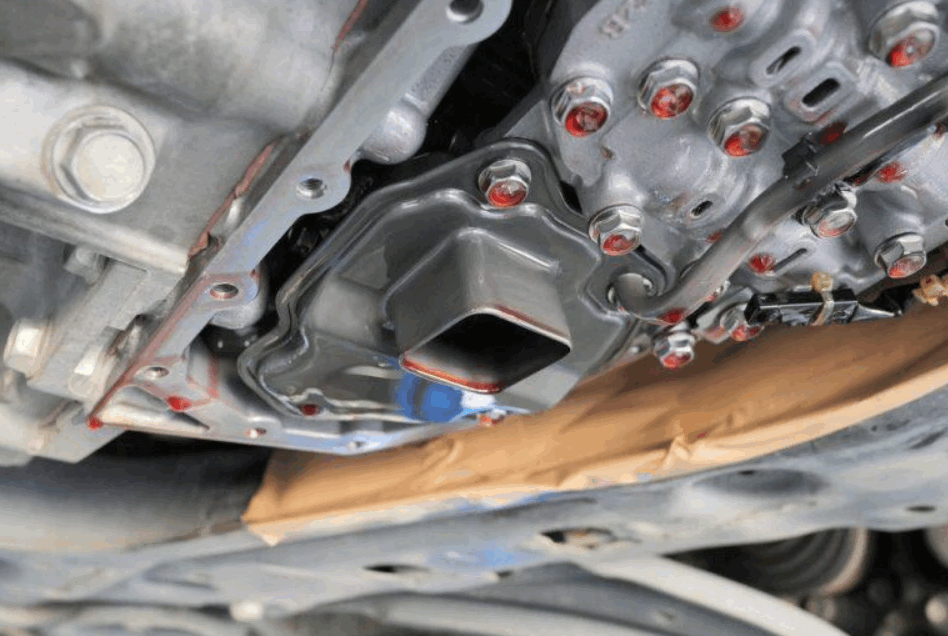
A drain and fill removes fluid through the transmission drain point. The technician then adds the correct amount of specified CVT fluid. This process may not remove every drop of old fluid from the transmission. Some fluid can remain inside internal passages and components. However, the procedure replaces a portion of the used fluid without relying on a forced exchange process.
A transmission flush uses equipment to exchange fluid through the system. This method differs from a conventional drain and fill. Owners should not assume that a flush provides better maintenance simply because it replaces more fluid. The correct choice depends on the transmission design and Nissan’s applicable service information.
Fluid level also requires careful attention during CVT service. Too little fluid can interfere with lubrication and hydraulic operation. Too much fluid can also create operating problems. Some procedures require technicians to check fluid under specific temperature conditions. Therefore, accurate servicing involves more than draining old fluid and adding new fluid.
Before choosing either method, identify the exact Nissan model, model year, and CVT. Then confirm the required fluid and service procedure. Following the correct Nissan CVT service procedure matters more than choosing a fluid exchange method based on a general transmission maintenance rule.
What Happens If You Do Not Change Nissan CVT Fluid?
Old Nissan CVT fluid can lose the properties that help lubricate, cool, and control the transmission. Continued heat and mechanical stress gradually affect the fluid. Delaying necessary maintenance can therefore reduce the protection that the fluid provides to internal CVT components.
Lubrication represents one important function. CVT components operate under continuous mechanical loads and need proper lubrication to limit friction and wear. The fluid also helps move heat away from critical areas. As the fluid ages, it may become less effective at performing these jobs under demanding conditions.
CVT fluid also supports hydraulic operation and specific friction characteristics. These properties help the transmission respond correctly during acceleration and changes in driving load. Poor fluid condition can affect transmission operation. However, old fluid does not cause every CVT problem. Mechanical damage, electronic faults, overheating, and other issues can produce similar symptoms.
A fluid change also cannot repair damaged internal components. Once a CVT develops a mechanical failure, replacing the fluid may not restore normal operation. This distinction makes preventive maintenance important. Follow the appropriate maintenance schedule and consider the vehicle’s operating conditions before serious symptoms appear. Proper fluid maintenance helps protect the CVT, but it does not guarantee that the transmission will never develop a fault.
How Much Does a Nissan CVT Fluid Change Cost?
The cost of a Nissan CVT fluid change depends on the model, fluid specification, fluid quantity, labor rate, and service procedure. For this reason, one price cannot accurately represent every Nissan CVT service. Local labor rates can also create substantial differences between repair facilities.
CVT fluid accounts for part of the service cost. Different Nissan transmissions may require different quantities and specifications. A vehicle that requires Nissan NS 3 fluid may therefore have different material costs from another CVT application. The shop must also use enough of the correct fluid to complete the specified procedure.
Labor adds another variable. A basic drain and fill may require less work than a service that includes additional inspection or diagnostic procedures. Some CVTs also require careful fluid level checks under defined operating conditions. These requirements can affect the amount of labor involved.
Ask what the quoted service includes before comparing prices. Confirm the fluid specification, quantity, service method, and labor included in each estimate. A low price provides little value if the service uses an unsuitable fluid or incorrect procedure. You should also separate routine fluid maintenance from CVT repair costs. A fluid change maintains the transmission, while internal repair or complete CVT replacement involves a different level of work and expense.
How Should You Determine the Right CVT Fluid Change Interval for Your Nissan?
Determine the right Nissan CVT fluid change interval by checking your vehicle specifications, maintenance schedule, driving conditions, and service history. Do not start with a generic mileage number. Start with information that applies to your exact vehicle.
First, identify the Nissan model and model year. Next, confirm the transmission type and required CVT fluid specification. Nissan has used different CVT systems across its vehicle range. Fluid requirements can also differ between applications. These details help prevent you from applying the maintenance requirements of another Nissan to your vehicle.
Next, check the applicable maintenance schedule. Look for instructions about CVT fluid inspection, deterioration, or replacement. Then compare those requirements with your driving conditions. Heavy traffic, high temperatures, steep terrain, and sustained loads can place additional stress on the transmission and its fluid.
Service history provides the final piece of the maintenance picture. Check when the CVT last received fluid service and what fluid the technician used. An incomplete history creates more uncertainty, especially on a used Nissan. In that situation, professional inspection can help you assess the transmission before choosing a maintenance strategy.
Do not use 30,000 or 60,000 miles as an automatic replacement rule for every Nissan. Use the vehicle specific maintenance information first. Then account for operating conditions and previous service. This method creates a more reliable CVT maintenance plan and keeps the decision connected to the requirements of your Nissan.
Conclusion
The right Nissan CVT transmission fluid change interval depends on your specific vehicle rather than one universal mileage rule. Your Nissan model, model year, maintenance schedule, driving conditions, and service history all affect the maintenance decision.
Mileage figures such as 30,000 and 60,000 miles can provide useful reference points. However, they should not replace the maintenance information for your vehicle. A Nissan that operates under demanding conditions may place greater stress on its CVT fluid. Another vehicle with the same mileage may experience less severe use.
Start by confirming your model, model year, transmission type, and required CVT fluid. Then check the applicable maintenance schedule and review previous service records. Consider your driving conditions before deciding when to perform the next fluid service.
Regular CVT maintenance helps the fluid protect internal components, control heat, and support proper transmission operation. It cannot repair existing mechanical damage. For that reason, preventive maintenance works best before serious CVT symptoms develop. Following vehicle specific requirements provides a stronger maintenance strategy than relying on a generic mileage interval alone.