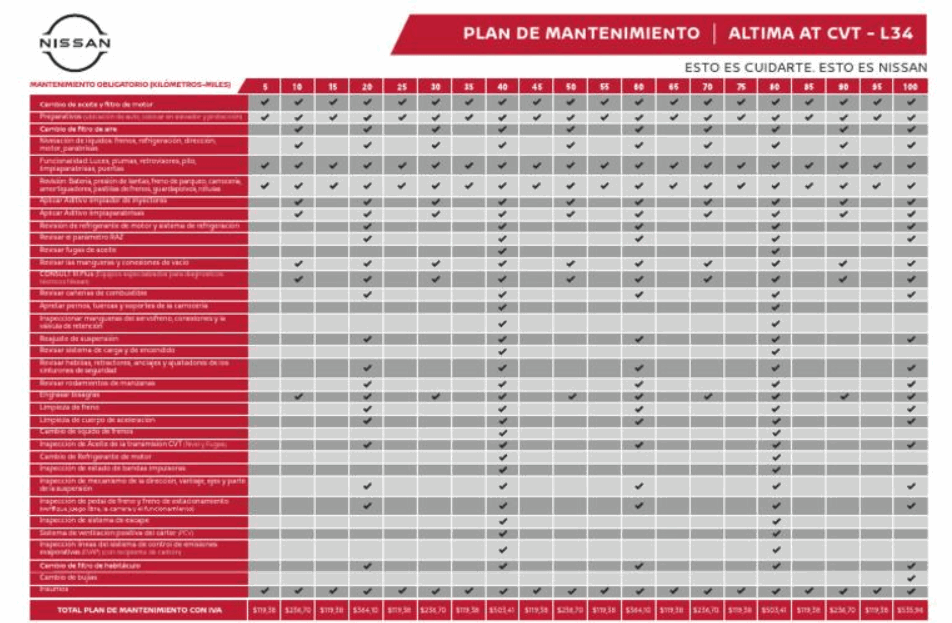
The Nissan CVT fluid change mileage depends on the vehicle, transmission, driving conditions, and maintenance history. There is no single interval that applies to every Nissan. Owners should first check the maintenance information for their specific model. They should also consider earlier fluid inspection under demanding driving conditions.
CVT fluid performs several important functions inside a continuously variable transmission. It lubricates moving parts and helps control transmission heat. It also provides the friction properties required for proper CVT operation. However, heat and mechanical stress can degrade the fluid over time. Severe operating conditions may accelerate this process.
For this reason, mileage should not be the only factor when planning CVT maintenance. A fixed 30,000, 60,000, or 90,000 mile interval may not suit every vehicle. The correct interval depends on the Nissan model and its maintenance requirements. Driving conditions, fluid condition, and previous service history also matter.
This guide explains when Nissan CVT fluid should be changed. It also covers earlier service, warning signs, and proper maintenance methods. These factors can help you choose a suitable service interval for your Nissan.
What Is the Recommended Nissan CVT Fluid Change Mileage?
The recommended Nissan CVT fluid change mileage is not the same for every Nissan vehicle. The correct interval depends on the model, model year, transmission, and maintenance schedule. For this reason, owners should check the maintenance guide for their specific vehicle before replacing the fluid.
Mileage recommendations also need to distinguish between fluid inspection and fluid replacement. An inspection determines whether the CVT fluid still meets the required condition. A replacement removes used fluid and adds the correct new fluid. These services do not always occur at the same mileage.
Driving conditions can also change when CVT fluid needs attention. Heat and transmission load place additional stress on the fluid. This makes operating conditions important when choosing a service interval. A vehicle used under demanding conditions may need fluid inspection sooner than one used under lighter conditions.
A 30,000 or 60,000 mile interval should therefore not be treated as a universal Nissan rule. The same mileage can represent different levels of transmission use. Vehicle age and previous CVT maintenance also affect the decision. This becomes especially important when the service history is incomplete.
The safest approach is to combine mileage with vehicle specific maintenance information. Owners should also consider driving conditions and previous fluid service. This provides a more accurate Nissan CVT maintenance plan than relying on one mileage number for every model.
Why Does Nissan CVT Fluid Change Mileage Vary by Vehicle and Driving Conditions?
Nissan CVT fluid change mileage varies because each vehicle can place a different level of stress on its transmission fluid. Mileage records distance, but it does not measure heat, transmission load, or driving intensity. These factors affect how quickly CVT fluid deteriorates.
Transmission temperature is an important factor. CVT fluid helps lubricate internal parts and control heat during operation. Higher operating temperatures place more stress on the fluid. Repeated exposure to demanding conditions can therefore affect fluid condition before a vehicle reaches a commonly suggested service mileage.
Driving patterns also influence CVT operation. Frequent stop and go traffic requires repeated changes in vehicle speed. Mountain driving can place additional load on the transmission. Towing and carrying heavy loads can increase operating stress as well. These conditions make mileage alone less useful for judging fluid condition.
Vehicle specifications create another difference. Nissan models can use different CVT designs and fluid specifications. Their maintenance requirements may also vary by model year. Owners should therefore avoid applying the service interval from one Nissan model to another without checking vehicle specific information.
Maintenance history provides the final piece of the decision. A Nissan with documented CVT service has a known maintenance baseline. A used vehicle with no service records creates more uncertainty. In that situation, owners should verify the required maintenance schedule and fluid specification before deciding when service is appropriate.
Should You Change Nissan CVT Fluid Every 30,000 Miles?
You should not treat a 30,000 mile Nissan CVT fluid change as a universal requirement for every model. This mileage can serve as a conservative service point in certain situations. However, the correct decision should follow the maintenance information for your specific Nissan.
Driving conditions are one reason an earlier service may deserve consideration. Frequent stop and go traffic can place repeated demands on the transmission. Towing and mountain driving can also increase transmission load. High operating temperatures add further stress to the fluid. These conditions can make earlier inspection more relevant.
Service history is equally important. Consider a used Nissan with 60,000 miles and complete CVT maintenance records. Its maintenance needs are easier to evaluate because previous service is documented. A similar vehicle with no records creates more uncertainty. Mileage alone cannot show whether its CVT fluid was previously inspected or replaced.
Changing the fluid every 30,000 miles should therefore be a vehicle specific maintenance decision. It should not be based only on a mileage figure found online. Check the maintenance schedule for the exact model and model year. Then compare that information with the vehicle’s driving conditions and service history.
This approach keeps preventive maintenance tied to the actual vehicle. It also avoids treating 30,000 miles as a fixed rule for all Nissan CVTs. When the maintenance history is unknown, confirm the correct fluid specification and service requirements before proceeding.
What Are the Signs That Nissan CVT Fluid Needs to Be Changed?
Signs that Nissan CVT fluid needs attention can include shuddering, hesitation, unusual noise, overheating symptoms, and changes in transmission response. However, these symptoms do not prove that old CVT fluid is the cause. They indicate that the transmission should be inspected.
Shuddering may appear during acceleration or at certain vehicle speeds. Hesitation can occur when the driver presses the accelerator and the vehicle responds more slowly than expected. Changes in transmission behavior may also become noticeable as the vehicle warms up. These symptoms require diagnosis because several CVT problems can produce similar effects.
Unusual noise is another reason to investigate the transmission. Whining or other new transmission related sounds should not automatically be blamed on the fluid. Internal wear, fluid level problems, or other faults may create similar symptoms. Identifying the actual cause is more important than replacing fluid based on a symptom alone.
Heat related symptoms also deserve attention. CVT fluid helps manage heat while lubricating internal transmission components. Fluid that has deteriorated may not perform these functions as effectively. However, overheating can also result from mechanical or cooling system problems.
Owners should therefore combine symptoms with mileage, maintenance history, and vehicle specific service information. A CVT inspection can determine whether fluid service is appropriate or further diagnosis is required. This prevents routine fluid replacement from being mistaken for a repair for an existing transmission fault.
What Happens If You Wait Too Long to Change Nissan CVT Fluid?
Waiting too long to change Nissan CVT fluid can reduce the fluid’s ability to lubricate, control heat, and support proper transmission operation. CVT fluid works under heat and mechanical stress whenever the vehicle is driven. Its condition can decline as mileage and operating time increase.
Lubrication is one of the fluid’s main functions. Internal CVT components depend on the correct fluid to reduce friction and wear. As fluid condition declines, it may provide less effective protection. Contaminants produced during normal transmission operation can also affect fluid condition over time.
Heat management is another important function. The transmission generates heat while transferring power to the wheels. CVT fluid absorbs and transfers part of this heat during operation. Repeated exposure to high temperatures places additional stress on the fluid. Demanding driving conditions can increase this thermal load.
CVT fluid also needs the correct friction properties for the transmission design. Fluid deterioration can affect these properties and change transmission behavior. However, replacing old fluid cannot repair worn or damaged internal components. Fluid service is preventive maintenance rather than a guaranteed solution for an existing CVT problem.
Owners should not wait for transmission symptoms before checking maintenance requirements. The better approach is to follow the vehicle specific schedule and consider operating conditions. Mileage, service history, and fluid condition should guide the maintenance decision. This helps protect CVT operation without assuming that fluid replacement can correct every transmission fault.
Should You Drain and Fill or Flush a Nissan CVT?
A drain and fill is different from a transmission flush, so Nissan owners should follow the service procedure specified for their CVT. The correct method depends on the vehicle, transmission design, fluid condition, and maintenance history. These two procedures should not be treated as interchangeable.
A drain and fill removes fluid through the transmission drain point. New CVT fluid is then added according to the required service procedure. Some old fluid can remain inside the transmission after this service. The exact amount depends on the transmission and how the procedure is performed.
A flush uses a different process to exchange a larger portion of the transmission fluid. The equipment and procedure can vary between service providers. For this reason, owners should not request a flush simply because it appears to replace more fluid. The approved procedure for the specific Nissan CVT should guide the decision.
Maintenance history becomes especially important on a high mileage Nissan. A vehicle with regular CVT service has a clearer maintenance record. An older vehicle with unknown service history requires more careful evaluation. Existing transmission symptoms should also be diagnosed before assuming that a fluid service will correct them.
Before servicing the CVT, confirm the required procedure for the exact Nissan model and model year. The correct fluid specification must also be verified. Following vehicle specific requirements provides a better maintenance approach than choosing between a drain and fill or flush based on mileage alone.
Which CVT Fluid Should You Use in a Nissan?
You should use the CVT fluid specification required for your specific Nissan model, model year, and transmission. Nissan vehicles do not all use the same CVT fluid. Owners should verify the required specification before adding or replacing any fluid.
Nissan NS 2 and Nissan NS 3 are two CVT fluid specifications associated with Nissan vehicles. However, they should not be treated as interchangeable based on their names alone. The correct specification depends on the transmission installed in the vehicle. Check the owner’s information or applicable Nissan service information before choosing a fluid.
Using the correct specification matters because CVT fluid performs several functions. It lubricates internal components and helps manage transmission heat. The fluid also needs suitable friction properties for the transmission design. These requirements make fluid selection part of proper CVT maintenance.
Owners should also be careful when considering aftermarket CVT fluids. A product label may list compatibility with several vehicles or fluid specifications. That claim should not replace the requirements for the specific Nissan. Verify that the product meets the specification required by the vehicle before using it.
Fluid quantity and service procedure also need to match the transmission. Choosing the correct fluid is only one part of the service. The required fluid level and filling procedure must also be followed. Confirm these requirements before performing CVT maintenance, especially when the vehicle’s previous service history is unknown.
When Should You Change Your Nissan CVT Fluid?
You should change Nissan CVT fluid according to the maintenance requirements for your specific vehicle and its operating conditions. There is no single mileage that applies to every Nissan CVT. Model year, transmission type, driving conditions, and service history can all affect the maintenance decision.
Start by checking the maintenance information for your Nissan model. Then compare those requirements with how the vehicle is used. Frequent stop and go traffic, towing, mountain driving, and high transmission temperatures can place additional stress on CVT fluid. These conditions may justify closer attention to fluid condition and service requirements.
Previous maintenance also matters. A documented CVT service history provides a clearer basis for planning future maintenance. An unknown history creates more uncertainty, especially on a high mileage Nissan. In that situation, verify the correct fluid specification and service procedure before replacing the fluid.
Most importantly, treat CVT fluid replacement as preventive maintenance rather than a repair. Shuddering, hesitation, overheating, or unusual noises can indicate transmission problems that require diagnosis. Changing the fluid does not guarantee that an existing mechanical problem will disappear.
The best Nissan CVT fluid change mileage is therefore the interval that matches the specific vehicle, its maintenance requirements, and its operating history.