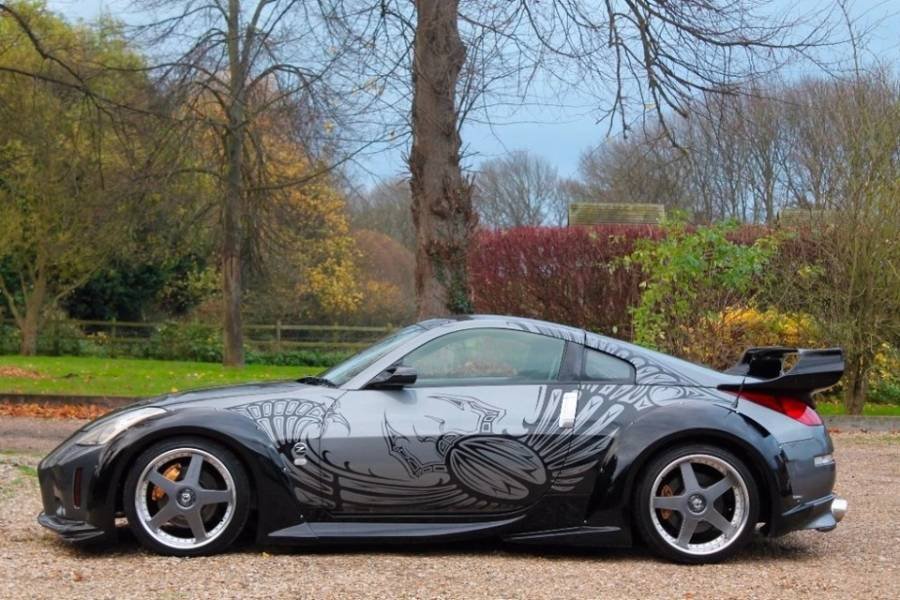
The Nissan 350Z years that require the most caution are 2003, 2004, and certain 2005–2006 models, but the reasons differ by model year and powertrain configuration. The 2003 model deserves particular attention because early-production cars accumulated complaints involving the manual transmission and premature front tire wear. The 2004 model carried over some of these concerns, while specific 2005–2006 configurations require closer inspection for engine oil consumption and related powertrain issues.
These problems do not make every 350Z from these years a bad purchase. A well-maintained example with documented repairs can present less ownership risk than a newer car with poor maintenance, heavy modifications, or an unknown service history. Engine type also matters because the 350Z used different versions of Nissan’s VQ35 engine during its production run, including the VQ35DE, VQ35DE RevUp, and later VQ35HR.
This guide explains the Nissan 350Z years to avoid, the most common problems associated with each model year, and the symptoms buyers should check before purchasing a used 350Z. It also compares the higher-risk years with later models and explains how mileage, maintenance history, modifications, and vehicle condition should influence the final buying decision.
What Nissan 350Z Years Should You Avoid?
The Nissan 350Z years that deserve the most caution are 2003, 2004, and certain 2005–2006 models. The 2003 model presents the clearest concentration of early-production concerns, particularly involving the manual transmission and front tire wear. The 2004 model shares some of these issues. For 2005 and 2006, the buying risk depends more heavily on engine configuration, especially when evaluating cars equipped with the VQ35DE RevUp engine.
The severity of these concerns differs by model year. A transmission that grinds during shifts represents a greater ownership risk than a worn window regulator because transmission repairs can affect both drivability and repair costs. Excessive oil consumption also deserves more attention than minor electrical faults because allowing the engine oil level to fall too low can compromise lubrication. For this reason, buyers should evaluate each year according to the type and severity of its known problems rather than simply counting the number of reported faults.
| Model year | Main concerns | Relative caution | Buying approach |
|---|---|---|---|
| 2003 | Manual transmission issues, front tire wear and early-production problems | Highest | Inspect carefully before buying |
| 2004 | Transmission concerns and alignment-related tire wear | High | Verify transmission and tire condition |
| 2005 | Engine concerns on specific configurations | Configuration-dependent | Identify the engine before buying |
| 2006 | RevUp oil-consumption and transmission concerns | Configuration-dependent | Check oil history and drivetrain carefully |
| 2007–2009 | Fewer early-production concerns, but age-related problems remain | Lower | Generally stronger candidates with proper maintenance |
A model year on this list should not automatically be rejected. The 350Z is now an older sports car, so maintenance history, previous repairs, mileage, modifications, accident history, and how the vehicle was driven can substantially change the risk of an individual example. A documented 2004 car with corrected alignment and a healthy transmission can be a better purchase than a neglected later model with extensive modifications and incomplete service records.
Why Is the 2003 Nissan 350Z a Year to Avoid?
The 2003 Nissan 350Z is the model year that requires the most caution because it combines first-year production with notable complaints involving the manual transmission and front tire wear. As the first model year of the Z33-generation 350Z, 2003 cars represent the earliest version of the platform available to consumers. Complaint datasets also place the 2003 model among the most problematic years of the 350Z production run, making its service history particularly important when evaluating one today.
Manual transmission problems are one of the more serious concerns. Owners have reported grinding during gear changes, a symptom associated with transmission and synchronizer problems. A synchronizer helps match the rotational speeds of transmission components before a gear engages. When the system does not operate correctly, shifts can become difficult or produce a grinding sound. Buyers evaluating a manual 2003 350Z should therefore test every gear during a pre-purchase drive rather than assuming that a transmission is healthy because the clutch engages normally.
Premature front tire wear is another documented concern on early 350Zs. Nissan issued a warranty extension covering 2003–2004 350Z models for a front-wheel alignment condition associated with abnormal front tire noise. Incorrect alignment can cause the tire tread to wear unevenly, creating feathering across the tread blocks. The result can include increased road noise and shortened tire life. A buyer should inspect both front tires for uneven wear because replacing the tires alone does not address an underlying alignment or suspension problem.
Age now adds another layer of risk to the 2003 model. These cars are more than two decades old, so an original production weakness can overlap with ordinary deterioration of suspension components, seals, bushings, electrical components, and other wear items. Modifications also matter because many 350Zs have been altered for performance, drifting, or appearance. A heavily modified car without records creates more uncertainty than a stock or carefully modified example with documented maintenance.
The 2003 350Z is therefore not an automatic “do not buy.” It is a higher-risk model year that requires stronger evidence of proper maintenance and repairs before purchase. A healthy transmission, even tire wear, documented servicing, appropriate fluid levels, and a professional pre-purchase inspection can distinguish a well-kept 2003 example from one likely to require expensive repairs.
What Problems Affect the 2004 Nissan 350Z?
The main problems to check on a 2004 Nissan 350Z are uneven front tire wear and manual transmission issues. The 2004 model carried over important characteristics of the first-year 350Z, so buyers should treat it as an early-production car rather than assuming that all initial problems disappeared after 2003. However, its risk profile does not justify automatically treating every 2004 example as a poor purchase.
Front tire wear is one of the better-documented concerns because Nissan extended warranty coverage for an alignment-related condition affecting 2003–2004 350Z models. The problem could produce abnormal tire noise associated with uneven wear across the front tires. When the alignment causes the tread blocks to wear unevenly, the tires can develop a feathered pattern that reduces their usable life and increases road noise. This means a set of recently installed tires does not necessarily prove that the underlying problem has been corrected.
Buyers should inspect the entire tread surface of both front tires rather than checking tread depth at only one point. Uneven wear between the inner and outer sections, feathered tread blocks, or noticeably different wear between the left and right tires can indicate an alignment or suspension issue. Service records showing previous alignment work provide additional context. If abnormal wear is present, the suspension and alignment should be inspected before calculating the cost of simply replacing the tires.
Manual transmission condition is another important consideration. Grinding during shifts is a warning sign because the gearbox depends on synchronizers to help gears engage smoothly as their rotational speeds change. A worn or damaged transmission component can therefore produce symptoms that are most obvious during actual gear changes. A pre-purchase test drive should include shifts through every gear under normal operating conditions, with attention to grinding, resistance, unusual noise, or difficulty engaging a gear.
A 2004 350Z with a smooth transmission, even tire wear, documented maintenance, and no evidence of neglected suspension problems can still be a reasonable purchase. The model year should trigger a more detailed inspection, not an automatic rejection. The condition of the individual car determines whether the known early-production concerns remain relevant to the buyer.
What Problems Affect the 2005 Nissan 350Z?
The 2005 Nissan 350Z requires a more configuration-specific evaluation because engine type becomes an important part of its reliability profile. Buyers should identify the exact trim and engine configuration before applying oil-consumption concerns to a particular car. Treating every 2005 350Z as mechanically identical can produce an inaccurate buying recommendation.
One important change was the introduction of a higher-output version of the VQ35 engine for specific configurations. This version is commonly known as the VQ35DE RevUp. The distinction matters because oil-consumption concerns associated with RevUp-equipped cars should not automatically be attributed to every 2005 350Z. A buyer should therefore verify the vehicle’s configuration using its VIN, specifications, and service documentation rather than relying only on the model year shown in an advertisement.
Oil consumption matters because an engine that repeatedly loses oil between services can eventually operate below its intended lubrication level. Engine oil creates a lubricating film between moving components while also helping control heat and contamination. When the level becomes too low, critical components receive less protection. The practical buying concern is therefore not simply the inconvenience of adding oil; it is whether the engine has previously been operated with insufficient oil.
Service history can reveal more than a single oil-level check. Buyers should look for documented oil changes, owner records, repair invoices, and evidence that the previous owner monitored oil levels between services. An engine showing a correct level during an inspection could have been topped off immediately before the car was offered for sale, so one dipstick reading cannot establish its long-term consumption rate.
A cold start and an extended test drive can provide additional information about engine condition, but neither replaces a mechanical inspection. Buyers should pay attention to abnormal engine noise, visible leaks, warning lights, exhaust behavior, and evidence of neglected maintenance. Any suspected consumption problem should be evaluated in the context of the exact engine configuration and its service history instead of being diagnosed solely from the vehicle’s age.
The 2005 model is therefore different from the 2003 model in the way its risk should be interpreted. For a 2003 350Z, early-production problems deserve broad attention; for a 2005 350Z, the exact configuration becomes more important. A properly maintained 2005 car without evidence of abnormal oil use should not be rejected merely because some vehicles from the model year are associated with engine-related complaints.
Why Should Buyers Be Careful With the 2006 Nissan 350Z?
Buyers should be careful with the 2006 Nissan 350Z primarily because RevUp-equipped cars are associated with oil-consumption concerns, while manual transmission condition also requires close inspection. These problems can create greater ownership risk than minor electrical or interior faults because they involve two of the car’s most expensive mechanical systems: the engine and transmission.
The VQ35DE RevUp is particularly important when evaluating a 2006 350Z. Excessive oil consumption means the engine loses or burns enough oil between service intervals to require additional monitoring and top-offs. The immediate problem is a falling oil level. The more serious consequence occurs when an owner fails to monitor that level and continues driving with insufficient lubrication. Engine oil reduces friction between moving components, helps manage heat, and carries contaminants toward the filter. Running the engine with too little oil therefore increases the possibility of accelerated internal wear and expensive engine damage.
A buyer cannot determine the car’s long-term oil-consumption history from a single dipstick check. The oil may be full during a pre-purchase inspection because the seller recently topped it off. Maintenance records provide stronger context because they can show oil-change intervals, previous engine work, and whether the owner documented adding oil between services. Buyers should also inspect for external leaks and pay attention to abnormal exhaust smoke, engine noises, warning lights, or other evidence that justifies a deeper mechanical diagnosis.
Manual transmission condition should be evaluated separately from engine oil consumption. Grinding, resistance when selecting a gear, or difficulty shifting can indicate transmission wear and should not be dismissed as a normal characteristic of an older sports car. Test the gearbox through all available gears and evaluate it after the drivetrain reaches operating temperature. A clutch that engages normally also does not prove that the transmission itself is healthy because the clutch and internal gearbox components perform different functions.
The 2006 model should consequently be evaluated according to its mechanical condition rather than rejected based only on its model year. A 2006 350Z with documented oil monitoring, a healthy engine, smooth gear engagement, and consistent maintenance can present a substantially different buying proposition from a neglected example with an unknown oil history. A pre-purchase inspection becomes particularly valuable when maintenance records are incomplete.
Are the 2007, 2008, and 2009 Nissan 350Z More Reliable?
The 2007–2009 Nissan 350Z models are generally stronger candidates for buyers who want to avoid the specific early-production and RevUp-related concerns associated with previous years. One of the most important changes was the adoption of the VQ35HR engine, which separates these later cars mechanically from RevUp-equipped versions. However, later production does not make a 350Z immune to age, wear, poor maintenance, or previous abuse.
The VQ35HR represents an important distinction when comparing model years because engine configuration directly affects which known problems deserve attention. Buyers considering later 350Zs do not need to apply RevUp-specific concerns to the HR engine as though the two engines were identical. This illustrates why reliability should be evaluated through the relationship between model year, engine version, maintenance history, and actual vehicle condition rather than through model year alone.
Age-related wear remains relevant even on a 2007–2009 car. Rubber bushings, suspension components, seals, bearings, clutch components, window mechanisms, and other wear items can deteriorate after years of use. Mileage also provides only partial information. A lower-mileage sports car that spent long periods unused or received irregular servicing is not automatically healthier than a higher-mileage example that was maintained consistently.
Previous use is another major variable. The 350Z is a rear-wheel-drive sports car that is frequently modified, so buyers can encounter vehicles with aftermarket suspension, wheels, exhaust systems, engine modifications, or changes made for track and drift use. Modification does not automatically mean abuse, but undocumented or poorly installed modifications increase uncertainty. Changes to suspension geometry, for example, can influence tire wear and handling, while powertrain modifications can complicate diagnosis when the vehicle develops drivability problems.
The 2007–2009 models are therefore better viewed as preferable starting points rather than guaranteed problem-free years. Buyers should still verify engine condition, fluid levels, transmission operation, suspension and tire wear, service history, accident history, and modification quality. When two cars are otherwise comparable in condition and documentation, a well-maintained later HR-powered 350Z can be a more attractive choice than an earlier example carrying unresolved model-specific concerns.
What Are the Most Common Nissan 350Z Problems Across All Model Years?
The most important Nissan 350Z problems to check are manual transmission wear, excessive oil consumption on specific engine configurations, uneven tire wear, clutch wear, and window regulator failure. These problems do not affect every 350Z equally. Model year, engine version, transmission type, mileage, maintenance, and previous use determine which problems present the greatest risk on an individual car.
Powertrain and chassis problems deserve more attention during a pre-purchase inspection than minor convenience faults. A failing window regulator can be inconvenient, but engine or transmission problems can have a much greater effect on drivability and repair costs. Buyers should therefore prioritize problems according to severity instead of treating every commonly reported fault as equally important.
| Problem | Mainly associated with | Common warning signs | Buyer concern |
|---|---|---|---|
| Manual transmission wear | Primarily manual-transmission cars | Grinding, difficult gear engagement | High |
| Excessive oil consumption | Specific engine configurations, particularly RevUp-equipped cars | Falling oil level, frequent top-offs | High |
| Uneven front tire wear | Particularly 2003–2004 models | Feathering, uneven tread, tire noise | Medium |
| Clutch wear | Manual-transmission cars | Slipping, abnormal engagement, pedal issues | Medium to high |
| Window regulator failure | Multiple model years | Slow, intermittent, or inoperative window | Medium |
What Causes Nissan 350Z Transmission Problems?
Nissan 350Z transmission problems can produce gear grinding, difficult engagement, and poor shift quality when internal gearbox components no longer operate correctly. Manual-transmission cars deserve particular attention because complaints involving gear grinding appear among the notable problems associated with early 350Z model years.
Synchronizers are important to shift quality because they help match the rotational speeds of transmission components before a gear fully engages. Wear or damage within this system can make a shift difficult and allow a grinding noise to occur during gear engagement. The symptom should not automatically be attributed to the clutch because the clutch and internal transmission components perform separate functions.
A proper test drive should include every forward gear rather than only first and second gear around a parking lot. Shift the transmission under normal acceleration and again after the drivetrain has reached operating temperature. Resistance entering a gear, repeated grinding, a gear that does not remain engaged, or unusual transmission noise warrants further inspection. A single smooth shift does not establish the condition of the entire gearbox.
Repair history is also important. Documentation showing transmission replacement or previous gearbox work can change the risk assessment, but the quality of the repair still matters. Buyers should confirm what was replaced, when the work was completed, and whether the transmission currently operates correctly. A documented repair provides more useful information than a seller’s unsupported statement that a known issue was “already fixed.”
Why Do Some Nissan 350Z Engines Consume Excessive Oil?
Excessive oil consumption is primarily a concern for specific Nissan 350Z engine configurations rather than a problem that should be assigned to every model year. RevUp-equipped cars deserve additional scrutiny because oil-consumption complaints are an important part of their used-car risk profile.
Oil consumption becomes dangerous when the oil level falls faster than the owner monitors and replenishes it. Engine oil lubricates moving surfaces, reduces friction, helps manage heat, and carries contaminants through the lubrication system. An engine operating below its required oil level receives less protection, so a consumption problem combined with poor owner maintenance presents a greater risk than oil consumption that was carefully monitored.
Buyers should establish oil history through multiple pieces of evidence. Check the dipstick correctly, inspect the engine and surrounding areas for external leakage, review maintenance invoices, and ask whether oil was added between scheduled changes. Evidence of frequent top-offs deserves further investigation because it helps establish whether the engine consumes a meaningful amount of oil between services.
The engine version should also be verified before making a reliability judgment. The 350Z production run included the VQ35DE, VQ35DE RevUp, and VQ35HR, and these designations should not be treated as interchangeable. Identifying the engine first allows the buyer to investigate problems relevant to that configuration rather than applying every 350Z engine complaint to every car.
Why Do Some Nissan 350Z Models Have Uneven Tire Wear?
Uneven front tire wear on early Nissan 350Z models can result from alignment conditions that cause the tread to wear irregularly across the tire. The issue is particularly relevant to 2003–2004 cars because Nissan addressed an alignment-related condition associated with abnormal front tire noise on these model years.
Tire feathering occurs when tread blocks develop uneven edges instead of wearing uniformly. This pattern can increase tire noise and shorten tire life. It can also provide visible evidence that the vehicle’s alignment or suspension geometry needs attention. Replacing worn tires improves the immediate tire condition but does not correct the cause when an alignment or suspension problem remains.
Inspect both front tires across their complete width. Compare the inner, center, and outer tread areas and run a hand carefully across the tread to identify an irregular feathered pattern. The rear tires should also be inspected because aggressive driving, incorrect pressures, alignment, suspension changes, and aftermarket wheel setups can create additional wear patterns unrelated to the original early-model concern.
Clutch wear should be evaluated alongside these three major problem groups on manual cars. Warning signs can include slipping under acceleration, abnormal engagement, or changes in pedal behavior. Because clutch components are wear items, their condition depends heavily on mileage and driving history rather than model year alone. A sports car that has experienced repeated hard launches or track use can require clutch work earlier than a car driven less aggressively.
Window operation is another practical inspection point. A slow, intermittent, or non-working window can indicate a problem with the regulator, motor, switch, wiring, or another part of the mechanism. This type of fault generally presents a different level of ownership risk from engine or gearbox problems, but identifying it before purchase still helps buyers estimate the repairs a specific 350Z requires.
The most useful approach is therefore to rank Nissan 350Z problems by both probability and consequence. Engine oil consumption and transmission faults deserve priority because unresolved problems can affect major mechanical components. Tire wear, clutch condition, and window operation should then be evaluated as part of the overall condition assessment. This hierarchy gives buyers a more accurate picture than simply counting how many faults appear on a used 350Z.
Should You Buy a Nissan 350Z From a Year to Avoid?
You can buy a Nissan 350Z from a higher-risk model year when the individual car has a strong maintenance history, known problems have been addressed, and a pre-purchase inspection confirms that its major mechanical systems are healthy. A model-year reputation identifies problems that deserve additional attention; it does not establish the condition of every car produced during that year.
The distinction matters because two 350Zs from the same model year can have substantially different ownership histories. One car may have received regular fluid changes, documented repairs, and replacement wear components, while another may have missed maintenance intervals and accumulated unresolved mechanical problems. The second car presents greater uncertainty even though both vehicles share the same model-year designation.
Evidence of completed repairs can also change the buying decision. For example, an early 350Z showing abnormal front tire wear deserves investigation into its alignment and suspension condition. A car with even tire wear and documentation showing that the underlying issue was corrected presents a different risk from one that repeatedly receives new tires without addressing the cause. The same principle applies to transmission work: documentation should identify what was repaired or replaced rather than simply state that the transmission was serviced.
Maintenance history becomes especially important when evaluating a car associated with oil-consumption concerns. Buyers need to determine whether the previous owner monitored the oil level and maintained the engine correctly. A full oil level on inspection day provides only a snapshot. Service invoices, oil-change records, previous repairs, and evidence of routine monitoring provide a broader picture of how the engine was treated over time.
Modifications should be evaluated by their quality and effect rather than treated as automatic evidence of abuse. A professionally installed exhaust or suspension setup with supporting records is different from extensive undocumented modifications on a car with an unknown history. Changes to suspension geometry, wheel fitment, engine management, or drivetrain components deserve particular attention because they can affect tire wear, drivability, reliability, or the interpretation of existing mechanical symptoms.
The best higher-risk-year 350Z to buy is therefore one with verifiable history and a condition that can be independently confirmed. When documentation is incomplete or the vehicle shows signs of unresolved engine, transmission, suspension, or accident-related problems, walking away is generally safer than assuming a low purchase price will compensate for future repairs.
What Should You Check Before Buying a Used Nissan 350Z?
Check the engine, transmission, clutch, tires, suspension, maintenance records, modifications, and accident history before buying a used Nissan 350Z. These areas reveal more about the condition of an individual car than its model year alone and help determine whether known 350Z problems have already been repaired, remain unresolved, or are beginning to develop.
A pre-purchase inspection should ideally be performed by a technician familiar with Nissan vehicles or performance cars. The inspection should supplement rather than replace the buyer’s own checks. Service records can establish historical maintenance, a road test can reveal drivability problems, and a physical inspection can identify current wear or damage. Using all three sources of information reduces the risk of judging the vehicle from appearance or mileage alone.
How Should You Check the Engine on a Used Nissan 350Z?
Check a used Nissan 350Z engine by verifying its oil level and condition, inspecting for leaks, observing a cold start, checking for abnormal noises or exhaust smoke, and reviewing its maintenance history. Buyers should also identify the engine version because the VQ35DE, VQ35DE RevUp, and VQ35HR should not be evaluated as though they have identical reliability profiles.
Start with the engine cold when possible. A seller who has already warmed the vehicle before every viewing removes an opportunity to observe how the engine behaves after sitting. During startup, pay attention to warning lights, abnormal mechanical sounds, unstable operation, and visible exhaust behavior. These observations are screening tools rather than standalone diagnoses, so an abnormal symptom should lead to further inspection instead of an immediate assumption about its cause.
Check the oil according to the appropriate procedure and inspect the engine compartment and underside for evidence of leakage. For cars where oil consumption is a concern, ask directly how much oil is added between changes and how frequently the level is checked. Compare the seller’s answer with available maintenance documentation. A recently topped-off engine can show a normal dipstick reading even when it has historically required additional oil between services.
Service records should establish a pattern rather than a single maintenance event. Regular oil changes, documented repairs, and invoices from previous work provide evidence about how the vehicle was maintained. Missing records do not prove neglect, but they increase uncertainty because the buyer has less evidence to distinguish a well-maintained engine from one that received inconsistent care.
How Should You Check the Transmission on a Used Nissan 350Z?
Check a manual Nissan 350Z transmission by shifting through every gear and watching for grinding, resistance, abnormal noise, or difficulty engaging a gear. Transmission testing is especially important on early cars because gearbox-related complaints form part of their known reliability history.
Begin with normal shifts rather than immediately driving the car aggressively. Test each forward gear and observe whether the shifter enters the selected gear consistently. Repeat the assessment after the drivetrain warms up because a transmission can behave differently as fluid and components reach operating temperature. Repeated grinding or resistance deserves professional diagnosis before purchase.
The clutch should be evaluated at the same time but treated as a separate component. Check engagement behavior and look for slipping under load, abnormal pedal behavior, or difficulty transferring power smoothly. A healthy clutch does not prove that the gearbox is healthy, and a transmission problem should not automatically be diagnosed as clutch wear.
Ask for documentation when a seller claims that the clutch or transmission has already been replaced. Determine which components were installed, when the work occurred, and who performed it. A repair invoice containing specific parts and labor information provides stronger evidence than an undocumented claim.
How Should You Check the Tires and Suspension on a Used Nissan 350Z?
Check a used Nissan 350Z for uneven tire wear, feathered tread, alignment problems, suspension noise, damaged components, and modifications that alter suspension geometry. Tire condition is particularly important on 2003–2004 models because of the alignment-related front tire wear concern associated with early cars.
Inspect all four tires across their complete tread width. Compare the inner, center, and outer portions rather than relying on the most visible tread area. Uneven wear can indicate alignment, pressure, suspension, or setup problems. Differences between the left and right sides can provide additional evidence that the tires have not been wearing uniformly.
The age and specification of the tires also provide context. A sports car fitted with mismatched tires, unsuitable sizes, or neglected old rubber may indicate cost-cutting or poor maintenance. Aftermarket wheels and lowered suspension require additional attention because changes in ride height, wheel offset, and alignment settings can alter tire wear and handling characteristics.
Listen for suspension noises during the test drive and note whether the car tracks predictably. A professional inspection can then examine bushings, joints, dampers, wheel bearings, alignment-related components, and other hardware that cannot be reliably evaluated from a short road test alone.
Finally, inspect the complete modification history. Determine what has been changed, why it was changed, whether original components are available, and whether installation records exist. A modified 350Z can still be a good purchase, but undocumented changes increase the number of variables a buyer must evaluate.
A used 350Z should pass an individual-condition test in addition to a model-year test. Identify the known concerns for its year and configuration first, then verify whether those concerns exist on the actual vehicle. This approach prevents buyers from rejecting a well-maintained car solely because of its production year while also preventing a later model year from creating false confidence.
Read more: Nissan 350Z Ticking Noise: Causes, Symptoms & Fixes
Is Mileage or Model Year More Important When Buying a Nissan 350Z?
Condition and maintenance history are generally more important than model year or mileage alone when buying a used Nissan 350Z. Model year helps identify known failure patterns, while mileage shows how far the vehicle has traveled. Neither metric establishes how the car was maintained, driven, modified, stored, or repaired during its life.
Model year remains useful because different 350Z versions have different areas that require attention. A 2003–2004 car deserves closer inspection for early-production concerns such as manual transmission behavior and abnormal front tire wear. Specific later configurations require greater attention to engine oil consumption, while 2007–2009 cars use the VQ35HR and avoid some concerns associated with earlier configurations. Model year therefore tells a buyer what to investigate, not whether an individual vehicle is automatically reliable or unreliable.
Mileage works in a similar way. Higher mileage increases the likelihood that wear items have reached or passed part of their service life, including clutch components, suspension bushings, wheel bearings, dampers, seals, and other mechanical parts. However, mileage becomes more useful when evaluated alongside maintenance records. A 350Z with 120,000 miles and documented servicing can present less uncertainty than a 70,000-mile car with missing records and evidence of neglected maintenance.
How those miles accumulated also matters. The 350Z is a performance-oriented, rear-wheel-drive sports car, so two vehicles with identical odometer readings can have experienced very different operating conditions. Highway driving, short urban trips, track use, drifting, repeated hard launches, and long periods of storage place different demands on vehicle components. The odometer cannot distinguish between these histories.
For example, consider a 2004 350Z with higher mileage, a smooth manual transmission, even tire wear, documented maintenance, and records showing previous repairs. Compare it with a lower-mileage 2008 car that has extensive undocumented modifications, irregular servicing, worn tires, and signs of hard use. Choosing the 2008 solely because it is newer and has fewer miles would ignore the stronger condition evidence provided by the 2004 car.
Use model year to identify known risks, mileage to estimate accumulated use, and maintenance history plus a pre-purchase inspection to judge the actual car. When these factors conflict, documented mechanical condition should carry more weight than selecting a vehicle solely because it belongs to a supposedly better model year.
Which Nissan 350Z Years Are Better Alternatives to the Years to Avoid?
The 2007–2009 Nissan 350Z models are generally better starting points for buyers who want to reduce exposure to the specific problems associated with earlier cars. These later models use the VQ35HR engine and do not share every powertrain concern associated with previous configurations. They should still be inspected carefully because age, maintenance, mileage, modifications, and previous use remain major reliability factors.
The 2007 and 2008 model years provide the broadest opportunity for buyers seeking an HR-powered 350Z, while the 2009 model requires additional context because the 350Z was at the end of its production cycle and availability differs by body style and market. Buyers should therefore verify the exact vehicle specification rather than assuming that every listing follows the same model-year and body-style pattern.
The VQ35HR is one reason later cars are attractive alternatives. Selecting an HR-powered 350Z removes the need to treat RevUp-specific oil-consumption concerns as though they apply to the engine in the same way. This does not mean that every VQ35HR engine is trouble-free. Any older engine can develop leaks, cooling-system faults, sensor problems, or other issues depending on maintenance and use. The advantage is that buyers can begin their search without some of the specific concerns that make certain earlier configurations more complicated to evaluate.
Later model years also benefit from being farther removed from the initial production period. This is relevant when comparing them with 2003–2004 cars affected by early concerns such as abnormal front tire wear. However, the difference in production year is now relatively small compared with the overall age of the Z33 platform. Even the newest 350Z examples are old enough for age-related deterioration to become a meaningful part of the buying decision.
For that reason, buyers should not automatically choose a poorly maintained 2007–2009 car over a well-maintained earlier example. A later car with oil leaks, worn suspension, a slipping clutch, poor-quality modifications, accident damage, or incomplete maintenance records can require more work than an earlier car whose known problems have already been corrected.
The practical strategy is to prioritize well-maintained 2007–2009 examples while remaining open to earlier cars that pass a thorough inspection and have strong documentation. This approach uses model-year reliability as a filtering tool without allowing it to replace an assessment of the actual vehicle.
Buyers who want a more detailed comparison of the strongest options should also review the best Nissan 350Z years, including the differences in engines, reliability concerns, and buying considerations between individual model years. That comparison provides the next step after identifying which Nissan 350Z years require the most caution.