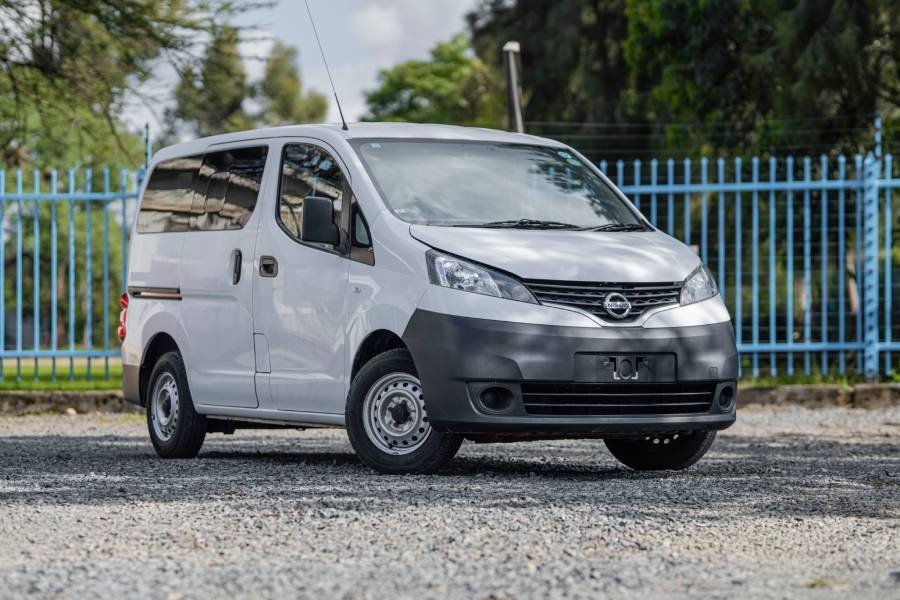
The 2016 Nissan NV stands out as the model year buyers should approach most cautiously, although the available complaint data is too limited to label every example from that year unreliable. Current NHTSA-derived data shows 17 owner complaints for the 2016 NV, the highest total among the 2012–2021 model years in one dataset. The 2018 and 2014 models follow with 11 and 10 complaints, respectively. These figures are warning signals rather than failure rates because sales volume, vehicle age, mileage, and reporting behavior affect complaint totals.
The reported problems are also spread across several vehicle systems rather than one universally defective component. Across Nissan NV model years, NHTSA complaints include electrical, airbag, brake, powertrain, engine, body, fuel-system, and steering issues. For the 2016 model specifically, brakes, visibility, and electrical systems are among the most frequently named categories in the available complaint data.
This guide identifies the Nissan NV years to avoid or inspect more carefully by comparing owner complaints, recalls, problem severity, and model-year patterns. It also separates reported complaints from confirmed defects and recalls, which is essential when evaluating a relatively low-volume commercial van with limited reliability data. The goal is to determine which Nissan NV years present stronger warning signals and what buyers should verify before purchasing a used example.
What Nissan NV Years Should You Avoid?
The 2016 Nissan NV is the model year that deserves the most caution based on raw NHTSA owner-complaint volume, while 2018 and 2014 also show elevated complaint totals. Current NHTSA-derived data compiled by RoadVitals lists 17 complaints for the 2016 model, 11 for 2018, and 10 for 2014. By comparison, the database lists six complaints for 2015, six for 2019, three for 2021, and one for 2020. These totals make 2016 the clearest model year to investigate closely before purchase, but they do not prove that it has the highest failure rate because production volume and exposure time differ by year.
| Model year | NHTSA owner complaints | Main concern | Buying risk |
|---|---|---|---|
| 2016 | 17 | Multiple systems, including brakes, visibility, electrical and engine-related reports | Highest caution |
| 2018 | 11 | Elevated complaint volume relative to most NV years | Higher caution |
| 2014 | 10 | Elevated complaint and recall activity | Higher caution |
| 2013 | 9 | Older vehicle age plus complaint history | Moderate caution |
The 2016 Nissan NV has the strongest warning signal in the raw complaint data, but the nature of those reports matters more than the number alone. RoadVitals identifies brakes, visibility, and electrical equipment among the categories most frequently named for the year. CarComplaints also records engine-related reports, including cases involving loss of power, catalytic converter problems, and a fuel-pump diagnosis. In one report, a van at approximately 180,000 miles stalled and would not accelerate beyond 20 mph; the dealer reportedly diagnosed four catalytic converters and the fuel pump for replacement. Another report involved loss of engine power at approximately 200,000 miles and diagnoses involving a catalytic converter and cam sensor. These are individual owner reports rather than evidence that every 2016 NV develops the same failures.
The 2018 Nissan NV is another year worth additional inspection, with 11 owner complaints in the same NHTSA-derived dataset. However, complaint-based assessments do not produce a completely consistent ranking. One newer analysis that groups NHTSA complaints by VIN production run ranks 2018 as the worst year in its 2013–2019 dataset, while raw complaint totals place 2016 first. This difference demonstrates why a buyer should not treat a single “worst year” ranking as a mechanical failure prediction. The method used to normalize complaint data can change the ranking.
The 2014 Nissan NV also warrants closer inspection, with 10 complaints and two recall campaigns listed in the RoadVitals dataset. Its raw complaint count is lower than those of 2016 and 2018 but higher than most other Nissan NV model years. Vehicle age is an additional consideration because a 2014 van may now have accumulated substantial mileage and commercial use. For an older work van, maintenance records and current mechanical condition can therefore outweigh the model-year ranking itself.
The 2013 model records nine complaints in the same dataset, but it should not automatically be classified alongside 2016 as an equally problematic year. The available evidence is relatively sparse across the entire Nissan NV line. RoadVitals records only 70 NHTSA owner complaints across the 2012–2021 model years it covers. A difference of several reports can therefore move a year substantially up or down a ranking.
For this reason, “years to avoid” should mean years that deserve additional scrutiny rather than years that every buyer must reject. The strongest caution applies to 2016 because it combines the highest raw complaint volume with reports involving potentially expensive or safety-relevant systems. The 2018 and 2014 models deserve secondary caution based on their elevated complaint totals. A well-maintained example from any of these years can still be a better purchase than a neglected Nissan NV from a year with fewer reported problems.
What Problems Make Certain Nissan NV Years Worse Than Others?
The main Nissan NV problem categories reported to NHTSA are electrical, airbags, brakes, powertrain, engine, body and structure, fuel system, and steering. Across the 2012–2021 model years in RoadVitals’ dataset, electrical issues account for 10 component mentions, followed by eight for airbags, seven for brakes, six for powertrain, and six for the engine. Because a single complaint can identify more than one component, these numbers represent component mentions rather than unique vehicle failures.
Electrical problems are the largest category in this dataset, representing 16.7% of component mentions. Electrical faults can range substantially in severity, so the category alone is insufficient to determine whether a Nissan NV should be avoided. A buyer should identify the actual symptom, affected component, repair history, and whether the fault is active. This distinction matters because an isolated electrical accessory problem carries a different ownership risk from an electrical fault associated with warning lights, starting problems, or loss of vehicle operation.
Engine and powertrain complaints deserve greater attention because repairs in these systems can materially affect the economics of buying an older commercial van. The NHTSA-derived dataset contains six engine and six powertrain component mentions across the NV range. For the 2016 model, individual complaints describe loss of engine power and catalytic converter failures at high mileage. One owner reported a catalytic converter diagnosis at approximately 99,950 miles with a quoted replacement cost of $2,500 for both converters. Another reported loss of power at approximately 200,000 miles followed by catalytic converter and cam-sensor diagnoses. These reports establish that such failures have occurred, but the small sample does not establish a fleet-wide failure rate.
The powertrain also changed during the Nissan NV’s production run. Earlier full-size NV models were available with a 4.0-liter V6 or 5.6-liter V8, and models through 2016 used five-speed automatic transmissions. The V8 received a seven-speed automatic for 2017. This change is relevant when comparing used vans because a 2016 V8 and a 2017 V8 do not have identical powertrain configurations. A model-year reliability assessment should therefore account for engine and transmission configuration instead of treating every Nissan NV as mechanically identical.
Brakes represent another notable category, with seven component mentions across the model range in the NHTSA-derived data. The 2016 model is specifically identified as having brakes among its most frequently named complaint categories. Brake-related reports deserve more weight in a purchase inspection than cosmetic or convenience complaints because braking performance directly affects vehicle safety, particularly on NV2500 HD and NV3500 HD vans used to carry substantial loads.
Air-conditioning and rear-cabin airflow complaints also appear in reports for the 2016 NV. Owners have described weak or absent airflow from the rear system, including a report alleging debris accumulation around the rear evaporator because of the system’s design. These reports are especially relevant to an NV Passenger used to transport people in hot climates, although they should not be interpreted as evidence that every van has the same HVAC defect.
The practical distinction is problem severity rather than problem count alone. An older Nissan NV with several minor interior or HVAC complaints can present less financial risk than a van with one unresolved engine, powertrain, brake, or emissions-system problem. Buyers evaluating the 2014, 2016, or 2018 model years should therefore use complaint data to identify components requiring closer inspection, then base the purchase decision on the condition and service history of the individual van.
Which Nissan NV Years Have the Most Owner Complaints?
The 2016 Nissan NV has the highest raw owner-complaint total among the model years identified earlier, followed by the 2018 and 2014 models. The NHTSA-derived dataset used in this analysis records 17 complaints for 2016, 11 for 2018, 10 for 2014, and nine for 2013. These four years therefore deserve more attention during a used-vehicle inspection than years with fewer reports, but complaint totals should not be interpreted as failure rates.
| Model year | Owner complaints | Relative concern |
|---|---|---|
| 2016 | 17 | Highest |
| 2018 | 11 | Elevated |
| 2014 | 10 | Elevated |
| 2013 | 9 | Moderate |
| 2015 | 6 | Lower |
| 2019 | 6 | Lower |
| 2021 | 3 | Low |
| 2020 | 1 | Lowest |
Complaint volume measures reported incidents, not the percentage of Nissan NVs that experienced a failure. A model year with 17 complaints is not necessarily 17 times less reliable than a year with one complaint. Production volume, vehicle age, accumulated mileage, commercial use, and the likelihood that an owner reports a problem to NHTSA all influence the final number. This limitation is particularly important for the Nissan NV because it was a commercial-oriented vehicle sold in much lower volumes than mainstream passenger vehicles.
The 2016 model deserves the closest examination because its complaints involve more than convenience-related faults. Reported categories include brakes, electrical equipment, visibility, engine-related problems, and loss-of-power incidents. Individual reports involving catalytic converters, sensors, and reduced engine performance indicate the possibility of repairs that can become expensive on a high-mileage work van. However, individual complaints establish that a problem occurred; they do not establish how frequently it occurs across the entire 2016 NV population.
The 2018 and 2014 models form a second tier of concern based on their complaint totals. The difference between 10 complaints for 2014 and 11 for 2018 is too small to support a meaningful reliability distinction by itself. Buyers should instead compare the type and severity of reported failures and then inspect those systems on the specific van being considered.
The 2013 Nissan NV has nine complaints in the dataset and requires similar context. Its age creates an additional ownership variable that complaint counts cannot measure. A 2013 commercial van may have experienced years of towing, cargo hauling, extended idling, or stop-and-go operation. A documented maintenance history and mechanical inspection can therefore provide more useful information about an individual 2013 NV than its position in a model-year complaint ranking.
The complaint data supports treating 2016 as the primary caution year and 2018 and 2014 as secondary caution years, not declaring these models universally defective. Complaint patterns are most useful as an inspection guide: they identify the systems buyers should investigate before committing to a particular used Nissan NV.
Which Nissan NV Years Have the Most Serious Recalls?
Recall history should be evaluated separately from owner complaints because a safety recall identifies a defect covered by a manufacturer remedy, while a complaint records an owner’s reported experience. NHTSA administers the U.S. safety recall program and allows consumers to search recalls by vehicle identification number or by year, make, and model. A used Nissan NV can therefore have an open recall even when the model year itself does not have a poor overall reliability record.
One important distinction is between the full-size Nissan NV and the smaller Nissan NV200. NHTSA records show that certain 2013–2016 NV200 models were included in Nissan’s large Occupant Classification System recall, campaign 16V-244. The defect could incorrectly classify the front passenger and potentially suppress the passenger frontal airbag. That campaign involved the NV200, not the full-size NV1500, NV2500 HD, or NV3500 HD discussed as the primary vehicles in this guide. Buyers should not transfer an NV200 recall to the full-size NV simply because both vehicles use the NV name.
Full-size Nissan NV Cargo and Passenger vans also appear in Nissan recall documentation. For example, Nissan issued campaign documentation covering certain 2016–2017 NV Cargo and Passenger Vans as part of a recall bulletin. Recall applicability depends on the vehicle’s production details rather than the model name alone, which is why VIN verification is more reliable than assuming every van from an affected model year requires the same repair.
A recall does not automatically make a Nissan NV model year one to avoid. A safety recall can actually provide a clearer repair path than an intermittent reliability problem because the manufacturer specifies a remedy for affected vehicles. The more important question for a used buyer is whether the individual van is included in a campaign and whether the required repair has been completed.
An unresolved recall changes the purchase assessment because the vehicle may still contain the component or condition that triggered the safety campaign. Documentation showing that a recall remedy was completed reduces that specific concern, although it does not guarantee the condition of unrelated systems such as the engine, transmission, brakes, or electrical equipment.
Recall count also should not be used as a standalone reliability score. Two recalls involving minor or readily corrected components do not necessarily create more ownership risk than one recurring powertrain problem that produces a large repair bill. Problem severity, remedy status, complaint patterns, mileage, and maintenance history provide a more useful assessment when considered together.
Before buying any used Nissan NV, enter its 17-character VIN into NHTSA’s recall lookup rather than relying exclusively on model-year lists. NHTSA states that consumers can search safety recalls by VIN as well as year, make, and model. VIN-based verification determines whether the specific vehicle has an applicable safety recall and is particularly important when a recall covers only vehicles manufactured within a defined production period.
What Are the Best Nissan NV Years to Buy Used?
The 2020 and 2021 Nissan NV are the strongest starting points for used buyers based on the available NHTSA complaint data, while 2017 also has a notably low complaint count. The NHTSA-derived dataset records one owner complaint for 2020, three for 2021, and zero for 2017. In comparison, 2016 has 17 complaints, 2018 has 11, and 2014 has 10. These numbers make the later model years attractive alternatives, but a low complaint count should not be interpreted as proof that every vehicle from those years is reliable.
| Model year | NHTSA complaints | Recalls in dataset | Buying assessment |
|---|---|---|---|
| 2020 | 1 | 0 | Strong starting point |
| 2021 | 3 | 0 | Strong starting point |
| 2017 | 0 | 2 | Worth considering after recall verification |
| 2019 | 6 | 1 | Reasonable alternative |
| 2018 | 11 | 1 | Inspect more carefully |
| 2016 | 17 | 1 | Highest caution |
The 2020 Nissan NV has the cleanest combination of complaint and recall counts in this dataset. It records one NHTSA owner complaint and no recall campaigns, compared with substantially higher complaint totals for several earlier years. This makes the 2020 model a logical year to prioritize when comparing otherwise similar used vans. The limitation is that complaint totals are not adjusted for the number of vehicles sold, mileage, or years of exposure, so the figures identify warning signals rather than precise failure probabilities.
The 2021 Nissan NV is another strong candidate because it records only three complaints and no recalls in the same dataset. Its position as a later model year can also be useful for buyers who want a van with fewer years of accumulated commercial use. A newer model is not automatically mechanically superior, but age affects rubber components, seals, corrosion exposure, interior wear, and the amount of time a commercial vehicle has had to accumulate mileage.
The 2017 model presents a more complicated case. The dataset records zero owner complaints but two recalls. That combination demonstrates why complaint count and recall count must remain separate reliability signals. Zero complaints is favorable, but the recall history means a buyer should verify the specific van by VIN and confirm that every applicable remedy has been completed before treating a 2017 NV as a lower-risk purchase.
The 2019 Nissan NV occupies the middle ground with six owner complaints and one recall in the available data. Its complaint total is substantially below the 17 reports for 2016 and 11 for 2018, but it is not as clean statistically as 2020 or 2021. A 2019 model with complete maintenance records, moderate mileage, and a clean pre-purchase inspection can therefore remain a sensible alternative when newer examples are unavailable or significantly more expensive.
Broader ownership data also suggests that the Nissan NV should not be judged solely by its worst model years. RepairPal rates the NV1500 at 3.5 out of 5 for reliability and reports an average annual repair and maintenance cost of $825. The heavier-duty NV2500 receives a lower 2.0 out of 5 rating, with an average annual repair cost of $906, while the NV3500 receives 3.0 out of 5 and an average annual repair cost of $740. These ratings cover each model as a whole rather than individual model years, so they are more useful for understanding ownership context than for selecting a specific year.
For most buyers, 2020 and 2021 should be investigated first, followed by a properly inspected 2017 or 2019 example. The final choice should still depend on the individual van. A 2020 NV with neglected maintenance and hard commercial use can present greater risk than a well-maintained older model with documented servicing.
How Many Miles Can a Nissan NV Last?
A Nissan NV can exceed 150,000 miles, and a substantial share of vehicles in CARFAX’s dataset have reached 200,000 miles, but mileage alone does not determine remaining service life. CARFAX reports that 71.5% of Nissan NV models in its dependability data have reached 150,000 miles, compared with 65.7% of similar vans. It also reports that 44.3% have reached 200,000 miles, slightly above the 41.4% figure for comparable vans. These figures show that high-mileage Nissan NVs exist in meaningful numbers, but they do not guarantee that a particular van will reach a specific mileage without major repairs.
A practical expectation is therefore better expressed as a condition-based lifespan rather than a fixed mileage limit. Commercial vans accumulate wear differently from passenger cars because two vehicles showing 150,000 miles on their odometers may have experienced completely different workloads. One may have covered mostly highway miles carrying light cargo, while another may have spent years making short urban deliveries with frequent starts, stops, idling, and heavy loads.
Maintenance history becomes increasingly important once a Nissan NV passes 100,000 miles. Engine oil changes, transmission servicing, cooling-system maintenance, brake work, suspension repairs, and documented replacement of failed components reveal more about the van’s remaining useful life than mileage alone. Records also help distinguish normal wear from repeated repairs that could indicate an unresolved mechanical problem.
Powertrain configuration should also be considered when evaluating a high-mileage NV. The Nissan NV was sold in multiple weight classes and configurations, including the NV1500, NV2500 HD, and NV3500 HD. These vehicles can experience different workloads because an NV3500 used for heavy commercial duty does not have the same operating history as an NV1500 used for lighter cargo. Reliability ratings reflect some of this variation: RepairPal rates the NV1500 at 3.5 out of 5, the NV3500 at 3.0, and the NV2500 at 2.0.
High mileage should therefore change the inspection standard rather than automatically eliminate a Nissan NV from consideration. A van approaching or exceeding 150,000 miles needs evidence of consistent servicing and should be inspected for leaks, abnormal engine operation, transmission behavior, cooling-system condition, brake wear, suspension wear, exhaust-system faults, and stored diagnostic codes. Evidence of repeated powertrain problems deserves greater weight than normal replacement of wear items.
A Nissan NV with 150,000–200,000 miles can still be a viable purchase when its condition, maintenance history, and previous usage support it. CARFAX’s mileage data shows that reaching these mileage thresholds is not unusual for the model. The remaining lifespan of an individual van, however, cannot be predicted from the odometer or model year alone. For a used commercial vehicle, documented maintenance and current mechanical condition provide the stronger buying signal.
What Should You Check Before Buying a Used Nissan NV?
Check seven areas before buying a used Nissan NV: maintenance records, engine condition, transmission operation, exhaust and emissions components, brakes and suspension, electrical equipment, and recall status. These checks are especially important for the 2014, 2016, and 2018 model years identified earlier because complaint data alone cannot determine the condition of an individual van.
Start with the maintenance history. Service records should show consistent oil and filter changes rather than long unexplained gaps. Nissan’s maintenance schedule for the 2016 NV1500 specifies engine oil and filter replacement every 5,000 miles or six months. Nissan also provides maintenance schedules according to vehicle configuration, mileage, and driving conditions, so buyers should compare the records with the schedule for the exact NV being inspected. Missing records do not prove neglect, but documented maintenance provides stronger evidence that the engine and related components received routine service.
Inspect the engine both cold and at operating temperature. A cold start can reveal abnormal noises, difficult starting, smoke, warning lights, or unstable idle that may be less obvious after the seller has warmed the engine. Once the engine reaches operating temperature, check for leaks, unusual smells, overheating symptoms, and inconsistent performance. Nissan’s maintenance guidance specifically identifies engine oil, coolant, drive belts, radiator hoses, fluid leaks, and the exhaust system as items requiring regular checks.
Test the transmission under more than one driving condition. The van should be driven from a stop, through normal acceleration, at road speed, and during deceleration. Watch for delayed engagement when shifting into Drive or Reverse, abnormal noises, slipping, harsh shifts, or engine speed increasing without corresponding acceleration. Because Nissan changed some NV powertrain configurations during the model’s production run, the inspection should match the engine, transmission, and model year of the individual vehicle rather than assuming all NV vans use the same drivetrain.
Inspect the exhaust and emissions system carefully, particularly on a high-mileage van. Earlier owner reports discussed in this guide include catalytic converter diagnoses and loss-of-power symptoms on 2016 models. Nissan’s own maintenance guidance instructs owners to inspect the exhaust system for loose supports, cracks, holes, abnormal exhaust sounds, and exhaust fumes. A pre-purchase diagnostic scan can also identify stored or pending fault codes even when no obvious drivability problem appears during a short test drive.
Brakes and suspension deserve additional attention on a former commercial vehicle. Check braking for vibration, pulling, abnormal pedal behavior, warning lights, or unusual noises. Inspect tires for uneven wear because irregular patterns can provide evidence of alignment, steering, or suspension problems. The inspection should also account for how the van was previously used. Years of heavy cargo operation can produce a different wear profile from a passenger van or lightly loaded service vehicle with the same odometer reading.
Test every major electrical function rather than assuming an accessory fault will be inexpensive. Check exterior and interior lights, dashboard warnings, power windows and locks, climate controls, charging outlets, and rear HVAC equipment when fitted. Electrical issues are among the more frequently represented categories in the Nissan NV complaint data discussed earlier, making a complete electrical-function test more relevant than it would be in a generic used-car checklist.
A professional pre-purchase inspection should complete the evaluation. The inspection is particularly valuable for a Nissan NV because commercial usage history can matter as much as model year. Ask the mechanic to inspect the powertrain, cooling system, brakes, steering, suspension, exhaust system, leaks, diagnostic codes, and evidence of previous collision or underbody damage. The purchase decision should be reconsidered when a seller refuses an independent inspection, especially on a high-mileage van or a model year with elevated complaint history.
Read more: Nissan P0507 Code: Causes, Symptoms, Diagnosis, Repair & Reset Guide
How Can You Check a Nissan NV for Open Recalls?
Check a Nissan NV for open safety recalls by entering its 17-character VIN into NHTSA’s recall lookup before purchasing it. NHTSA states that its recall system can search by VIN, license plate, or year, make, and model. A VIN search is preferable for a specific used vehicle because recall campaigns can apply only to particular vehicles within a model year.
The VIN can normally be found at the lower-left corner of the windshield, on the driver’s-side doorjamb label, or on vehicle registration and insurance documents. Verify that the VIN on the vehicle matches the VIN on its paperwork before running the search. NHTSA also provides a VIN decoder that can identify information encoded by the manufacturer, including details about the vehicle and its manufacturing origin.
An open recall should be resolved rather than ignored during the buying process. NHTSA states that unrepaired safety recalls displayed through its lookup should be addressed, and recall repairs are performed free of charge through the manufacturer’s dealership. Nissan recall documentation likewise directs owners of affected vehicles to an authorized Nissan dealership for the remedy.
Recall verification should be performed even when buying one of the Nissan NV years with relatively low complaint totals. A favorable model-year reliability record does not confirm that a specific VIN is free from an outstanding safety recall. VIN status, service history, current condition, and model-year complaint patterns answer different questions and should be evaluated together.
Should You Buy a Nissan NV From a Year on the Avoid List?
You can buy a Nissan NV from a higher-risk model year when the individual van has documented maintenance, no unresolved safety recalls, no evidence of major recurring mechanical problems, and passes an independent pre-purchase inspection. A “year to avoid” designation identifies a model year requiring greater scrutiny; it does not establish that every vehicle produced that year is defective.
The 2016 Nissan NV illustrates this distinction. It has the highest raw complaint total in the dataset examined earlier, which makes it a higher-priority year for inspection. That information should change how a buyer evaluates a 2016 van, not automatically end the purchase. A 2016 NV with complete service records, satisfactory engine and transmission operation, no relevant diagnostic codes, resolved recalls, and evidence of consistent maintenance presents a different risk profile from another 2016 example with 200,000 miles, incomplete records, loss-of-power symptoms, and unresolved warning lights.
Maintenance history should carry substantial weight because Nissan specifies recurring service requirements rather than treating maintenance as optional after purchase. For example, Nissan specifies 5,000-mile or six-month oil and filter intervals for the 2016 NV1500 configuration referenced earlier. Its maintenance materials also call for checks of components including coolant, drive belts, fluid levels, exhaust equipment, leaks, radiator hoses, and other systems. A documented service history allows the buyer to determine whether these requirements were addressed consistently.
Price should reflect mechanical risk as well. A higher-risk Nissan NV is not automatically a good purchase simply because it costs less than a later model. Deferred engine, emissions, transmission, brake, or cooling-system repairs can eliminate the initial saving. Buyers should compare the purchase price plus immediately necessary repairs with the cost of a cleaner example from a lower-complaint model year.
Previous usage is equally important for a commercial van. Mileage does not reveal how much time the engine spent idling, how frequently the vehicle carried heavy loads, whether it was used for repeated short trips, or how consistently it was serviced. Two Nissan NVs with identical model years and odometer readings can therefore have substantially different mechanical conditions.
Prioritize 2020 and 2021 examples when condition, specification, mileage, and price are comparable, while applying greater scrutiny to 2016 and the other higher-complaint years identified in this guide. Do not reject or purchase an NV from its model year alone. The strongest buying decision combines model-year reliability evidence with maintenance records, VIN-specific recall status, previous usage, diagnostic results, and an independent mechanical inspection.