
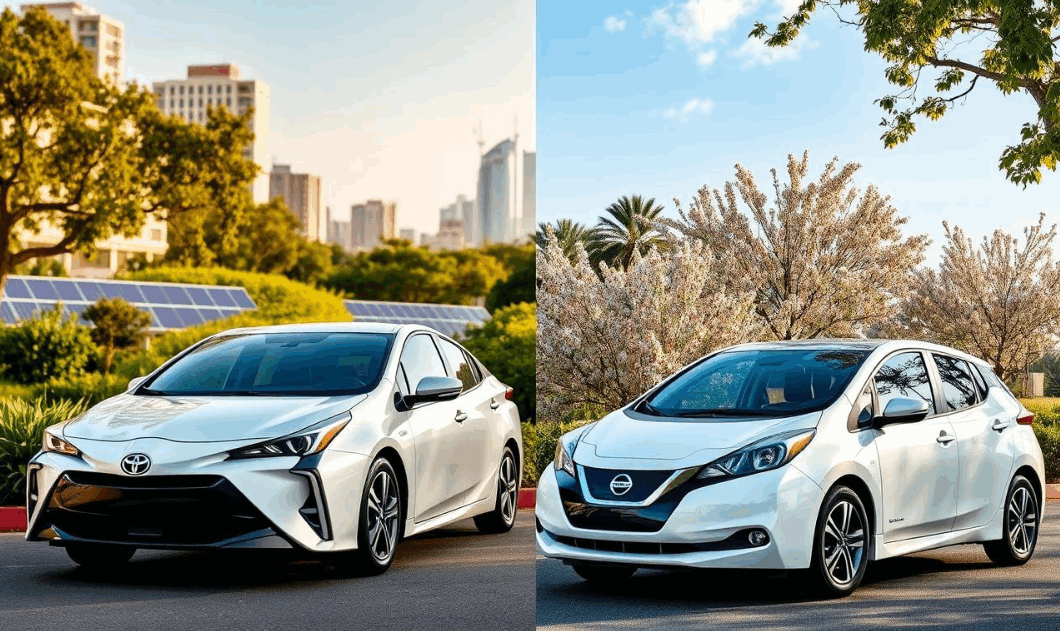
The Nissan Leaf is better for drivers who want a fully electric car and have reliable access to charging, while the Toyota Prius is better for drivers who need longer driving range and faster refueling. The biggest difference is the powertrain. The Nissan Leaf is a battery electric vehicle that runs entirely on electricity. The Toyota Prius is a hybrid that combines a gasoline engine, an electric motor, and a hybrid battery.
This difference affects more than how each car gets its energy. It determines how drivers refuel or recharge, how far they can travel, what maintenance the vehicle requires, and how suitable it is for different driving patterns. A Leaf can work particularly well for daily commuting when it can recharge at home overnight. A Prius provides more flexibility for drivers who regularly take long trips or do not have dependable access to an EV charger.
Choosing between them therefore requires more than comparing fuel economy or purchase price. This Nissan Leaf vs. Toyota Prius comparison examines powertrain, energy efficiency, driving range, charging and refueling, performance, operating costs, maintenance, reliability, and everyday practicality. These factors show where each vehicle has an advantage and which one better matches a specific driving routine.
What Are the Main Differences Between the Nissan Leaf and Toyota Prius?
The main difference between the Nissan Leaf and Toyota Prius is that the Leaf is a fully electric vehicle, while the Prius is a gasoline electric hybrid. The Leaf gets all of its propulsion energy from a rechargeable battery. The standard Prius uses both a gasoline engine and an electric motor, with its hybrid system managing the two power sources automatically. As a result, the Leaf must be charged, while the standard Prius is refueled with gasoline and does not require external charging.
This powertrain difference changes the way each vehicle fits into daily life. The Leaf is well suited to drivers who can charge at home and travel predictable distances. A driver can plug it in after arriving home and start the next day with a recharged battery. The Prius does not provide fully electric driving in the same way, but gasoline refueling gives it greater flexibility when a journey extends beyond the normal daily routine.
The two vehicles also differ in maintenance requirements and energy use. The Leaf has no gasoline engine, so it eliminates routine engine services such as oil changes. The Prius retains an internal combustion engine, although its hybrid system reduces gasoline consumption by using electric assistance and regenerative braking.
These differences make driving patterns an important part of the Nissan Leaf vs. Toyota Prius decision. The Leaf has a stronger advantage when charging is convenient and daily mileage fits comfortably within its available range. The Prius has a stronger advantage when long distance flexibility and quick refueling are priorities.
How Do the Nissan Leaf and Toyota Prius Powertrains Differ?
The Nissan Leaf uses a battery and electric motor for propulsion, whereas the Toyota Prius combines an electric motor with a gasoline engine. This difference determines how energy is stored, converted, and delivered to the wheels. It also explains many of the differences in efficiency, maintenance, range, and driving experience between the two vehicles.
In the Leaf, electrical energy stored in the high voltage battery supplies the electric motor through the vehicle’s power electronics. The motor converts that electrical energy into mechanical energy that turns the wheels. Because an electric motor can produce torque without waiting for an engine to build revolutions, power delivery is immediate. Regenerative braking also allows the motor to recover part of the vehicle’s kinetic energy during deceleration and return it to the battery.
The Prius uses a more complex combination of energy sources. Its hybrid system coordinates a gasoline engine, electric motor, and hybrid battery according to driving conditions. Electric propulsion can assist the gasoline engine or move the vehicle under suitable conditions, while regenerative braking recovers energy that would otherwise be lost as heat. The gasoline engine remains an essential source of energy for extended driving.
The practical distinction is straightforward. Leaf owners replace regular gasoline stops with EV charging, while Prius owners continue refueling with gasoline but use substantially less fuel than a conventional gasoline vehicle. Therefore, access to charging and typical trip distance are central factors when choosing between these two powertrain designs.
Which Is More Efficient, the Nissan Leaf or Toyota Prius?
The Nissan Leaf is more energy efficient than the Toyota Prius because its electric drivetrain wastes less energy. However, the two vehicles measure efficiency in different ways. The Leaf uses electricity, so manufacturers express its consumption in kilowatt hours per distance. They may also use MPGe. The Prius uses gasoline, so manufacturers commonly report its efficiency in miles per gallon.
For this reason, MPG alone cannot provide a direct comparison. An electric motor converts a large share of electrical energy into motion. It also avoids many energy losses associated with gasoline combustion. The Prius reduces these losses through electric assistance, regenerative braking, and efficient engine operation. However, it still relies on gasoline combustion for much of its energy.
Efficiency also affects driving costs. Local electricity and gasoline prices determine how much drivers pay for each mile. Home charging at a favorable residential rate can strengthen the Leaf’s cost advantage. Expensive public charging can reduce this benefit. In the same way, changing gasoline prices affect the Prius’s operating costs.
Buyers should therefore consider three factors together: energy consumption, local energy prices, and annual mileage. The Leaf has the advantage in drivetrain energy efficiency. However, local energy costs determine how much money that efficiency actually saves.
Which Has More Driving Range, the Nissan Leaf or Toyota Prius?
The Toyota Prius offers greater total driving range, while the Nissan Leaf relies on a more limited battery range. The Prius also allows drivers to restore that range quickly at a gas station. This advantage makes it more practical for long trips. The Leaf remains suitable for drivers who travel predictable distances and charge regularly.
Several factors affect the Leaf’s real world range. Highway speeds increase energy consumption, while aggressive acceleration can drain the battery faster. Cabin heating and air conditioning also require energy. Temperature, elevation, driving style, and battery condition can further change the distance available from one charge.
The Prius responds to several of the same conditions. Speed, terrain, temperature, and driving behavior can change its fuel economy. However, its gasoline tank and efficient hybrid system support longer trips between stops. Drivers can also add fuel within minutes when the tank becomes low.
The difference matters less during predictable daily travel. A Leaf owner can charge at home overnight and start the next morning with sufficient energy. This routine removes the need for a separate fuel stop on many days.
Long distance travel creates a different situation. Prius drivers can refuel quickly and continue their journey. Leaf drivers must consider charging locations and charging time. Therefore, the Prius has the stronger range advantage for long trips. The Leaf remains practical when daily mileage stays safely within its available battery range.
Is Charging the Nissan Leaf Less Convenient Than Refueling the Toyota Prius?
Charging the Nissan Leaf takes longer than refueling the Toyota Prius, but home charging can make daily use more convenient. A Prius driver can stop at a gas station, fill the tank, and continue driving within minutes. A Leaf driver needs more time to restore a similar amount of usable range.
Home charging changes this comparison. Leaf owners can plug in the car after arriving home and charge it overnight. This routine allows them to start the next day with more available range. It can also remove regular trips to a gas station. Drivers with predictable daily mileage may rarely need public charging.
Public charging requires more planning. Charging speed depends on the charger, battery condition, battery temperature, and current state of charge. The charging rate can also slow as the battery approaches a high charge level. Therefore, drivers cannot treat every charging session as equally fast.
The Prius avoids these charging requirements. Drivers add gasoline when needed and rely on the hybrid system to manage its battery. This makes the Prius easier to use on long trips or unpredictable routes.
Charging convenience therefore depends on the driver’s routine. The Prius offers faster energy replenishment and greater flexibility away from home. The Leaf can offer greater daily convenience when owners have reliable home charging. Without home charging, the Prius gains a stronger practical advantage.
Which Has Better Performance, the Nissan Leaf or Toyota Prius?
The Nissan Leaf delivers immediate electric motor response, while the Toyota Prius combines electric assistance with gasoline engine performance. Neither advantage alone determines which vehicle performs better for every driver. Acceleration, power output, vehicle weight, and model year all affect the comparison.
The Leaf’s electric motor produces torque as soon as the driver presses the accelerator. This characteristic creates quick response from low speeds. It also removes traditional engine gear changes from the driving experience. As a result, acceleration can feel smooth and immediate during urban driving.
The Prius uses its electric motor and gasoline engine together when additional power is required. Its hybrid system adjusts the contribution of each power source during acceleration and cruising. The electric motor supports low speed response, while the gasoline engine helps provide sustained power.
Performance also depends on where the vehicle operates. Immediate motor response gives the Leaf useful characteristics in city traffic. The Prius offers a powertrain that supports both urban driving and longer highway journeys without charging stops.
Buyers should compare specific model years before choosing a performance winner. Nissan and Toyota have changed power output and acceleration across different generations. However, the basic distinction remains consistent. The Leaf emphasizes direct electric response, while the Prius balances electric assistance with the flexibility of a gasoline engine.
Which Costs Less to Drive, the Nissan Leaf or Toyota Prius?
The Nissan Leaf can cost less per mile to drive when owners charge at favorable residential electricity rates. The Toyota Prius also keeps energy costs low because its hybrid system uses gasoline efficiently. However, local electricity and gasoline prices can change the final result.
Drivers can estimate Leaf energy costs with a simple calculation. First, determine how many kilowatt hours the car uses over a specific distance. Then multiply that amount by the local electricity rate. For example, a driver who charges mainly at home may pay less than someone who relies on public charging. Some public networks charge higher rates than residential utilities.
Prius fuel costs follow a similar calculation. Drivers can divide the local gasoline price by the vehicle’s actual miles per gallon. This produces an estimated fuel cost per mile. Highway speed, traffic, temperature, and driving style can change real world fuel economy.
Annual mileage also affects the difference. A small cost advantage per mile becomes more important as yearly driving increases. However, energy cost represents only one part of vehicle ownership. Purchase price, insurance, maintenance, repairs, and depreciation also affect total expenses.
The Leaf can provide the lower energy cost when home electricity remains affordable. The Prius can become more competitive when electricity costs rise or drivers depend on expensive public charging. Buyers should compare local prices before choosing either vehicle based on operating cost.
Which Costs Less to Maintain, the Nissan Leaf or Toyota Prius?
The Nissan Leaf generally has fewer routine powertrain maintenance requirements because it does not use a gasoline engine. The Toyota Prius requires engine maintenance in addition to service for its hybrid components. However, both vehicles still require regular inspections and replacement of wear items.
Leaf owners do not need engine oil changes because the vehicle has no internal combustion engine. They also avoid several service items associated with gasoline powertrains. However, the Leaf still requires attention to tires, brakes, fluids, suspension components, and other vehicle systems. Battery condition also matters as the vehicle ages.
The Prius retains a gasoline engine, so owners must follow its scheduled engine maintenance requirements. The vehicle also contains an electric motor and hybrid battery. Toyota designed these systems to work together, but the additional components create different service requirements from those of a fully electric vehicle.
Both cars use regenerative braking. This system converts part of the vehicle’s kinetic energy into electrical energy during deceleration. As a result, the friction brakes can perform less work during normal driving. Reduced brake use can extend the service life of some braking components.
The Leaf has the simpler routine powertrain maintenance profile. However, lower scheduled maintenance does not guarantee lower total ownership costs. Battery health, repairs, tires, vehicle age, and depreciation can have a larger financial effect over several years.
Which Is More Reliable, the Nissan Leaf or Toyota Prius?
Both the Nissan Leaf and Toyota Prius can provide reliable transportation, but they face different long term risks. The Leaf has a simpler electric drivetrain with fewer mechanical powertrain components. The Prius adds a gasoline engine to its hybrid system, which creates more routine service requirements.
Battery condition deserves special attention when evaluating a Leaf. An EV battery can lose usable capacity as it ages. This process is battery degradation, and it does not mean the battery has failed. However, capacity loss reduces available driving range. Age, temperature, charging habits, and previous use can influence battery condition.
The Prius also relies on a battery, but its hybrid battery serves a different purpose. It supports the gasoline engine rather than providing all propulsion energy for normal driving. Buyers must consider the condition of both the hybrid system and gasoline engine when evaluating an older Prius.
Model year also matters for both vehicles. Nissan and Toyota have changed battery systems, powertrains, and vehicle components across different generations. For this reason, a broad reliability comparison cannot replace an inspection of a specific used car.
Used car buyers should check vehicle age, mileage, service history, battery condition, and previous repairs. These factors provide more useful information than the model name alone. The Leaf offers a simpler drivetrain, while the Prius has a more complex hybrid powertrain. Actual reliability still depends heavily on model year, condition, and maintenance history.
Which Is More Practical for Daily Driving, the Nissan Leaf or Toyota Prius?
The Nissan Leaf is practical for predictable daily travel with reliable charging, while the Toyota Prius supports a wider range of driving patterns. The better choice depends mainly on daily mileage, charging access, and the frequency of long trips.
The Leaf fits naturally into a home charging routine. Owners can connect the car after their final trip and recharge while it sits overnight. This approach works well for commuting, school runs, shopping, and other regular journeys. Drivers can complete these trips without visiting a gas station.
The Prius requires gasoline, but it removes the need to plan around EV chargers. Drivers can use the same vehicle for short urban journeys and longer highway trips. A quick fuel stop also restores a large amount of driving range. This flexibility helps people with unpredictable schedules or frequent long distance travel.
Charging access can change the decision. A private driveway or garage with suitable charging makes Leaf ownership easier. Drivers who depend on public chargers must consider charger availability, charging time, and travel to charging locations. Those requirements can reduce the convenience of an EV.
Daily mileage provides the final context. The Leaf makes sense when routine trips stay comfortably within its usable range. The Prius places fewer restrictions on unexpected journeys. Therefore, the Leaf suits predictable EV friendly routines, while the Prius offers greater flexibility for varied daily and long distance driving.
Should You Buy a Nissan Leaf or Toyota Prius?
Buy the Nissan Leaf if you want an electric car for predictable daily travel and have reliable access to charging. Choose the Toyota Prius if you need greater flexibility for long trips and quick refueling. Neither vehicle serves every driver equally well. Your driving routine and access to charging should guide the final decision.
Who Should Buy a Nissan Leaf?
The Nissan Leaf suits drivers who can make EV charging part of their normal routine. Home charging provides the strongest use case. It allows owners to recharge while the vehicle sits overnight. Drivers can then begin most days without making a separate energy stop.
The Leaf also makes sense for predictable commuting and regular local trips. Its electric drivetrain eliminates gasoline use and requires fewer routine powertrain services. Immediate motor response also works well in urban traffic. However, buyers should confirm that the available battery range covers their normal mileage with a comfortable reserve.
Who Should Buy a Toyota Prius?
The Toyota Prius suits drivers who need more flexibility from one vehicle. Its hybrid powertrain provides efficient gasoline driving without depending on external charging. Drivers can also restore range within minutes at a gas station.
This advantage becomes important for frequent highway travel and long road trips. The Prius also makes more sense for drivers without convenient home charging. They avoid the need to schedule regular visits to public EV chargers.
The final choice depends on how you use the car. Choose the Leaf for an EV focused routine with dependable charging. Choose the Prius for longer range, faster refueling, and fewer charging constraints.
Nissan Leaf vs. Toyota Prius: Which Is Better Overall?
The Nissan Leaf is better for drivers who want an EV and have dependable charging, while the Toyota Prius is better for greater travel flexibility. The right choice depends on how far you drive, where you charge, and how often you take long trips.
The Leaf fits a predictable driving routine. Home charging allows owners to restore range overnight and avoid regular gas station visits. Its electric drivetrain also removes gasoline use and reduces routine powertrain maintenance. These advantages make the Leaf a strong choice for commuting and regular local travel.
The Prius serves a broader range of driving situations. Its hybrid system reduces gasoline consumption without requiring external charging. Drivers can refuel quickly and continue traveling, which simplifies long trips and unexpected journeys. It also removes dependence on home or public EV charging.
Choose the Leaf if dependable charging and predictable mileage fit your routine. Choose the Prius if long range, quick refueling, and flexible travel matter more. The better vehicle is the one that matches your actual driving pattern rather than the one with the strongest advantage in a single specification.