
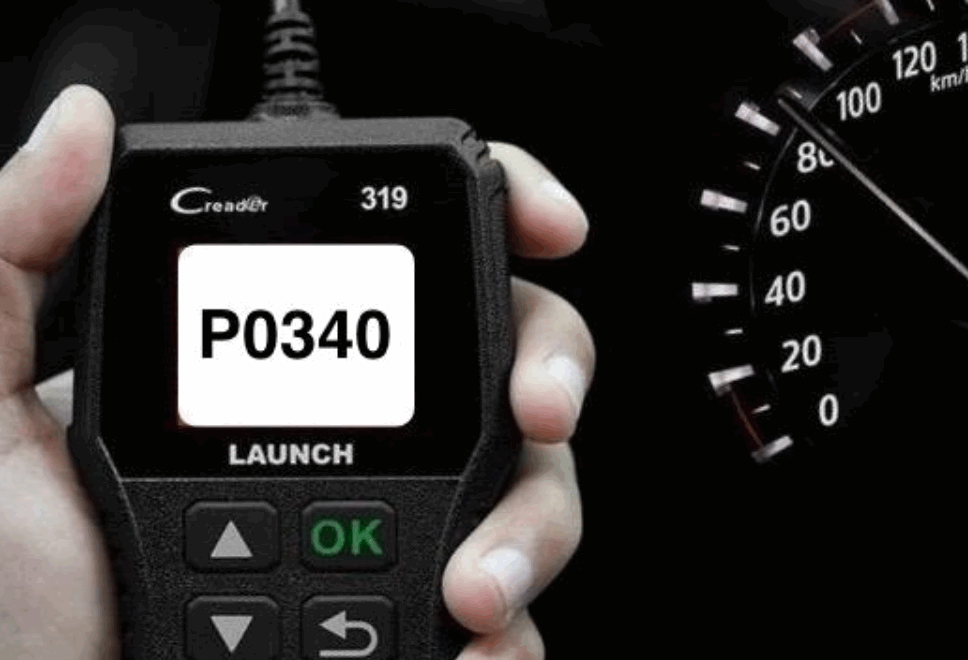
Nissan P0340 indicates a problem with the camshaft position sensor circuit. The Engine Control Module uses the camshaft position signal to monitor camshaft operation and coordinate engine functions. When the expected signal is missing, interrupted, or outside the expected operating range, the ECM can store P0340 and turn on the Check Engine Light.
A P0340 code does not automatically mean the camshaft position sensor has failed. The problem can originate from the sensor itself, damaged wiring, a loose or corroded electrical connector, an interrupted power or ground circuit, or an engine timing problem that affects the expected camshaft signal. Replacing the sensor without testing these related components can leave the original fault unresolved.
Common signs associated with Nissan P0340 include hard starting, engine stalling, rough idle, hesitation, reduced engine performance, and a no start condition in more severe cases. The exact symptoms depend on the Nissan model, engine, and underlying fault.
Diagnosing Nissan P0340 therefore requires checking the complete camshaft position sensor circuit before replacing parts. This guide explains what P0340 means, its symptoms and causes, how to diagnose the fault, and which repair should be performed once the actual cause has been confirmed.
What Does the Nissan P0340 Code Mean?
Nissan P0340 means the Engine Control Module has detected a problem with the camshaft position sensor circuit. The camshaft position sensor monitors the position and movement of the camshaft and sends this information to the ECM as an electrical signal. The ECM uses this signal as part of the engine management process, so an incorrect or missing signal can cause P0340 to be stored.
The camshaft position sensor works in relation to the rotating components inside the engine. As the camshaft rotates, the sensor generates a signal that allows the ECM to determine camshaft position. This information helps the engine management system control functions that depend on accurate engine position data. A stable signal is therefore necessary for normal starting and engine operation.
P0340 describes a circuit malfunction rather than confirming the failure of one specific component. The circuit includes the camshaft position sensor, electrical connector, wiring, power supply, ground connection, and signal path to the ECM. A damaged wire or poor connector contact can interrupt the signal even when the sensor itself remains functional.
For this reason, finding Nissan P0340 should begin a diagnostic process rather than immediately lead to sensor replacement. The sensor and its circuit must be inspected and tested to determine where the signal is being lost or disrupted. Related engine timing problems may also require investigation when electrical testing does not reveal the cause. Identifying the actual fault prevents unnecessary parts replacement and determines the correct repair.
What Are the Symptoms of Nissan P0340?
There are 7 common symptoms of Nissan P0340: a Check Engine Light, hard starting, a no start condition, engine stalling, rough idle, hesitation, and reduced engine performance. The exact symptoms depend on how severely the camshaft position sensor signal is disrupted. A minor or intermittent circuit problem may only trigger the Check Engine Light, while a complete loss of the signal can create more noticeable starting and drivability problems.
Hard starting and a no start condition can occur when the ECM does not receive reliable camshaft position information during engine startup. The engine management system depends on accurate position signals to determine how the engine is rotating. An unstable or missing signal can therefore make starting take longer or prevent normal startup when the fault becomes severe.
Engine stalling, rough idle, and hesitation can appear when the camshaft position signal becomes intermittent while the engine is running. For example, a loose connector or damaged wire may temporarily interrupt the electrical signal as the vehicle vibrates or the engine temperature changes. The ECM then receives inconsistent position information, which can affect smooth engine operation.
Reduced engine performance can accompany these symptoms because the engine management system is operating without reliable camshaft position data. However, symptoms alone cannot confirm that the camshaft position sensor is defective. Wiring faults, connector problems, electrical circuit failures, and other related faults can produce similar behavior. Reading the stored trouble codes and testing the circuit is necessary to identify the actual cause of Nissan P0340.
What Causes the P0340 Code on a Nissan?
There are 6 main causes of the P0340 code on a Nissan: a faulty camshaft position sensor, damaged wiring, a loose or corroded connector, a power or ground circuit problem, an engine timing fault, and an ECM related fault. Each cause can prevent the Engine Control Module from receiving the camshaft position signal it expects. This is why P0340 should be diagnosed as a circuit problem before any component is replaced.
A faulty camshaft position sensor is one possible cause because an internal sensor failure can stop or distort the signal sent to the ECM. However, the same result can occur when wiring between the sensor and ECM is damaged. Broken wires, short circuits, poor electrical contact, and heat damaged insulation can interrupt the circuit even when the sensor itself is working correctly.
Connector and power supply problems can also trigger Nissan P0340. A loose connector may create an intermittent connection, while corrosion on the terminals can increase electrical resistance and interfere with signal transmission. A poor ground or interrupted power supply can prevent the sensor from operating correctly. These faults should be checked before replacing the camshaft position sensor.
Engine timing problems require attention when the sensor and electrical circuit pass testing but P0340 remains present. A timing related fault can affect the relationship between camshaft and crankshaft position information. ECM failure is another possible cause, but it should be considered only after the sensor, wiring, connectors, electrical supply, and relevant mechanical conditions have been properly tested. Diagnosis should identify the failed part or circuit instead of assuming the camshaft position sensor is responsible.
How Do You Diagnose the Nissan P0340 Code?
Diagnose Nissan P0340 by confirming the code, checking related trouble codes, inspecting the camshaft position sensor circuit, testing the sensor, and investigating engine timing when the electrical system passes inspection. Diagnosis should follow this order because P0340 identifies a circuit problem but does not confirm which component has failed.
Start by connecting an OBD II scanner and confirming that P0340 is stored. Check for additional codes at the same time because related faults can provide useful diagnostic context. Record the available code information before clearing anything. This preserves evidence that can help determine whether the problem is isolated to the camshaft position sensor circuit or involves another engine management system.
Next, inspect the camshaft position sensor connector and wiring harness. Look for loose connections, corrosion, damaged terminals, broken wires, and insulation damage. Pay particular attention to wiring near hot or moving engine components. A sensor can operate correctly but still produce an unreliable signal when its electrical connection is interrupted.
What Should You Check Before Replacing the Camshaft Position Sensor?
Check the connector, wiring, power supply, ground connection, and signal circuit before replacing the camshaft position sensor. Electrical testing should follow the specifications for the specific Nissan model and engine because circuit layouts and test values are not identical across all vehicles.
Replace the sensor only when testing supports a sensor failure. Investigate relevant engine timing conditions when the sensor and circuit test correctly but P0340 remains present. After identifying the fault, repair it, clear the stored code, run the engine, and scan the vehicle again. A successful diagnosis is confirmed when normal operation returns and P0340 does not reappear.
How Do You Fix the Nissan P0340 Code?
Fix Nissan P0340 by repairing the fault identified during diagnosis instead of automatically replacing the camshaft position sensor. The correct repair depends on whether the problem comes from the sensor, wiring, connector, electrical supply, engine timing, or another verified part of the circuit. Matching the repair to the confirmed cause prevents unnecessary parts replacement and reduces the chance of P0340 returning.
Replace the camshaft position sensor when diagnostic testing confirms that it cannot produce the required signal. Use the correct sensor for the specific Nissan model and engine because sensor designs and applications vary. After installation, inspect the connector connection again to make sure the terminals are secure and the wiring is not under tension or exposed to damaging engine components.
Repair the electrical circuit when testing identifies damaged wiring, corroded terminals, a loose connector, or a power or ground problem. Damaged wires require a secure electrical repair rather than a temporary connection. Corroded or damaged connector terminals also need to be cleaned, repaired, or replaced according to their condition. Restoring a stable electrical path allows the ECM to receive the camshaft position signal correctly.
Investigate engine timing when the sensor and its electrical circuit pass testing but the fault remains. Timing related repairs should address the confirmed mechanical problem rather than treating P0340 alone. After completing any repair, clear the stored code with an OBD II scanner, start the engine, and verify normal operation. Scan the vehicle again after testing. The repair is successful when the underlying fault is corrected and P0340 does not return.
Can You Drive a Nissan With the P0340 Code?
You should avoid driving a Nissan with P0340 when the engine stalls, has difficulty starting, loses power, or runs unpredictably. A vehicle that only displays the Check Engine Light may continue to operate, but the code still indicates a fault in the camshaft position sensor circuit that requires diagnosis. Continuing to drive without identifying the cause can allow an intermittent problem to become more disruptive.
The level of risk depends on the symptoms and the underlying fault. An intermittent electrical connection may allow the engine to run normally at one moment and disrupt the camshaft position signal at another. For example, vibration or changes in engine temperature can affect a damaged wire or loose connector. The result may be hesitation, rough operation, stalling, or difficulty restarting the engine.
Engine stalling creates a greater driving concern because the vehicle can lose engine power unexpectedly. A no start condition can also leave the driver unable to restart the vehicle after the engine has been turned off. These symptoms make continued driving less predictable even when the vehicle initially appears usable.
Treat Nissan P0340 as a fault that should be diagnosed promptly rather than a code to ignore until the vehicle stops running. If the engine is stalling, losing substantial power, or operating abnormally, stop driving and arrange for diagnosis or repair. If the vehicle runs normally and only the Check Engine Light is present, have the code diagnosed as soon as practical to identify the sensor, circuit, or related fault before symptoms become more severe.
Where Is the Camshaft Position Sensor Located on a Nissan?
Nissan usually places the camshaft position sensor on or near the cylinder head, close to the camshaft. However, the exact location varies by model, model year, and engine. Check the service information for your specific Nissan before you inspect or replace the sensor.
Some Nissan engines use more than one camshaft position sensor. Engines with multiple camshafts or cylinder banks may use separate sensors to monitor different camshaft positions. Therefore, you need to identify which sensor and circuit relate to P0340 before replacing any parts. Choosing the wrong sensor will not correct the actual fault.
Access to the sensor also differs between Nissan models. Some engines provide easy access from the top of the engine compartment. Other engines place components around the sensor that limit access. You can follow the relevant wiring and connector to help locate it. However, the correct service information provides a more reliable way to identify the component.
Confirm the model, model year, engine, and sensor position before starting the repair. This step helps you distinguish the camshaft position sensor from nearby engine sensors with similar connectors. After locating the correct sensor, inspect its connector and wiring. Look for loose terminals, corrosion, broken wires, and damaged insulation. These electrical problems can interrupt the camshaft position signal and trigger Nissan P0340 even when the sensor works correctly.
How Much Does It Cost to Fix Nissan P0340?
The cost to fix Nissan P0340 depends on the fault that causes the code. A failed camshaft position sensor usually requires a different repair than damaged wiring or an engine timing problem. For this reason, a technician should diagnose the cause before estimating the total repair cost.
Diagnostic work forms the first part of the expense. A technician may scan the ECM, inspect the sensor and connector, check the wiring, and test the electrical circuit. This process identifies whether the problem comes from the sensor or another part of the system. Accurate diagnosis can also prevent the cost of replacing a working sensor.
Sensor replacement involves the price of the part and the labor needed to access it. Labor time varies across Nissan models because engine layouts place the sensor in different locations. Wiring and connector faults create another cost range. A simple connector repair may require less work, while damaged wiring can require more time to locate and repair.
Timing related faults can increase the repair cost because they may require more extensive engine inspection and labor. The final amount also varies by Nissan model, engine, local labor rate, and the parts used for the repair. Therefore, P0340 alone cannot provide an accurate repair price. Identify the root cause first, then calculate the cost of the required parts and labor. This approach provides a more useful estimate and avoids paying for repairs that do not correct Nissan P0340.
What Should You Do When Your Nissan Has a P0340 Code?
Diagnose Nissan P0340 before replacing the camshaft position sensor or other engine components. Start by confirming the code with an OBD II scanner and checking for related trouble codes. Then inspect the sensor connector, wiring, power supply, ground connection, and signal circuit. These checks help identify the actual source of the fault.
Replace the camshaft position sensor only when testing confirms that it has failed. Repair damaged wiring, poor electrical connections, or connector problems when they interrupt the signal. If the sensor and circuit work correctly, investigate relevant engine timing conditions or other faults that can affect camshaft position information.
Do not ignore P0340 when your Nissan has hard starting, stalling, power loss, or unstable engine operation. These symptoms can make the vehicle less reliable and require prompt diagnosis. Even when the engine appears to run normally, finding the root cause can prevent the fault from becoming more disruptive.
After completing the repair, clear the stored code and run the engine. Scan the vehicle again to check the result. A complete Nissan P0340 repair identifies the root cause, corrects the fault, and confirms that the code does not return.