
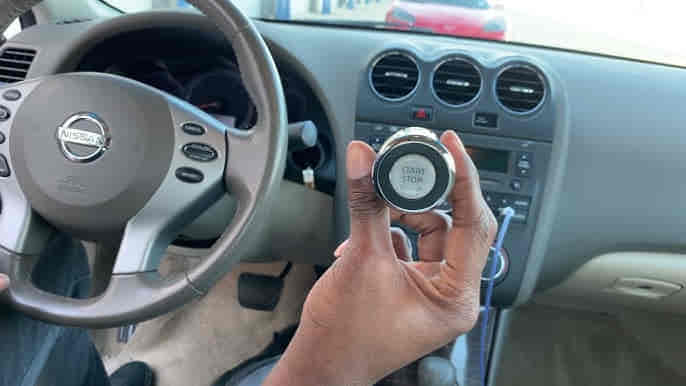
A Nissan push button start system can stop working for several reasons, ranging from a simple key fob battery issue to a more complex problem involving the vehicle’s starting, security, or electronic control systems. When the system fails, drivers often experience symptoms such as the engine not responding when the Start/Stop button is pressed, warning messages appearing on the dashboard, or the vehicle displaying a “No Key Detected” or “Key System Error” notification.
The push button start system relies on multiple components working together. The Intelligent Key must communicate with the vehicle, the brake pedal switch must confirm that the brake is being pressed, the vehicle battery must provide sufficient voltage, and the immobilizer system must authorize engine startup. If any part of this process fails, the engine may not start even though the key is present and the dashboard appears normal.
Many drivers immediately assume the starter motor or engine has failed. In reality, key fob batteries, weak vehicle batteries, brake switch faults, and electronic communication errors account for a large percentage of push button start problems. Understanding how the system operates makes troubleshooting faster and prevents unnecessary repairs.
This guide explains the 10 most common reasons a Nissan push button start system stops working and provides practical solutions for each issue.
What Are the Signs That Nissan Push Button Start Is Not Working?
The most obvious sign of a Nissan push button start problem is that the engine does not start when the Start/Stop button is pressed. However, the failure can present itself in several different ways depending on which component is preventing the starting sequence from completing.
Some vehicles show no response at all. The driver presses the button and nothing happens. Other vehicles illuminate dashboard lights but fail to crank the engine. In more advanced cases, warning messages such as “No Key Detected,” “Key System Error,” “Press Brake and Start,” or “Steering Lock Malfunction” appear on the instrument cluster.
A delayed start can also indicate an underlying problem. The engine may start after several attempts instead of immediately responding. This behavior often points toward communication issues between the Intelligent Key and the vehicle.
Intermittent failures are particularly important because they frequently signal an electronic component that is beginning to fail. A vehicle that starts normally one day but refuses to start the next may have a weakening battery, an unstable brake switch, or deteriorating key recognition hardware.
Identifying the exact symptom helps narrow the diagnosis because each stage of the push button start process depends on a specific group of components working correctly.
Why Is the Key Fob Battery Dead?
A dead key fob battery is one of the most common reasons a Nissan push button start system stops working. The Intelligent Key continuously communicates with the vehicle using radio-frequency signals. When the battery loses power, the signal becomes too weak for the vehicle to recognize.
Most key fob batteries gradually lose voltage over time rather than failing instantly. Drivers often notice a decreasing operating range before complete failure occurs. The vehicle may require the key to be positioned closer to the start button before it can be detected.
As battery voltage declines, communication between the key and the vehicle becomes inconsistent. The Nissan security system may interpret the weak signal as an unauthorized key or fail to detect it entirely. This causes the push button start sequence to stop before engine startup authorization is granted.
Many Nissan models include an emergency backup procedure that allows the driver to start the vehicle by placing the Intelligent Key directly against the push start button. This method enables short-range communication even when the key fob battery is nearly depleted.
Replacing the battery is usually a quick and inexpensive solution. In many cases, a new battery immediately restores normal push button start operation.
Why Is Nissan Not Detecting the Intelligent Key?
A Nissan vehicle may fail to start because it cannot detect the Intelligent Key even when the key is physically present inside the cabin. This problem occurs when communication between the smart key system and the vehicle becomes disrupted.
Signal interference is one of the leading causes. Electronic devices such as smartphones, wireless chargers, GPS units, and aftermarket accessories can interfere with radio-frequency communication. In some cases, metal objects placed near the key can partially block the signal.
The location of the key also matters. The Intelligent Key is designed to operate within a specific detection zone. If the key is placed inside a metal container, buried under objects, or positioned in an area where the signal is weakened, the vehicle may not recognize it.
A malfunctioning Intelligent Key antenna can create similar symptoms. The vehicle uses multiple antennas positioned throughout the cabin to identify the key’s location. If one or more antennas fail, key detection may become inconsistent or stop entirely.
Software-related communication errors can also prevent recognition. A corrupted smart key configuration or system fault may interrupt communication even when all hardware components are functioning correctly.
When the vehicle cannot detect the Intelligent Key, engine startup authorization is blocked as a security measure, preventing the push button start system from operating.
Why Is the Vehicle Battery Too Weak to Start the Engine?
A weak vehicle battery is one of the most frequently overlooked causes of push button start failure. Although the dashboard may illuminate normally, the battery may not have sufficient power to support the complete starting process.
The push button start system depends on stable voltage to operate electronic control modules, security systems, key recognition hardware, and the starter motor. If battery voltage drops below the required threshold, one or more of these systems may fail to function correctly.
Modern Nissan vehicles contain numerous electronic modules that continuously consume power even when the engine is turned off. Extended periods of inactivity, extreme temperatures, aging batteries, and charging system problems can gradually reduce available battery capacity.
Low battery voltage often creates misleading symptoms. Drivers may suspect the push button start switch, Intelligent Key, or starter motor when the actual cause is insufficient electrical power. Warning messages related to key recognition and electronic systems frequently appear when voltage becomes unstable.
Most automotive batteries begin showing performance decline after three to five years of use. As internal resistance increases, the battery becomes less capable of supplying the high current required during engine startup.
Testing battery voltage is one of the most important diagnostic steps because a weak battery can affect multiple vehicle systems simultaneously and mimic more serious mechanical or electronic failures.
Why Is the Brake Pedal Switch Not Working?
A faulty brake pedal switch can prevent a Nissan push button start system from activating because the vehicle must verify that the brake pedal is being pressed before it allows engine startup. This safety mechanism is designed to prevent unintended vehicle movement and is integrated directly into the start authorization process.
When the brake pedal is pressed, the brake switch sends a signal to the vehicle’s control modules confirming that the driver intends to start the engine. If the switch fails to transmit this signal, the Nissan system assumes the brake pedal is not being pressed, even when it physically is. As a result, pressing the Start/Stop button produces no response or triggers a warning message instructing the driver to press the brake pedal.
Brake switch failures often develop gradually. Drivers may notice that the engine starts intermittently, requiring multiple presses of the brake pedal before the vehicle responds. In some situations, brake lights may also stop functioning correctly because the same switch is responsible for activating both systems.
Wear, contamination, internal electrical failure, and mechanical misalignment are common causes of brake switch problems. Since the component is activated every time the vehicle is driven, it experiences significant long-term usage and eventually becomes susceptible to failure.
Because the push button start system depends on confirmation from the brake switch, even a minor malfunction can completely prevent engine startup despite all other systems operating normally.
Why Is the Steering Wheel Lock Preventing the Engine From Starting?
The steering wheel lock system can prevent a Nissan from starting when it fails to release correctly during the startup sequence. Many Nissan models use an electronic steering lock mechanism that works alongside the Intelligent Key and immobilizer system to enhance vehicle security.
The steering lock engages when the vehicle is turned off and helps prevent unauthorized movement of the steering wheel. During startup, the lock must disengage before the engine control system grants permission to start the vehicle. If the lock remains engaged, the push button start sequence cannot continue.
Mechanical tension is one of the most common causes of steering lock problems. When the front wheels are turned sharply before the engine is switched off, pressure can build within the steering mechanism. This pressure may make it difficult for the electronic lock to release when the driver attempts to restart the vehicle.
Electronic failures can create more serious issues. Damaged steering lock actuators, communication faults, and low battery voltage can interrupt the release process. In these situations, the vehicle may display steering lock warning messages while refusing to crank the engine.
The relationship between the steering lock and the push button start system illustrates how modern Nissan vehicles rely on multiple security components working together. A failure within any one of these systems can interrupt the entire startup process.
Why Is the Push Button Start Switch Faulty?
A defective push button start switch can prevent the engine from starting because the switch serves as the driver’s primary input device for initiating the startup sequence. Every time the button is pressed, it sends an electrical command to the vehicle’s control modules requesting engine startup authorization.
Like any frequently used component, the push button switch is subject to wear over time. Internal contacts may deteriorate, electrical connections can become unstable, and repeated usage can reduce responsiveness. As the component ages, it may fail to register button presses consistently.
The symptoms of a failing start button often include delayed response, intermittent operation, or complete inactivity. Some drivers notice that pressing the button multiple times eventually starts the vehicle, while others find that the button stops responding entirely.
Electrical issues can produce similar symptoms. Loose wiring connections, damaged connectors, and communication faults between the start switch and the control modules may interrupt signal transmission. In these situations, the button itself may be functioning correctly even though the vehicle does not receive the startup command.
Although push button switch failures are less common than battery or key-related issues, they become increasingly likely as vehicles accumulate age and mileage. Proper diagnosis is important because the symptoms can resemble several other starting system problems.
Why Is the Immobilizer System Blocking the Start Process?
The immobilizer system can prevent a Nissan from starting when it detects a security-related issue or fails to verify the authenticity of the Intelligent Key. The immobilizer serves as an anti-theft technology designed to stop unauthorized engine operation.
Every time the Start/Stop button is pressed, the vehicle performs a security verification process. The Intelligent Key transmits a unique electronic code that must match information stored within the vehicle’s security system. If the verification process fails, the immobilizer blocks engine startup.
Communication errors are a common cause of immobilizer activation. Weak key fob batteries, damaged transponder chips, antenna failures, and software synchronization problems can interrupt the authentication process. Even when the key physically belongs to the vehicle, communication failures may prevent successful verification.
Security system faults can also trigger immobilizer-related startup problems. Corrupted programming data, electrical disturbances, and control module communication issues may cause the system to incorrectly identify a valid key as unauthorized.
When the immobilizer blocks startup, drivers often see warning indicators related to key recognition or security systems. These warnings help identify that the issue is occurring during the authorization stage rather than within the starter motor or engine itself.
Because the immobilizer directly controls startup authorization, resolving communication and security verification problems is essential before the engine can start normally.
Why Is the Starter Motor Failing?
A failing starter motor can prevent a Nissan push button start system from cranking the engine even when every electronic authorization step has been completed successfully. Once the Intelligent Key, brake switch, immobilizer, and control modules approve startup, the starter motor becomes responsible for physically turning the engine.
The starter motor operates under demanding conditions. Each startup cycle requires the component to generate substantial torque while drawing significant electrical current from the battery. Over time, internal components such as brushes, solenoids, bearings, and electrical windings experience wear.
One of the most recognizable symptoms of starter motor failure is a clicking sound without engine cranking. This occurs when the startup command reaches the starter assembly, but the motor lacks the ability to rotate the engine. In other situations, drivers may hear grinding noises, slow cranking, or complete silence during startup attempts.
Heat exposure can accelerate starter motor deterioration. Because the starter is positioned near the engine and transmission, prolonged exposure to high temperatures can affect internal electrical components and reduce long-term reliability.
Starter motor problems are often mistaken for battery issues because both conditions prevent the engine from cranking. However, a healthy battery combined with repeated cranking failures frequently points toward starter motor wear rather than insufficient electrical power.
Why Is the Engine Control Module Experiencing Problems?
The Engine Control Module (ECM) can prevent a Nissan push button start system from working because it serves as the central command center for engine management and startup authorization. Before the engine can start, the ECM must communicate successfully with multiple vehicle systems, including the Intelligent Key system, immobilizer, brake switch, battery management system, and starter circuit.
When the ECM experiences communication failures, software corruption, voltage irregularities, or hardware malfunctions, the startup sequence may stop before the engine receives permission to crank. In many cases, the vehicle appears to have power because dashboard lights illuminate normally, yet pressing the Start/Stop button produces no response.
Low battery voltage is one of the most common contributors to ECM-related issues. Modern control modules require stable voltage levels to operate correctly. Repeated voltage drops can trigger communication errors, memory corruption, and temporary software faults that interfere with the startup process.
Moisture intrusion, damaged wiring, corroded connectors, and electrical surges can also affect ECM performance. Because the module coordinates communication between numerous vehicle systems, even a minor interruption can create symptoms that appear unrelated. Drivers may see warning messages involving key recognition, security systems, or electronic malfunctions when the underlying issue originates within the ECM network.
Although ECM failures are less common than battery, key fob, or brake switch problems, they become more likely after electrical system issues, collision repairs, or prolonged exposure to environmental stress. Proper diagnostic scanning is usually required to confirm whether the module is responsible for the startup failure.
Why Does Nissan Display a Key System Error Message?
A “Key System Error” message appears when the vehicle detects a problem within the Intelligent Key communication network. This warning indicates that one or more components involved in key authentication are unable to communicate correctly during the startup process.
The Intelligent Key system depends on multiple elements working together. The key fob transmits an encrypted identification signal, interior antennas receive that signal, the Body Control Module processes authentication requests, and the immobilizer system verifies authorization. If communication fails at any stage, the vehicle may display a Key System Error warning.
Weak key fob batteries remain one of the most common causes. As battery voltage decreases, signal strength becomes inconsistent and authentication failures become more frequent. The vehicle may occasionally recognize the key while rejecting it during other startup attempts.
Electronic interference can create similar symptoms. Devices operating on nearby radio frequencies may disrupt communication between the key and the vehicle. Aftermarket electronics, wireless accessories, and damaged antennas can also interfere with normal operation.
Software synchronization issues occasionally trigger the warning as well. Following battery replacement, module updates, electrical repairs, or system resets, communication data between vehicle modules may become temporarily inconsistent. In these situations, the security system may block startup until proper communication is restored.
A Key System Error should not be ignored because it directly affects the vehicle’s ability to recognize authorized keys. Identifying the specific source of the communication failure is essential for restoring reliable push button start operation.
What Should You Do If Nissan Push Button Start Still Does Not Work?
If the Nissan push button start system still does not work after performing basic troubleshooting, a structured diagnostic approach becomes necessary. Randomly replacing parts often increases repair costs without addressing the root cause of the problem.
The first step is verifying the condition of the key fob battery and vehicle battery. These two components account for a significant percentage of push button start failures and should always be evaluated before investigating more complex systems.
The next step involves confirming Intelligent Key recognition. Testing with a spare key can help determine whether the issue originates from the key itself or from the vehicle’s key detection system. If both keys produce the same symptoms, attention should shift toward antennas, control modules, or vehicle-side communication networks.
Scanning the vehicle for diagnostic trouble codes is often necessary when warning lights or security messages appear. Modern Nissan vehicles store fault information that can identify communication errors, immobilizer faults, brake switch failures, and module-related issues. This information significantly reduces diagnostic guesswork.
If electrical systems, batteries, keys, and communication networks appear functional, professional inspection may be required to evaluate the starter motor, push button switch, steering lock system, or Engine Control Module. Advanced diagnostic equipment is often needed to isolate faults within these components.
Systematic diagnosis is important because push button start failures can involve multiple interconnected systems. Identifying the exact point where the startup sequence stops is the fastest path toward a reliable repair.
Which Nissan Models Report Push Button Start Problems Most Often?
Push button start issues can occur across the Nissan lineup, but reports are generally more common in models equipped with earlier generations of Intelligent Key technology. As vehicle electronics became increasingly sophisticated, startup systems grew more dependent on communication between multiple control modules and security components.
Models such as Nissan Altima, Nissan Rogue, Nissan Sentra, Nissan Maxima, Nissan Murano, and Nissan Pathfinder frequently appear in owner discussions involving push button start concerns. However, the underlying causes often vary depending on model year, software generation, and system architecture.
Older vehicles are more likely to experience wear-related issues involving key fobs, steering lock mechanisms, starter motors, and electronic switches. Newer vehicles tend to encounter software-related communication faults, module synchronization problems, and compatibility issues following system updates.
The presence of push button start problems does not necessarily indicate a design defect. Many reported issues develop after years of normal use as batteries weaken, electronic components age, and vehicle software becomes outdated. Environmental factors such as temperature fluctuations, moisture exposure, and electrical system stress can further influence reliability.
Understanding common issues within specific model years can help accelerate diagnosis, but every vehicle should be evaluated based on its individual symptoms rather than assumptions about a particular model.
How Can You Prevent Nissan Push Button Start Problems?
Preventing Nissan push button start problems begins with maintaining the systems that support startup authorization and electronic communication. Because the push button start system relies on multiple interconnected components, preventative maintenance significantly reduces the risk of unexpected failures.
Replacing key fob batteries before they become completely depleted is one of the simplest preventive measures. Weak batteries often create intermittent communication issues long before total failure occurs. Proactive replacement helps maintain consistent Intelligent Key performance.
Battery maintenance is equally important. A healthy vehicle battery provides the stable voltage required by control modules, immobilizer systems, and starter circuits. Regular battery testing can identify declining performance before startup problems develop.
Software updates should not be overlooked. Manufacturers periodically release updates that improve communication reliability, security functions, and module compatibility. Keeping vehicle software current reduces the likelihood of startup authorization errors and system communication faults.
Protecting the Intelligent Key from physical damage is another valuable practice. Dropping the key, exposing it to moisture, or subjecting it to impact can damage internal electronics and reduce communication reliability. Proper handling helps preserve long-term functionality.
Routine inspection of electrical connections, charging systems, and starting components further improves reliability. Many startup problems develop gradually through voltage instability, connector corrosion, or component wear. Addressing these issues early prevents larger failures from occurring.
Read more: Nissan Rogue Bluetooth Not Working
Conclusion
A Nissan push button start system can fail because of issues involving the Intelligent Key, key fob battery, vehicle battery, brake switch, steering lock, immobilizer system, starter motor, Engine Control Module, or electronic communication network. Although the symptoms often appear similar, the underlying causes can vary significantly depending on where the startup sequence is interrupted.
The majority of push button start problems originate from battery-related issues, key recognition failures, or communication errors rather than major mechanical defects. For this reason, drivers should begin troubleshooting with the simplest and most common causes before investigating advanced electronic systems.
Understanding how the push button start system operates makes diagnosis more efficient. Every startup attempt requires successful communication between the Intelligent Key, security systems, control modules, and starting components. A failure within any stage of this process can prevent the engine from starting.
By identifying the specific symptom, following a structured troubleshooting process, and addressing issues before they become severe, most Nissan owners can restore reliable push button start performance and avoid unnecessary repairs.