
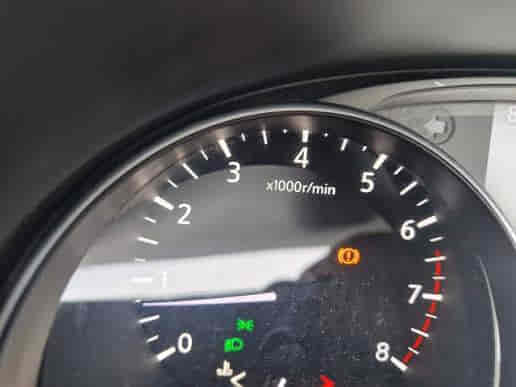
The Auto Hold system in the Nissan Qashqai is designed to improve driving comfort by automatically maintaining brake pressure after the vehicle comes to a complete stop. Instead of keeping your foot on the brake pedal in traffic or at traffic lights, the Auto Hold function keeps the vehicle stationary until the accelerator is pressed again. When the system operates correctly, it reduces driver fatigue and works seamlessly with the Electronic Parking Brake (EPB), Anti-lock Braking System (ABS), and Electronic Stability Control (ESC).
If the Nissan Qashqai Auto Hold is not working, the problem may range from incorrect operating conditions to sensor failures or brake system faults. In many cases, Auto Hold becomes unavailable because one of the required systems has detected an error, even if the braking performance still appears normal. Dashboard warning lights, a flashing Auto Hold indicator, or a message such as “Auto Hold Unavailable” often indicates that another vehicle system is preventing the feature from activating.
Understanding why Auto Hold stops working requires more than checking the Auto Hold button itself. The system depends on multiple electronic modules, wheel speed sensors, brake pedal switches, seat belt sensors, door switches, battery voltage, and the Electronic Parking Brake. This guide explains the most common causes of Nissan Qashqai Auto Hold failure, how to diagnose the problem, and the most effective repair solutions before visiting a workshop.
Why Is My Nissan Qashqai Auto Hold Not Working?
The Nissan Qashqai Auto Hold system stops working whenever one or more operating conditions required by the brake control module are not satisfied. Unlike conventional braking systems, Auto Hold relies on information from multiple electronic control units before allowing the vehicle to remain stationary automatically. If any component provides incorrect data or reports a fault, the system disables itself to maintain braking safety.
One of the most common reasons is that the driver’s seat belt is not fastened or the driver’s door is not fully closed. Nissan programs the Auto Hold system to operate only when the driver is properly seated and secured. Even a faulty seat belt buckle sensor or door latch switch can cause the Auto Hold indicator to flash or remain unavailable because the control module interprets the condition as unsafe.
The Electronic Parking Brake also plays a critical role in Auto Hold operation. Since both systems share braking hardware and electronic controllers, any malfunction affecting the electronic parking brake can automatically disable Auto Hold. Problems such as worn brake actuators, damaged parking brake motors, or calibration errors frequently trigger warning messages that affect both systems simultaneously.
Low battery voltage represents another frequent cause, especially during winter or after replacing the battery. Modern Nissan Qashqai models depend on stable electrical voltage to operate dozens of electronic modules. When battery voltage falls below the required threshold, non-essential comfort functions, including Auto Hold, may be temporarily disabled while critical vehicle systems continue operating normally.
Brake pedal switch failure is another common diagnosis. The Auto Hold system continuously monitors brake pedal position to determine when sufficient braking force has been applied. If the brake light switch sends inconsistent signals, the control module cannot accurately determine whether the driver intends to stop the vehicle, preventing Auto Hold from engaging.
Wheel speed sensor faults also prevent proper operation because the system must verify that all four wheels have completely stopped before maintaining brake pressure. A damaged ABS sensor, contaminated magnetic encoder ring, or broken sensor wiring can interrupt speed information. Even if ABS warning lights appear only intermittently, Auto Hold may stop functioning because accurate wheel speed data is no longer available.
Software communication errors between vehicle control modules occasionally cause Auto Hold failures without any mechanical defect. Battery replacement, module updates, or temporary voltage interruptions may require system recalibration using professional diagnostic equipment. In these situations, clearing stored fault codes and performing module initialization often restores normal operation without replacing any hardware.
Environmental conditions may also affect Auto Hold performance. Heavy mud, snow, or ice around wheel speed sensors and brake components can interfere with sensor readings. Although these situations are usually temporary, the vehicle may disable Auto Hold until sensor signals return to normal after driving conditions improve or the affected components are cleaned.
Because Auto Hold integrates multiple safety systems rather than operating independently, diagnosing the problem requires evaluating the entire electronic braking network instead of focusing solely on the Auto Hold switch. Reading diagnostic trouble codes with an OBD-II scanner capable of accessing ABS and Electronic Parking Brake modules is typically the fastest method for identifying the underlying cause.
What Causes Nissan Qashqai Auto Hold to Stop Working?
Several mechanical, electrical, and software-related faults can cause the Nissan Qashqai Auto Hold system to stop working. Although the Auto Hold feature appears to function independently, it is actually integrated with the Electronic Parking Brake (EPB), Anti-lock Braking System (ABS), Electronic Stability Control (ESC), Engine Control Module (ECM), and Body Control Module (BCM). A fault detected in any of these systems may disable Auto Hold even if the vehicle continues to drive and brake normally.
One of the most common causes is a malfunctioning brake light switch. Every time the brake pedal is pressed, the switch sends a signal to multiple control modules confirming that sufficient brake pressure has been applied. Auto Hold requires this signal before it can maintain hydraulic brake pressure after the vehicle stops. As the switch wears over time, intermittent electrical contact may prevent the control module from recognizing brake pedal input, causing the Auto Hold indicator to flash or remain inactive. Drivers may also notice delayed brake light operation or inconsistent cruise control performance because these systems rely on the same sensor.
Electronic Parking Brake faults are another leading cause of Auto Hold failure. Since Auto Hold works together with the EPB to keep the vehicle stationary, any problem affecting the parking brake motor, actuator, control module, or wiring can immediately deactivate the feature. Brake actuator wear, seized calipers, damaged wiring harnesses, or calibration failures after brake servicing commonly trigger both Electronic Parking Brake and Auto Hold warning messages simultaneously.
Wheel speed sensor failure frequently prevents Auto Hold from engaging because the system must accurately determine when the vehicle has completely stopped. Each wheel contains an ABS sensor that continuously measures rotational speed. Dirt accumulation, corrosion, damaged sensor wiring, or a cracked magnetic encoder ring can interrupt the signal transmitted to the ABS control module. Without reliable wheel speed information, the vehicle cannot safely maintain brake pressure, prompting the control unit to disable Auto Hold until the fault is corrected.
Low battery voltage is another overlooked factor that affects Auto Hold operation. Modern Nissan Qashqai models contain more than twenty electronic control modules communicating through the CAN Bus network. During engine start-up or when battery voltage falls below the required operating threshold, the Body Control Module prioritizes essential vehicle functions while temporarily disabling convenience features such as Auto Hold. Aging batteries, poor alternator performance, loose battery terminals, or recent battery replacement without proper system initialization can all contribute to voltage-related Auto Hold problems.
Faults within the ABS or Electronic Stability Control system almost always affect Auto Hold because these technologies share hydraulic brake components and electronic sensors. If the ABS module detects abnormal hydraulic pressure, communication errors, or unexpected wheel speed differences, Auto Hold automatically becomes unavailable as a safety precaution. In many cases, drivers will notice ABS, traction control, or stability control warning lights appearing at the same time as the Auto Hold warning indicator.
Software issues have become increasingly common as modern vehicles rely heavily on electronic communication between multiple modules. Interrupted software updates, corrupted control module memory, or failed calibration procedures after replacing the battery or brake components can prevent Auto Hold from functioning correctly. Nissan dealerships often resolve these issues by updating the Body Control Module, Electronic Parking Brake Module, or ABS software rather than replacing physical components. This explains why some Auto Hold failures disappear after a system reset or module reprogramming.
Driver-operated safety switches also influence whether Auto Hold activates. The system continuously verifies that the driver’s seat belt remains fastened and the driver’s door is fully closed before allowing brake hold functionality. A defective seat belt buckle sensor, damaged door latch switch, or wiring fault can incorrectly signal that the driver is leaving the vehicle. To eliminate the possibility of unintended vehicle movement, the control module immediately disables Auto Hold whenever these safety conditions are not satisfied.
Environmental contamination can occasionally produce temporary Auto Hold failures without any defective components. Driving through deep mud, heavy snow, flooding, or excessive road salt can obstruct wheel speed sensors or create moisture inside electrical connectors. As sensor signals become unstable, the braking control module may deactivate Auto Hold until the contamination is removed or the connectors dry completely. In many situations, normal operation returns after cleaning the affected components and clearing stored diagnostic trouble codes.
Because Auto Hold depends on multiple interconnected vehicle systems, diagnosing the root cause requires identifying the original fault rather than replacing parts based on symptoms alone. Professional diagnosis using a scan tool capable of accessing the ABS, EPB, BCM, and ECM modules provides the most accurate method for determining why the Nissan Qashqai Auto Hold system has stopped working while avoiding unnecessary component replacement.
How Can You Fix Nissan Qashqai Auto Hold Not Working?
Fixing the Nissan Qashqai Auto Hold system begins with identifying whether the issue is caused by operating conditions, electrical faults, sensor failures, or brake system malfunctions. Because Auto Hold is integrated with several safety systems, the correct repair depends on resolving the root cause rather than replacing the Auto Hold switch itself. In many cases, the feature resumes normal operation immediately after the underlying fault is corrected.
The first step is to verify that all operating conditions required by the Auto Hold system are satisfied. The engine must be running, the driver’s seat belt must be fastened, the driver’s door must be fully closed, and the Auto Hold button must be activated before the system can engage. Some Nissan Qashqai owners mistakenly assume the feature should remain permanently enabled after restarting the vehicle, but depending on the model year and software version, Auto Hold may need to be switched on again after each ignition cycle.
Next, inspect the dashboard for warning indicators. If the ABS, Electronic Parking Brake, Traction Control, or Check Engine Light is illuminated, the Auto Hold system is likely disabled as a secondary consequence of another fault. Since Auto Hold relies on these electronic systems for accurate brake control, repairing the primary warning often restores Auto Hold without requiring additional repairs. Ignoring these warning lights may lead to unnecessary replacement of functioning Auto Hold components.
Checking the vehicle’s battery condition is another essential diagnostic step. A weak battery can reduce system voltage below the operating threshold required by the Body Control Module and Electronic Parking Brake Module. Modern vehicles are highly sensitive to voltage fluctuations, particularly during engine start-up. If the battery is several years old or has recently discharged, testing its voltage and charging capacity may reveal the source of intermittent Auto Hold failures. Replacing a deteriorated battery frequently resolves unexplained electronic system faults, including Auto Hold warnings.
Brake fluid level should also be inspected because insufficient hydraulic pressure can prevent the braking system from operating normally. Although a low brake fluid reservoir does not always indicate a leak, worn brake pads naturally reduce fluid levels as the caliper pistons extend further over time. If the brake fluid warning light accompanies the Auto Hold warning, the braking system should be inspected immediately to identify leaks, worn brake components, or hydraulic pressure problems before continuing to drive the vehicle.
Wheel speed sensors deserve close attention because they provide the information required for ABS, Electronic Stability Control, and Auto Hold operation. Dirt, corrosion, road salt, or metallic debris can accumulate around the sensor tip or magnetic encoder ring, producing inaccurate wheel speed readings. Cleaning contaminated sensors may restore proper communication, while damaged sensors or broken wiring require replacement. Since each sensor continuously transmits data to the ABS control module, even a single defective sensor can disable multiple driver assistance systems simultaneously.
The brake light switch should also be tested if Auto Hold fails intermittently or activates inconsistently. This inexpensive component communicates brake pedal position to several electronic control units. If the switch sticks or produces irregular electrical signals, the Auto Hold module cannot determine when adequate braking force has been applied. Replacing a worn brake pedal switch is often a straightforward repair that restores normal Auto Hold operation while also correcting related cruise control or brake light issues.
Electronic Parking Brake calibration is another repair commonly required after brake servicing or battery replacement. Replacing rear brake pads, disconnecting the battery, or performing certain maintenance procedures may cause the parking brake module to lose its learned calibration values. Using a professional diagnostic scanner to initialize or recalibrate the Electronic Parking Brake often restores communication between the EPB and Auto Hold systems without replacing any mechanical parts.
If no visible faults are present, scanning the vehicle with an advanced OBD-II diagnostic tool becomes the most effective troubleshooting method. Basic code readers can identify engine faults, but they often cannot access the ABS, Electronic Parking Brake, or Body Control modules where Auto Hold-related diagnostic trouble codes are stored. Professional diagnostic equipment allows technicians to monitor live sensor data, verify brake switch operation, inspect CAN Bus communication, and identify software-related faults that would otherwise remain hidden.
Software updates should also be considered, particularly on newer Nissan Qashqai models. Manufacturers periodically release revised control module software to correct communication errors, improve system stability, and eliminate false warning messages. If diagnostic testing identifies no mechanical defect, an authorized Nissan service center may recommend updating the ABS, Body Control Module, or Electronic Parking Brake software before replacing hardware. This approach often resolves intermittent Auto Hold faults while reducing unnecessary repair costs.
If the Auto Hold warning remains active after completing these inspections, professional diagnosis is recommended. Persistent faults may indicate internal failure of the ABS hydraulic control unit, Electronic Parking Brake actuator, Body Control Module, or CAN Bus communication network. These components require specialized diagnostic procedures and programming equipment beyond the capabilities of standard home maintenance. Addressing the underlying fault promptly helps restore Auto Hold functionality while ensuring the entire braking system continues to operate safely and reliably.
Can You Drive If Nissan Qashqai Auto Hold Is Not Working?
Yes, you can usually drive a Nissan Qashqai when the Auto Hold system is not working, provided the primary braking system continues to operate normally and no critical brake-related warning lights indicate a serious fault. Auto Hold is a driver convenience feature rather than a core braking function. Its purpose is to maintain brake pressure after the vehicle stops, reducing the need to keep the brake pedal depressed during traffic congestion or while waiting at intersections. When Auto Hold becomes unavailable, the vehicle simply returns to conventional braking, requiring the driver to keep the brake pedal applied until it is safe to move again.
The situation changes if the Auto Hold failure occurs alongside warnings for the ABS, Electronic Parking Brake, Electronic Stability Control, or Brake System. These systems share sensors, hydraulic components, and electronic control modules with Auto Hold. When multiple warning indicators appear simultaneously, the problem may extend beyond the Auto Hold feature and affect braking assistance or vehicle stability. Although the vehicle may still be drivable, braking performance under emergency conditions could be compromised, making immediate diagnosis essential.
If the dashboard displays only an Auto Hold warning without additional fault messages, the issue is commonly related to operating conditions, sensor calibration, battery voltage, or communication errors rather than mechanical brake failure. In these situations, drivers generally notice no difference in normal braking performance apart from losing the automatic brake holding function. The vehicle continues to stop using the conventional hydraulic braking system, and the Electronic Parking Brake can still be applied manually whenever necessary.
Drivers should remain attentive if the vehicle begins exhibiting symptoms beyond the Auto Hold warning. A brake pedal that feels unusually soft or excessively firm, abnormal grinding noises, reduced braking effectiveness, warning messages indicating brake system failure, or repeated activation of multiple electronic safety warnings suggest that the problem may involve the primary braking system rather than the Auto Hold feature alone. Continuing to drive under these conditions increases safety risks and may lead to further damage if hydraulic pressure or electronic brake control has been compromised.
Intermittent Auto Hold operation also deserves attention. Some Nissan Qashqai owners report that Auto Hold functions normally after starting the engine but becomes unavailable later during the journey. This behavior often indicates an electrical or sensor-related problem rather than complete component failure. Battery voltage fluctuations, overheating wheel speed sensors, loose electrical connectors, or unstable CAN Bus communication may temporarily interrupt the information required by the Auto Hold control module. Diagnosing these intermittent faults early prevents them from developing into more extensive electronic braking system failures.
Ignoring an Auto Hold warning for an extended period may also result in higher repair costs. A minor issue such as a deteriorating wheel speed sensor, weakening battery, or faulty brake pedal switch can eventually affect additional systems including ABS, traction control, adaptive cruise control, hill start assist, and emergency braking. Since these technologies share many of the same electronic components, addressing the original fault promptly helps prevent multiple systems from becoming unavailable simultaneously.
If the Auto Hold warning appears after recent brake pad replacement, battery replacement, or Electronic Parking Brake servicing, the cause is often related to calibration rather than component failure. Performing the correct initialization procedure with professional diagnostic equipment frequently restores normal operation without replacing any parts. For this reason, checking the vehicle’s service history can provide valuable clues before beginning more extensive troubleshooting.
Although the Nissan Qashqai remains safe to drive in many Auto Hold failure scenarios, the warning should never be ignored indefinitely. Auto Hold is integrated into the vehicle’s electronic braking architecture, meaning its failure often serves as an early indicator of faults affecting interconnected systems. Prompt diagnosis not only restores driver convenience but also helps ensure the braking, stability, and safety systems continue operating as Nissan originally intended.
How Can You Prevent Nissan Qashqai Auto Hold Problems?
Preventing Nissan Qashqai Auto Hold problems is largely a matter of maintaining the vehicle’s braking and electrical systems according to Nissan’s recommended service schedule. Because Auto Hold depends on information from multiple electronic modules and sensors, small issues that appear unrelated can eventually interfere with its operation. Routine inspections and preventive maintenance significantly reduce the likelihood of unexpected Auto Hold failures while improving the overall reliability of the vehicle’s safety systems.
Keeping the battery in good condition is one of the most effective preventive measures. The Auto Hold system requires stable voltage to communicate with the Electronic Parking Brake, ABS, Body Control Module, and Engine Control Module. As batteries age, their voltage output becomes less consistent, particularly during cold weather or frequent short trips. Voltage fluctuations may not prevent the engine from starting, but they can cause intermittent communication errors that disable Auto Hold. Testing the battery during scheduled maintenance and replacing it before it reaches the end of its service life helps prevent many electronic faults.
Regular brake system maintenance is equally important because Auto Hold relies on hydraulic brake pressure to keep the vehicle stationary. Worn brake pads, contaminated brake fluid, seized calipers, or excessive brake disc wear can affect braking performance and place additional stress on the Electronic Parking Brake. Replacing brake fluid at the recommended interval maintains hydraulic pressure while reducing the risk of internal corrosion within the braking system. Properly serviced brakes not only improve safety but also ensure that Auto Hold continues to operate smoothly.
Wheel speed sensors should also be inspected periodically, especially if the vehicle is frequently driven on muddy roads, gravel surfaces, or areas treated with road salt during winter. Dirt, moisture, and corrosion around the sensors or magnetic encoder rings can gradually reduce signal quality before eventually triggering warning lights. Cleaning these components during routine brake servicing helps maintain accurate wheel speed information for the ABS and Auto Hold systems.
Drivers should also avoid ignoring warning lights that appear briefly before disappearing. Temporary ABS, traction control, or Electronic Parking Brake warnings often indicate intermittent electrical problems that may later disable Auto Hold completely. Loose connectors, damaged wiring insulation, or deteriorating sensors frequently produce intermittent faults long before permanent failure occurs. Addressing these early warning signs prevents minor electrical issues from developing into more expensive repairs.
Battery replacement and brake servicing should always be performed using the correct procedures recommended by Nissan. Disconnecting the battery without following initialization requirements or replacing rear brake pads without placing the Electronic Parking Brake into service mode may cause calibration errors within the braking control module. Professional workshops use diagnostic equipment to recalibrate the Electronic Parking Brake after maintenance, ensuring that Auto Hold continues to function correctly once repairs are complete.
Keeping vehicle software up to date also contributes to long-term reliability. Nissan periodically releases software updates for control modules that improve communication between electronic systems, resolve known software bugs, and optimize the operation of advanced driver assistance features. During routine servicing, owners should ask dealerships whether updated software is available for the ABS, Body Control Module, or Electronic Parking Brake Module, particularly if the vehicle has experienced intermittent Auto Hold issues in the past.
Driving habits also influence the longevity of the braking system. Repeated heavy braking, aggressive acceleration followed by sudden stops, or prolonged brake pedal application on steep inclines increase wear on brake components and generate additional heat within the braking system. Smooth driving techniques reduce mechanical stress while allowing regenerative braking and electronic brake management systems to operate more efficiently.
Preventive maintenance should include regular diagnostic scans even when no warning lights are visible. Modern Nissan Qashqai models can store pending fault codes before a malfunction becomes obvious to the driver. Identifying these stored codes during scheduled servicing allows technicians to detect sensor degradation, communication errors, or voltage irregularities at an early stage. Correcting these hidden faults before they trigger dashboard warnings reduces repair costs and minimizes the risk of unexpected Auto Hold failure.
By combining proper battery care, regular brake maintenance, periodic sensor inspections, software updates, and proactive diagnostic testing, most Nissan Qashqai owners can prevent Auto Hold problems throughout the vehicle’s service life. Since the system operates as part of a larger electronic braking network, maintaining every supporting component is the most effective strategy for ensuring reliable Auto Hold performance under all driving conditions.
Read more: Nissan Note Hybrid Fuel Consumption
Frequently Asked Questions About Nissan Qashqai Auto Hold Not Working
Why is the Auto Hold light flashing on my Nissan Qashqai?
A flashing Auto Hold indicator usually means the system has detected a fault or one of its operating conditions has not been met. Common causes include an unfastened driver’s seat belt, an open driver’s door, low battery voltage, a faulty brake pedal switch, or problems within the ABS or Electronic Parking Brake system. If the warning remains after restarting the vehicle, the braking system should be scanned for diagnostic trouble codes to identify the underlying issue.
Why does Auto Hold stop working after I replace the battery?
Auto Hold may stop functioning after battery replacement because several control modules lose their learned calibration values during power interruption. The Electronic Parking Brake, Body Control Module, and ABS module may require initialization or recalibration before the system can operate normally again. In some cases, the issue resolves automatically after several driving cycles, while other vehicles require a diagnostic scan tool to complete the relearning procedure.
Can a weak battery cause Nissan Qashqai Auto Hold to fail?
Yes. The Auto Hold system depends on stable electrical voltage to communicate with multiple electronic control modules. A weak or aging battery can cause voltage fluctuations that interrupt communication between the ABS, Electronic Parking Brake, and Body Control Module. As a safety measure, the vehicle may disable Auto Hold while continuing to operate normally in other areas.
Does an ABS warning light affect Auto Hold?
Yes. Auto Hold relies on the ABS system to monitor wheel speed and hydraulic brake pressure. If the ABS control module detects a fault, Auto Hold is automatically disabled because it can no longer verify that the vehicle has stopped safely. Repairing the ABS fault usually restores Auto Hold functionality without requiring additional repairs.
Can worn brake pads stop Auto Hold from working?
Worn brake pads do not directly disable Auto Hold, but excessive brake wear can affect hydraulic brake performance and Electronic Parking Brake operation. If brake pad wear becomes severe enough to trigger brake system warnings or reduce hydraulic efficiency, the Auto Hold system may deactivate until the braking components are repaired.
Why does Auto Hold only work sometimes?
Intermittent Auto Hold operation usually indicates an electrical or sensor-related problem rather than complete component failure. Common causes include loose wiring connections, deteriorating wheel speed sensors, inconsistent brake pedal switch signals, unstable battery voltage, or software communication errors between vehicle control modules. These intermittent faults often become permanent if left unresolved.
Can I reset the Nissan Qashqai Auto Hold system myself?
There is no dedicated manual reset procedure for the Auto Hold system. If the fault is caused by temporary operating conditions, turning the engine off and restarting the vehicle may restore normal operation. However, if warning lights remain illuminated, the vehicle typically requires diagnostic scanning to clear fault codes and verify that the underlying problem has been repaired before Auto Hold becomes available again.
How much does it cost to repair Nissan Qashqai Auto Hold?
Repair costs vary depending on the underlying fault. Replacing a brake light switch or installing a new battery is generally inexpensive, while repairing the Electronic Parking Brake actuator, ABS control module, or wheel speed sensor network can be considerably more expensive. Performing an accurate diagnostic inspection before replacing components helps avoid unnecessary repair costs and ensures the correct fault is addressed.
Does cold weather affect Nissan Qashqai Auto Hold?
Yes. Low temperatures reduce battery efficiency and increase electrical demand during engine start-up. Cold weather can also affect wheel speed sensors, brake components, and electrical connectors exposed to moisture, snow, or road salt. These conditions may temporarily disable Auto Hold until the vehicle reaches normal operating temperature or the affected components are cleaned.
When should I visit a Nissan dealer for Auto Hold problems?
Professional diagnosis is recommended whenever the Auto Hold warning appears together with ABS, Electronic Parking Brake, Brake System, or Electronic Stability Control warning lights. Dealer-level diagnostic equipment can access manufacturer-specific control modules, perform software updates, recalibrate the Electronic Parking Brake, and identify communication faults that standard OBD-II scanners cannot detect. Prompt diagnosis helps prevent minor electronic issues from developing into more extensive braking system failures.