
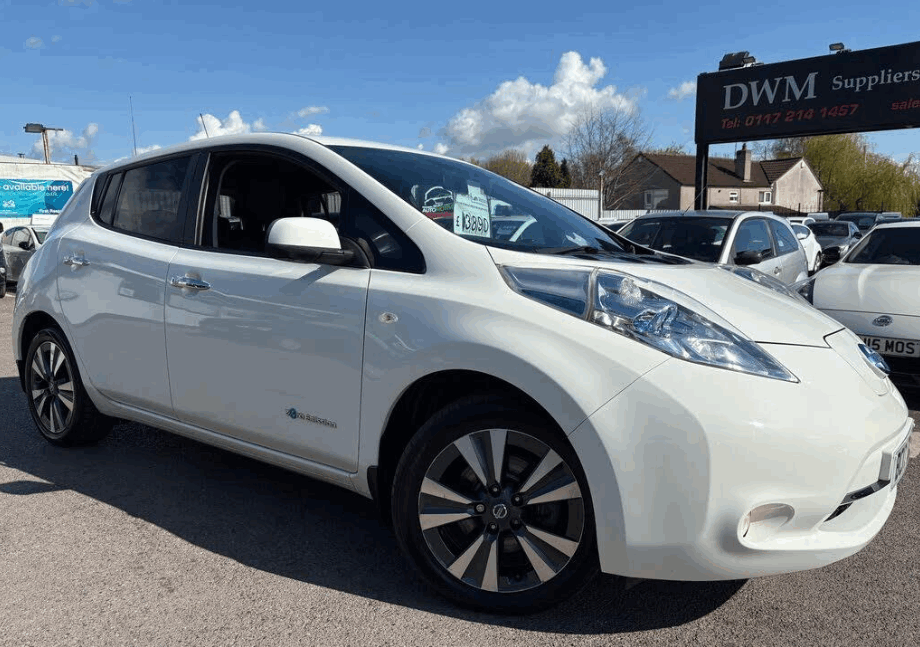
Used Nissan Leafs are cheap because they depreciate quickly and older batteries lose capacity over time. Early models also have limited driving range compared with newer electric vehicles. Battery replacement concerns can further reduce buyer demand. Older EV technology and CHAdeMO charging also affect resale value. At the same time, newer EVs give buyers more alternatives at competitive prices.
However, a cheap Nissan Leaf does not always indicate a bad car. Battery condition has a greater impact on value than price alone. Model year, battery capacity, mileage, and charging capability also matter. Most importantly, buyers should check the battery State of Health and remaining real world range. These factors show how useful the car will be for daily driving.
There are 7 main reasons used Nissan Leafs sell at low prices. Several of these factors also influence each other. Battery degradation reduces driving range, while shorter range limits the potential buyer pool. Lower demand then pushes resale values down. Understanding these connections helps buyers judge each car more accurately. A cheap used Nissan Leaf can offer good value when its battery and range match the buyer’s driving needs.
Why Are Used Nissan Leafs So Cheap?
Used Nissan Leafs are cheap for 7 main reasons: rapid depreciation, battery degradation, limited range, battery costs, older technology, CHAdeMO charging, and EV competition. These factors reduce demand for older models and push their resale values down. However, they do not affect every used Nissan Leaf equally.
Depreciation plays a major role because electric vehicle technology has improved quickly. Newer EVs offer longer ranges, faster charging, and more advanced battery systems. These improvements make early Nissan Leaf models less attractive in the used car market. Buyers may therefore expect a lower price even when an older Leaf remains reliable.
Battery condition creates another major difference in value. Lithium ion batteries gradually lose usable capacity as they age. A degraded battery gives the car less driving range on a full charge. This limitation reduces the number of buyers who can use the vehicle comfortably. Concerns about future battery costs can also lower the amount buyers want to pay.
Charging technology and market competition add more price pressure. Many Nissan Leafs use CHAdeMO for DC fast charging. Meanwhile, newer EVs offer different charging options and greater driving ranges. Buyers now have more electric cars to compare at similar price points.
For these reasons, a low price alone does not determine whether a used Nissan Leaf offers good value. Battery health, remaining range, model year, and charging needs provide a more useful picture.
Why Do Nissan Leafs Depreciate So Quickly?
Nissan Leafs depreciate quickly because newer electric vehicles offer better range, charging performance, battery technology, and features. These improvements reduce demand for older Leaf models. As buyer demand falls, sellers must accept lower prices in the used car market.
Technology changes have a strong effect on EV depreciation. An older gasoline car can still offer similar basic driving capability to a newer model. Electric vehicles face a different comparison. Buyers often compare battery capacity, driving range, and charging performance before considering other features. A newer EV with better specifications can therefore make an older Leaf less desirable.
Driving range creates an especially important difference. Early Nissan Leaf models have less original range than many newer electric vehicles. Battery aging can reduce that range further. As a result, an older Leaf may serve daily local trips well but provide less flexibility for longer journeys. This smaller range of practical uses limits the potential buyer pool.
Depreciation does not mean every older Nissan Leaf has a mechanical problem. Market value and vehicle condition are different factors. A Leaf can remain functional while losing a large share of its resale value. Rapid improvements across the EV market can accelerate this process.
For buyers, heavy depreciation can create an opportunity. The first owner absorbs much of the loss in value. A used buyer can then purchase an electric car for less. The value depends on whether the battery condition, remaining range, and charging capability still meet that buyer’s needs.
How Does Battery Degradation Lower Used Nissan Leaf Prices?
Battery degradation lowers used Nissan Leaf prices because it reduces battery capacity and available driving range. Buyers place less value on a Leaf that travels fewer miles per charge. This relationship makes battery condition a major factor in the price of an older Nissan Leaf.
Lithium ion batteries gradually lose capacity as they age. Several factors influence the rate of degradation. These include battery age, charging cycles, driving habits, and exposure to high temperatures. Frequent use also adds cycles to the battery over time. As usable capacity declines, the car stores less energy after a full charge.
Battery State of Health helps describe the remaining capacity of an EV battery. A higher State of Health generally means the battery retains more of its original capacity. A lower figure indicates greater capacity loss. For a used Leaf buyer, this information provides useful context for estimating remaining driving range.
Battery degradation does not mean complete battery failure. A degraded battery can continue powering the vehicle for daily trips. However, its shorter range can limit how the owner uses the car. For example, a Leaf may still handle a short commute without difficulty. The same car may require more frequent charging on longer journeys.
This difference also explains why two similar Nissan Leafs can have different market values. Mileage and model year do not reveal the entire condition of the battery. Buyers should also consider battery health and usable range. A Leaf with a healthier battery can justify a higher price because it provides greater daily utility.
Why Does Limited Driving Range Make Older Nissan Leafs Cheaper?
Limited driving range makes older Nissan Leafs cheaper because it reduces the number of drivers who can use them comfortably. A shorter range limits trip flexibility and increases the need for frequent charging. These limitations reduce buyer demand and put downward pressure on used prices.
Older Nissan Leaf models started with smaller battery capacities than many newer electric vehicles. Battery degradation can reduce their usable capacity further as the cars age. The result is a lower real world range than the vehicle provided when new. Buyers must therefore consider current range rather than original specifications alone.
Daily driving needs determine how important this limitation becomes. A Leaf with modest range may work well for a short urban commute. It can also handle school runs, shopping, and other local trips. The same vehicle may become inconvenient for regular highway travel or longer journeys. Drivers without reliable charging access face an additional limitation.
Range also affects the size of the used car market for each vehicle. More drivers can consider an EV that covers both daily trips and occasional longer journeys. Fewer drivers will consider a car that mainly suits local travel. A smaller buyer pool can reduce resale value even when the vehicle remains useful.
For this reason, low range does not automatically make an older Nissan Leaf a poor purchase. The important comparison is between remaining range and actual driving needs. A cheap Leaf can provide strong value when its usable range comfortably covers the owner’s regular trips.
Does Nissan Leaf Battery Replacement Cost Affect Resale Value?
Nissan Leaf battery replacement costs can reduce resale value because buyers consider the risk of future battery expenses. An older battery with significant capacity loss creates more uncertainty. Buyers may respond by offering less for the car, even when the battery still works.
Battery degradation does not automatically mean the battery needs replacement. Capacity loss happens gradually as lithium ion batteries age. A Leaf can continue serving daily driving needs with reduced battery capacity. The important question is whether its remaining range still meets the owner’s requirements.
Battery problems can also differ in severity. Normal capacity loss is different from a fault that requires repair. A battery related issue may not require replacement of the entire battery pack. Buyers should therefore avoid assuming that every battery concern creates the same cost.
The possibility of a large future expense still affects buyer behavior. A buyer may compare a cheaper Leaf with a weak battery against a more expensive Leaf with better battery health. Paying more for the healthier battery can provide better value over the ownership period. This comparison puts additional price pressure on Leafs with greater battery degradation.
A cheap used Nissan Leaf does not necessarily need a new battery. Buyers should examine battery State of Health, usable capacity, and real world range first. These factors provide a clearer picture of battery value. They also help buyers decide whether the low purchase price fairly reflects the condition of the car.
How Do Older EV Technology and CHAdeMO Charging Lower Nissan Leaf Values?
Older EV technology and CHAdeMO charging can lower Nissan Leaf values because they reduce convenience compared with newer electric vehicles. Buyers now have access to EVs with longer ranges and faster charging options. This progress makes some older Leaf models less competitive in the used market.
Charging capability plays an important role in this comparison. Many Nissan Leaf models use the CHAdeMO connector for DC fast charging. A buyer who depends on public fast charging must consider access to compatible chargers. Charging convenience becomes more important for drivers who regularly travel beyond the car’s normal daily range.
Home charging changes this situation. A driver who charges overnight may rarely need public fast charging. For that owner, CHAdeMO compatibility may have little effect on daily use. A driver who takes frequent long trips will place more value on public charging access. The same charging limitation can therefore affect buyers differently.
Older Leaf models also compete with improvements in battery capacity, range, charging performance, and vehicle technology. These differences do not make an older Leaf unusable. They change its position in the market. Buyers can demand a lower price when newer alternatives provide greater flexibility.
This technology gap helps explain the low prices of many used Nissan Leafs. The effect depends on how the buyer plans to use the vehicle. Home charging and short daily trips can reduce the importance of older charging technology. Frequent long distance driving makes these limitations more significant.
How Do Newer EVs Push Down Used Nissan Leaf Prices?
Newer EVs push down used Nissan Leaf prices by giving buyers more capable alternatives. Modern electric cars often provide longer range and improved charging performance. These advantages reduce the relative value of older Nissan Leaf models. Lower buyer demand can then push their used prices down.
Competition matters because buyers judge value by comparing available vehicles. An older Leaf does not compete only with other Nissan Leafs. It also competes with other used EVs and newer electric cars. As the number of choices grows, buyers can become more selective about range, battery capacity, and charging capability.
Driving range creates a clear difference between generations of electric vehicles. Many buyers want enough range for daily travel and unexpected trips. Greater range also reduces the need to plan charging stops. An older Leaf with limited usable range serves fewer driving patterns. Buyers may expect a lower price in exchange for that limitation.
Charging performance creates another competitive gap. Newer EVs can offer charging systems that better suit frequent long distance travel. Improvements in battery technology and vehicle features also influence purchase decisions. Each improvement makes older specifications less valuable relative to current alternatives.
This does not mean a newer EV always provides better value. A used Nissan Leaf can cost much less and still meet basic transportation needs. The key difference is market position. Newer EVs raise buyer expectations, while older Leafs must compete through lower prices. That pressure helps explain why functional Nissan Leafs can become surprisingly cheap on the used market.
Is a Cheap Used Nissan Leaf Worth Buying?
A cheap used Nissan Leaf can be worth buying when its battery condition and remaining range match your daily driving needs. The low purchase price can make the Leaf attractive for local transportation. However, buyers should judge value by usable condition rather than price alone.
Battery health should be one of the first considerations. A healthier battery provides more usable capacity and gives the car greater driving range. A weaker battery may still work well for short trips. However, it can reduce flexibility and require more frequent charging. The best choice depends on how far you normally drive.
Charging access also affects the value of a used Leaf. Home charging makes ownership easier for many short distance commuters. The owner can recharge the car overnight and start each day with available range. Drivers who rely heavily on public charging need to examine compatible charging options more carefully.
A used Leaf can also make sense as a second household vehicle. It can handle commuting, shopping, school trips, and other predictable journeys. Buyers who frequently take long road trips may need greater range and more charging flexibility.
Purchase price should therefore be compared with battery State of Health, remaining range, and charging capability. The expected ownership period also matters. A very cheap Leaf is not automatically the best value. A suitable used Nissan Leaf is one that provides enough usable range for its price and intended purpose.
What Should You Check Before Buying a Used Nissan Leaf?
Check the battery health, remaining range, model year, battery size, charging capability, vehicle history, and warranty before buying a used Nissan Leaf. These factors reveal more about practical value than a low purchase price alone. Mileage remains useful, but it should not replace a proper battery assessment.
Start with the battery State of Health and available capacity. Battery condition affects how far the Leaf can travel after a full charge. Compare that usable range with your normal daily mileage. A car with enough range for your routine can remain practical despite significant age.
Next, confirm the model year and battery size. Nissan offered different Leaf configurations across its production history. These differences affect original range and overall usability. Buyers should identify the exact vehicle configuration rather than assume every Leaf from the same generation performs equally.
Charging capability also deserves attention. Check how you plan to charge at home and away from home. Drivers who depend on public fast charging should examine compatible infrastructure in their area. Home charging can make an older Leaf much easier to own for predictable daily trips.
Finally, review the service history, accident history, and remaining warranty coverage. Inspect the general condition of the car as you would with any used vehicle. Do not choose a Leaf simply because it has the lowest advertised price. The better purchase is the car whose battery condition, usable range, charging capability, and overall condition justify its price.
Why Are Used Nissan Leafs Cheap, and Should You Buy One?
Used Nissan Leafs are cheap because depreciation, battery degradation, limited range, battery costs, older technology, CHAdeMO charging, and newer EV competition reduce their resale value. These factors explain the low prices without making every used Leaf a poor purchase.
A cheap Nissan Leaf can offer good value when its battery still meets your driving needs. Battery State of Health provides useful information about remaining capacity. Real world range shows whether the car can handle your regular trips. Home charging can also make an older Leaf more practical for daily use.
However, the lowest purchase price does not always provide the best value. A Leaf with severe battery degradation may offer less useful range. Charging limitations can also create problems for drivers who take frequent long trips. Paying more for a healthier battery may provide greater utility over the ownership period.
The final decision should focus on usable value rather than price alone. Compare the battery condition, remaining range, charging capability, vehicle history, and overall condition with the asking price. A used Nissan Leaf can be a worthwhile purchase when its remaining battery capacity and daily utility justify what you pay for it.