Many people still ask whether Nissan makes UD Trucks. The confusion comes from the brand’s long history as Nissan Diesel. However, Nissan no longer owns or manufactures UD Trucks. Today, the company operates under a different ownership structure and continues to produce commercial trucks for global markets.
The relationship between UD Trucks and Nissan has changed several times over the past decades. First, Nissan developed the brand as Nissan Diesel. Later, Volvo Group acquired the company and renamed it UD Trucks. In 2021, Isuzu Motors purchased UD Trucks from Volvo and became its new owner. As a result, Nissan no longer plays a role in the company’s ownership or truck production.
Many fleet operators and truck buyers still associate UD Trucks with Nissan because older vehicles carried the Nissan Diesel name. Even so, today’s UD Trucks has its own brand identity, product lineup, and manufacturing operations. The company continues to design heavy and medium duty trucks for customers across Asia, the Middle East, Africa, and other international markets.
This guide explains whether UD Trucks are still made by Nissan. It also explores the company’s ownership history, manufacturing locations, current truck models, and global presence. By the end of this article, you will clearly understand how UD Trucks evolved and who owns the brand today.
Are UD Trucks Made by Nissan Today?
No, Nissan does not make UD Trucks today. Isuzu Motors owns UD Trucks and manages the company’s commercial vehicle business. Although UD Trucks started as Nissan Diesel, Nissan no longer controls the brand, manufactures its trucks, or develops its products. This ownership change explains why modern UD Trucks operate as a separate commercial vehicle manufacturer instead of a Nissan subsidiary.
The connection between the two companies dates back to 1935, when the truck manufacturer began operating under what later became Nissan Diesel. For many years, Nissan used the brand to produce medium and heavy duty commercial trucks for domestic and international markets. As the company expanded, Nissan Diesel earned a strong reputation for durable engines, dependable performance, and innovative diesel technology. Because of this long history, many fleet owners still refer to older UD vehicles as Nissan trucks.
The situation changed when Volvo Group acquired a majority stake in Nissan Diesel in 2007. Volvo completed the full acquisition in 2010 and officially rebranded the company as UD Trucks the following year. The new identity reflected the company’s independent position within Volvo’s global truck business while preserving the well-known UD name. Nissan ended its involvement after the acquisition and no longer participated in product development or manufacturing.
Another major transition occurred in 2021 when Isuzu Motors acquired UD Trucks from Volvo Group. Today, Isuzu oversees the brand’s operations, production, and long-term strategy while continuing to sell UD Trucks in many international markets. Although the company’s ownership has changed several times, UD Trucks continues to build commercial vehicles that focus on reliability, fuel efficiency, and productivity for professional transport operators.
How Did UD Trucks Evolve From Nissan Diesel?
UD Trucks began its journey as Nissan Diesel, one of Japan’s leading commercial vehicle manufacturers. The company built its reputation by producing durable diesel trucks for construction, logistics, and long distance transportation. Over several decades, Nissan Diesel expanded into international markets and became known for engineering reliable heavy duty vehicles. As a result, many transport companies still connect the UD brand with Nissan today.
The company’s history started in 1935 with the establishment of Diesel Motor Industry Co., Ltd. It later became part of the Nissan Group and adopted the Nissan Diesel name. During this period, the manufacturer introduced several successful truck models and developed advanced diesel engine technology. The company also pioneered the UD engine concept, which stands for Uniflow Diesel. This engine design improved combustion efficiency and helped establish the UD name as a symbol of innovation long before it became the company’s official brand.
The biggest change came when Volvo Group acquired a controlling interest in Nissan Diesel in 2007. After completing the acquisition in 2010, Volvo introduced a new global branding strategy. In 2011, the company officially changed the business name from Nissan Diesel to UD Trucks. The rebranding aimed to create a stronger international identity while reducing confusion with Nissan Motor, which no longer managed the commercial truck business.
Although the company adopted a new name, it continued to build on its engineering heritage. Many technologies, manufacturing standards, and product philosophies developed during the Nissan Diesel era remained part of UD Trucks. Today, the brand combines that legacy with modern innovations under Isuzu Motors, allowing UD Trucks to remain a respected manufacturer in the global commercial vehicle industry while operating independently from Nissan.
Who Owns UD Trucks Now?
Isuzu Motors owns UD Trucks today. The Japanese commercial vehicle manufacturer completed its acquisition of UD Trucks from Volvo Group in 2021. As the current owner, Isuzu manages the company’s business operations, product development, manufacturing strategy, and global growth. Nissan no longer has any ownership interest or management role in the brand.
Volvo Group played an important role in UD Trucks before Isuzu became the owner. In 2007, Volvo acquired a majority stake in Nissan Diesel and completed the full acquisition three years later. The company invested in new technologies, expanded the global dealer network, and officially rebranded Nissan Diesel as UD Trucks in 2011. During this period, UD Trucks strengthened its position in the heavy duty truck market while benefiting from Volvo’s engineering expertise and international presence.
A new chapter began in April 2021 when Isuzu Motors finalized the purchase of UD Trucks. The acquisition formed a strategic partnership between Isuzu and Volvo Group. While Isuzu became the owner of UD Trucks, the two companies continued to cooperate in areas such as commercial vehicle technology, purchasing, and future transportation solutions. This collaboration allows both manufacturers to improve efficiency while remaining separate brands in the global truck industry.
Today, UD Trucks operates as an independent brand within the Isuzu Group. The company continues to develop medium and heavy duty trucks for logistics, construction, mining, and regional distribution. Its products remain available across Asia, Africa, the Middle East, and several other international markets. Although the ownership has changed over time, UD Trucks continues to focus on reliability, productivity, fuel efficiency, and advanced transport solutions for commercial fleet operators.
Where Are UD Trucks Manufactured Today?
UD Trucks manufactures its vehicles primarily in Japan while supporting global production through regional assembly operations. The company’s main manufacturing center is located in Ageo, Saitama Prefecture, where it produces heavy and medium duty trucks for domestic and international markets. This facility also serves as the company’s headquarters, engineering center, and research hub, ensuring that product development and manufacturing follow the same quality standards.
Japan remains the core of UD Trucks’ manufacturing strategy because it allows the company to maintain strict quality control and advanced engineering practices. Engineers design, test, and refine new truck models at the Ageo facility before they enter global production. This integrated approach helps UD Trucks deliver reliable commercial vehicles that meet the performance requirements of logistics companies, construction businesses, and fleet operators across different regions.
To support international demand, UD Trucks also works with regional manufacturing and assembly partners in selected markets. Local assembly helps reduce delivery times, improve parts availability, and comply with regional regulations. Depending on the destination market, some vehicles are shipped as completely built units, while others are assembled locally from supplied components. This flexible production model allows the company to serve customers more efficiently without compromising product quality.
Nissan no longer participates in the manufacturing of UD Trucks. Since Volvo Group acquired the company and Isuzu Motors later became its owner, all production, engineering, and business operations have moved outside Nissan’s control. Today, UD Trucks continues to manufacture commercial vehicles under the leadership of Isuzu while preserving the engineering heritage that made the brand well known throughout the global trucking industry.
What Truck Models Does UD Trucks Produce?
UD Trucks produces several commercial truck models that serve different industries and transportation needs. The company’s current lineup includes heavy, medium, and light duty vehicles designed for long haul transport, regional distribution, construction, and specialized applications. Each model focuses on durability, fuel efficiency, driver comfort, and advanced safety technologies that help fleet operators reduce operating costs.
The UD Quon is the brand’s flagship heavy duty truck. It supports long distance freight transportation, heavy cargo, and demanding logistics operations. The latest Quon features fuel efficient powertrains, automated manual transmissions, and advanced driver assistance systems that improve safety and productivity. Many transport companies choose the Quon because it delivers reliable performance while helping reduce fuel consumption and maintenance expenses over long operating periods.
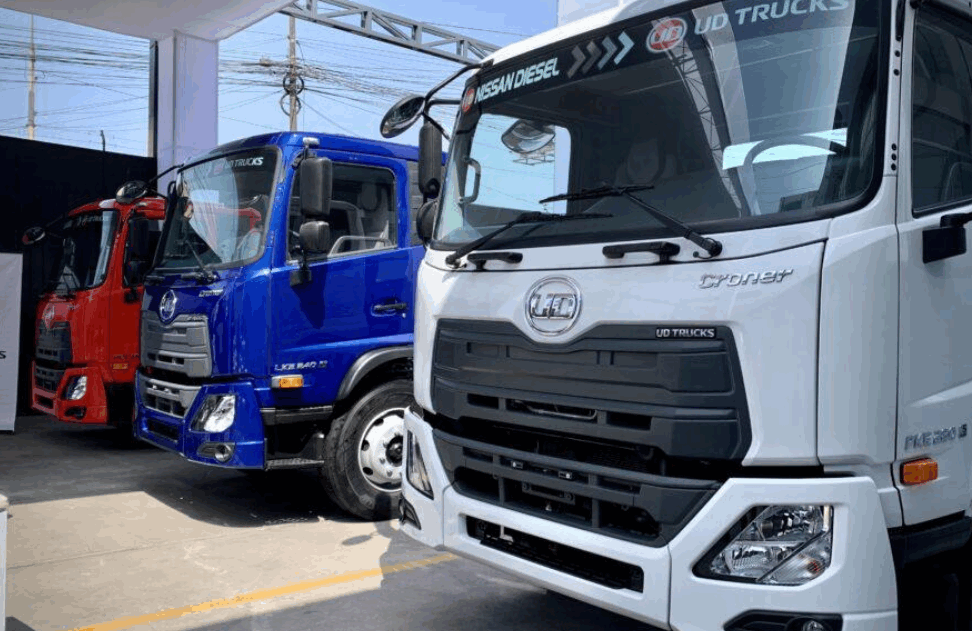
The UD Croner serves the medium duty truck segment and targets businesses that require flexible transportation solutions for urban and regional deliveries. It offers multiple wheelbase configurations, body options, and payload capacities to support industries such as retail distribution, food delivery, construction, and municipal services. Its practical design allows operators to balance performance, maneuverability, and operating efficiency in daily commercial use.
UD Trucks also markets the Quester in selected regions across Asia, Africa, and the Middle East. The Quester is designed for developing markets where customers need dependable trucks that can operate in challenging road conditions. Its robust chassis, durable drivetrain, and simplified maintenance make it suitable for construction, mining, and heavy transport applications. Together, the Quon, Croner, and Quester demonstrate UD Trucks’ commitment to providing commercial vehicles that meet the diverse requirements of modern fleet operators around the world.
Are UD Trucks Reliable Compared With Other Japanese Truck Brands?
UD Trucks has built a strong reputation for reliability in the global commercial vehicle industry. Fleet operators value the brand for its durable powertrains, efficient fuel consumption, and low operating costs. Although UD Trucks competes with well known manufacturers such as Isuzu, Hino, and Mitsubishi Fuso, it continues to attract customers who prioritize long service life and dependable performance in demanding transport environments.
One of the company’s biggest strengths is its engineering approach. UD Trucks develops vehicles that can withstand continuous operation under heavy workloads while maintaining consistent performance. Advanced diesel engines, automated manual transmissions, and integrated safety technologies help reduce mechanical wear and improve overall efficiency. These features also lower maintenance requirements and minimize vehicle downtime, which is essential for businesses that rely on daily transportation.
Fuel efficiency is another reason many companies choose UD Trucks. Modern models use optimized engine management systems and aerodynamic designs to reduce fuel consumption without sacrificing power. Combined with predictive maintenance technologies and connected fleet management solutions, these improvements help fleet owners control operating expenses and maximize vehicle productivity throughout the truck’s service life.
Compared with other Japanese truck brands, each manufacturer offers distinct advantages. Isuzu is widely recognized for medium duty trucks and fuel efficient diesel engines. Hino has earned a reputation for dependable fleet vehicles and extensive dealer support. Mitsubishi Fuso focuses on advanced safety systems and global commercial vehicle solutions. UD Trucks stands out by combining durable engineering, driver focused technology, and efficient heavy duty transport solutions. This balanced approach makes the brand a competitive choice for logistics companies, construction firms, and long distance freight operators across international markets.
Frequently Asked Questions About UD Trucks
Is UD Trucks still owned by Nissan?
No, UD Trucks is not owned by Nissan. Isuzu Motors acquired the company from Volvo Group in 2021 and now manages its global operations. Nissan ended its involvement after Volvo completed the acquisition of Nissan Diesel. Today, UD Trucks operates as an independent commercial truck brand within the Isuzu Group.
Why did Nissan sell UD Trucks?
Nissan sold its commercial truck business as part of a broader corporate restructuring strategy. The company decided to focus more on its passenger vehicle business while Volvo Group expanded its presence in the global commercial vehicle market. The transaction allowed Volvo to strengthen its truck portfolio and provided UD Trucks with greater access to international technology and distribution networks.
Does Volvo still own UD Trucks?
No, Volvo Group no longer owns UD Trucks. Although Volvo played a significant role in developing the brand between 2007 and 2021, ownership transferred to Isuzu Motors in April 2021. Volvo and Isuzu continue to cooperate on selected commercial vehicle technologies, but UD Trucks now operates under Isuzu’s ownership.
Are UD Trucks made in Japan?
Yes, UD Trucks are primarily manufactured in Japan. The company’s main production facility is located in Ageo, Saitama Prefecture, where engineers develop and assemble many of its heavy and medium duty truck models. UD Trucks also supports regional assembly operations in selected international markets to serve local customers more efficiently.
Are UD Trucks reliable?
Yes, UD Trucks are widely recognized for their durability, fuel efficiency, and dependable performance. Many logistics companies, construction businesses, and fleet operators choose the brand because its trucks can handle demanding workloads while maintaining low operating costs. Continuous investment in engineering and safety technologies has also strengthened the brand’s reputation in international markets.
Which company manufactures UD Trucks today?
UD Trucks manufactures its commercial vehicles under the ownership of Isuzu Motors. The company continues to design, engineer, and produce trucks for global markets while maintaining its own brand identity. Nissan no longer participates in manufacturing, product development, or business operations.
Conclusion
UD Trucks is no longer made or owned by Nissan. Although the company built its reputation as Nissan Diesel, several ownership changes have transformed the brand into an independent commercial vehicle manufacturer. Volvo Group acquired the business in 2010, introduced the UD Trucks name in 2011, and later transferred ownership to Isuzu Motors in 2021. Today, Isuzu leads the company’s global operations while continuing to invest in advanced truck technology and international growth.
Modern UD Trucks continue to serve logistics, construction, mining, and regional transportation industries with reliable heavy and medium duty vehicles. Models such as the UD Quon, UD Croner, and UD Quester demonstrate the brand’s commitment to productivity, fuel efficiency, and driver safety. While the Nissan name remains part of the company’s history, today’s UD Trucks operates independently and follows a different business strategy under Isuzu. Understanding this evolution helps buyers, fleet managers, and transport professionals make informed decisions when comparing Japanese commercial truck brands.