Old Nissan trucks have several names. The most common names include Datsun Truck, Nissan Pickup, Nissan Hardbody, Frontier, and Navara. Nissan used different names because the company sold these trucks in different markets and changed its branding over time.
Many people still call older models Datsun trucks, while others know them as Nissan Pickups or Hardbody trucks. This difference often confuses buyers, collectors, and first-time owners. They may struggle to identify the correct model or find compatible replacement parts.
This guide answers the question, “What are old Nissan trucks called?” It explains why Nissan changed its truck names and how each generation fits into the brand’s history. You will also learn the differences between Datsun, Nissan Pickup, Hardbody, Frontier, and Navara. By the end of this article, you will know how to identify each model and understand why the same truck may have different names in different countries.
What Are Old Nissan Trucks Called?
Old Nissan trucks are called Datsun Truck, Nissan Pickup, Nissan Hardbody, Frontier, and Navara. The exact name depends on when Nissan built the truck and where the company sold it. Although these vehicles share the same heritage, Nissan introduced different names to match regional markets and branding strategies. That is why two trucks from the same generation may have different badges but nearly identical designs.
The earliest pickup models carried the Datsun name because Nissan marketed many of its export vehicles under the Datsun brand. Buyers in North America, Australia, and several other countries became familiar with models such as the Datsun 520, Datsun 620, and Datsun 720. During the 1980s, Nissan gradually retired the Datsun name and introduced Nissan Pickup as the global replacement. This transition marked the beginning of a new branding strategy while maintaining the same reputation for durability and reliability.
As Nissan expanded its truck lineup, new model names appeared to reflect different markets and product lines. The Nissan Hardbody became one of the brand’s most recognizable compact pickups in North America because of its rugged construction and bold styling. Later generations adopted the Frontier name in the United States, while many international markets continued using the Navara name. Even today, enthusiasts often use these names interchangeably when discussing classic Nissan trucks. Understanding these naming changes helps owners identify specific models, locate compatible parts, and trace the history of each generation with greater accuracy.
Why Did Nissan Change the Datsun Name to Nissan?
Nissan changed the Datsun name to create a single global brand identity. Before the 1980s, the company sold many passenger cars and pickup trucks overseas under the Datsun brand. While Datsun enjoyed strong recognition in export markets, Nissan wanted customers around the world to associate every vehicle with one corporate name. This decision strengthened the company’s international image and created a more consistent brand across all markets.
The transition began in the early 1980s and continued for several years. During this period, some trucks displayed both the Datsun and Nissan badges to help customers recognize the change. Dealers also promoted the new branding through advertisements, brochures, and showroom displays. By the middle of the decade, Nissan had replaced the Datsun name on most pickup trucks sold around the world.
Although the branding changed, the trucks themselves remained familiar to many owners. Popular models continued to offer dependable engines, practical cargo beds, and simple mechanical designs that earned a reputation for long-term reliability. Many collectors still refer to these vehicles as Datsun trucks because they remember the original badge or own earlier production models. Others prefer the Nissan name because it reflects the company’s modern identity. Both names describe the same family of pickup trucks, making the history of old Nissan trucks unique among Japanese automotive brands.
Which Old Nissan Truck Models Were Produced Over the Years?
Nissan has produced several pickup truck generations since the 1950s, and each generation introduced new designs, technologies, and model names. While many people recognize the Hardbody or Frontier, the company’s pickup history began much earlier with the Datsun brand. Every generation reflects Nissan’s efforts to improve durability, performance, and market appeal without losing the practicality that made its trucks popular.
The Datsun 520 entered production during the mid-1960s and became one of Nissan’s first successful compact pickups in international markets. It offered a simple design, dependable mechanics, and excellent fuel economy for its time. Nissan later introduced the Datsun 521 with styling updates and mechanical improvements that increased its popularity among commercial users and private owners.
The Datsun 620 arrived in the early 1970s with a wider body, improved comfort, and stronger engines. It quickly became one of Nissan’s best-selling pickup trucks worldwide. The Datsun 720 followed with a more modern appearance, better suspension, and available four-wheel drive, making it suitable for both work and recreational driving. These improvements helped Nissan compete more effectively with other Japanese pickup manufacturers.
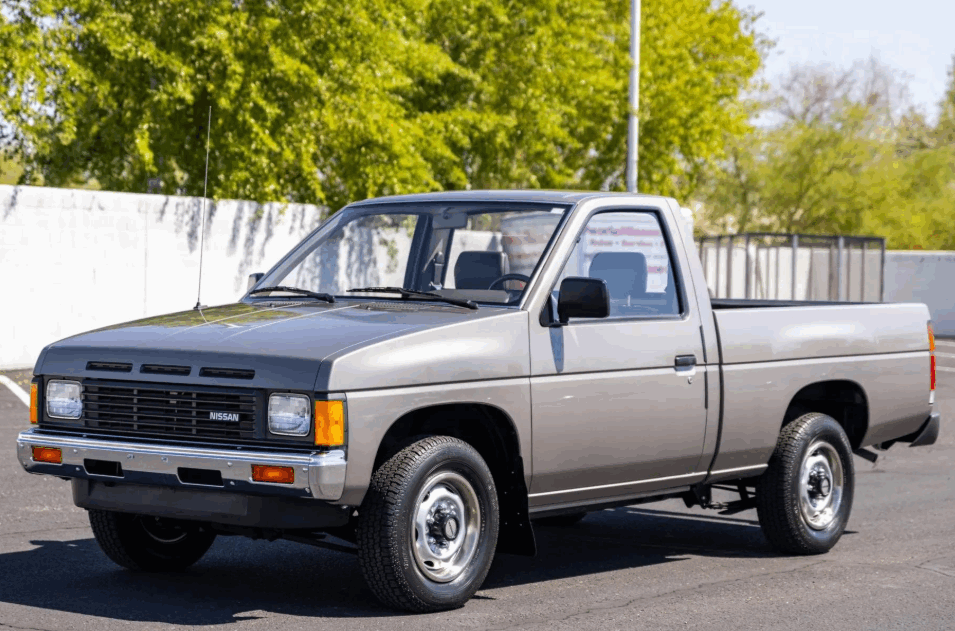
The Nissan D21, better known as the Hardbody, replaced the 720 during the mid-1980s. Its durable double-wall cargo bed and angular styling earned widespread recognition, especially in North America. Nissan later introduced the D22, which refined the platform while improving ride quality and capability. In the United States, the Frontier eventually replaced the traditional Nissan Pickup name, while many global markets adopted the Navara name for similar models. Together, these generations established Nissan as one of the leading manufacturers of compact and midsize pickup trucks.
What Is the Difference Between Datsun, Nissan Pickup, Hardbody, Frontier and Navara?
Datsun, Nissan Pickup, Hardbody, Frontier, and Navara describe different stages of Nissan’s pickup truck history rather than completely different vehicles. Some names represent specific generations, while others identify the same truck in different regions. Understanding these differences makes it easier to identify older models and avoid confusion when researching or purchasing a classic Nissan truck.
The Datsun name appeared on Nissan’s export pickup trucks until the early 1980s. After Nissan unified its global branding, most new models adopted the Nissan name. During this transition, many buyers referred to the vehicles simply as the Nissan Pickup because that name appeared in brochures and dealership marketing. The trucks changed gradually, but the new branding created a clearer identity for the company.
The Hardbody name refers specifically to the Nissan D21 generation. Nissan introduced this nickname to highlight the truck’s reinforced double-wall cargo bed and rugged construction. Because of its durability and distinctive styling, the Hardbody remains one of the most respected classic Nissan pickups. Many enthusiasts still consider it one of the brand’s most reliable trucks.
The Frontier and Navara represent later generations built on similar engineering platforms. Nissan sells the Frontier primarily in North America, while the Navara serves many markets in Asia, Europe, Australia, and South America. Although equipment levels, engines, and styling may differ between regions, both models continue the legacy established by earlier Nissan pickup trucks. Knowing these naming differences helps buyers identify the correct vehicle regardless of where it was originally sold.
How Can You Identify an Old Nissan Truck?
You can identify an old Nissan truck by checking its model code, production year, exterior design, and vehicle identification number (VIN). These details provide the most accurate way to determine a truck’s generation, even when previous owners have replaced badges or modified the vehicle. Many classic Nissan pickups look similar at first glance, but each generation includes unique design features that make identification easier.
The model code offers the fastest way to identify a specific truck. Codes such as Datsun 620, Datsun 720, D21, and D22 refer to different generations rather than trim levels. Nissan used these internal codes throughout production, and they remain the standard reference for collectors, mechanics, and parts suppliers. Matching the model code with the production year helps confirm the truck’s original identity and prevents ordering incorrect replacement components.
Exterior styling also reveals important clues. Earlier Datsun trucks feature simple body lines, round or rectangular headlights, and compact dimensions. The D21 Hardbody introduced a sharper, more angular appearance with a reinforced cargo bed that inspired its well-known nickname. Later models, including the D22, Frontier, and Navara, adopted smoother body panels, larger cabins, and updated front grilles that reflected modern pickup design.
The VIN provides the most reliable confirmation because it records manufacturing information assigned by Nissan. A VIN search can verify the production year, assembly plant, engine type, and original specifications. Buyers should compare this information with the truck’s physical features before purchasing a classic Nissan pickup. This simple step reduces the risk of buying a modified vehicle or one with incorrect documentation.
Are Old Nissan Trucks Still Reliable Today?
Old Nissan trucks remain reliable when owners maintain them properly and replace worn components on time. Many classic models continue to serve as daily drivers, work trucks, and restoration projects because Nissan designed them with simple mechanical systems and durable construction. Their reputation for longevity has made them popular among enthusiasts around the world.
One reason for this reliability is the straightforward engineering found in earlier generations. Engines such as the Z-series and KA24 developed a strong reputation for durability when owners followed regular maintenance schedules. Routine oil changes, cooling system inspections, and timing component replacements often allowed these engines to operate for hundreds of thousands of miles. Their simple design also makes repairs easier than those on many modern trucks.
Age, however, affects every vehicle regardless of brand. Rust, worn suspension components, deteriorated rubber seals, and aging electrical systems are common issues on older Nissan pickups. Buyers should inspect the frame, body panels, transmission, and engine carefully before purchasing a used model. A thorough inspection often reveals maintenance needs that may not appear during a short test drive.
Despite these age-related concerns, many old Nissan trucks continue to deliver dependable performance. Replacement parts remain widely available for popular generations, and strong enthusiast communities provide technical support and restoration advice. Owners who perform regular maintenance can enjoy reliable transportation while preserving a classic pickup that represents an important part of Nissan’s automotive history.
Conclusion
Old Nissan trucks have carried several names throughout their history, but they all belong to the same legacy of dependable pickup trucks. Models such as the Datsun Truck, Nissan Pickup, Hardbody, Frontier, and Navara reflect different generations, branding strategies, and regional markets rather than completely separate vehicle families. Understanding these naming differences helps owners, collectors, and buyers identify the correct model with greater confidence.
Each generation introduced meaningful improvements while maintaining the durability and practicality that made Nissan pickups popular worldwide. Early Datsun models established the brand’s reputation for reliability, while the Hardbody became an icon for its rugged design and long-lasting performance. Later models, including the Frontier and Navara, continued that legacy by offering updated technology without abandoning the qualities that drivers expected from a Nissan truck.
Whether you are restoring a classic pickup, searching for replacement parts, or planning to buy an older model, knowing the history behind Nissan’s truck names makes the process much easier. A clear understanding of each generation allows you to compare models accurately, avoid common misconceptions, and choose the truck that best matches your needs. Exploring Nissan’s pickup history also reveals how these vehicles earned their reputation as some of the most dependable compact and midsize trucks ever produced.