
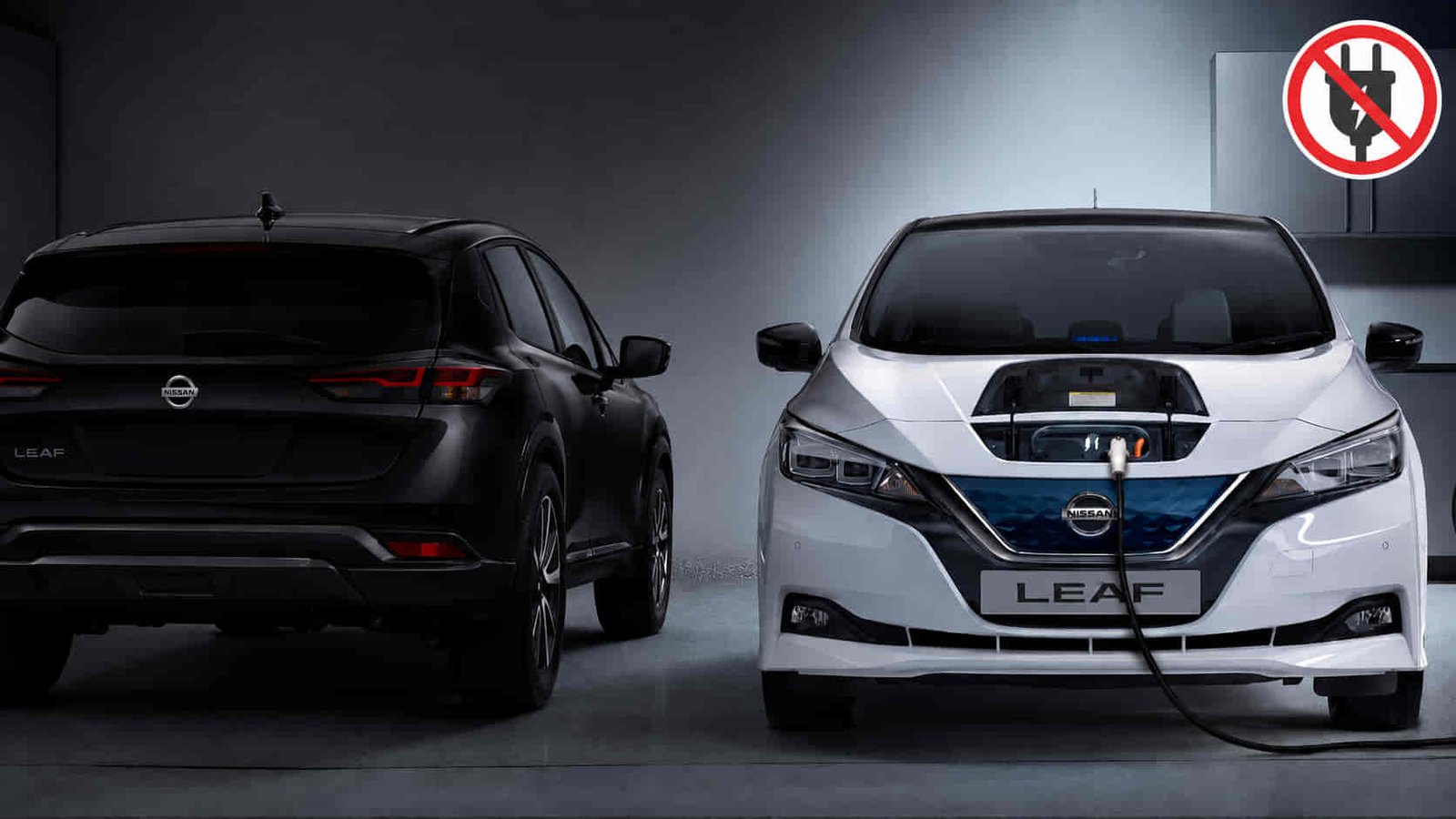
A Nissan Leaf that refuses to charge can be frustrating because charging is the most fundamental function of an electric vehicle. Whether the vehicle fails to recognize the charger, stops charging unexpectedly, charges extremely slowly, or displays warning messages, the issue can prevent normal vehicle operation and significantly reduce driving range.
Unlike conventional vehicles, the Nissan Leaf relies on a complex charging ecosystem that includes the charging station, charging cable, onboard charger, Battery Management System, high-voltage battery, and vehicle software. If any part of this system fails, charging may stop completely or become unreliable.
Many charging problems are caused by relatively simple issues such as faulty charging cables, timer settings, weak 12-volt batteries, or charging station communication failures. Others may involve more advanced problems related to the onboard charger, battery management system, or high-voltage battery pack.
Understanding the root cause is important because not every charging failure indicates an expensive battery problem. This guide explains the 10 most common reasons a Nissan Leaf is not charging and the solutions that restore normal charging performance.
What Are the Signs That Nissan Leaf Is Not Charging?
The most obvious sign is that the battery state of charge does not increase after connecting the vehicle to a charger. However, charging-related problems can appear in several different forms depending on the affected component.
Some Nissan Leaf owners connect the charger and receive no response from the vehicle. The charging indicators fail to illuminate and charging never begins. Others experience charging sessions that start normally but stop unexpectedly after several minutes.
Slow charging is another common symptom. The vehicle may continue charging but at a significantly reduced rate compared with normal operation. In some situations, charging speeds vary unpredictably between sessions.
Warning messages, dashboard indicators, and charging system alerts can also provide important clues. These notifications often indicate communication problems, battery management issues, or hardware faults within the charging system.
Identifying the exact charging symptom helps narrow the diagnostic process and determine which part of the charging system requires attention.
Why Is the Charging Cable Damaged?
A damaged charging cable is one of the most common reasons a Nissan Leaf fails to charge. The charging cable serves as the primary communication and power delivery pathway between the vehicle and the charging station.
Physical wear is a frequent cause of cable failure. Repeated bending, twisting, outdoor exposure, and improper storage can damage internal conductors over time. Even when the outer insulation appears intact, internal wiring may become compromised.
Connector damage can create additional problems. Bent pins, corrosion, moisture intrusion, and dirt accumulation may interfere with communication between the charger and the vehicle. Since charging requires both electrical power and communication signals, connector issues can prevent charging from starting.
Intermittent cable faults often produce inconsistent symptoms. The vehicle may charge successfully during some sessions while failing during others. This inconsistency frequently leads owners to suspect the vehicle rather than the cable itself.
Inspecting the charging cable and testing with an alternative charger are often effective first steps when diagnosing Nissan Leaf charging problems.
Why Is the Charging Station Not Working Properly?
The charging station itself may be responsible when a Nissan Leaf refuses to charge. Because charging requires successful communication between the vehicle and the EVSE, a malfunctioning charging station can prevent the process from starting.
Public charging stations experience heavy usage and environmental exposure. Damaged connectors, software faults, network communication problems, and internal hardware failures can affect charging performance.
Residential charging equipment can also develop issues. Circuit breaker problems, electrical supply interruptions, installation defects, and component wear may reduce charging reliability.
Communication failures are particularly common. Before charging begins, the vehicle and charging station exchange information regarding charging parameters and safety conditions. If this handshake process fails, charging is automatically prevented.
Testing the vehicle with a different charging station is one of the fastest ways to determine whether the problem originates from the charger or the Nissan Leaf itself.
Why Is the Charging Port Dirty or Damaged?
The charging port plays a critical role in both power transfer and communication. If the port becomes contaminated or physically damaged, the Nissan Leaf may fail to establish a charging session.
Dust, moisture, corrosion, and debris can accumulate inside the charging port over time. Even small amounts of contamination may interfere with connector contact and communication signals.
Physical damage is another concern. Repeated charging cycles, accidental impacts, and improper connector insertion can damage charging pins or internal components. Misaligned or bent contacts may prevent the charger from seating properly.
Cold weather conditions can contribute to charging port issues as well. Ice formation and moisture buildup may obstruct connector engagement and interrupt communication between the vehicle and charger.
Because the charging port serves as the primary interface between the vehicle and charging equipment, maintaining its condition is essential for reliable charging performance.
Why Is the Charging Timer Preventing Charging?
Many Nissan Leaf owners unknowingly activate charging timers and later assume the vehicle has developed a charging fault. Charging timers are designed to start charging during specific periods, often to take advantage of lower electricity rates.
When a charging timer is active, the vehicle may refuse to begin charging immediately after being plugged in. Instead, charging remains delayed until the programmed schedule is reached.
Drivers frequently encounter this issue after adjusting charging settings, updating vehicle software, or purchasing a used Nissan Leaf. Because the charging cable and station appear functional, the delay can easily be mistaken for a system malfunction.
Charging timer conflicts may also occur when charging schedules stored in the vehicle conflict with charging station scheduling features. In these situations, neither system initiates charging because both are waiting for the other to begin the process.
Verifying charging timer settings is an important troubleshooting step because timer-related issues can mimic more serious charging system failures.
Why Is the 12-Volt Battery Weak or Dead?
Although the Nissan Leaf is powered by a high-voltage battery pack, a conventional 12-volt battery remains essential for vehicle electronics and charging system operation. A weak 12-volt battery can prevent charging even when the main battery is healthy.
The 12-volt battery powers communication systems, control modules, relays, and charging-related electronics. Before charging begins, these systems must function correctly to authorize and manage the charging process.
As the battery ages, voltage levels decline. Low voltage can interfere with communication between the vehicle, charger, and Battery Management System. The result may be charging failures, warning messages, or inconsistent charging behavior.
Many Nissan Leaf owners are surprised to learn that a small auxiliary battery can disable charging functionality. However, modern electric vehicles depend heavily on low-voltage electronics to control high-voltage systems safely.
Testing and replacing a weak 12-volt battery often resolves charging issues that initially appear related to the main traction battery.
Why Is the Battery Management System Experiencing Problems?
The Battery Management System is one of the most important components in the Nissan Leaf charging system because it monitors battery health, controls charging parameters, and protects the high-voltage battery from damage. If the BMS detects abnormal conditions, it may prevent charging entirely.
The BMS continuously evaluates battery temperature, voltage balance, state of charge, and cell performance. Before charging begins, the system verifies that all operating conditions are within safe limits. If any value falls outside the acceptable range, charging may be delayed, restricted, or blocked.
Communication failures can also affect charging. The BMS must exchange information with the onboard charger, vehicle control modules, and charging station. If communication becomes interrupted, the charging process may stop automatically as a safety precaution.
Software inconsistencies occasionally contribute to BMS-related charging issues. Following software updates, battery servicing, or electrical faults, the system may require recalibration before normal charging resumes.
Because the BMS directly controls charging authorization, any malfunction within this system can prevent the Nissan Leaf from accepting a charge even when the battery and charger appear functional.
Why Is the Onboard Charger Failing?
The onboard charger converts alternating current from Level 1 and Level 2 charging stations into direct current that can be stored in the Nissan Leaf battery pack. If this component fails, charging may stop completely or operate intermittently.
Unlike DC fast charging, which delivers power directly to the battery, standard AC charging depends on the onboard charger to manage energy conversion. When the charger experiences internal faults, the vehicle may fail to recognize incoming power or terminate charging shortly after it begins.
Heat exposure is a common contributor to onboard charger failure. Continuous charging cycles generate significant heat, and prolonged exposure can gradually affect electronic components. Voltage fluctuations, electrical surges, and aging circuitry may produce similar effects.
Drivers often notice symptoms such as charging sessions that never start, charging interruptions, reduced charging speed, or charging error messages. In some cases, the vehicle charges normally using one charging method but fails with another.
Because the onboard charger performs a critical conversion function, diagnosing its condition is essential when other charging components appear to be operating correctly.
Why Is the High-Voltage Battery Overheating?
The Nissan Leaf may refuse to charge if the high-voltage battery becomes excessively hot. Battery temperature is one of the most closely monitored variables within the charging system because excessive heat accelerates battery degradation and can compromise long-term performance.
The Battery Management System actively protects the battery by limiting or preventing charging when temperatures exceed safe thresholds. This protection strategy helps preserve battery life and reduce the risk of thermal damage.
High temperatures often occur after extended driving, repeated DC fast charging sessions, or operation in extremely hot climates. Under these conditions, the battery may require time to cool before charging can resume.
Drivers frequently encounter this issue during long-distance travel. After multiple fast-charging stops, battery temperatures may rise significantly, causing charging speeds to decrease or charging sessions to pause temporarily.
Because temperature protection is functioning as intended, overheating-related charging interruptions often resolve automatically once battery temperatures return to acceptable levels.
Why Is Vehicle Software Preventing Charging?
Vehicle software controls nearly every aspect of the Nissan Leaf charging process. If software becomes outdated, corrupted, or incompatible with charging equipment, charging performance may be affected.
The charging system depends on multiple control modules working together. These modules manage charger communication, battery protection, charging schedules, and energy distribution. Software inconsistencies can interfere with any of these functions.
Firmware updates are occasionally released to address charging reliability issues, improve compatibility with charging stations, and optimize battery management strategies. Vehicles operating with outdated software may experience charging problems that have already been corrected in newer versions.
Corrupted software data can create similar symptoms. Unexpected power interruptions, failed updates, and module communication errors may affect charging-related settings and system behavior.
Software-related charging issues are often difficult to identify because they can mimic hardware failures. For this reason, software verification is an important part of the diagnostic process when charging problems persist.
Why Is the DC Fast Charging System Not Working?
DC fast charging problems can occur even when Level 1 and Level 2 charging operate normally. This is because fast charging relies on different hardware, communication protocols, and power delivery systems.
The Nissan Leaf uses the CHAdeMO charging standard for DC fast charging. Before charging begins, the vehicle and charging station exchange detailed information regarding battery condition, charging limits, and safety requirements. If this communication process fails, charging will not start.
Connector damage, software incompatibilities, charging station faults, and communication errors are common causes of DC fast charging failures. Because fast charging operates at significantly higher power levels, safety requirements are more stringent than those used for standard AC charging.
Battery temperature also plays a major role. The Battery Management System may restrict or disable fast charging when battery temperatures become elevated to prevent excessive heat buildup.
If the Nissan Leaf charges normally on Level 1 or Level 2 equipment but fails on DC fast chargers, the issue often involves CHAdeMO communication, fast-charging hardware, or thermal management rather than the battery itself.
What Should You Do If Nissan Leaf Still Will Not Charge?
If the Nissan Leaf continues refusing to charge after basic troubleshooting, a structured diagnostic approach becomes necessary. Identifying whether the problem originates from the charger, vehicle, battery, or communication system significantly improves repair efficiency.
The first step is testing multiple charging methods. Verifying performance with another charging cable, charging station, or charging level helps isolate the source of the issue. If the vehicle charges successfully elsewhere, the original charging equipment becomes the primary suspect.
Battery-related warning messages should also be reviewed carefully. Dashboard indicators often provide valuable information regarding battery protection, charging faults, and system communication errors.
The condition of the 12-volt battery should be evaluated as well. Many charging issues originate from low-voltage electrical problems rather than faults within the high-voltage battery system.
If charging remains unavailable after these checks, professional diagnostic testing may be required. Specialized diagnostic equipment can evaluate the Battery Management System, onboard charger, telematics communication, and charging-related control modules more accurately than visual inspection alone.
Which Nissan Leaf Model Years Commonly Experience Charging Problems?
Charging issues can affect any Nissan Leaf generation because charging performance depends on a combination of battery condition, charging hardware, software, and environmental factors. However, certain patterns are more common in specific model years.
Older Nissan Leaf models often experience charging challenges related to battery aging, onboard charger wear, and charging port deterioration. As vehicles accumulate years of use, component wear naturally increases the likelihood of charging-related problems.
Vehicles frequently exposed to extreme temperatures may experience additional battery stress. Long-term heat exposure can accelerate battery degradation and influence charging performance over time.
Newer Nissan Leaf models generally benefit from improved battery management systems, enhanced charging software, and upgraded electronic components. However, they remain susceptible to charging station compatibility issues, software conflicts, and communication failures.
The overall condition of the charging system often influences charging reliability more than the model year itself. Proper maintenance and software updates play a significant role in long-term performance.
How Can You Prevent Nissan Leaf Charging Issues?
Preventing charging problems requires maintaining both the vehicle and charging equipment. Because the charging process depends on multiple interconnected systems, proactive maintenance significantly improves reliability.
Regular inspection of charging cables and connectors is one of the most effective preventative measures. Detecting wear, corrosion, and physical damage early helps prevent communication and power delivery issues.
Keeping the charging port clean is equally important. Dirt, moisture, and debris can interfere with connector engagement and create charging interruptions. Routine inspection helps maintain reliable contact between the charger and vehicle.
Monitoring the 12-volt battery also improves charging reliability. Replacing aging auxiliary batteries before failure occurs reduces the likelihood of communication and charging authorization problems.
Avoiding excessive battery heat helps preserve long-term charging performance. Limiting repeated fast-charging sessions during extremely hot conditions reduces thermal stress on the battery pack.
Maintaining current software versions further improves compatibility with charging infrastructure and helps ensure that charging-related updates are applied promptly.
Read more: Nissan Connect App Not Working
Conclusion
A Nissan Leaf that is not charging may be affected by problems involving the charging cable, charging station, charging port, timer settings, 12-volt battery, Battery Management System, onboard charger, vehicle software, DC fast charging hardware, or the high-voltage battery itself. Although charging failures can appear serious, many are caused by relatively simple issues that can be resolved without major repairs.
Successful troubleshooting begins by identifying the specific symptom. Charging refusal, interrupted charging sessions, slow charging, and fast-charging failures often point toward different root causes. Understanding where the charging process breaks down significantly improves diagnostic accuracy.
Most Nissan Leaf charging issues can be corrected through charging equipment inspection, software updates, battery maintenance, and communication system diagnostics. Only a small percentage of cases involve major battery or charging hardware replacement.
By maintaining charging equipment, monitoring battery health, and addressing warning signs early, Nissan Leaf owners can improve charging reliability and maximize long-term electric vehicle performance.