
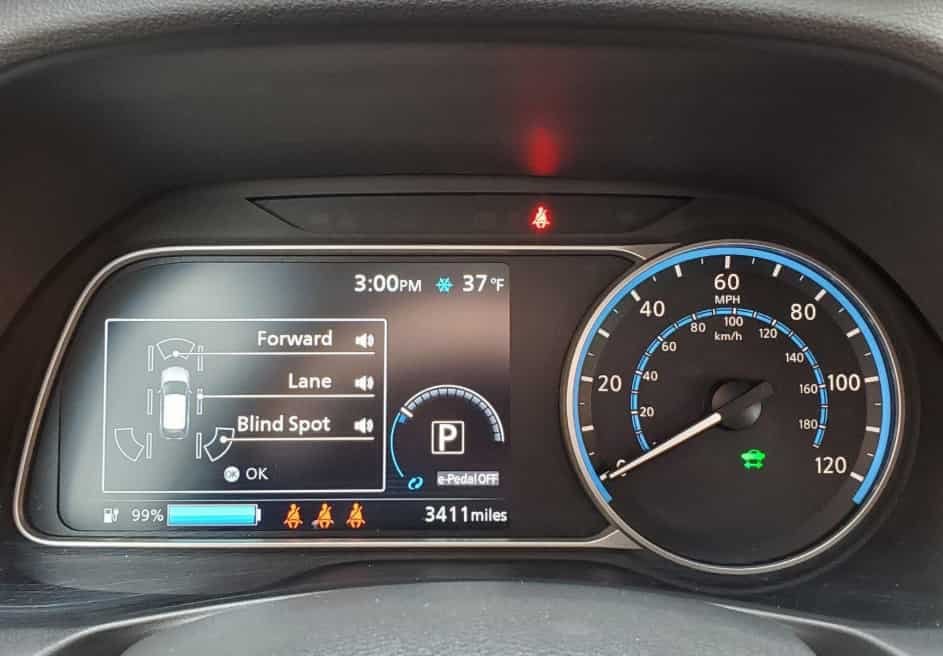
The Nissan Leaf is one of the most widely used electric cars, but it is not free from reliability concerns. The 12 most common Nissan Leaf problems include battery degradation, reduced driving range, charging failures, 12 volt battery faults, brake system warnings, heater failure, suspension noise, steering issues, electrical errors, infotainment faults, slow rapid charging, and premature tire wear.
Battery degradation is the most serious issue because it directly affects driving range, charging frequency, resale value, and long term ownership cost. Early Nissan Leaf models are more vulnerable because their battery packs rely on passive air cooling. Heat, age, repeated rapid charging, and poor charging habits can reduce battery capacity faster.
Other faults are less expensive but can still prevent the vehicle from starting or charging. A weak 12 volt battery, for example, can trigger several warning lights, disable control modules, and stop the car from entering Ready mode. Charging faults may come from the cable, charge port, timer settings, onboard charger, or battery temperature.
The severity of these problems depends on the model year, climate, mileage, battery condition, maintenance history, and charging pattern. This guide explains the symptoms, causes, repair options, and risks of each issue. It also shows which Nissan Leaf models require closer inspection and what buyers should check before purchasing a used vehicle.
What Are the 12 Most Common Nissan Leaf Problems?
The Nissan Leaf has 12 commonly reported problems that affect battery performance, charging reliability, electrical systems, driving comfort, and long term ownership costs. Some issues develop gradually over several years, while others can appear without warning because of component failure or a weak 12 volt battery. Understanding these problems helps owners diagnose faults earlier and allows used car buyers to identify expensive repair risks before making a purchase.
Battery Degradation
Battery degradation is the most significant Nissan Leaf problem because it permanently reduces the amount of energy the battery can store. Drivers usually notice shorter driving range, more frequent charging, and the loss of battery capacity bars on the dashboard. High temperatures, battery age, and repeated DC fast charging accelerate battery wear, especially in early models without an active liquid cooling system.
Reduced Driving Range
Driving range decreases when the battery loses capacity or when operating conditions increase energy consumption. Cold weather, highway speeds, aggressive acceleration, steep roads, and cabin heating all reduce the distance the vehicle can travel on a full charge. Temporary range loss is normal under demanding conditions, while permanent range reduction usually indicates battery aging.
Charging Problems
Charging problems prevent the Nissan Leaf from charging normally through either AC or DC charging stations. The charging session may fail to start, stop unexpectedly, or display warning messages. Common causes include a faulty charging cable, damaged charge port, onboard charger failure, incorrect charging timer settings, or a weak 12 volt battery that interrupts communication between vehicle systems.
12 Volt Battery Failure
The small 12 volt battery controls the vehicle’s electronic systems even though the high voltage battery powers the electric motor. When the auxiliary battery becomes weak, the vehicle may display multiple warning lights, fail to enter Ready mode, reset the dashboard, or experience charging errors. Replacing an aging 12 volt battery often resolves several unrelated electrical symptoms.
Brake System Warnings
Brake related warning lights may appear because of sensor failures, ABS faults, electronic brake control issues, or low voltage from the 12 volt battery. Drivers may experience inconsistent regenerative braking, unusual pedal feel, or warning indicators even when the mechanical brakes remain functional. A complete diagnostic scan is necessary before replacing brake components.
Heater and Climate Control Failure
Cabin heating problems are most noticeable during winter because they reduce both passenger comfort and driving range. Some Nissan Leaf models experience failures of the PTC heater or heat pump system, resulting in little or no warm air inside the cabin. Electrical faults, failed sensors, and software issues may also contribute to heating problems.
Suspension Noise
Suspension components gradually wear over time and can produce knocking, clunking, or rattling sounds when driving over uneven roads. Worn stabilizer links, control arm bushings, strut mounts, and shock absorbers are among the most common sources of suspension noise. Although many cases begin as minor annoyances, excessive wear can eventually affect handling and tire wear.
Steering and Alignment Problems
Some Nissan Leaf owners report steering pull, off center steering wheels, vibration, or uneven tire wear. These issues are commonly caused by wheel alignment problems, suspension wear, impact damage, or incorrect tire pressure. Proper alignment improves vehicle stability, extends tire life, and increases driving efficiency.
Electrical System Faults
Modern electric vehicles rely on multiple control modules that continuously communicate with one another. A single electrical fault can trigger several warning messages across different systems. Loose connectors, damaged wiring, failed sensors, software errors, and low auxiliary battery voltage are among the most common causes of electrical problems.
Infotainment System Issues
The infotainment system may freeze, restart unexpectedly, lose Bluetooth connectivity, or fail to communicate with NissanConnect services. Outdated software, unstable voltage, corrupted settings, and hardware faults are the most common reasons these problems occur. Software updates often resolve minor issues without replacing components.
Slow Rapid Charging
Many owners notice that DC fast charging becomes slower after several consecutive charging sessions. This happens because battery temperature rises during charging, causing the battery management system to reduce charging speed in order to protect battery cells. The effect is more noticeable during long road trips and in hot climates.
Premature Tire Wear
Electric vehicles produce maximum torque almost instantly, placing greater stress on the tires during acceleration. Combined with the additional weight of the battery pack, this can lead to faster tire wear than many comparable gasoline vehicles. Regular tire rotation, proper inflation, and correct wheel alignment help maximize tire life while maintaining efficiency.
Why Does the Nissan Leaf Traction Battery Degrade?
Battery degradation is the most significant Nissan Leaf problem because it permanently reduces the amount of energy the battery can store. Unlike many newer electric vehicles that use liquid cooling, most Nissan Leaf models rely on passive air cooling. As battery temperature rises, the chemical reactions inside the lithium ion cells accelerate, causing irreversible capacity loss over time. This process is gradual, but it directly affects driving range, charging frequency, and the long term value of the vehicle.
The first signs of battery degradation usually appear as shorter driving range and the loss of battery capacity bars on the dashboard. Drivers may also notice that the battery percentage drops faster than expected, especially during highway driving or cold weather. Diagnostic tools such as LeafSpy provide a more accurate picture by displaying the battery State of Health, available ampere hours, and individual cell balance. These values help owners determine whether reduced range is caused by normal operating conditions or permanent battery wear.
Several factors influence how quickly the Nissan Leaf battery degrades. High ambient temperatures have the greatest impact because heat accelerates cell aging. Frequent DC fast charging, storing the vehicle with a full battery for extended periods, and repeatedly discharging the battery to very low levels also increase long term stress. Battery age remains an unavoidable factor, meaning even low mileage vehicles gradually lose capacity as the cells naturally deteriorate.
Battery degradation cannot be reversed, but its effects can be managed. Minor cell imbalance may improve after battery balancing, while damaged modules can sometimes be replaced individually. Severely degraded batteries usually require a refurbished or complete replacement pack. Before buying a used Nissan Leaf, battery health should always receive more attention than mileage because it has the greatest influence on reliability, usable range, and future ownership costs.
Why Does a Nissan Leaf Lose Driving Range?
A Nissan Leaf loses driving range because the amount of usable energy changes according to battery condition, driving habits, weather, and road conditions. Reduced range does not always mean the battery is failing. In many cases, temporary factors increase energy consumption and shorten the distance the vehicle can travel on a single charge. Understanding the difference between normal efficiency loss and permanent battery degradation helps owners identify real problems and avoid unnecessary repairs.
Battery condition has the greatest influence on long term driving range. As the battery ages, its maximum storage capacity gradually declines, leaving less energy available for daily driving. Temporary conditions also play an important role. Cold weather slows battery chemistry and increases electricity consumption because the cabin heater requires additional power. Highway driving, strong headwinds, steep hills, low tire pressure, and aggressive acceleration all force the electric motor to consume more energy than normal. Carrying heavy cargo or using climate control continuously can further reduce efficiency during longer journeys.
Several practical habits can help maximize driving range without affecting everyday usability. Maintaining steady speeds, accelerating smoothly, and using regenerative braking whenever possible reduce unnecessary energy consumption. Preconditioning the cabin while the vehicle remains connected to a charger allows the heating or cooling system to use external electricity instead of battery power. Regularly checking tire pressure and wheel alignment also improves efficiency by reducing rolling resistance.
Drivers should monitor driving range over several weeks instead of judging battery health after a single trip. If the vehicle consistently delivers significantly fewer miles under similar weather and driving conditions, the battery should be inspected using its capacity bars or a diagnostic tool such as LeafSpy. Identifying permanent capacity loss early allows owners to plan future maintenance, estimate resale value more accurately, and determine whether battery replacement will eventually become necessary.
Why Does a Nissan Leaf Fail to Charge?
Charging problems are among the most frustrating Nissan Leaf issues because they can leave the vehicle unusable even when the battery itself is in good condition. A charging session may fail to start, stop unexpectedly, or display an error message on the dashboard. In some cases, the car charges normally with an AC home charger but refuses to connect to a DC fast charger. These symptoms usually indicate a fault within the charging system rather than a defective traction battery.
Several components can interrupt the charging process. A damaged charging cable, dirty charge port, incorrect charging timer settings, or an incompatible public charging station may prevent communication between the vehicle and the charger. A weak 12 volt battery is another common cause because it supplies power to the electronic control modules that manage charging. If the auxiliary battery cannot provide stable voltage, the vehicle may fail to authorize the charging session even though the high voltage battery remains healthy. Less common causes include a faulty onboard charger, damaged wiring, or software communication errors.
Diagnosing a charging problem should begin with the simplest checks before replacing expensive components. Owners should inspect the charging cable for visible damage, confirm that the charging connector is fully inserted, and temporarily disable any scheduled charging timers. Testing the 12 volt battery is equally important because many charging failures disappear after replacing a weak auxiliary battery. If the problem continues, a diagnostic scan can identify fault codes related to the onboard charger, battery management system, or charging communication network.
Most charging problems can be resolved without replacing the traction battery. Early diagnosis reduces repair costs and prevents unnecessary part replacements. When charging issues occur repeatedly at different charging stations, the vehicle should be inspected by a qualified electric vehicle technician to identify electrical faults before they develop into more serious reliability problems.
Why Does the Nissan Leaf 12 Volt Battery Fail?
The 12 volt battery is a small component, but it plays a critical role in the Nissan Leaf. The traction battery powers the electric motor. However, the 12 volt battery supplies electricity to the computers, lighting system, security features, and charging electronics. If this battery becomes weak, the car may fail to enter Ready mode. Many owners mistakenly believe the traction battery has failed when the real problem is much simpler.
A weak 12 volt battery often causes several unrelated symptoms. The dashboard may display multiple warning lights. The infotainment screen may restart unexpectedly. Keyless entry may stop working. Charging sessions can also fail. Some drivers notice ABS or brake warnings even though those systems are not defective. This happens because every control module depends on a stable low voltage supply.
Battery age is the most common cause of failure. Most auxiliary batteries gradually lose capacity after several years of use. Extreme temperatures also shorten battery life. Long periods without driving can discharge the battery. Corroded battery terminals reduce charging efficiency. A faulty DC to DC converter may also prevent the battery from receiving enough charge during normal driving.
Testing the 12 volt battery should be one of the first diagnostic steps. Check the battery voltage and perform a load test. Inspect the terminals for corrosion or loose connections. Replacing an aging battery is relatively inexpensive. In many cases, it eliminates multiple warning lights and restores normal charging. Regular inspections also reduce the risk of unexpected breakdowns and improve the overall reliability of the Nissan Leaf.
Why Does the Nissan Leaf Show Brake System Warnings?
Brake system warnings usually indicate a fault in the braking or electronic control system. They do not always mean the mechanical brakes have failed. In many cases, the warning appears because the vehicle detects abnormal data from a sensor or control module. A weak 12 volt battery can also trigger brake related alerts by disrupting communication between electronic systems.
Drivers may notice an ABS warning light, a brake warning light, or a traction control indicator. Some vehicles also display reduced regenerative braking or a firmer brake pedal. These symptoms should never be ignored because they may affect braking performance. However, warning lights alone cannot identify the exact cause. A diagnostic scan is necessary to determine which component has failed.
Several faults can activate the brake warning system. Failed wheel speed sensors are among the most common causes because they provide important data to the ABS and stability control systems. Low voltage from the 12 volt battery can also confuse electronic control modules and generate multiple warning messages. Other possible causes include worn brake pads, damaged brake discs, faulty ABS modules, brake fluid issues, or software errors that require an update.
The correct repair depends on the diagnostic results. Replacing brake pads or discs solves normal wear related problems. A weak 12 volt battery should be replaced if testing confirms low capacity. Faulty sensors or ABS components require professional diagnosis before replacement. After the repair, the warning lights should be cleared and the braking system should be tested during a road drive. Addressing brake warnings early improves safety and prevents small electrical faults from developing into more expensive repairs.
Why Does the Nissan Leaf Heater Stop Working?
The Nissan Leaf heater may stop working because of electrical faults, failed heating components, or software issues. Heating problems are more noticeable during winter because they reduce cabin comfort and driving range at the same time. Some drivers experience no warm air at all, while others notice that the cabin heats up much more slowly than expected. The exact cause depends on the vehicle’s model year and heating system.
A faulty PTC heater or heat pump is one of the most common reasons for poor heating performance. Earlier Nissan Leaf models use a PTC heater, while many newer models combine it with a heat pump to improve energy efficiency. If either component fails, the system cannot generate enough warm air. Faulty temperature sensors, blown fuses, damaged relays, or low coolant levels can also interrupt normal heater operation. In some cases, outdated software prevents the climate control system from working correctly.
Drivers should pay attention to warning signs before the heater stops working completely. Weak airflow, inconsistent cabin temperature, unusual noises, or warning messages on the dashboard often indicate an underlying fault. A noticeable drop in driving range during winter may also suggest that the heating system is consuming more electricity than normal because of an inefficient component.
Repairing the heating system begins with a diagnostic scan to identify stored fault codes. The technician should then inspect the fuses, relays, coolant level, and electrical connections before replacing expensive parts. Software updates may solve some climate control issues without additional repairs. If the PTC heater or heat pump has failed, replacement is usually the only permanent solution. Early diagnosis reduces repair costs and helps maintain both driving comfort and battery efficiency throughout the colder months.
Why Does the Nissan Leaf Suspension Make Knocking Noises?
Knocking noises from the Nissan Leaf suspension usually indicate worn or damaged suspension components. These sounds often become noticeable when driving over speed bumps, rough roads, or potholes. Although the vehicle may still feel safe to drive, ignoring the noise can lead to faster tire wear, poor handling, and higher repair costs. Finding the source early helps prevent additional damage.
Several suspension parts can produce knocking sounds. Worn stabilizer bar links are one of the most common causes because their joints loosen over time. Damaged control arm bushings can also create noise when the suspension moves under load. Worn shock absorbers, ball joints, strut mounts, or tie rod ends may produce similar symptoms. In some cases, loose suspension bolts or damaged subframe mounts are responsible for the noise instead of worn components.
The location and timing of the noise provide useful diagnostic clues. A knock heard while driving over bumps often points to stabilizer links or strut mounts. A clunk during acceleration or braking may indicate worn control arm bushings. Clicking noises while turning can suggest steering or suspension joint wear. Uneven tire wear, excessive vibration, or reduced steering stability are additional signs that the suspension requires inspection.
A professional inspection is the best way to identify the faulty component. Technicians typically check each suspension joint for excessive movement and inspect the bushings for cracks or deterioration. Any worn parts should be replaced in pairs when appropriate to maintain balanced handling. A wheel alignment is also recommended after major suspension repairs. Regular inspections and timely maintenance improve ride comfort, preserve tire life, and help the Nissan Leaf maintain stable handling in everyday driving.
Why Does the Nissan Leaf Have Steering Problems?
Steering problems in the Nissan Leaf are uncommon, but they can affect driving safety and comfort. Drivers may notice heavy steering, unusual vibrations, a pulling sensation, or warning lights related to the electric power steering system. These symptoms should not be ignored because they can reduce vehicle control and make the car more difficult to handle at higher speeds.
Several issues can cause steering problems. A faulty electric power steering motor or control module is one of the most common causes. Damaged steering angle sensors may also send incorrect data to the vehicle’s electronic systems. Worn tie rod ends, ball joints, or suspension components can create steering play and reduce precision. In addition, incorrect wheel alignment often causes the vehicle to drift to one side, even when the steering wheel is held straight.
Drivers should also check for signs that appear before steering performance becomes noticeably worse. Uneven tire wear may indicate poor alignment or worn suspension parts. Vibrations through the steering wheel often suggest unbalanced wheels or damaged tires. Clicking or knocking noises while turning can point to worn steering joints. If a steering warning light appears on the dashboard, the vehicle should be inspected as soon as possible to prevent further damage.
Diagnosing steering problems begins with a complete inspection of the steering and suspension systems. Technicians typically scan the vehicle for fault codes and examine the electric power steering unit, steering linkage, and front suspension. Wheel alignment and tire condition should also be checked during the inspection. Replacing worn components and correcting alignment issues usually restore normal steering performance. Routine maintenance and regular tire inspections help keep the Nissan Leaf stable, predictable, and safe to drive under all road conditions.
Why Does the Nissan Leaf Experience Electrical System Faults?
Electrical system faults can affect many functions in the Nissan Leaf. These problems often trigger multiple warning lights or cause unrelated systems to stop working. Drivers may experience charging failures, infotainment glitches, power window issues, or warning messages on the dashboard. In most cases, the fault is linked to the low-voltage electrical system rather than the high-voltage traction battery.
A weak 12 volt battery is one of the most common causes of electrical problems. The Nissan Leaf depends on this battery to power its electronic control modules before the traction battery takes over. If the voltage drops below the required level, communication between modules may become unstable. Faulty wiring, blown fuses, damaged connectors, or failing control modules can also interrupt normal operation. In some cases, outdated software creates communication errors that lead to false warning messages.
Electrical faults often begin with small symptoms before becoming more serious. The infotainment system may freeze or restart without warning. Power locks or windows may respond slowly. Dashboard lights may flicker during startup, and warning messages can appear briefly before disappearing. Although these symptoms seem unrelated, they often share the same electrical cause. Identifying the first signs can prevent additional components from being affected.
A complete diagnostic scan is the most effective way to locate an electrical fault. Technicians should first test the 12 volt battery and charging system because they are responsible for many common issues. The next step is to inspect the wiring, connectors, and fuses for damage or corrosion. Software updates should also be installed when available. Prompt diagnosis and repair improve vehicle reliability, reduce unnecessary part replacements, and help keep the Nissan Leaf operating safely and efficiently.
Why Does the Nissan Leaf Infotainment System Freeze or Restart?
Infotainment problems are common complaints among Nissan Leaf owners, especially in older models. The system may freeze, restart unexpectedly, or respond slowly to touch commands. Bluetooth connections may also fail without warning. Although these issues do not affect the vehicle’s ability to drive, they reduce convenience and can interfere with navigation, media playback, and hands-free communication.
Software bugs are one of the most common causes of infotainment failures. Over time, outdated software may become unstable and cause the display to freeze or reboot. Poor communication between the head unit and other electronic modules can produce similar symptoms. A weak 12 volt battery may also interrupt the system during startup because the infotainment unit requires a stable power supply. In some cases, damaged USB devices or incompatible smartphones create temporary software conflicts.
Drivers often notice warning signs before the system stops working completely. The touchscreen may respond slowly, applications may crash, or the display may remain black for several seconds after the vehicle starts. Bluetooth pairing may disconnect repeatedly, and the navigation system may load more slowly than usual. These symptoms usually become more frequent as the underlying problem worsens.
The first step is to restart the infotainment system and disconnect any external devices. Owners should also check for available software updates because manufacturers often release fixes for known bugs. If the problem continues, the 12 volt battery should be tested to confirm that it provides stable voltage. Persistent failures may require inspection of the head unit or related wiring. Resolving the issue early improves system reliability and restores normal access to navigation, entertainment, and communication features.
Why Does the Nissan Leaf Charge Slowly at DC Fast Chargers?
Slow DC fast charging is a common concern among Nissan Leaf owners, especially during long trips. Many drivers expect rapid charging speeds but notice that charging slows significantly after the battery reaches a certain temperature or state of charge. This behavior is usually normal and is designed to protect the battery rather than indicate a mechanical fault.
One of the main reasons is battery temperature management. Unlike many newer electric vehicles, most Nissan Leaf models use a passive air-cooled battery instead of an active liquid cooling system. During repeated fast charging sessions or hot weather, the battery temperature rises quickly. To prevent overheating and reduce long-term battery degradation, the battery management system automatically lowers the charging rate. This process is commonly known as Rapidgate and is most noticeable during consecutive DC fast charging sessions.
Charging speed also decreases as the battery fills. The highest charging rate is typically available when the battery is at a low state of charge. Once the battery reaches around 70 to 80 percent, the charging current gradually drops to protect the battery cells. Cold weather, older battery packs, and busy charging stations with limited power output can further reduce charging performance. These factors often combine to make charging slower than expected.
Drivers can improve charging performance by planning charging stops carefully. Charging from a lower battery level usually delivers the fastest results. Allowing the battery to cool between consecutive fast charging sessions also helps maintain higher charging speeds. Using reliable high-power charging stations and keeping the battery management software up to date can further improve the charging experience. Understanding these charging characteristics helps owners set realistic expectations and travel more efficiently in the Nissan Leaf.
Why Does the Nissan Leaf Experience Uneven Tire Wear?
Uneven tire wear is a common maintenance issue that affects many Nissan Leaf owners. It reduces tire life, lowers driving efficiency, and can negatively impact handling. Drivers may notice that one edge of the tire wears faster than the other or that the front tires wear out sooner than expected. Identifying the cause early helps prevent premature tire replacement and improves overall driving safety.
Incorrect wheel alignment is one of the most common causes of uneven tire wear. Even a small alignment error can change how the tires contact the road. Worn suspension components, such as control arm bushings or ball joints, can also alter wheel angles and increase tire wear. In addition, underinflated or overinflated tires create uneven pressure across the tread. Aggressive acceleration and hard cornering may further accelerate wear because the Nissan Leaf delivers instant electric motor torque.
Drivers should inspect their tires regularly for early warning signs. Uneven tread depth, feathered edges, or cupped tread patterns often indicate an alignment or suspension problem. Steering vibration or the vehicle pulling to one side may also suggest that the tires are wearing unevenly. These symptoms usually become worse if the underlying issue is not corrected. Regular inspections help detect problems before they shorten tire life.
Preventing uneven tire wear requires routine maintenance. Tire pressure should be checked at least once a month and adjusted to the manufacturer’s recommended specification. Tire rotation should be performed every 5,000 to 7,500 miles to promote even tread wear. Wheel alignment should also be inspected after hitting a pothole or replacing suspension components. These simple maintenance practices improve tire longevity, enhance driving stability, and help the Nissan Leaf deliver its best efficiency throughout the life of the tires.
Conclusion
The Nissan Leaf remains one of the most practical and affordable electric vehicles on the used market. However, like any vehicle, it has several recurring issues that owners and buyers should understand before making a purchase. Battery degradation, charging problems, 12 volt battery failure, electrical faults, suspension wear, and infotainment glitches are among the most frequently reported concerns. Fortunately, many of these problems can be diagnosed early and repaired without replacing expensive high-voltage components.
Regular maintenance plays an important role in keeping the Nissan Leaf reliable. Monitoring battery health, checking the 12 volt battery, inspecting the suspension, maintaining proper tire pressure, and installing software updates can prevent many common failures. These simple maintenance tasks also improve driving efficiency, extend component life, and reduce unexpected repair costs.
If you are considering buying a used Nissan Leaf, a pre-purchase inspection should include a battery health assessment, diagnostic scan, charging system test, and suspension inspection. Understanding the vehicle’s common problems allows you to evaluate its condition more accurately and negotiate a fair price. With proper maintenance and informed ownership, the Nissan Leaf can continue to provide dependable and cost-effective electric transportation for many years.