A clicking noise while driving a Nissan Note can originate from several different systems, including the suspension, steering, drivetrain, brakes, wheels, or engine. Although some clicking sounds are harmless, others may indicate component wear, loose hardware, or developing mechanical failures that require immediate attention.
The location, frequency, and driving conditions associated with the noise provide important diagnostic clues. A clicking sound that occurs only during turns often points toward CV joint problems, while a clicking noise that changes with wheel speed may indicate issues involving wheel bearings, brake components, or axle assemblies. Engine-related clicking noises typically follow engine RPM rather than vehicle speed.
Because multiple vehicle systems can produce similar sounds, identifying the exact source requires understanding when and where the clicking occurs. Diagnosing the root cause early can prevent minor wear from developing into expensive repairs or safety concerns.
This guide explains the 10 most common reasons a Nissan Note produces a clicking noise while driving and the solutions that address each problem.
What Are the Signs That the Clicking Noise Requires Attention?
Not every clicking noise indicates a serious mechanical problem, but certain characteristics suggest that inspection should not be delayed. A clicking sound that becomes louder over time, occurs more frequently, or is accompanied by vibration often indicates component wear that is progressively worsening.
Noises that occur during turning, acceleration, braking, or driving over bumps are particularly important because they often point toward suspension, steering, drivetrain, or brake-related components. If the clicking is accompanied by steering instability, uneven tire wear, braking issues, or warning lights, the likelihood of a mechanical fault increases significantly.
A clicking noise that suddenly appears after hitting a pothole, curb, or road debris should also be investigated promptly because impact damage can loosen suspension components or damage drivetrain parts.
Understanding how the noise behaves under different driving conditions helps narrow the diagnostic process and identify the affected system more accurately.
Why Is the CV Joint Worn or Damaged?
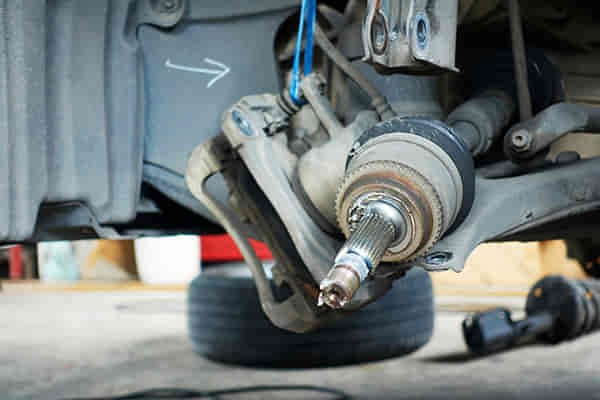
A worn Constant Velocity (CV) joint is one of the most common causes of clicking noises while driving, particularly when turning. CV joints allow power to transfer from the transmission to the wheels while accommodating suspension movement and steering angles.
As the internal bearings and races wear, excessive clearance develops inside the joint. During turns, this wear allows components to shift and create a repetitive clicking sound. The noise is usually most noticeable when accelerating through corners because additional torque increases stress on the damaged joint.
CV joint wear often develops after the protective rubber boot becomes damaged. Once the boot tears, grease escapes and contaminants enter the joint. Dirt, moisture, and debris accelerate internal wear and eventually lead to clicking noises.
The sound typically begins during sharp turns and gradually becomes more noticeable under a wider range of driving conditions. If ignored, severe wear can eventually result in drivetrain failure.
Because CV joints are directly involved in power delivery, persistent clicking during turns should be inspected as soon as possible.
Why Are the Brake Components Producing a Clicking Sound?
Brake components can generate clicking noises when hardware becomes loose, worn, or improperly positioned. The braking system contains multiple moving parts that must remain securely mounted to operate quietly and effectively.
Brake pads may shift slightly if retaining clips become damaged or worn. Each time the wheel rotates or braking force changes, the pads can move within the caliper assembly and produce a clicking sound. This noise often becomes more noticeable when transitioning between acceleration and braking.
Loose caliper hardware can create similar symptoms. Mounting bolts, guide pins, and anti-rattle clips help stabilize brake components. If these parts loosen or wear excessively, clicking noises may develop while driving.
Foreign objects trapped near brake components can also produce repetitive clicking sounds. Small stones, road debris, and damaged dust shields may contact rotating components and generate noises that change with wheel speed.
Because brake-related noises can affect both safety and performance, any clicking associated with braking should be inspected promptly.
Why Is a Loose Heat Shield Making Noise?
A loose heat shield is a surprisingly common source of clicking sounds in Nissan Note models. Heat shields are thin metal panels designed to protect surrounding components from exhaust system temperatures.
Over time, mounting hardware can corrode, loosen, or break. When this occurs, the heat shield may vibrate against nearby components while the vehicle is moving. The resulting sound is often described as clicking, ticking, or metallic rattling.
Road vibration, engine movement, and changes in exhaust temperature can influence the noise. Drivers may notice that the clicking becomes more pronounced at certain speeds or when driving over uneven surfaces.
Because heat shields are lightweight, even a small amount of looseness can generate noticeable noise. Fortunately, this issue is usually inexpensive to repair compared with drivetrain or suspension-related faults.
Although a loose heat shield rarely creates an immediate safety concern, addressing the issue prevents additional mounting damage and eliminates unnecessary vibration.
Why Are the Wheel Lug Nuts Loose?
Loose wheel lug nuts can create clicking or knocking sounds while driving because the wheel is no longer secured tightly against the hub assembly. This condition should be treated as a serious safety concern because continued operation may lead to wheel damage or loss of wheel retention.
As the wheel shifts slightly against the mounting surface, metal-to-metal movement generates repetitive clicking noises. The sound often changes with wheel speed and may become more noticeable during acceleration, braking, or cornering.
Improper wheel installation is a common cause. Lug nuts that are not tightened to the correct torque specification may gradually loosen over time. Recent tire service, wheel replacement, and suspension work often precede this type of problem.
Drivers may also notice vibration through the steering wheel or vehicle body in addition to the clicking noise. These symptoms indicate that wheel movement has progressed beyond minor looseness.
Because loose lug nuts present a significant safety risk, immediate inspection is recommended whenever this condition is suspected.
Why Is the Suspension System Producing a Clicking Noise?
The suspension system can generate clicking noises when components such as ball joints, sway bar links, control arm bushings, or strut mounts begin to wear. These components experience constant movement while absorbing road impacts and maintaining vehicle stability.
As wear develops, excessive play allows metal components to move beyond their intended range. This movement can create clicking sounds when driving over bumps, entering driveways, or navigating uneven road surfaces.
Sway bar links are particularly common sources of clicking noises. These components connect the stabilizer bar to the suspension assembly and are subjected to continuous movement during cornering and suspension travel.
Worn suspension components often produce additional symptoms such as reduced ride quality, steering looseness, uneven tire wear, and minor vibrations. Identifying the affected component early helps prevent additional suspension damage.
Why Is the Wheel Bearing Failing?
A failing wheel bearing can produce a clicking noise while driving because the internal rollers and bearing surfaces become worn or damaged. Wheel bearings support the weight of the vehicle while allowing the wheels to rotate smoothly. When wear develops, the bearing can no longer maintain proper alignment, causing abnormal movement and noise.
Although wheel bearings more commonly produce humming or grinding sounds, early-stage failures can create intermittent clicking noises that change with wheel speed. The sound often becomes more noticeable during cornering because vehicle weight shifts onto the affected wheel.
Contamination is one of the leading causes of bearing failure. Water intrusion, damaged seals, and loss of lubrication accelerate internal wear and increase friction between moving components. As deterioration progresses, the clicking noise may evolve into a louder grinding or roaring sound.
Drivers may also notice steering instability, vibration, or uneven tire wear. Because wheel bearings directly affect wheel support and vehicle control, prompt inspection is recommended whenever bearing-related noises are suspected.
Why Is the Steering System Making a Clicking Sound?
The steering system can generate clicking noises when components develop excessive play or wear. Tie rods, steering rack assemblies, intermediate shafts, and steering column joints all contain moving parts that can produce noise when their operating tolerances change.
A clicking sound during turning often indicates movement between worn steering components. As clearances increase, parts that should move smoothly begin shifting abruptly under load. This creates a repetitive clicking sensation that may be felt through the steering wheel as well as heard inside the cabin.
Steering rack mounting points can also contribute to the problem. If mounting bushings deteriorate or hardware loosens, the rack may move slightly during steering input and generate clicking noises.
The steering system works closely with the suspension and drivetrain, which can make diagnosis challenging. A noise that appears to originate from the steering wheel may actually be coming from a CV joint, suspension link, or wheel assembly.
Because steering-related issues directly affect vehicle control, any clicking noise associated with steering input should be investigated before component wear progresses further.
Why Is the Drive Shaft Damaged?
A damaged drive shaft can create clicking noises while driving because it transfers engine power from the transmission to the wheels through rotating mechanical components. Any wear, imbalance, or damage within this assembly can produce abnormal sounds during vehicle movement.
Universal joints and connection points are common sources of clicking noises. As these components wear, small amounts of play develop within the drivetrain. Each time torque is applied or removed, the affected parts shift and create a clicking or clunking sound.
Physical damage may also occur after impact with road debris, curbs, or potholes. Even minor deformation can affect rotational balance and create repetitive noises that increase with vehicle speed.
Drivetrain-related clicking often becomes more noticeable during acceleration because additional torque places greater stress on worn components. Drivers may also experience vibration, shuddering, or unusual drivetrain feedback.
Because the drive shaft plays a critical role in power delivery, continued operation with a damaged component can lead to more extensive drivetrain repairs if left unaddressed.
Why Is the Engine Valve Train Producing Clicking Noises?
The engine valve train can produce clicking sounds when components responsible for opening and closing engine valves develop excessive clearance or wear. The valve train includes lifters, rocker arms, valves, camshafts, and related hardware that operate continuously while the engine is running.
Valve train noises are typically linked to engine speed rather than vehicle speed. As engine RPM increases, the clicking frequency increases proportionally. This characteristic helps distinguish engine-related noises from wheel, suspension, or drivetrain problems.
Low engine oil levels are one of the most common contributors to valve train clicking. Many valve train components rely on oil pressure for lubrication and proper operation. When oil supply becomes inadequate, metal-to-metal contact increases and clicking noises develop.
Wear within hydraulic lifters can create similar symptoms. Over time, internal components lose their ability to maintain proper valve clearance, resulting in repetitive ticking or clicking sounds.
While some valve train noise may not indicate immediate failure, persistent clicking should be inspected because prolonged operation under poor lubrication conditions can accelerate engine wear significantly.
Why Is the Timing Chain Creating a Clicking Sound?
A worn timing chain can create clicking or rattling noises because it synchronizes crankshaft and camshaft rotation through a precisely controlled mechanical connection. When timing components wear, chain tension decreases and abnormal movement develops.
Timing chain systems rely on guides and tensioners to maintain proper alignment. As these components deteriorate, the chain may develop excessive slack. This allows it to move more than intended and create clicking sounds during engine operation.
The noise is often most noticeable during cold starts because oil pressure has not yet stabilized. As engine speed changes, the timing chain may produce repetitive clicking or rattling sounds that follow engine RPM.
In advanced cases, timing chain wear can affect engine performance. Poor synchronization between the crankshaft and camshaft may cause rough running, reduced power, starting difficulties, and warning lights.
Because timing components are critical to engine operation, ignoring timing chain noise can eventually result in severe engine damage. Early diagnosis helps prevent more expensive repairs later.
What Should You Do If Nissan Note Keeps Making a Clicking Noise?
If a Nissan Note continues producing a clicking noise while driving, the first step is identifying when the sound occurs. Whether the noise appears during turning, braking, acceleration, driving over bumps, or at specific speeds provides important diagnostic information.
A noise that changes with wheel speed often points toward wheel bearings, brakes, tires, or drivetrain components. A clicking sound that occurs primarily during turns frequently suggests CV joint wear. If the noise follows engine RPM instead of vehicle speed, attention should shift toward engine components such as the valve train or timing chain.
Visual inspection can reveal obvious problems such as damaged CV boots, loose heat shields, worn suspension components, or missing hardware. Checking wheel lug nut torque and looking for signs of fluid leakage can also help identify common causes.
When the source cannot be identified through basic inspection, professional diagnosis becomes necessary. Road testing, suspension inspection, and drivetrain evaluation allow technicians to isolate the affected component more accurately.
Prompt diagnosis is important because many clicking noises begin as minor issues but become significantly more expensive if wear continues unchecked.
Which Nissan Note Model Years Commonly Develop Clicking Noises?
Clicking noises can occur in any Nissan Note model year because the sound is typically related to component wear rather than a specific design flaw. However, the source of the noise often varies depending on vehicle age, mileage, and maintenance history.
Older Nissan Note models are more likely to develop clicking noises from suspension components, CV joints, wheel bearings, and engine accessories because these parts experience gradual wear over time. Vehicles with higher mileage naturally accumulate more wear within moving assemblies.
Newer models may encounter occasional clicking sounds related to drivetrain components, steering systems, or minor manufacturing tolerances, but these cases are generally less common than wear-related issues in older vehicles.
Road conditions also play a major role. Vehicles frequently driven on rough roads, potholes, speed bumps, or poorly maintained surfaces often experience accelerated wear within suspension and steering systems.
The most effective approach is focusing on the specific symptom rather than the model year. Similar clicking noises can originate from completely different systems depending on the vehicle’s condition and operating history.
How Can You Prevent Clicking Noises in a Nissan Note?
Preventing clicking noises begins with regular inspection and maintenance of components that experience continuous movement. Suspension parts, drivetrain components, steering assemblies, and engine systems all require periodic attention to remain quiet and reliable.
Routine suspension inspections help identify worn bushings, sway bar links, ball joints, and control arm components before excessive play develops. Replacing these parts early prevents clicking noises and improves ride quality.
Maintaining CV joint boots is equally important. A damaged boot allows grease to escape and contaminants to enter the joint, dramatically accelerating wear. Replacing a torn boot is significantly less expensive than replacing an entire CV axle assembly.
Regular oil changes support valve train and timing chain health by ensuring proper lubrication. Many engine-related clicking noises develop when lubrication quality deteriorates or oil levels fall below recommended specifications.
Wheel and brake inspections also contribute to prevention. Properly torqued lug nuts, healthy wheel bearings, and secure brake hardware reduce the likelihood of clicking noises developing within rotating assemblies.
Consistent preventative maintenance not only reduces noise-related issues but also extends the service life of critical vehicle components.
Read more: Nissan Qashqai Bluetooth Not Working
Conclusion
A clicking noise while driving a Nissan Note can originate from multiple systems including the CV joints, suspension, steering, wheel bearings, brakes, drivetrain, valve train, or timing chain. Although some clicking sounds are relatively minor, others may indicate developing mechanical problems that require immediate attention.
The most effective way to diagnose the issue is by observing when the noise occurs. Clicking during turns often points toward CV joints, while noises that follow engine RPM frequently indicate engine-related causes. Sounds linked to wheel speed commonly involve brakes, bearings, tires, or drivetrain components.
Many clicking noises begin as minor wear but become more serious if ignored. Early diagnosis allows repairs to be completed before additional components become damaged, reducing overall repair costs and improving vehicle reliability.
By understanding the most common causes of clicking noises and maintaining critical vehicle systems regularly, Nissan Note owners can identify problems early and prevent more significant mechanical failures.