A Nissan P0011 code indicates that the engine timing system has detected an intake camshaft position that is more advanced than expected. On Nissan vehicles, this fault usually points to a problem within the Variable Valve Timing system, also called the CVTC system. The issue commonly appears when oil flow, timing components, or valve timing controls stop operating within factory specifications.
P0011 is not a code that should be ignored. A Nissan engine depends on precise synchronization between the camshaft, crankshaft, timing chain, oil pressure system, and electronic controls. When one component falls out of range, valve timing changes. That timing change can reduce engine performance and eventually create more serious mechanical damage.
There are 6 common causes of Nissan P0011. Low engine oil, dirty oil, a faulty VVT solenoid, a stuck oil control valve, a stretched timing chain, and a failed camshaft position sensor account for most cases. High-mileage models including Nissan Altima, Sentra, Rogue, and Maxima frequently experience these problems because timing components wear over time.
Symptoms usually appear before severe damage occurs. Drivers often notice a Check Engine Light, rough idle, hesitation during acceleration, hard starting, reduced fuel economy, or unusual timing chain noise.
This guide explains what Nissan P0011 means, what causes it, how to diagnose it step by-step, repair options, and expected repair costs before the problem turns into major engine damage.
What Does Nissan P0011 Mean?
Nissan P0011 means the intake camshaft timing on Bank 1 is more advanced than the Engine Control Module expects. The code appears when the engine timing system detects that the camshaft angle moved beyond its intended range for a specific operating condition.
Nissan engines use a system called Continuous Variable Valve Timing Control (CVTC) to optimize valve timing. The system adjusts camshaft position according to engine speed, oil pressure, throttle input, and load conditions. The goal is to improve fuel economy, acceleration, and emissions. When the CVTC system advances timing too far or fails to return to the commanded position, the ECM stores P0011.
Bank 1 refers to the side of the engine containing cylinder number one. On many Nissan four-cylinder engines including the 2.5L QR25DE used in Altima and Rogue models, Bank 1 simply represents the only cylinder bank. The issue usually affects intake camshaft operation rather than exhaust timing.
P0011 often starts as a control issue but can develop into a mechanical problem. A small oil flow restriction may initially trigger the code. If ignored, the same restriction can eventually damage timing components or create excessive timing chain wear.
What Are the Common Symptoms of Nissan P0011?
There are 7 common symptoms of Nissan P0011: Check Engine Light illumination, rough idle, poor acceleration, hard starting, engine stalling, reduced fuel economy, and timing chain noise.
The Check Engine Light appears first in most situations because the ECM detects a timing value outside acceptable parameters before drivers notice physical symptoms. Many owners discover P0011 during an OBD2 scan after the warning light appears.
Engine performance symptoms usually appear next. Incorrect camshaft timing changes valve opening and closing events. The engine may idle roughly, hesitate during acceleration, or feel slower than usual. Some drivers describe the vehicle as feeling heavy or delayed during throttle input because airflow and combustion timing no longer match engine demand.
Fuel efficiency also decreases because incorrect valve timing changes combustion efficiency. Nissan engines using variable timing systems rely on precise adjustments to optimize fuel usage. When timing remains advanced longer than intended, fuel consumption rises. In more severe cases, drivers may hear rattling or metallic noises near the timing chain area. This noise sometimes indicates chain stretch or timing component wear.
What Causes Nissan P0011?
There are 6 main causes of Nissan P0011: low engine oil, dirty engine oil, a faulty VVT solenoid, a stuck oil control valve, a stretched timing chain, and a failed camshaft position sensor.
Low engine oil is one of the most common causes because Nissan’s CVTC system depends heavily on oil pressure. The system uses pressurized oil to adjust camshaft position. Insufficient oil volume reduces hydraulic control and causes inaccurate timing adjustments.
Dirty engine oil creates similar problems. Sludge and contaminants restrict oil flow through narrow passages inside the VVT system. Even small restrictions can slow actuator movement and prevent proper camshaft control. Vehicles exceeding oil change intervals frequently develop this issue.
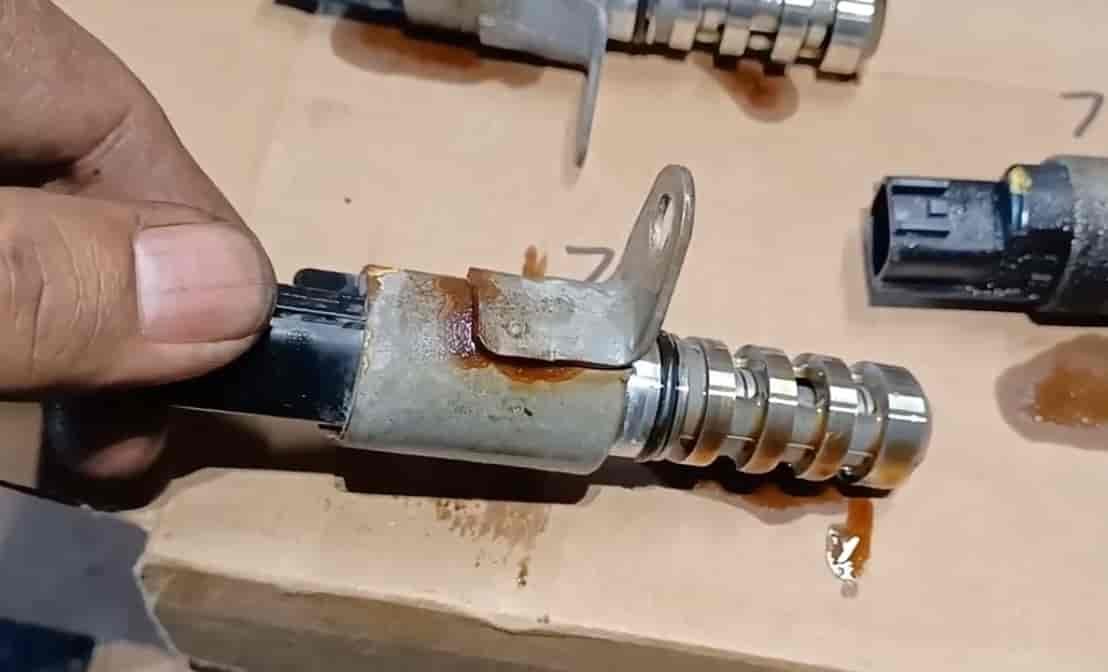
Mechanical failures also trigger P0011. A faulty VVT solenoid may remain partially open, continuously advancing cam timing. A stuck oil control valve can disrupt oil delivery. Timing chains stretch over time and change valve synchronization. Camshaft position sensors may also transmit inaccurate readings to the ECM, causing false timing calculations.
High-mileage Nissan models often experience multiple causes simultaneously. A vehicle with 150,000 miles may have degraded oil quality, timing chain wear, and weakened VVT performance at the same time.
Can Low Oil Cause Nissan P0011?
Yes, low engine oil can directly cause Nissan P0011. The Nissan CVTC system depends on hydraulic oil pressure to adjust intake camshaft timing. When oil volume drops below the required level, the system cannot accurately move or stabilize camshaft position.
The CVTC actuator uses pressurized engine oil to rotate the camshaft according to engine demand. Low oil levels reduce pressure inside the actuator and create delayed or unstable movement. The ECM compares commanded timing values against actual camshaft positions. When timing exceeds acceptable limits, the system triggers P0011.
Oil quality creates similar problems. Nissan engines are sensitive to oil viscosity and maintenance intervals. Using oil that is too thick, too thin, or contaminated with sludge changes flow behavior inside narrow VVT passages. For example, a high-mileage Nissan Altima using degraded oil beyond a 10,000-mile service interval can develop restricted oil flow and trigger timing faults even when oil quantity appears sufficient.
Checking oil level should be the first diagnostic step because correcting oil issues sometimes removes the code without replacing components.
Is Nissan P0011 Serious?
Nissan P0011 ranges from moderately serious to highly serious depending on the underlying cause. A temporary oil-related issue creates lower risk than a stretched timing chain or failing timing components.
Minor cases usually involve dirty oil or a partially restricted VVT system. The vehicle may continue driving with limited symptoms such as rough idle or decreased fuel economy. Engine performance suffers, but immediate damage does not always occur.
Mechanical timing problems create greater risk. A stretched timing chain changes synchronization between the camshaft and crankshaft. Incorrect timing affects combustion events, valve operation, and airflow. Long-term operation under these conditions increases stress on internal components.
There are 3 major long-term risks associated with ignoring P0011: timing chain failure, catalytic converter damage, and severe engine wear. Poor combustion can create excessive unburned fuel, increasing exhaust temperatures and damaging emission components. Timing errors can also place additional strain on valves and timing assemblies.
Drivers should treat P0011 as an early warning sign rather than a minor inconvenience.
Can You Drive With Nissan P0011?
You can drive with Nissan P0011 for a short distance in mild situations, but extended driving increases the risk of engine damage. The answer depends on symptom severity rather than the code alone.
Vehicles showing only a Check Engine Light and mild performance changes may remain drivable temporarily. Short trips to a repair facility usually create minimal risk if no severe symptoms exist.
Stop driving immediately if the engine develops rattling noises, hard starting, stalling, severe hesitation, or noticeable power loss. These symptoms often indicate timing chain wear or major timing system failures. Continuing to drive under these conditions increases the chance of expensive repairs.
Engine timing problems rarely improve without intervention. A small oil restriction can become a damaged VVT actuator. Minor timing chain wear can eventually become a chain replacement. Addressing P0011 early usually reduces repair costs and prevents secondary failures.
How Do You Diagnose Nissan P0011 Step by Step?
There are 8 diagnostic steps for Nissan P0011: scan fault codes, inspect oil level, test oil pressure, check the VVT solenoid, inspect the oil control valve, inspect the timing chain, test the camshaft sensor, and evaluate ECM data.
Start with an OBD2 scanner because P0011 frequently appears alongside related timing codes. Additional codes such as P0014, P0016, or camshaft sensor faults can narrow the diagnosis. Freeze frame data also helps identify operating conditions when the failure occurred.
Check engine oil immediately after scanning. Low oil level, dirty oil, or incorrect viscosity creates a large percentage of Nissan timing faults. Many technicians inspect oil condition before moving to advanced testing because this step requires minimal time and cost.
Measure oil pressure if oil level appears normal. The CVTC system depends on hydraulic pressure to operate correctly. Weak oil pressure prevents accurate camshaft adjustment and may indicate internal engine wear or oil flow restrictions.
Inspect VVT components next. The VVT solenoid and oil control valve regulate oil flow into the timing system. Sludge buildup, electrical failures, or internal sticking commonly create timing irregularities. Timing chain inspection becomes necessary if earlier tests reveal no clear fault. Excessive chain stretch changes synchronization and often produces rattling sounds during startup.
Finally, evaluate camshaft sensor data and ECM readings. A failed sensor can report inaccurate timing values and create false calculations even when mechanical components remain functional.
How Do You Fix Nissan P0011?
Nissan P0011 repairs depend on the root cause because the code itself identifies a timing condition rather than a failed component.
Oil service resolves many cases. Replacing dirty oil and installing the manufacturer-recommended viscosity restores hydraulic performance in the CVTC system. Some technicians also perform an engine flush when sludge accumulation affects oil passages.
VVT-related repairs become necessary when oil service does not eliminate the fault. Replacing a faulty VVT solenoid or cleaning a stuck oil control valve restores proper oil regulation. These repairs commonly solve timing issues in Nissan engines with moderate mileage.
Mechanical repairs become necessary in more severe cases. Timing chain stretch changes camshaft synchronization and requires replacement of chain components, guides, and tensioners. A damaged camshaft position sensor may also require replacement if inaccurate readings trigger false timing calculations.
Resetting the ECM after repairs confirms whether timing values return to specification. A successful repair eliminates both the fault code and the performance symptoms associated with P0011.
How Much Does Nissan P0011 Repair Cost?
There are 5 common Nissan P0011 repair cost ranges, and total repair expenses vary significantly based on the root cause.
Minor repairs create relatively low costs. Oil changes and simple maintenance procedures typically fall within standard service pricing. Vehicles diagnosed early often avoid major component replacement.
Electrical repairs and valve timing components increase repair expenses. Replacing a VVT solenoid or camshaft sensor usually involves parts and labor costs because component access varies by engine design.
Timing chain repairs create the highest expenses. Replacing timing chains requires extensive disassembly because technicians must access front engine components. Labor costs frequently exceed component prices.
Typical repair costs include:
| Repair Item | Estimated Cost |
|---|---|
| Oil change | $50–120 |
| VVT solenoid replacement | $150–350 |
| Camshaft sensor replacement | $100–300 |
| Timing chain replacement | $700–1800 |
| Diagnostic service | $80–150 |
Vehicles repaired early often remain near the lower end of the cost range. Ignoring symptoms usually increases both labor and component expenses.
Which Nissan Models Commonly Experience P0011?
Nissan P0011 appears more frequently in high-mileage models that use CVTC systems and timing chain-driven engines. Although the code can occur in many vehicles, several Nissan platforms report the issue more often because of engine design and long-term wear patterns.
Nissan Altima is one of the most commonly reported models associated with P0011. The 2.5L QR25DE engine relies heavily on oil quality and proper timing system operation. High-mileage Altima vehicles sometimes develop timing chain stretch or VVT system contamination after extended oil change intervals.
Nissan Rogue also experiences P0011 regularly because many Rogue models share the same QR-series engine architecture. Owners frequently report rough idle, hesitation, and intermittent Check Engine Light behavior before the code becomes permanent.
Nissan Sentra and Maxima can develop similar timing problems as mileage increases. Vehicles exceeding 100,000–150,000 miles commonly experience wear inside timing components, oil control systems, and camshaft actuators. Poor maintenance history further increases risk.
The issue rarely affects only one component. Older Nissan engines often develop a combination of oil contamination, timing wear, and VVT degradation simultaneously.
What Is the Difference Between Nissan P0011 and P0014?
Nissan P0011 and P0014 both involve camshaft timing problems, but they affect different timing positions and engine conditions.
P0011 indicates that intake camshaft timing on Bank 1 is more advanced than expected. The ECM detects excessive intake cam advance beyond the target position. The issue commonly involves oil pressure problems, VVT faults, timing chain wear, or oil control valve failures.
P0014 typically indicates excessive exhaust camshaft timing advance. While both codes involve variable timing systems, the affected camshaft differs. Intake and exhaust timing systems perform different functions inside the engine, so symptoms and repair paths can vary.
Vehicles occasionally trigger both codes together. Simultaneous faults often suggest larger timing system problems such as stretched timing chains or severe oil flow restrictions. Multiple timing codes generally increase repair complexity because technicians must evaluate synchronization across the entire valve timing system.
For related timing codes, an internal article such as P0011 vs P0014 differences can support troubleshooting decisions and strengthen topical connections.
What Is the Difference Between Nissan P0011 and P0016?
P0011 and P0016 involve timing issues, but P0016 specifically indicates a correlation problem between the camshaft and crankshaft.
P0011 focuses on camshaft timing being excessively advanced. The code identifies an operational timing condition inside the variable valve timing system.
P0016 identifies synchronization failure between rotating engine components. The ECM continuously compares camshaft and crankshaft positions. If the measured relationship falls outside acceptable values, the system triggers P0016.
Timing chain stretch commonly creates P0016 because chain wear physically changes component alignment. In severe situations, a vehicle may trigger both P0011 and P0016 simultaneously. This combination often indicates mechanical timing wear rather than isolated sensor or oil issues.
Drivers should consider combined timing codes a higher-risk condition because synchronization faults can eventually affect valve operation and overall engine reliability.
How Often Should You Change Oil to Prevent P0011?
Most Nissan engines should receive oil changes every 5,000–7,500 miles to reduce the risk of P0011. Severe driving conditions may require shorter intervals because the CVTC system depends heavily on clean oil and stable oil pressure.
Variable valve timing systems use small oil passages and hydraulic actuators to control camshaft movement. Dirty oil creates sludge buildup that restricts flow through these narrow passages. Reduced flow changes actuator response speed and causes inaccurate camshaft positioning.
Driving conditions directly affect oil degradation. Stop-and-go traffic, frequent short trips, towing, hot climates, and high engine loads accelerate oil contamination. For example, a Nissan Rogue driven primarily in city traffic may require maintenance closer to the 5,000-mile interval instead of waiting for extended service schedules.
Many P0011 cases develop gradually after repeated delayed oil changes. Preventive maintenance usually costs less than replacing timing components.
How Long Does a Nissan VVT Solenoid Last?
Most Nissan VVT solenoids last between 100,000 and 150,000 miles under normal driving conditions. Actual lifespan depends heavily on oil maintenance history and engine operating conditions.
The VVT solenoid controls oil flow into the timing actuator. Internal components move repeatedly throughout engine operation. Over time, contamination, sludge accumulation, heat exposure, and wear reduce responsiveness.
There are 3 common signs of VVT solenoid failure: intermittent Check Engine Light activity, rough engine performance, and delayed acceleration response. Some vehicles initially trigger timing codes only during cold starts before symptoms become constant.
Vehicles with poor maintenance history often experience earlier failures. Engines operating with dirty oil place greater stress on moving valve components because contamination restricts internal movement and accelerates wear.
When Does a Nissan Timing Chain Usually Fail?
Most Nissan timing chains last between 120,000 and 200,000 miles, but wear patterns vary by engine design and maintenance history. Timing chains typically last longer than timing belts, although they are not lifetime components.
Timing chain wear develops gradually. The chain stretches over thousands of heat cycles and engine revolutions. As wear increases, synchronization between the crankshaft and camshaft slowly changes.
There are 4 common warning signs of timing chain wear: startup rattling noises, rough idle, engine hesitation, and repeated timing fault codes. Drivers frequently notice a metallic rattling sound for several seconds during cold starts because chain tension becomes unstable.
Poor oil maintenance accelerates timing chain wear. Chains, guides, and tensioners rely on proper lubrication to reduce friction and heat buildup. A high-mileage Nissan Altima with extended oil change intervals may develop chain wear significantly earlier than a well-maintained vehicle.
This topic also creates a natural opportunity for internal linking into broader timing chain maintenance and engine reliability content.
Final Section
P0011 is not simply a Check Engine Light code. Nissan P0011 indicates that the engine timing system is operating outside its intended range and requires attention before secondary damage develops. The issue commonly begins with oil-related problems, VVT system faults, or timing component wear, but the severity increases when symptoms remain unresolved.
There are 3 factors that determine how serious the condition becomes: repair timing, underlying mechanical condition, and maintenance history. A vehicle with low oil or contaminated oil may require only basic service. A vehicle with timing chain stretch or multiple timing faults may require extensive repairs and higher labor costs.
Early diagnosis changes outcomes significantly. Drivers who inspect oil condition, scan codes quickly, and address timing symptoms immediately often avoid expensive repairs. Delayed action creates a chain reaction where oil flow issues lead to VVT failures, timing wear, and eventually broader engine problems.
Nissan models including Altima, Rogue, Sentra, and Maxima can continue operating reliably for high mileage when oil service intervals and timing system maintenance remain consistent. Preventive maintenance costs significantly less than major timing repairs.
You can also expand this topic cluster naturally into related content such as timing chain failure symptoms, VVT solenoid troubleshooting, camshaft sensor issues, and additional OBD2 timing codes.