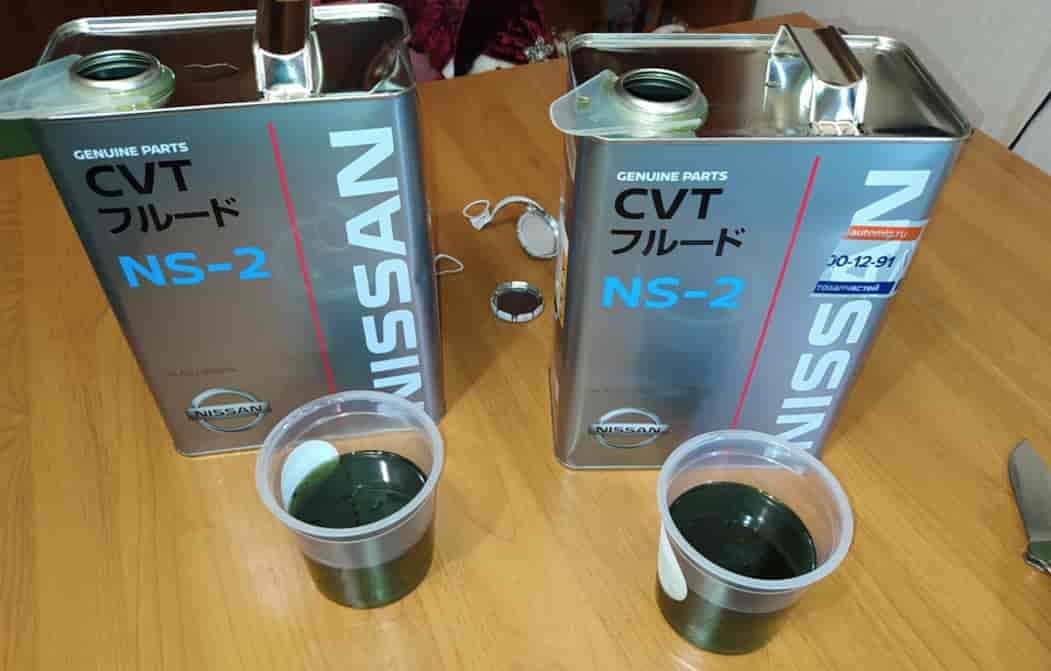
Several fluids can replace Nissan CVT NS-2, but compatibility matters more than the brand name printed on the bottle. Nissan continuously variable transmissions, especially those developed with Jatco technology, depend on highly specific fluid properties. Viscosity, friction modifiers, heat resistance, and pressure behavior directly affect how the transmission belt and pulleys operate. A fluid that appears similar on the label can still create shifting problems if its formulation differs from Nissan NS-2 requirements.
Many Nissan owners search for an NS-2 equivalent because original OEM fluid is sometimes expensive, difficult to find, or unavailable in local markets. Universal CVT fluids and aftermarket alternatives often advertise compatibility with multiple manufacturers, including Nissan. However, “compatible with” and “approved by” are not identical standards. A wrong choice can contribute to shuddering, overheating, delayed acceleration, or long-term transmission wear.
There are 7 commonly referenced alternatives for Nissan NS-2 fluid, including products from Idemitsu, Valvoline, Castrol, Amsoil, and other manufacturers. Some are closer to OEM specifications than others. The differences become more important in older Nissan models using early Jatco CVT designs.
This guide explains what Nissan NS-2 fluid is, which alternatives are considered compatible, how to verify replacement claims, which Nissan vehicles use NS-2, and what risks appear when incorrect CVT fluid is used.
What is Nissan CVT Fluid NS-2?
Nissan CVT Fluid NS-2 is a transmission fluid specification developed specifically for Nissan continuously variable transmissions. Unlike conventional automatic transmission fluid, NS-2 was engineered to support the operating characteristics of early Nissan CVT systems. The formulation controls friction behavior, heat transfer, hydraulic pressure, and metal-to-metal interaction inside the transmission.
Nissan introduced NS-2 for vehicles equipped with earlier generations of Jatco CVT transmissions. Models such as the Nissan Altima, Sentra, Rogue, Versa, and Murano used this specification in certain production years. The fluid became part of the transmission design rather than a simple lubricant. CVT systems rely on steel belts and adjustable pulleys instead of fixed gears, which creates different performance requirements compared to standard automatic transmissions.
Fluid properties directly influence transmission behavior. The CVT control system depends on stable hydraulic pressure and precise friction characteristics to maintain pulley ratio changes. If the fluid viscosity becomes too thick or friction behavior changes, the transmission may develop delayed response, vibration, slipping, or abnormal wear. This explains why Nissan specifies dedicated CVT formulations instead of allowing generic automatic transmission fluids.
Many drivers assume all CVT fluids function similarly because they share the same category name. The reality is different. Two CVT fluids can have different additive packages, thermal stability ratings, and friction modifier chemistry. These differences become more noticeable in high-mileage vehicles and under severe operating conditions such as heavy traffic, towing, or hot climates.
Which fluids are equivalent to Nissan CVT Fluid NS-2?
There are 7 commonly used fluids marketed as compatible with Nissan NS-2 specifications, but compatibility claims vary significantly between manufacturers. Some products closely replicate OEM properties, while others use broader universal formulations designed to support multiple vehicle brands.
Idemitsu CVTF Type N is frequently considered the closest replacement option because Idemitsu has supplied transmission fluids to Japanese manufacturers. The formulation specifically targets Nissan CVT requirements and is often viewed as one of the safest aftermarket choices. Many repair shops prefer it because of its similarity to factory specifications.
Valvoline CVT Fluid is another widely used option. The product advertises compatibility with several Nissan applications and supports many older NS-2 vehicles. Castrol Transmax CVT, Eneos ECO CVT Fluid, Amsoil CVT Fluid, Beck/Arnley CVT Fluid, and Aisin CVT Fluid are also marketed for Nissan applications. Each product differs in additive chemistry, viscosity profile, and compatibility language.
Not all replacement fluids carry direct OEM approval. Some labels state “suitable for use in applications requiring NS-2,” while others use wording such as “recommended for” or “compatible with.” These phrases do not represent identical standards. Manufacturers often perform internal testing, but official Nissan approval may not exist.
Drivers should also consider vehicle age and transmission generation. A fluid that performs adequately in a newer CVT system may produce different results in an older Jatco transmission with higher mileage. Transmission wear patterns and fluid sensitivity increase over time, making product selection more important.
How can you verify whether a CVT fluid matches Nissan NS-2?
Checking the bottle for “CVT” is not enough because fluid compatibility depends on specification details rather than product category labels. Many universal fluids advertise broad compatibility lists, but their formulations may differ from Nissan NS-2 operating requirements.
The first verification step involves checking manufacturer compatibility statements. Products specifically mentioning Nissan NS-2 applications generally provide greater confidence than generic universal formulas. Phrases such as “engineered for Nissan NS-2 applications” indicate stronger targeting than broad compatibility claims covering dozens of brands.
Viscosity and friction behavior create another major difference. CVT systems rely on controlled belt movement and pulley pressure. Small changes in fluid thickness or additive chemistry can affect shift smoothness and internal wear. Unlike conventional automatic transmissions, CVTs operate within narrower performance windows.
OEM approval and compatibility language also carry different meanings. Official approvals indicate testing against manufacturer requirements. Compatibility claims usually mean the fluid manufacturer believes the product performs similarly under expected operating conditions. Those are not equivalent standards.
Vehicle owners should also consult service manuals before replacing fluid. Nissan changed transmission designs across model years, and some later vehicles moved from NS-2 to NS-3 formulations. Assuming all Nissan CVT systems use identical fluid specifications creates unnecessary risk and may contribute to premature transmission problems.
Which Nissan vehicles use NS-2 fluid?
Nissan NS-2 fluid was primarily designed for earlier Nissan CVT-equipped vehicles before Nissan introduced the newer NS-3 specification. Several popular models used NS-2 during specific production years, but compatibility depends on model year and transmission generation rather than vehicle name alone.
The Nissan Altima used NS-2 fluid in many models equipped with early Jatco CVT systems, particularly vehicles produced before the transition toward newer transmission designs. Certain Nissan Sentra and Rogue model years also relied on NS-2. Other vehicles including the Versa, Cube, Murano, and Maxima used the same specification during selected production periods.
Model year matters because Nissan gradually updated transmission technology. Around the mid-2010s, many newer vehicles transitioned to NS-3 fluid. Owners frequently assume that two Nissan Altimas from different years use identical fluid specifications, but transmission revisions often changed service requirements.
The safest approach is verifying the owner’s manual, service documentation, or transmission identification label. Using model name alone creates unnecessary uncertainty because even trim levels and production dates can affect CVT fluid requirements.
Can Nissan NS-3 replace Nissan NS-2?
Nissan NS-3 is a newer CVT fluid specification, but it does not automatically function as a direct replacement for NS-2 in every situation. Nissan developed NS-3 to improve efficiency, reduce internal friction, and support updated transmission designs.
NS-3 generally uses a lower-viscosity formulation compared to NS-2. The thinner fluid improves fuel efficiency and helps newer CVT systems operate with reduced internal resistance. However, earlier transmission designs were calibrated around the friction behavior and pressure characteristics of NS-2.
Mixing fluid specifications can create inconsistent operating conditions. Transmission control systems calculate hydraulic behavior based on expected fluid performance. Changes in viscosity or additive chemistry may affect belt pressure, pulley response, and heat management. Small variations can become more noticeable in older or high-mileage transmissions.
Some mechanics report successful use of NS-3 in older vehicles, while others recommend staying with original specifications whenever possible. Nissan service recommendations should remain the primary reference point because transmission replacement costs significantly exceed fluid cost differences.
Drivers replacing fluid should also avoid partial assumptions. A newer fluid generation does not automatically mean universal backward compatibility. Transmission engineering priorities changed over time, and fluid formulations evolved alongside those mechanical updates.
What happens if you use the wrong CVT fluid?
Using incorrect CVT fluid can create shifting problems, overheating, shuddering, and long-term transmission damage. CVT systems operate differently from conventional automatic transmissions because pulley pressure and steel belt behavior depend heavily on fluid characteristics.
One common symptom involves shuddering during acceleration. If friction behavior differs from expected specifications, the belt may not engage smoothly with pulley surfaces. Drivers often describe the sensation as vibration, hesitation, or jerking during low-speed acceleration.
Heat management creates another concern. CVT fluid transfers heat while maintaining hydraulic pressure throughout the transmission system. Incorrect fluid properties can reduce cooling performance and increase operating temperatures. Excess heat accelerates fluid breakdown and contributes to internal component wear.
Long-term effects can become more expensive. Transmission belts, pulleys, valve bodies, and bearings rely on stable lubrication and pressure behavior. Small fluid mismatches may not create immediate failure, but repeated operation under incorrect conditions can shorten transmission lifespan significantly.
Many transmission complaints blamed on “bad CVTs” originate from maintenance errors, delayed fluid changes, or incompatible fluid selection. The transmission itself may not always be the original problem. Fluid quality and specification accuracy frequently play a larger role than many owners realize.
When should Nissan CVT NS-2 fluid be changed?
Nissan does not apply a single replacement interval to every vehicle because driving conditions affect CVT fluid degradation rates differently. Under normal driving conditions, many owners replace CVT fluid between 30,000 and 60,000 miles, although actual recommendations vary by model year and transmission design.
Severe operating conditions accelerate fluid deterioration. Stop-and-go traffic, frequent short trips, mountainous roads, towing, high ambient temperatures, and aggressive acceleration place additional thermal stress on CVT systems. Heat gradually breaks down additives and changes fluid properties over time. Once friction behavior begins to change, transmission performance may also change.
Several symptoms indicate deteriorating CVT fluid. Delayed acceleration, rough engagement, hesitation, vibration, abnormal noises, or increased transmission temperature can signal fluid degradation. Dark fluid color and burnt odor may also suggest excessive heat exposure.
Preventive maintenance remains less expensive than transmission repair. Many technicians recommend shorter service intervals for older Nissan vehicles because fluid condition becomes increasingly important as mileage increases. Replacing fluid before noticeable symptoms appear often reduces long-term wear.
Drivers should also understand that “lifetime fluid” terminology creates confusion. Transmission fluid continues to age regardless of marketing language. Mechanical stress, heat cycles, and contamination gradually reduce fluid effectiveness over extended use.
Which Nissan NS-2 equivalent fluid is the safest choice?
The safest Nissan NS-2 replacement depends on how closely the fluid matches OEM operating characteristics rather than how many applications appear on the label. Products designed specifically around Nissan requirements generally create less uncertainty than broad universal formulations.
Idemitsu CVTF Type N is often considered one of the strongest alternatives because of its focus on Japanese transmission applications. Many technicians view it as the closest aftermarket option to factory specifications. Nissan owners looking for an alternative without moving toward universal fluid formulations frequently select this option.
OEM Nissan NS-2 remains the reference standard because it was engineered specifically for the transmission system. Availability and price, however, sometimes encourage owners to explore alternatives. Products such as Valvoline CVT Fluid and Castrol Transmax CVT provide broader market availability and support multiple Nissan applications.
The comparison below summarizes commonly referenced Nissan NS-2 alternatives.
| Product | Compatibility | Main Advantage | Potential Drawback | Best Use Case |
|---|---|---|---|---|
| Idemitsu CVTF Type N | High | Close to OEM characteristics | Availability varies | Nissan-specific replacement |
| Nissan OEM NS-2 | Very High | Factory specification | Higher cost | Maximum compatibility |
| Valvoline CVT Fluid | Moderate to High | Broad application support | Universal formulation | Daily driving |
| Castrol Transmax CVT | Moderate | Widely available | Less Nissan-focused | General replacement |
| Eneos ECO CVT | Moderate | Japanese vehicle support | Limited regional access | Import vehicle maintenance |
| Amsoil CVT Fluid | Moderate | Strong thermal performance | Premium pricing | Severe driving conditions |
| Aisin CVT Fluid | Moderate | Japanese transmission expertise | Compatibility varies | Selected Nissan models |
Fluid selection should prioritize specification accuracy over marketing claims. Saving a small amount during a fluid change becomes insignificant compared to the cost of diagnosing or replacing a damaged CVT transmission.
Final Section (Optional Semantic Closing)
Choosing a Nissan CVT Fluid NS-2 equivalent requires more than matching product labels or selecting the cheapest option available. CVT transmissions operate within tighter fluid tolerances than conventional automatic transmissions, which makes specification accuracy a maintenance requirement rather than a preference.
Several alternatives, including Idemitsu CVTF Type N, Valvoline CVT Fluid, Castrol Transmax CVT, and other aftermarket products, advertise compatibility with Nissan NS-2 applications. However, not all alternatives provide identical friction characteristics, viscosity behavior, or long-term transmission protection. Differences that appear minor on a specification sheet can produce noticeable changes inside a CVT system over thousands of miles.
Vehicle owners should verify three factors before replacing fluid: Nissan model year, transmission generation, and manufacturer compatibility statements. Nissan gradually transitioned from NS-2 toward NS-3 specifications, and assumptions based only on vehicle names often create unnecessary maintenance mistakes.
Transmission fluid cost differences are relatively small compared to transmission repair costs. Selecting a fluid that closely matches OEM operating behavior generally creates the lowest long-term risk. In many situations, using the correct fluid specification matters more than choosing a premium brand.
If you own a Nissan model equipped with a Jatco CVT system, checking fluid requirements before service remains one of the simplest ways to protect transmission performance and lifespan.