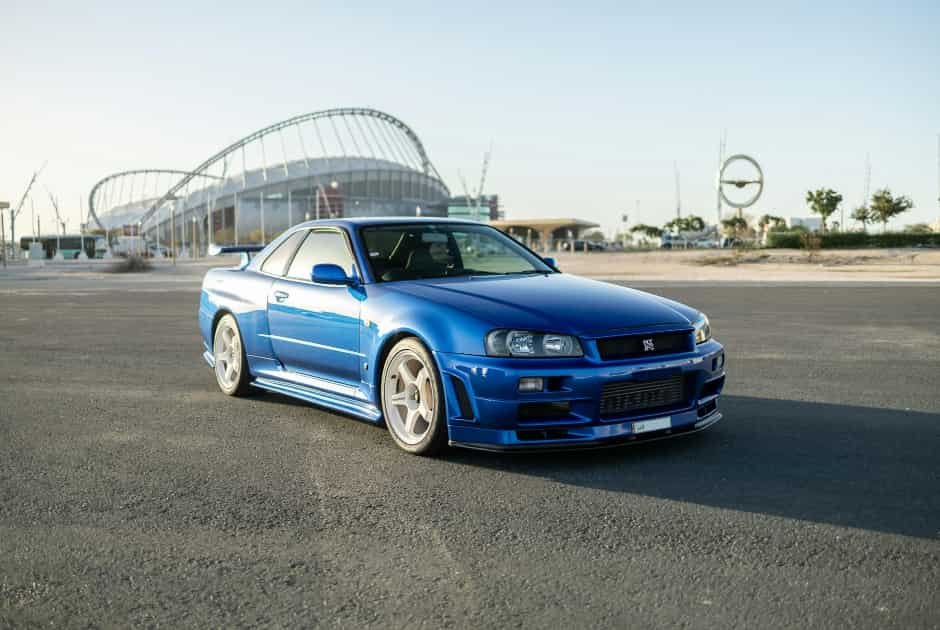
Most Nissan Skyline models are not permanently illegal in the United States. A specific Skyline becomes illegal to import or use on public roads when it does not meet the required federal safety rules, emissions requirements, import conditions, or state registration standards.
The legal status of a Nissan Skyline depends on its exact manufacture date, model generation, engine configuration, import pathway, and supporting documents. Under the federal safety exemption, a vehicle that is at least 25 years old can generally be imported without proving compliance with all applicable Federal Motor Vehicle Safety Standards. The 25 year period begins on the vehicle’s actual manufacture date rather than the model year printed in an advertisement.
Most R32 and R33 Skyline models have already reached this age threshold. Many early R34 models also qualify, while later R34 vehicles must wait until their individual 25th anniversaries. However, age alone does not guarantee complete legality. The vehicle must also satisfy Environmental Protection Agency requirements, enter through the correct customs process, and qualify for registration in the owner’s state. EPA rules can also become more complicated when a Skyline has an engine that differs from its original model and configuration.
This guide explains which Skyline models remain restricted, why the R34 receives the most legal scrutiny, and how buyers can verify a vehicle before completing a purchase.
What Nissan Skyline Models Are Illegal in the US?
No Nissan Skyline generation is permanently illegal simply because it carries the Skyline name. A Skyline becomes illegal or restricted when it does not satisfy the federal requirements for importation, emissions, or registration. The vehicle’s manufacture date, import history, engine configuration, and supporting documentation determine whether it can legally enter and operate in the United States.
As of 2026, nearly every R32 and R33 Skyline has surpassed the federal 25 year import threshold. These models can generally be imported without meeting all current Federal Motor Vehicle Safety Standards because they qualify for the age based exemption. Many early production R34 Skylines have also reached this milestone. However, later R34 models manufactured after mid 2001 may still fall short of the required age, making them ineligible for the same exemption until their individual 25th anniversary arrives.
It is also important to understand that federal legality extends beyond the vehicle’s age. A Skyline imported with incomplete customs paperwork, inaccurate declarations, or invalid documentation may still face legal issues even if it qualifies under the 25 year rule. Likewise, a vehicle that has undergone significant modifications without proper emissions compliance may encounter additional restrictions during importation or registration.
The following table provides a general overview of the current legal status of each Skyline generation.
| Skyline Model | General Status in the US | Primary Requirement |
|---|---|---|
| R32 Skyline | Generally legal to import | Verify lawful federal import records |
| R33 Skyline | Generally legal to import | Confirm documentation and title history |
| Early R34 Skyline | Potentially legal | Verify exact manufacture date |
| Late R34 Skyline | May remain restricted | Wait until the vehicle reaches 25 years |
| Improperly imported Skyline | Potentially illegal | Resolve federal compliance issues |
Although this table offers a useful starting point, buyers should never rely solely on the model generation. Every Skyline should be evaluated individually by reviewing its manufacture date, customs documentation, emissions compliance, chassis identification, and registration history before making a purchase.
Why Are Nissan Skyline Models Considered Illegal in the US?
Japanese manufacturers designed most Nissan Skyline models for the domestic market instead of the United States. Nissan never certified these vehicles under the Federal Motor Vehicle Safety Standards before selling them in Japan. As a result, American buyers could not import many Skyline models through the same process used for vehicles originally built for the U.S. market.
The Skyline GT R, especially the R34, became extremely popular among enthusiasts during the late 1990s and early 2000s. High demand encouraged some companies and private buyers to import these cars before they qualified for the federal age exemption. Some importers submitted incomplete paperwork or relied on compliance methods that later failed to satisfy federal authorities. Those cases created the widespread belief that every Nissan Skyline was illegal in the United States, even though federal law never banned the Skyline name itself.
Many people also misunderstand what the word “illegal” means. Federal law separates importing, owning, registering, and driving into different legal activities. A Skyline may qualify for private ownership but fail to qualify for public road registration. Another vehicle may enter the country legally but lose registration because it does not satisfy state inspection requirements. In other cases, an owner may legally keep a Skyline inside a private collection or use it exclusively on a race track without violating federal import rules.
Several government agencies oversee different parts of the process. The National Highway Traffic Safety Administration enforces federal safety regulations. The Environmental Protection Agency enforces emissions requirements. U.S. Customs and Border Protection reviews imported vehicles at the border. Finally, each state’s motor vehicle agency decides whether the vehicle qualifies for a title and registration. Buyers who understand these responsibilities can evaluate a Skyline more accurately and reduce legal risks before making a purchase.
How Does the 25 Year Rule Apply to Nissan Skyline Models?
The 25 year rule forms the foundation of Nissan Skyline legality in the United States. This federal exemption allows owners to import a vehicle without proving compliance with every applicable Federal Motor Vehicle Safety Standard once the vehicle reaches 25 years of age. However, the law measures eligibility from the vehicle’s actual manufacture date instead of its model year. That distinction often changes whether a Skyline qualifies for import on a specific date.
For example, a Skyline manufactured in March 2001 became eligible under the federal safety exemption in March 2026. By contrast, another Skyline from the same model year but manufactured in December 2001 cannot qualify until December 2026. Buyers who overlook this difference sometimes assume every vehicle from the same model year shares the same legal status. In reality, customs officials review the exact production date when evaluating eligibility.
Age alone also does not complete the import process. Buyers should confirm the manufacture date through the Japanese export certificate, the manufacturer’s identification plate, and other official records before purchasing the vehicle. They should also review customs paperwork, emissions documents, and title history to confirm that every stage of the import process complies with federal and state requirements.
Understanding the 25 year rule helps buyers avoid expensive mistakes. It also prevents them from relying on advertisements that simply describe a Skyline as “25 year legal” without providing evidence. A complete document review remains the safest way to confirm that a vehicle qualifies for lawful importation.
Are R32 Nissan Skyline Models Legal in the US?
Most R32 Nissan Skyline models are now legal to import into the United States because every original R32 has exceeded the federal 25 year age requirement. That makes the R32 one of the easiest Skyline generations for American enthusiasts to purchase legally. However, buyers should still verify the vehicle’s documentation before completing a transaction.
The R32 family includes the GT R, GTS, GTS t, sedan, coupe, and several limited production variants. Although these models generally qualify for the federal age exemption, they still require legitimate customs records, emissions documentation, and a clear ownership history. Missing paperwork can create registration delays and reduce the vehicle’s resale value even when the car itself satisfies the age requirement.
Buyers should also remember that previous import history matters. Some R32 Skylines entered the United States before reaching 25 years of age through methods that later raised legal concerns. Reaching the required age does not automatically erase problems created during the original import process. Anyone considering an older Skyline should compare the chassis number with the customs entry records, Japanese export certificate, and state title before signing a purchase agreement.
For most enthusiasts, the R32 represents the lowest legal risk among classic Skyline generations. Even so, careful document verification remains just as important as inspecting the vehicle’s mechanical condition. A Skyline with complete federal records usually offers greater long term value than a cheaper example with an uncertain history.
Are R33 Nissan Skyline Models Legal in the US?
Most R33 Nissan Skyline models now qualify for legal import into the United States because they have exceeded the federal 25 year age requirement. This change has made the R33 much easier to purchase than it was two decades ago. Even so, buyers should never assume that every R33 on the market has a clean legal history because each vehicle entered the country under different circumstances.
The R33 played an important role in the history of Skyline imports. Before the 25 year exemption became available, certain R33 GTS and GT R models could enter the United States through an approved Registered Importer program after meeting specific federal safety requirements. Although that pathway helped some vehicles enter legally, it did not apply to every R33 produced during the generation’s production run. As a result, buyers should review each vehicle individually instead of relying on the model name alone.
Documentation remains one of the most important parts of the buying process. A legitimate R33 should include customs records, the HS 7 Declaration, EPA Form 3520 1 when applicable, the Japanese export certificate, and a clear title history. Matching the chassis number across every document also helps confirm that the vehicle has not been altered or incorrectly identified during previous ownership.
Today, the age exemption simplifies the import process for most R33 Skylines. However, complete documentation still provides the strongest evidence that a vehicle entered the country legally. Buyers who verify those records before purchasing can reduce legal risks and protect the long term value of their investment.
Are R34 Nissan Skyline Models Illegal in the US?
The R34 Nissan Skyline creates more legal confusion than any other Skyline generation. Many enthusiasts still believe every R34 remains illegal in the United States. In reality, the answer depends on the vehicle’s exact manufacture date rather than the R34 name itself. Some examples now qualify under the federal 25 year exemption, while others must wait until they reach their individual eligibility dates.
Nissan produced the R34 between 1998 and 2002. Because production continued for several years, not every vehicle reached the 25 year threshold at the same time. Early production models manufactured before the corresponding date in 2001 may now qualify for import under the federal safety exemption. Later production vehicles manufactured after that date must wait until they complete the full 25 year period before owners can use the same exemption.
Many buyers also assume that special editions follow different legal rules. However, the law does not distinguish between a standard GT R, a V Spec, a V Spec II, an M Spec, or a Nür edition when calculating age eligibility. Federal authorities evaluate every vehicle using the same core factors, including the manufacture date, import pathway, supporting documentation, and compliance with applicable regulations.
Because the R34 remains one of the world’s most desirable Japanese performance cars, misleading advertisements continue to appear in the marketplace. Buyers should request official import records instead of accepting claims that a vehicle is simply “US legal.” Verifying the manufacture date, customs documents, emissions records, and chassis identification provides far greater protection than relying on a seller’s description alone.
Does the EPA 21 Year Exemption Make a Nissan Skyline Legal?
Many buyers confuse the EPA 21 year exemption with the federal 25 year safety rule, but the two regulations serve different purposes. The Environmental Protection Agency focuses on emissions compliance, while the National Highway Traffic Safety Administration regulates vehicle safety standards. A Skyline must satisfy every applicable federal requirement before it can complete the import process legally.
The EPA may exempt a vehicle from certain emissions requirements once it reaches 21 years of age, provided it still uses the original engine and configuration. This condition becomes important because many Skylines have received engine swaps or performance upgrades over the years. Replacing an RB25 with an RB26 or installing aftermarket emissions components can change how the EPA evaluates the vehicle. Buyers should confirm the engine specification before assuming the exemption applies.
Importers also need to understand that meeting one federal requirement does not automatically satisfy another. A Skyline may qualify under the EPA age provision but still remain ineligible under NHTSA safety regulations if it has not reached 25 years of age. Likewise, a vehicle that qualifies under the safety exemption must still comply with applicable customs procedures and registration requirements before it can operate on public roads.
Before purchasing any imported Skyline, buyers should compare the engine information with the Japanese export certificate, customs paperwork, and emissions records. Completing this review helps confirm that the vehicle matches its original specifications and reduces the risk of unexpected compliance issues after purchase.
Can a Nissan Skyline Be Legal to Own but Illegal to Drive?
A person can legally own a Nissan Skyline without gaining the right to drive it on public roads. Ownership, importation, registration, and road use represent separate legal steps, and each one follows different rules. Many enthusiasts overlook this distinction because they assume ownership automatically grants unrestricted road access.
Several situations illustrate this difference. A collector may keep a Skyline inside a private collection without registering it for road use. Another owner may import a vehicle for racing, exhibitions, or restoration while delaying registration until the project meets state requirements. In each case, ownership remains legal even though the vehicle cannot legally operate on public streets.
State registration creates another layer of review. Every state establishes its own procedures for titles, inspections, insurance, and emissions testing. A Skyline that receives approval in one state may require additional documentation in another. Buyers should therefore research local regulations before purchasing an imported vehicle, especially if they plan to move or register the car in a different jurisdiction.
Understanding these legal stages helps buyers make better decisions. Instead of focusing only on whether a Skyline entered the country legally, they should also confirm that the vehicle qualifies for registration, insurance, and regular road use where they live.
Why Did MotoRex Affect Nissan Skyline Legality?
MotoRex remains one of the most influential names in the history of Nissan Skyline imports because the company helped introduce the Skyline to the United States long before most models qualified under the 25 year rule. Its work attracted enormous attention from enthusiasts, but it also created years of confusion about which Skylines qualified for legal import.
The company pursued federal approval for several Skyline models through the Registered Importer program. While some vehicles entered the country through approved procedures, later government reviews limited the scope of that approval. As a result, many buyers mistakenly assumed that every Skyline associated with MotoRex automatically qualified for legal ownership. Federal authorities, however, evaluate each vehicle individually rather than accepting claims based on a company name or previous owner.
Anyone considering a Skyline connected to MotoRex should verify every available document before making a purchase. Customs records, conformity paperwork, EPA documentation, title history, and matching chassis numbers provide much stronger evidence than advertisements or verbal assurances. Missing or inconsistent records should always raise additional questions before money changes hands.
MotoRex continues to influence today’s Skyline market because many collectors still search for vehicles that entered the United States during that period. Although those cars often attract significant interest, buyers should judge each example on its own documentation and compliance history instead of relying on reputation alone.
How Can You Verify Whether a Nissan Skyline Is Legal Before Buying It?
Verifying a Nissan Skyline before purchase requires more than checking its appearance or mileage. Buyers should confirm that the vehicle satisfies every legal requirement before signing a contract. A careful review reduces the risk of registration problems, unexpected expenses, and potential legal disputes after the sale.
The first step involves confirming the exact manufacture date. Federal law applies the 25 year exemption according to the production date rather than the model year. Buyers should compare the manufacturer’s identification plate with the Japanese export certificate and any available production records. Matching these documents helps confirm that the vehicle qualifies for the appropriate federal exemption.
The next step focuses on import documentation. A legitimate Skyline should include customs entry records, an HS 7 Declaration, EPA Form 3520 1 when applicable, and a complete title history. Buyers should also compare the chassis number across every document because Japanese vehicles commonly use a chassis number instead of the standard 17 character VIN used in the United States. Any inconsistency deserves further investigation before the purchase moves forward.
Finally, buyers should confirm that the vehicle meets their state’s registration requirements. A Skyline that entered the country legally may still require inspections, emissions testing, or additional paperwork before receiving license plates. Completing these checks before payment offers far greater protection than resolving legal issues after taking ownership.
What Happens If a Nissan Skyline Was Imported Illegally?
Importing a Nissan Skyline without satisfying federal requirements can create serious legal and financial consequences. The risks extend beyond the original importer because future owners may also inherit problems linked to the vehicle’s import history. For that reason, buyers should investigate the legal status of every Skyline before completing a purchase.
Federal authorities may seize a vehicle that entered the country through fraudulent declarations or unauthorized import methods. In some situations, officials may require the owner to export the vehicle or take other corrective actions before allowing it to remain in the United States. Even when enforcement does not result in seizure, incomplete documentation can delay registration, reduce resale value, and complicate insurance coverage.
An invalid import history can also affect future transactions. Potential buyers, lenders, and insurance companies often request supporting documentation before approving financing or coverage. Missing customs records or inconsistent ownership documents can discourage buyers and lower the market value of an otherwise desirable Skyline.
The safest approach involves verifying every document before money changes hands. Buyers who discover missing records or conflicting information should seek advice from an experienced import specialist or legal professional before moving forward with the transaction.
Is the Nissan GT R the Same as the Nissan Skyline GT R?
Many people use the names Nissan GT R and Nissan Skyline GT R interchangeably, but they do not describe the same vehicle. The R32, R33, and R34 performance models carried the Skyline GT R name because they belonged to the Skyline family. Nissan later introduced the R35 as the standalone Nissan GT R, creating a separate model line with its own identity.
This distinction also affects legal discussions. Nissan officially sold the R35 GT R in the United States, so American customers could purchase it through authorized dealerships without relying on the 25 year import rule. By contrast, Japanese market Skyline GT R models entered the country through federal import procedures because Nissan never offered them as regular U.S. production vehicles.
Understanding this difference helps buyers avoid confusion when researching import laws. Articles discussing Skyline legality usually focus on the R32, R33, and R34 generations rather than the R35 GT R. Although both vehicles share a performance heritage, they follow different regulatory and commercial histories in the American market.
Recognizing the distinction also improves buying decisions. A shopper searching for a legally imported Skyline should evaluate federal documentation and import history, while a buyer considering an officially sold R35 can follow the normal procedures used for any other U.S. market performance vehicle.
Conclusion: Which Nissan Skyline Models Can You Legally Own and Drive in the US?
Most Nissan Skyline models are not permanently illegal in the United States. Today, nearly every R32 and R33 has reached the federal 25 year threshold, while many early R34 models also qualify under the same exemption. However, buyers should evaluate each vehicle individually because the exact manufacture date, import history, and supporting documentation ultimately determine its legal status.
The safest purchase always combines legal eligibility with complete documentation. Buyers should confirm the manufacture date, verify the chassis number, review customs records, examine EPA documentation, and check state registration requirements before completing a transaction. Following these steps reduces legal uncertainty and protects the long term value of the vehicle.
The Nissan Skyline remains one of the most desirable Japanese performance cars ever built, but popularity should never replace proper due diligence. A well documented Skyline offers far greater peace of mind than a cheaper example with an uncertain history. By understanding the federal rules and verifying every record, buyers can confidently choose a Skyline that they can legally own, register, and enjoy on American roads.