
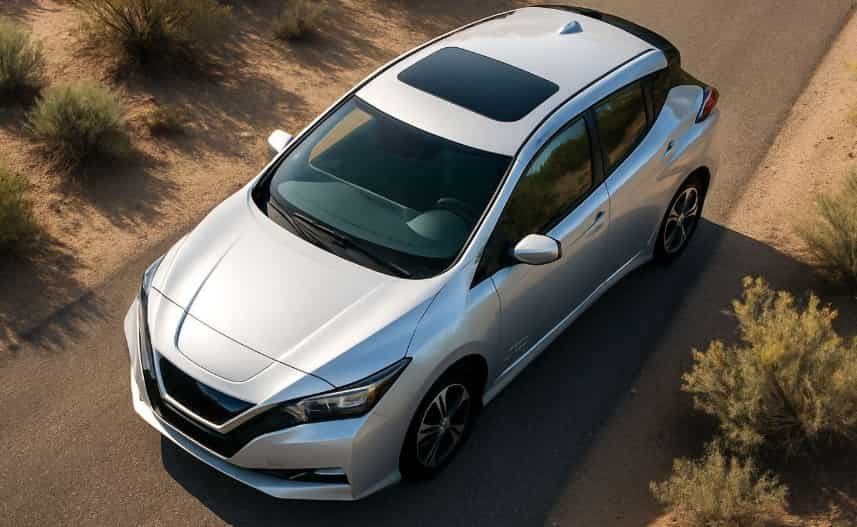
Does Nissan Leaf Have Solar Panels? The short answer is no for most models. A few early Nissan Leaf versions included a small solar panel on the rear spoiler. However, that panel does not charge the main battery that powers the car. Instead, it only helps support the 12 volt battery.
Many people expect an electric vehicle to recharge itself while sitting in the sun. That idea sounds practical because solar technology continues to improve every year. As a result, many buyers assume the Nissan Leaf works the same way. Unfortunately, that is not how the system was designed.
This misunderstanding often creates unrealistic expectations before someone buys a used Nissan Leaf. Some owners hope the factory solar panel can add extra driving range or reduce charging costs. Others believe every Leaf includes a solar roof because it is an electric vehicle. Both assumptions are incorrect.
Understanding how the Nissan Leaf uses solar technology can save you time, money, and disappointment. It also helps you compare the Leaf with other electric vehicles that offer different charging technologies. Once you know how the system works, you can make a better buying decision and choose the most practical charging solution for your daily routine.
In this guide, you will learn which Nissan Leaf models included a factory solar panel, what the panel actually does, and why it cannot charge the main traction battery. You will also discover how home solar systems can charge a Nissan Leaf, whether aftermarket solar panels are worth installing, and which myths continue to confuse many EV buyers today.
Does Nissan Leaf Have Solar Panels?
The answer depends on what you mean by a solar panel. Most Nissan Leaf models do not include solar panels that charge the main battery or increase driving range. If you expect the vehicle to collect sunlight and power itself like a traditional solar energy system, the Nissan Leaf does not work that way. However, some early models came with a small factory installed solar panel on the rear spoiler.
Many people confuse this feature with a true solar charging system. The small panel was never designed to recharge the high voltage lithium ion battery that powers the electric motor. Instead, it provides a small amount of electricity to help maintain the 12 volt battery. This battery supports systems such as the interior lights, clock, security functions, and electronic control modules. It does not provide the energy needed to move the vehicle.
Understanding this difference helps prevent one of the most common misconceptions about the Nissan Leaf. A solar spoiler and a solar charging system serve very different purposes. While the factory panel offers a minor benefit for the accessory battery, it does not reduce charging time or add extra miles of driving range.
If your goal is to power a Nissan Leaf with renewable energy, a home solar system is the better solution. Rooftop solar panels can generate enough electricity to charge the vehicle through a compatible home charger. This approach produces far more energy than the small factory panel and offers real savings over time. For most owners, home solar charging remains the most effective way to combine clean energy with everyday electric vehicle driving.
Which Nissan Leaf Models Had a Solar Panel?
Not every Nissan Leaf came with a factory installed solar panel. Nissan only offered this feature on selected first generation models, and availability depended on the model year, trim level, and market. Because of these differences, two vehicles from the same year may not include the same equipment.
The small solar panel appeared as part of the rear spoiler rather than on the roof. At first glance, many drivers assumed it could help charge the main battery. In reality, Nissan designed the panel to provide a small amount of power for the 12 volt battery. It did not supply energy to the high voltage traction battery or extend the vehicle’s driving range.
As the Nissan Leaf evolved, Nissan focused on larger battery capacities, improved charging speeds, and better driving efficiency. These upgrades offered far greater benefits than the small solar spoiler. For that reason, the feature gradually disappeared from later models and no longer plays a role in the current Nissan Leaf lineup.
If you are shopping for a used Nissan Leaf, do not assume the vehicle includes a solar panel simply because it is an early model. The easiest way to confirm this feature is to inspect the rear spoiler, review the original equipment list, or check the owner’s manual. You can also ask a Nissan dealer to verify the vehicle specifications using the Vehicle Identification Number. This step helps you understand exactly which factory features the car includes before making a purchase.
Although the solar spoiler is an interesting piece of Nissan’s early electric vehicle history, it should not be a deciding factor when choosing a used Leaf. Battery health, charging capability, maintenance history, and overall condition have a much greater impact on long term ownership.
What Does the Nissan Leaf Solar Panel Actually Do?
The factory solar panel on selected Nissan Leaf models has a simple purpose. It helps maintain the 12 volt battery instead of charging the main traction battery. Although the panel produces electricity from sunlight, the amount of power is very limited. It cannot support the energy demands of the electric motor or increase the vehicle’s driving range.
The 12 volt battery plays an important role in the daily operation of the Nissan Leaf. It supplies power to many electronic systems, including the interior lighting, dashboard display, infotainment system, security features, and control modules. Keeping this battery charged helps these components operate correctly, especially when the vehicle remains parked for long periods.
The high voltage traction battery serves a completely different function. It stores the electricity that powers the electric motor and moves the vehicle down the road. This battery requires much more energy than a small factory solar panel can generate. Because of this large difference in energy demand, the solar panel cannot recharge the traction battery or provide additional driving miles.
Many drivers expect any solar panel installed on an electric vehicle to reduce charging costs or extend battery range. While that idea sounds appealing, the technology used on the early Nissan Leaf was never intended to achieve those goals. Instead, Nissan introduced the solar spoiler as a small supporting feature that could help reduce the discharge of the 12 volt battery during normal vehicle use.
Understanding the difference between these two battery systems makes it much easier to understand how the Nissan Leaf works. Once you know the purpose of the factory solar panel, you can set realistic expectations and choose the most effective charging method for your driving needs.
Why Can’t the Nissan Leaf Solar Panel Charge the Main Battery?
The main reason is simple. The factory solar panel is too small to produce enough electricity for the high voltage traction battery. While it can collect energy from sunlight, its output is only suitable for supporting the 12 volt battery. Charging the main battery requires much more power than a compact solar panel can deliver.
Battery capacity also plays an important role. The traction battery stores a large amount of energy because it powers the electric motor during every trip. Even a short drive can use several kilowatt hours of electricity. By comparison, the small solar panel generates only a tiny amount of energy throughout the day. That difference makes it impossible for the panel to recharge the main battery in any meaningful way.
Another factor is the available surface area. The solar panel sits on the rear spoiler, which provides very little space for photovoltaic cells. Larger solar panels can produce more electricity because they capture more sunlight. Since the Nissan Leaf uses a compact panel, its energy production remains limited even under ideal weather conditions.
Weather also affects performance. Cloudy skies, shade, dirt, and high temperatures can reduce the amount of electricity a solar panel produces. Even on bright sunny days, the factory panel cannot generate enough energy to replace regular charging. Drivers still need to recharge the vehicle with a home charger, a public charging station, or a fast charging network.
Modern electric vehicles require reliable and consistent charging. Nissan designed the Leaf around plug in charging because it delivers the amount of electricity needed to keep the traction battery ready for daily driving. While the factory solar panel offers a small benefit for the 12 volt battery, it was never intended to replace conventional charging methods. For most owners, home solar panels connected to an EV charger remain the most practical way to use renewable energy with a Nissan Leaf.
Can You Charge a Nissan Leaf With Solar Power?
Yes, you can charge a Nissan Leaf with solar power, but not through the small factory solar panel found on some early models. Instead, you need a residential solar energy system that generates enough electricity to power an EV charger. This setup allows the vehicle to recharge using clean energy produced by rooftop solar panels.
A typical home solar system works in a simple way. Solar panels capture sunlight and convert it into electricity. An inverter changes that electricity into a form that your home and EV charger can use. When you plug your Nissan Leaf into a compatible charging station, the vehicle receives power from the solar system whenever enough electricity is available. If solar production is lower than your charging demand, the system can draw additional electricity from the power grid.
Many homeowners schedule charging during the middle of the day because solar panels usually produce the most electricity when the sun is strongest. This approach increases the amount of renewable energy used to charge the vehicle and can reduce monthly electricity costs. Some homeowners also install a battery storage system. The battery stores excess solar energy during the day and supplies it later when the vehicle charges at night.
Charging a Nissan Leaf with home solar offers several long term benefits. It can lower energy costs, reduce dependence on grid electricity, and decrease the environmental impact of daily driving. The actual savings depend on your local electricity rates, the size of your solar system, weather conditions, and your driving habits. Even so, a properly designed home solar installation produces far more useful energy than the small factory solar panel ever could. For most Nissan Leaf owners, home solar remains the most practical and efficient way to combine renewable energy with electric vehicle ownership.
How Many Solar Panels Are Needed to Charge a Nissan Leaf?
The number of solar panels needed to charge a Nissan Leaf depends on several factors. Your daily driving distance, the vehicle’s energy consumption, the efficiency of your solar panels, and the amount of sunlight in your location all influence the final answer. Because these conditions vary from one household to another, there is no single number that works for everyone.
A Nissan Leaf typically uses electricity more efficiently than many larger electric vehicles. Drivers who travel short distances each day need less energy to recharge the battery. As a result, they can often meet most of their charging needs with a smaller residential solar system. Drivers with longer commutes usually require a larger system to generate enough electricity throughout the year.
For example, imagine that you drive about 30 miles each day. If your Nissan Leaf consumes around 9 kilowatt hours of electricity during that trip, your solar system must produce at least that amount of usable energy each day. The exact number of solar panels depends on the output of each panel and the average number of peak sunlight hours where you live. Homes in sunny regions usually need fewer panels than homes that receive less direct sunlight.
It is also important to consider energy losses. Electricity passes through several components before it reaches the vehicle, including the inverter, charging equipment, and electrical wiring. Small losses occur during each stage of the process. Designing a solar system with additional capacity helps maintain reliable charging even when weather conditions are less than ideal.
If you plan to install solar panels primarily for your Nissan Leaf, it is a good idea to calculate both your household electricity use and your expected driving needs. A properly sized system can power your vehicle while also supplying electricity for everyday appliances. This approach improves long term value and makes better use of the energy your solar panels produce throughout the year.
Can You Install Solar Panels on a Nissan Leaf?
Yes, it is technically possible to install aftermarket solar panels on a Nissan Leaf. However, doing so is rarely a practical solution for charging the vehicle. While several companies offer portable or vehicle mounted solar products, these systems cannot generate enough electricity to recharge the high voltage traction battery in an efficient way.
The biggest limitation is the amount of available space. A passenger car has a relatively small surface area, which restricts the number and size of solar panels that can be installed. Even if the roof and other flat surfaces are covered with photovoltaic panels, the total energy produced during a sunny day remains modest. Most of that electricity is not enough to provide meaningful driving range.
Another challenge is system compatibility. The Nissan Leaf uses a sophisticated battery management system that controls how electricity enters and leaves the traction battery. Any aftermarket charging solution must work safely with this system. Installing an incompatible solar charging setup may damage electrical components or create safety risks. It may also affect the manufacturer’s warranty if the modification changes the original electrical system.
Portable solar panels offer a more flexible alternative, but they also have clear limitations. They can power small electronic devices or help maintain an external battery pack, yet they are not designed to charge an electric vehicle directly. Even under excellent weather conditions, charging a Nissan Leaf with portable solar panels would take far longer than using a standard home charger.
For most owners, investing in a residential solar energy system provides much better value than installing solar panels on the vehicle itself. A home solar system produces significantly more electricity, works with a dedicated EV charger, and delivers reliable performance throughout the year. If your goal is to reduce charging costs while using clean energy, rooftop solar remains the most practical and cost effective solution.
Is the Nissan Leaf Solar Panel Worth It?
The answer depends on your expectations. If you expect the factory solar panel to charge the main battery or increase driving range, you will probably feel disappointed. The small panel does not generate enough electricity to replace regular charging, and it has very little impact on the overall ownership experience.
On the other hand, the factory solar panel still offers a small practical benefit. It helps maintain the 12 volt battery by supplying a limited amount of electricity during daylight hours. Although this contribution is modest, it can help support low power electrical systems while the vehicle is parked. For some owners, this extra support adds convenience, especially if the car remains unused for several days.
Buyers should also remember that the solar panel is only one small feature among many. When choosing a used Nissan Leaf, battery health should always receive the highest priority. A well maintained traction battery has a much greater effect on driving range, charging performance, and long term ownership costs than a factory solar spoiler. It is also important to review the vehicle’s maintenance history, charging habits, and overall condition before making a purchase.
Drivers who want to lower their electricity bills should focus on home solar charging instead of the factory panel. A properly sized residential solar system can generate enough electricity to support daily charging while reducing dependence on grid power. This solution provides measurable financial benefits over time and allows owners to take full advantage of renewable energy.
In the end, the Nissan Leaf solar panel should be viewed as an interesting feature rather than a major selling point. It reflects an early attempt to integrate solar technology into an electric vehicle, but its real world impact remains limited. If your goal is lower charging costs, greater energy independence, and cleaner transportation, a home solar system will deliver far greater value than the small factory installed panel ever could.
Common Myths About Nissan Leaf Solar Panels
Many people misunderstand how the Nissan Leaf uses solar technology. Some of these misconceptions have existed since the first generation entered the market. Understanding the facts can help you make a better buying decision and set realistic expectations about charging and vehicle performance.
Myth 1: Every Nissan Leaf Has Solar Panels
This is one of the most common misconceptions. Most Nissan Leaf models do not include a factory solar panel. Nissan only offered a small solar spoiler on selected early models and specific trim levels. Newer models focus on improved battery technology and faster charging rather than integrated solar panels.
Myth 2: The Solar Panel Charges the Main Battery
The factory solar panel does not charge the high voltage traction battery. Its only purpose is to provide a small amount of electricity for the 12 volt battery. It cannot power the electric motor or increase the amount of energy stored for driving.
Myth 3: Parking in the Sun Increases Driving Range
Many people believe leaving the Nissan Leaf in direct sunlight will recharge the battery. That is not true. The factory solar panel does not generate enough electricity to add meaningful driving range. The vehicle still requires a compatible charging station to recharge the main battery.
Myth 4: Aftermarket Solar Panels Can Replace Regular Charging
Some companies sell portable or vehicle mounted solar panels for electric vehicles. While these products may produce electricity, they cannot replace a conventional charging system for everyday driving. Their output is too limited to recharge the Nissan Leaf efficiently within a practical amount of time.
Myth 5: Solar Charging Only Works With Solar Panels Installed on the Car
You do not need solar panels on the vehicle to charge a Nissan Leaf with renewable energy. Many owners use rooftop solar systems to generate electricity for their home EV charger. This method produces much more power, reduces electricity costs, and offers a far more practical way to charge the vehicle with clean energy.
The Nissan Leaf remains an efficient electric vehicle, but its factory solar panel should not be confused with a true solar charging system. Understanding these common myths makes it easier to evaluate the vehicle and choose the charging solution that best fits your daily driving needs.
Frequently Asked Questions
Does every Nissan Leaf have a solar panel?
No. Most Nissan Leaf models do not include a factory solar panel. Nissan only offered a small solar spoiler on selected early models and certain trim levels. The availability of this feature varies by model year and market.
Does the Nissan Leaf solar panel charge the main battery?
No. The factory solar panel only helps maintain the 12 volt battery. It does not charge the high voltage traction battery that powers the electric motor. Drivers must still recharge the vehicle through a compatible charging station.
Can a Nissan Leaf charge itself with sunlight?
No. The Nissan Leaf cannot recharge its main battery by sitting in the sun. The factory solar panel does not generate enough electricity to support the traction battery or increase driving range.
Can I charge a Nissan Leaf with home solar panels?
Yes. A residential solar energy system can generate electricity for a compatible home EV charger. This is the most practical way to charge a Nissan Leaf with renewable energy and reduce long term electricity costs.
How many solar panels do I need to charge a Nissan Leaf?
The exact number depends on your daily driving distance, local sunlight, and the size of your solar panels. Most homeowners calculate the system based on their average daily electricity consumption rather than the full battery capacity of the vehicle.
Is it worth installing aftermarket solar panels on a Nissan Leaf?
For most owners, the answer is no. Vehicle mounted solar panels produce only a limited amount of electricity and cannot replace conventional charging. A home solar system provides much greater energy production and better long term value.
Does the factory solar panel increase driving range?
No. The factory solar panel was not designed to extend driving range. Its purpose is to supply a small amount of electricity to the 12 volt battery instead of the high voltage traction battery.
What is the best way to charge a Nissan Leaf with solar energy?
The most effective solution is a properly sized rooftop solar system connected to a compatible home EV charger. This setup generates significantly more electricity than a small factory solar panel and supports reliable charging throughout the year.
Conclusion
So, does Nissan Leaf have solar panels? The answer is yes for a limited number of early models, but no for most Nissan Leaf vehicles on the road today. Even when a factory solar panel is present, it only helps maintain the 12 volt battery. It does not charge the high voltage traction battery or increase the vehicle’s driving range.
This distinction is important because many drivers expect an electric vehicle with a solar panel to generate enough electricity for everyday driving. While that idea is appealing, the technology used on the Nissan Leaf was never intended to replace conventional charging. Instead, Nissan designed the small solar spoiler as a supporting feature for low voltage electrical systems.
If your goal is to reduce charging costs and make better use of renewable energy, a residential solar system is a much more effective solution. Rooftop solar panels can produce enough electricity to power a compatible EV charger and support your daily driving needs. This approach offers greater energy savings, improved efficiency, and a more practical long term investment than relying on a small factory installed panel.
Before buying a used Nissan Leaf, focus on the factors that matter most. Check the health of the traction battery, review the vehicle’s maintenance history, confirm the available charging options, and inspect the overall condition of the car. These factors have a much greater impact on ownership than the presence of a factory solar panel. By understanding how the Nissan Leaf uses solar technology, you can make a confident decision and choose the charging solution that best fits your lifestyle.