
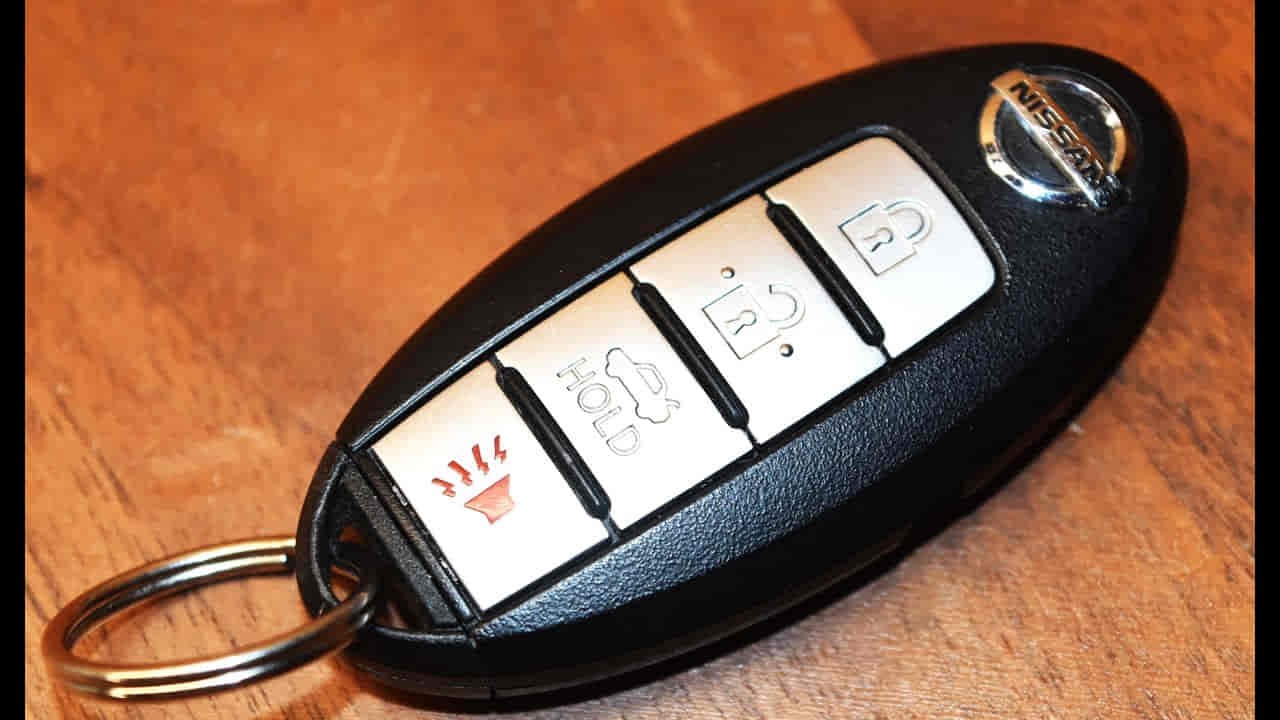
A Nissan key fob battery problem can prevent drivers from unlocking doors, starting the engine, or using remote vehicle functions. Although many owners assume the battery is the only cause, a key fob can stop working even after a brand-new battery has been installed. Communication failures, incorrect battery installation, signal interference, Intelligent Key system faults, and internal key damage can all create symptoms that resemble a dead battery.
Modern Nissan vehicles rely on the Intelligent Key system to communicate wirelessly with the vehicle. Every time a driver presses a lock, unlock, or remote start button, the key fob transmits an encrypted signal that must be recognized by the vehicle. If communication breaks down at any point, the vehicle may fail to respond despite the battery appearing functional.
Understanding the difference between a dead battery and a broader key system issue is important because it helps avoid unnecessary part replacements and reduces diagnostic time. This guide explains the 10 most common reasons a Nissan key fob battery appears not to be working and the solutions that restore normal operation.
What Are the Signs That a Nissan Key Fob Battery Is Not Working?
The most common signs of a Nissan key fob battery problem include reduced operating range, delayed button response, intermittent functionality, failed remote locking, and difficulty starting the vehicle using the Intelligent Key system. These symptoms typically appear gradually as battery voltage declines.
One of the earliest warning signs is reduced transmission distance. A key fob that previously unlocked the vehicle from several meters away may require the driver to stand directly beside the vehicle before the buttons respond. This occurs because a weakening battery produces a lower-powered radio signal.
As battery voltage continues to decline, button presses may become inconsistent. The lock button might work while the unlock button fails, or the key may function intermittently throughout the day. These irregular symptoms often indicate insufficient power rather than a complete key fob failure.
In more advanced cases, the vehicle may display messages such as “No Key Detected” or “Key System Error.” Because the Intelligent Key system relies on wireless communication, a weak battery can prevent successful authentication during vehicle startup.
Drivers may also notice that push button start performance becomes inconsistent. The vehicle may require the key to be placed directly against the start button before it recognizes the transmitter. This emergency backup procedure often confirms that the battery has become too weak for normal operation.
The progression of these symptoms provides valuable diagnostic information because battery-related issues typically worsen gradually rather than occurring without warning.
Why Is the Key Fob Battery Completely Dead?
A completely depleted battery is the most common reason a Nissan key fob stops working. Every Intelligent Key depends on a small lithium coin-cell battery to power its transmitter. As the battery ages, its voltage gradually declines until it can no longer generate a signal strong enough to communicate with the vehicle.
Most Nissan key fob batteries last between two and four years under normal usage conditions. However, frequent use, extreme temperatures, and long periods of button activation can accelerate battery depletion. Drivers who use remote start multiple times per day often experience shorter battery life because the transmitter operates more frequently.
Battery failure rarely occurs without warning. Reduced operating range, delayed response times, and intermittent button functionality usually appear before complete failure. Once battery voltage drops below the minimum operating threshold, the key fob can no longer transmit a recognizable signal, causing the vehicle to behave as though the key is missing.
Although replacing the battery is often the solution, confirming the correct battery specification is equally important. Installing an incompatible battery may create symptoms that closely resemble a dead battery even when the replacement is new.
Why Was the Wrong Battery Installed?
A Nissan key fob may continue to malfunction after battery replacement because the incorrect battery type was installed. While many Intelligent Keys use similar-looking coin-cell batteries, small differences in voltage, capacity, and physical dimensions can affect performance.
Most Nissan key fobs use either a CR2025 or CR2032 lithium battery. Although these batteries share the same voltage rating, they differ in thickness and energy capacity. Installing the wrong battery may prevent proper contact between the battery terminals and the internal circuitry.
Some replacement batteries purchased from low-cost suppliers may also have inconsistent manufacturing quality. Even when labeled correctly, these batteries may provide insufficient voltage or experience rapid power loss shortly after installation. As a result, drivers may assume the key fob itself is defective when the actual issue originates from the replacement battery.
Counterfeit batteries can create similar problems. These products often mimic well-known brands while delivering significantly lower performance and shorter service life. The battery may appear new but fail to provide stable power for reliable key fob operation.
Verifying battery specifications and selecting a reputable replacement helps eliminate one of the most common causes of persistent key fob problems after battery replacement.
Why Is the New Battery Installed Incorrectly?
A new battery can fail to restore key fob functionality if it is installed incorrectly. Because coin-cell batteries operate using specific positive and negative terminal orientations, improper installation interrupts power delivery to the transmitter circuit.
The most common installation mistake involves reversing battery polarity. When the battery is inserted upside down, the key fob receives no usable power even though the battery itself is fully charged. This situation frequently occurs because many key fob housings contain compact battery compartments that can be confusing during reassembly.
Improper seating is another common issue. The battery must sit securely within its holder and maintain continuous contact with the metal terminals. If the battery shifts during installation or fails to engage the contacts fully, power delivery becomes intermittent or nonexistent.
Physical damage can also occur during battery replacement. Excessive force applied while opening the key fob housing may bend terminal contacts or damage small electronic components. Even minor contact deformation can reduce conductivity and create symptoms identical to battery failure.
A correctly installed battery should immediately restore normal operation. If the key fob remains unresponsive after replacement, inspecting battery orientation and terminal contact integrity should be one of the first troubleshooting steps.
Why Is the Key Fob Not Communicating With the Vehicle?
A Nissan key fob may contain a healthy battery yet still fail to communicate with the vehicle. In this situation, the problem involves signal transmission rather than battery power.
The Intelligent Key system depends on radio-frequency communication between the transmitter and the vehicle’s receiving antennas. If this communication pathway becomes disrupted, the vehicle cannot recognize button commands or verify key presence during startup.
Electronic interference is a common cause of communication failure. Wireless devices, security systems, mobile phone transmitters, and other radio-frequency equipment can interfere with the signal exchanged between the key fob and the vehicle. In areas with heavy electronic activity, temporary communication problems may occur even when the key and battery are functioning correctly.
Environmental conditions can also affect signal reliability. Large metal structures, underground parking facilities, and areas with significant electromagnetic activity may weaken or distort radio-frequency transmission. The result is inconsistent key recognition and reduced remote operating range.
Communication problems may additionally originate within the vehicle itself. Damaged antennas, control module faults, and software-related issues can prevent successful signal reception despite a properly functioning key fob. Because both the key and vehicle participate in the communication process, diagnosing the entire system is necessary when battery replacement fails to resolve the problem.
Why Is the Intelligent Key System Not Detecting the Key?
The Intelligent Key system may fail to detect the key even when the battery is new because key recognition depends on more than battery power alone. Nissan vehicles use a network of antennas, sensors, and control modules to determine whether an authorized key is present.
When the driver approaches the vehicle or presses the Start/Stop button, the system initiates a communication sequence designed to verify the key’s identity. If any part of this process fails, the vehicle may display messages such as “No Key Detected” or refuse to start.
Interior detection antennas play a critical role in this process. These antennas are positioned throughout the cabin and are responsible for locating the key. If an antenna becomes damaged or loses communication with the control system, key detection may become unreliable.
Software synchronization issues can also interrupt recognition. Following battery replacement, electrical repairs, or module updates, communication data may become inconsistent between the key and vehicle. This can create situations where the key is physically present but fails authentication.
Intelligent Key detection problems are often mistaken for battery failures because both conditions produce similar symptoms. Understanding the distinction helps ensure that the correct component is repaired or replaced rather than focusing solely on the battery.
Why Is Signal Interference Blocking the Key Fob?
Signal interference can prevent a Nissan key fob from working even when the battery and transmitter are functioning normally. Because the Intelligent Key system relies on radio-frequency communication, external signals can disrupt the transmission process.
Wireless routers, mobile phone towers, security systems, radio transmitters, and industrial communication equipment all generate electromagnetic activity. In certain environments, these signals can compete with or overwhelm the frequencies used by the key fob.
The effects of interference vary depending on signal strength and proximity. Some drivers notice reduced operating range, while others experience complete communication failure. In severe cases, the vehicle may not respond to lock or unlock commands despite repeated button presses.
Aftermarket electronics can create similar issues. Remote starters, vehicle tracking devices, alarm systems, and unauthorized electronic modifications may interfere with factory communication networks. These conflicts can become especially difficult to diagnose because symptoms appear inconsistent.
Interference-related problems often disappear when the vehicle is moved to a different location. This behavior provides a useful clue that the issue involves signal disruption rather than a failing battery or defective key fob.
Why Does the Key Fob Need Reprogramming?
A Nissan key fob may stop working even with a healthy battery because the transmitter is no longer properly synchronized with the vehicle. Reprogramming becomes necessary when communication credentials between the Intelligent Key and the vehicle’s security system become corrupted, erased, or mismatched.
Every Nissan Intelligent Key contains a unique identification code that must match information stored within the vehicle’s security modules. During normal operation, this authentication process occurs automatically whenever the driver unlocks the vehicle or starts the engine. If the stored credentials become inconsistent, the vehicle may reject the key despite recognizing its signal.
Battery replacement itself does not usually require reprogramming. However, electrical system failures, module replacements, software updates, or extended battery disconnection events can occasionally disrupt synchronization. In these situations, the key may continue transmitting signals while the vehicle refuses to authorize access or engine startup.
Drivers often notice symptoms such as intermittent key recognition, failed remote locking, unsuccessful push button start attempts, or recurring “No Key Detected” messages. Because these symptoms closely resemble battery-related issues, reprogramming requirements are frequently overlooked during diagnosis.
When reprogramming is required, the vehicle must establish a new trusted relationship with the Intelligent Key. Once synchronization is restored, remote functions and key recognition typically return to normal operation.
Why Is the Key Fob Internally Damaged?
Internal key fob damage can prevent normal operation even when the battery is fully charged and installed correctly. Modern Nissan key fobs contain delicate electronic components that are vulnerable to physical impact, moisture exposure, and long-term wear.
Inside the key fob are circuit boards, microprocessors, antenna components, switches, and battery terminals. These parts work together to generate and transmit encrypted radio-frequency signals. Damage to any one of these components can interrupt communication with the vehicle.
Physical impact is one of the most common causes of internal failure. Repeated drops may crack solder joints, damage electronic circuits, or loosen internal connections. The key fob may continue functioning intermittently for a period before complete failure occurs.
Moisture exposure creates additional risks. Water can corrode electronic contacts, damage circuit pathways, and create short circuits within the transmitter assembly. Even small amounts of moisture trapped inside the housing can gradually degrade performance over time.
Button wear is another contributing factor. After thousands of uses, the internal contact pads beneath lock, unlock, and remote start buttons may deteriorate. As a result, some buttons may stop responding while others continue functioning normally.
Internal damage often requires replacement of the key fob assembly because many electronic components cannot be repaired economically. Proper inspection helps determine whether replacement is more practical than continued troubleshooting.
Why Is the Vehicle Battery Affecting Key Recognition?
A weak vehicle battery can create key recognition problems even when the key fob battery is operating normally. The Intelligent Key system depends on both the transmitter and the vehicle’s electronic systems functioning correctly. If vehicle voltage becomes unstable, communication may fail before authentication is completed.
Modern Nissan vehicles use multiple control modules to process key identification requests. These modules require stable electrical power to communicate with antennas, security systems, and the push button start system. When battery voltage drops below recommended levels, system performance can become unpredictable.
Low voltage often causes misleading symptoms. Drivers may assume the key fob battery is defective because the vehicle displays “No Key Detected” warnings or fails to respond to remote commands. In reality, the key is transmitting correctly, but the vehicle lacks sufficient electrical power to process incoming signals.
Battery-related communication problems become more common during cold weather because low temperatures reduce battery efficiency. Aging batteries are particularly vulnerable because their capacity decreases over time, making them less capable of supporting electronic systems during startup.
Charging system issues can produce similar effects. A failing alternator may leave the battery partially discharged, creating intermittent communication problems that appear unrelated to the electrical system. For this reason, vehicle battery condition should always be evaluated when diagnosing persistent key recognition failures.
Why Is Nissan Displaying a Key System Error Message?
A Key System Error message appears when the vehicle detects a fault within the Intelligent Key communication network. This warning indicates that the authentication process required for key recognition and startup authorization cannot be completed successfully.
The Intelligent Key system relies on continuous communication between the key fob, receiving antennas, Body Control Module, immobilizer system, and other electronic components. If communication fails at any point, the vehicle may generate a Key System Error notification.
Weak key fob batteries remain one of the most common causes. As battery voltage decreases, signal quality deteriorates and authentication failures become more frequent. The vehicle may occasionally recognize the key while rejecting it during other attempts.
Antenna failures can produce similar symptoms. Nissan vehicles use multiple antennas to locate and verify the key’s position. When an antenna malfunctions, communication coverage decreases and recognition reliability suffers.
Software issues can also trigger the warning. Module communication errors, outdated system software, and corrupted configuration data may prevent successful authentication even when all hardware components are functioning correctly.
The appearance of a Key System Error message should be treated as a system-level warning rather than a simple battery issue. Proper diagnosis often requires evaluating the entire Intelligent Key network rather than focusing solely on the transmitter.
What Should You Do If a New Nissan Key Fob Battery Still Does Not Work?
If a new Nissan key fob battery does not resolve the problem, the next step is identifying whether the failure originates from the key, the vehicle, or the communication process between them. Replacing additional batteries without diagnosis rarely solves persistent issues.
The first priority is confirming that the correct battery type was installed and that polarity orientation is correct. Even a new battery cannot power the transmitter if installation errors prevent electrical contact.
The second step is testing the spare key, if one is available. If the spare key functions normally, the original key fob likely contains an internal fault, programming issue, or damaged transmitter. If neither key works, the problem may involve vehicle-side components such as antennas, control modules, or the Intelligent Key system.
Vehicle battery condition should also be verified. Low system voltage can interfere with authentication and create symptoms that resemble key fob failure. Many Intelligent Key complaints ultimately originate from weak vehicle batteries rather than transmitter batteries.
If remote functions remain unavailable after these checks, professional diagnostic testing may be necessary. Specialized equipment can evaluate key programming status, antenna operation, module communication, and system authorization procedures more accurately than visual inspection alone.
Which Nissan Models Experience Key Fob Problems Most Often?
Key fob issues can affect virtually any Nissan model equipped with Intelligent Key technology, but reports tend to be more common in vehicles that have accumulated age, mileage, and prolonged electronic system usage.
Models such as Nissan Rogue, Nissan Altima, Nissan Sentra, Nissan Murano, Nissan Pathfinder, Nissan Maxima, and Nissan Versa frequently appear in discussions involving key recognition and remote access concerns. However, the majority of reported problems are related to battery condition, component wear, or electronic communication rather than model-specific defects.
Older vehicles often experience increased key fob issues because batteries, antennas, switches, and electronic modules naturally degrade over time. Exposure to heat, vibration, moisture, and repeated usage accelerates this aging process.
Newer vehicles may encounter different challenges involving software compatibility, security updates, and module communication. Although hardware reliability has generally improved, modern systems contain more electronic dependencies that can create additional troubleshooting scenarios.
The model year often influences symptom patterns more than the model itself. Understanding common issues within a specific generation can help streamline diagnosis, but successful repairs should always focus on the actual failure rather than assumptions based on vehicle type.
How Can You Extend Nissan Key Fob Battery Life?
Extending Nissan key fob battery life requires reducing unnecessary power consumption and protecting the transmitter from conditions that accelerate battery depletion. Although key fob batteries are designed to operate for several years, usage habits can significantly affect lifespan.
Limiting unnecessary button presses is one of the most effective strategies. Every lock, unlock, panic alarm, and remote start command consumes battery power. Repeated activation from long distances requires the transmitter to operate at maximum signal strength, increasing energy usage.
Protecting the key fob from extreme temperatures also helps preserve battery performance. High heat accelerates battery degradation, while extremely cold conditions temporarily reduce available power. Storing the key in a moderate environment improves long-term reliability.
Avoiding moisture exposure protects both the battery and internal electronics. Water intrusion can create electrical leakage paths that increase power consumption even when the key is not actively being used.
Regular battery replacement before complete depletion is another effective preventative measure. Replacing the battery every two to three years helps maintain strong signal performance and reduces the likelihood of unexpected communication failures.
Proper care not only extends battery life but also protects the overall reliability of the Intelligent Key system, reducing the chances of lockout situations and startup authorization problems.
Read more: Nissan Push Button Start Not Working
Conclusion
A Nissan key fob battery that appears not to be working may be caused by a dead battery, incorrect battery installation, signal interference, key programming issues, internal transmitter damage, vehicle battery problems, or Intelligent Key system faults. Although battery replacement solves many cases, it does not address every potential cause of key recognition failure.
The most effective troubleshooting process begins with simple checks such as battery condition, installation accuracy, and spare key testing before progressing to more advanced diagnostics involving antennas, security systems, and electronic control modules.
Because modern Nissan vehicles depend on continuous communication between the Intelligent Key and multiple vehicle systems, even minor disruptions can prevent locking, unlocking, and engine startup functions. Understanding how these systems interact helps identify the true source of the problem and avoids unnecessary component replacement.
By following a structured diagnostic approach and maintaining both the key fob and vehicle electrical system, most Nissan owners can restore reliable Intelligent Key performance and prevent future communication failures.